
When you’re diagnosed with colorectal cancer (CRC), one of the first things your care team will talk about is staging. Staging is the process of determining how far the cancer has grown and whether it has spread to other parts of the body. Knowing the stage is important because it provides your care team with the necessary information they need to create your personalized treatment plan.
Different tests and imaging can provide insights into staging. These may include:
- Colonoscopy to look inside the colon and rectum.
- Imaging tests such as ultrasound, CT scans, MRI, or PET scans to see if cancer has spread to lymph nodes or other organs.
- Blood tests, including a CEA (carcinoembryonic antigen) test, which can sometimes help track cancer.
- In some cases, surgery is needed not only to remove the tumor but also to more accurately determine the stage by examining tissue and lymph nodes under the microscope.
Below are the five different stages of CRC, so you can better understand what they mean.
Evidence-based guidance powered by NCCN Guidelines®
Personalized treatment plans shaped by the latest oncology standards—tailored to your diagnosis.
Get started
View your personalized treatment plan in the Outcomes4Me app
Use your diagnosis to unlock personalized NCCN Guidelines®-aligned recommendations.
Continue in app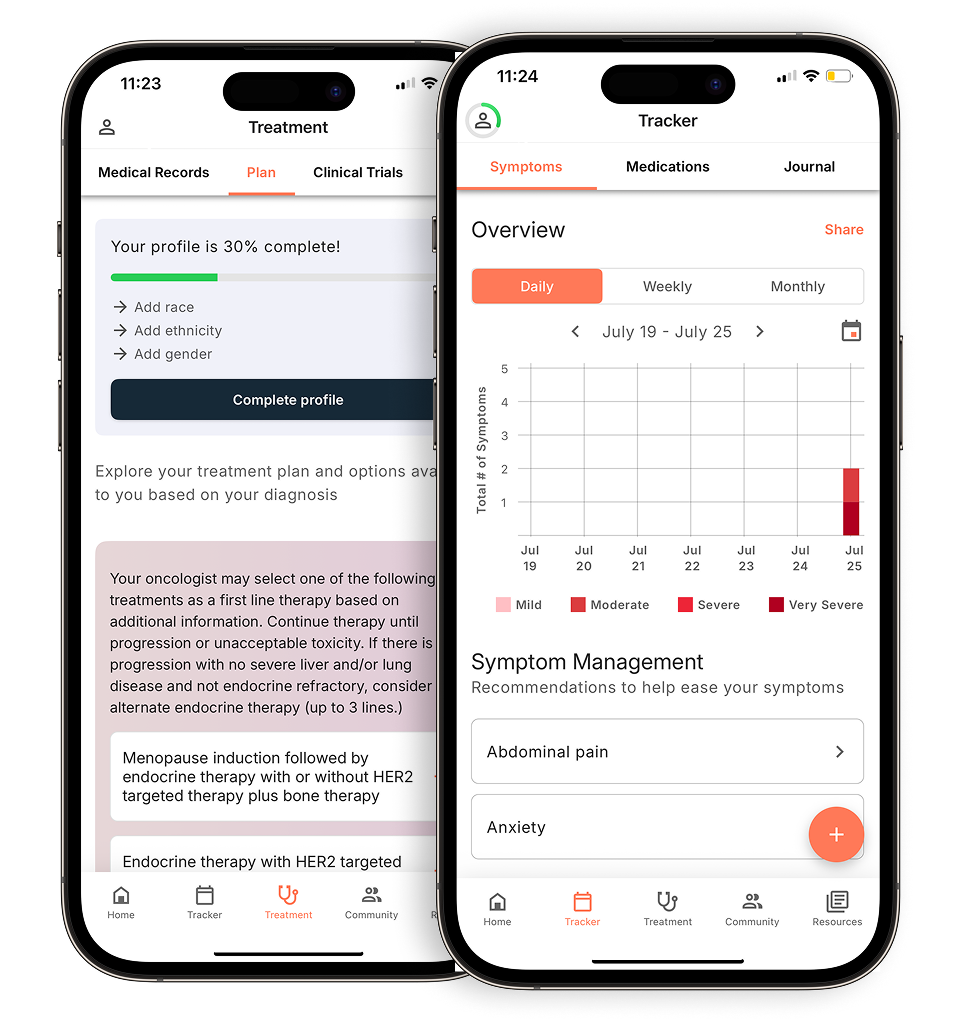
Stage 0: Carcinoma in situ
Stage 0 is the earliest stage. At this point, cancer cells are only found in the inner lining of the colon or rectum and haven’t grown deeper into the wall. Many people don’t notice symptoms at this stage, and it’s often found during a routine colonoscopy. Treatment usually involves removing the polyp or a small area of abnormal cells during the procedure.
Stage I
In stage I, the cancer has grown deeper into the inner layers of the colon or rectum wall but hasn’t reached nearby lymph nodes or spread to distant sites. Some people may experience changes in bowel habits (like constipation, diarrhea, or narrower stools), but many still won’t notice major symptoms. Surgery to remove the tumor is the main treatment option. Depending on your diagnosis, your doctor may recommend chemotherapy after surgery.
Stage II
Stage II means the cancer has grown through the wall of the colon or rectum and possibly into nearby tissues, but it still hasn’t spread to the lymph nodes. This stage is divided into three different groups.
- Stage IIA: Cancer has grown through the wall into the outer layers of the colon or rectum.
- Stage IIB: Cancer has grown through the wall and is touching nearby tissues.
- Stage IIC: Cancer has grown through the wall and has spread to nearby organs, but not to lymph nodes.
Symptoms may include rectal bleeding, persistent abdominal pain, or unexplained weight loss. At this stage, surgery is still the main treatment, and sometimes chemotherapy is recommended after surgery to lower the risk of recurrence.
Stage III
In Stage III, the cancer has spread to nearby lymph nodes but not to distant organs. This means it’s becoming more advanced, but it’s still considered potentially curable. Stage III is further broken down into the following groups:
- Stage IIIA: Cancer has spread into the inner layers of the colon or rectum wall and is found in 1–3 nearby lymph nodes.
Stage IIIB: Cancer has grown through the wall into nearby tissues and is found in 1–3 lymph nodes, or has spread to 4–6 nodes without growing beyond the wall. - Stage IIIC: Cancer is in 7 or more nearby lymph nodes, or has grown into nearby tissues and a smaller number of lymph nodes.
People at this stage may notice more obvious symptoms, such as persistent blood in the stool, bowel blockages, or pain. Treatment usually includes surgery, followed by chemotherapy, and sometimes radiation (especially for rectal cancer).
Stage IV
Stage IV means the cancer has spread to distant parts of the body, such as the liver, lungs, or the lining of the abdomen.
- Stage IVA: Cancer has spread to one distant organ.
- Stage IVB: Cancer has spread to more than one distant organ.
- Stage IVC: Cancer has spread to distant organs and the abdominal lining.
Symptoms may include ongoing pain, digestive problems, or trouble breathing if the cancer has reached the lungs. Treatment focuses on controlling the cancer, relieving symptoms, and improving quality of life, using combinations of surgery, chemotherapy, targeted therapy, or immunotherapy.
Why staging matters
Understanding your cancer’s stage provides a clearer picture of the next steps. It can feel like there’s a lot of information to absorb with each stage and substage, but your care team is here to help walk you through any questions. Staging doesn’t define you, it’s simply a guide that helps navigate the best treatment options for your diagnosis and personal goals.
You’re not alone. Join the Outcomes4Me Community for a safe space to share your story and connect with others who share your diagnosis.
Personalized support for real care decisions
Understand your diagnosis, explore clinical trials, and track symptoms--all in one place.
Get started
Compare treatments, prepare for appointments, and track side effects—all in the app
Built for your diagnosis, Outcomes4Me gives you the tools to make confident, informed decisions—right when you need them.
Continue in app