
Relapsed disease means your CLL came back after you completed or stopped venetoclax and had a period of control. Refractory disease means the leukemia progressed while you were still taking it.
When planning next steps after relapse, your care team may consider how long your previous remission lasted along with other factors about your individual situation. Ask your doctor how they weigh these different considerations when recommending treatment options. It’s also why venetoclax may help some patients achieve remission, though remission is different from a cure, and your care team can discuss what response to expect in your specific situation.
The current treatment landscape: beyond BCL-2 inhibitors
For most people, the next move after a BCL-2 inhibitor is a Bruton’s tyrosine kinase (BTK) inhibitor, a completely different signaling pathway. BTK inhibitors are among the treatment options your care team may consider after a BCL-2 inhibitor like venetoclax, and some patients have found them helpful at this stage of disease.
BTK inhibitors split into two groups. Covalent agents bind permanently to a specific site on the BTK enzyme. Non-covalent (reversible) agents attach differently and don’t depend on that same binding site, which matters if you’ve already been exposed to a covalent drug.
PI3K inhibitors and chemoimmunotherapy may be considered for people who have tried multiple other targeted treatments or who have specific health conditions or access considerations that affect other options. Your care team can discuss whether these approaches might be suitable for your situation.
Evaluating relapse timing and next steps
Timing carries real weight here. Progression within 12 to 24 months of stopping therapy may be considered early relapse by your care team, and doctors often approach this differently than later recurrences. Ask your oncologist how timing of your relapse might affect your treatment options. Relapse well beyond that window, called late relapse, may suggest that the leukemia developed escape mechanisms more slowly than in earlier relapses, though your care team can help you understand what this timing means for your individual situation.
That distinction opens a door many people don’t know exists. For patients who relapse after a longer period of remission, retreatment with venetoclax may be an option your care team can discuss, potentially combined with a different antibody partner.
Evidence-based guidance powered by NCCN Guidelines®
Personalized treatment plans shaped by the latest oncology standards—tailored to your diagnosis.
Get started
View your personalized treatment plan in the Outcomes4Me app
Use your diagnosis to unlock personalized NCCN Guidelines®-aligned recommendations.
Continue in app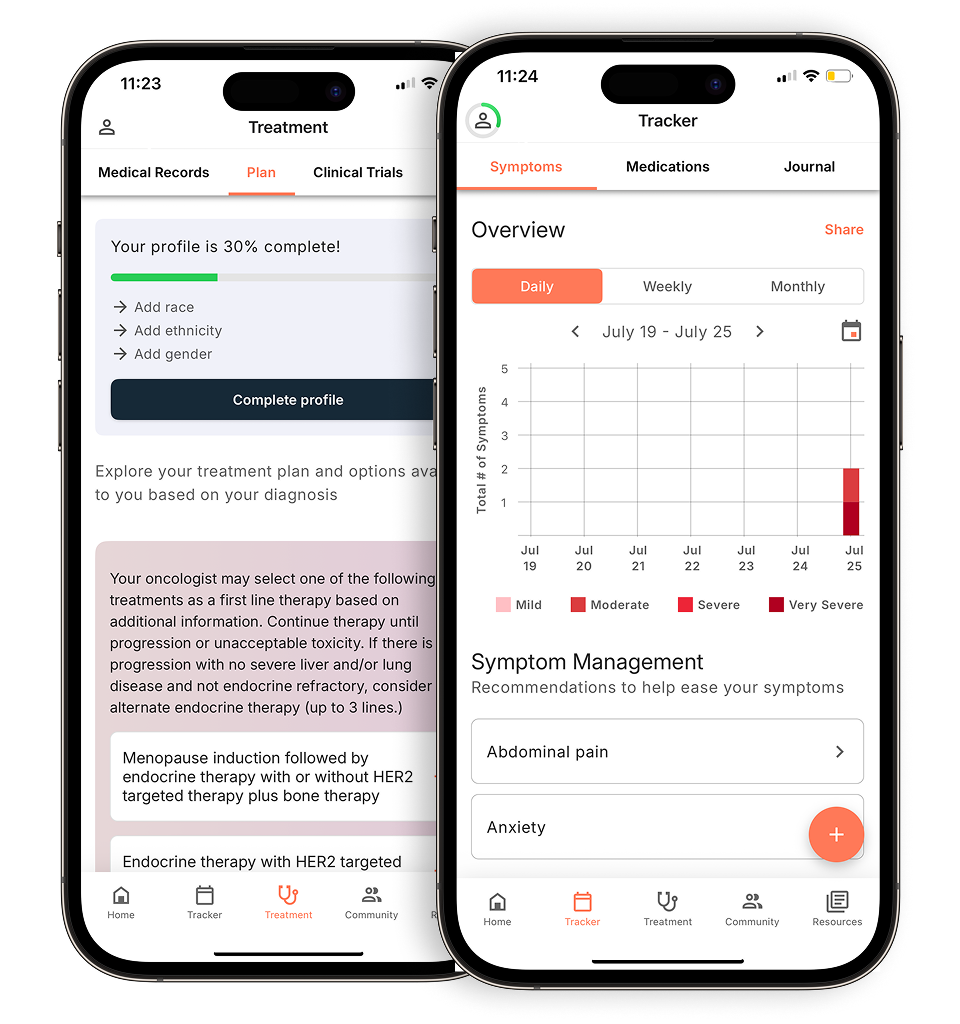
Genetic findings reorder the priorities. If your testing shows del(17p) or a TP53 mutation, your care team may be more likely to recommend novel targeted agents rather than chemoimmunotherapy as an initial approach, regardless of how long your first remission lasted. Ask your care team whether your markers have been retested at relapse. Some research suggests that genetic markers related to venetoclax response may change between initial treatment and relapse, though your care team can help determine whether genetic testing at relapse might be relevant to your situation.
Conventional wisdom vs. reality: understanding sequential failure
There’s a persistent assumption that once a modern targeted therapy stops working, the leukemia has become universally tough, that each failure narrows the field toward zero. The biology doesn’t support that.
CLL cells may develop resistance to venetoclax through various mechanisms that researchers are still studying. These may include shifts toward related survival proteins or changes to how the drug binds to its target, though the exact processes can vary among patients. Solving that problem does nothing to protect them from a drug that attacks B-cell receptor signaling, or from an immune-based therapy that recruits T cells.
Picture a key and a lock. Venetoclax is a key cut for one lock. When the cells change that lock, the key stops turning, but the building has other doors, and they’re still using their original hardware. Some patients with relapsed CLL may benefit from switching to a different drug class, as your cancer cells may respond differently to a new type of treatment. Ask your care team whether changing drug classes might be an option for you.
This is where the newer end of the field matters. Non-covalent BTK inhibitors such as pirtobrutinib and, further along, bispecific antibodies and cellular therapies work through different approaches than earlier treatments, and your care team can discuss whether these options may be appropriate for your situation.
Non-covalent BTK inhibitors
Pirtobrutinib is being studied as a treatment option for some patients with CLL who have progressed after venetoclax, and your care team can discuss whether it may be appropriate for you.
Covalent BTK inhibitors like ibrutinib and acalabrutinib are thought to work by binding at the C481 site on the BTK enzyme, and your doctor can explain how this mechanism may relate to your treatment options. Some research suggests that CLL cells may develop changes at the C481 site that could reduce how well covalent BTK inhibitors work, though this is an area your care team can discuss with you.
Cancer care guidance for every step of your journey
Get treatment options, clinical trials, and support tailored to your diagnosis--all in one place.
Get started
See treatment options, manage symptoms, and stay informed—all in the app
View treatment options and trials personalized to your diagnosis—plus track progress in real time.
Continue in appPirtobrutinib is a reversible BTK inhibitor that works differently than some other BTK inhibitors. Your care team can explain how its mechanism may be relevant to your treatment options. It may be an option to discuss with your care team if your CLL has developed resistance to other BTK inhibitors. For someone who has been through venetoclax and a covalent BTK inhibitor, that bypass mechanism is the difference between a repeat attempt and a genuinely new one. Your care team will weigh prior exposure, tolerability history, and cardiac risk when considering it.
When standard care isn’t enough. Clinical trials and CAR-T
When CLL has progressed through both BCL-2 and BTK inhibition, what’s often called multi-class refractory disease, the conversation shifts toward immunotherapy and cellular therapy.
CD19-directed CAR T-cell therapy is designed to re-engineer T cells to help them recognize and target leukemia cells. Your care team can discuss whether this approach may be suitable for your situation. Bispecific antibodies are a type of therapy being studied for relapsed CLL that work by bringing T cells closer to cancer cells. Unlike some other approaches, they may not require the complex cell manufacturing process that other treatments involve.
Resistance markers and retreatment criteria
A molecular explanation of venetoclax resistance involves a change in the BCL-2 protein itself. Research has identified a Gly101Val mutation in BCL-2 protein that may affect how venetoclax binds to its target. Your care team can discuss whether this mutation might be relevant to your individual situation. The drug’s shape no longer fits cleanly, binding affinity falls, and the protein resumes protecting the leukemia cell from programmed death. The drug is unchanged, the target moved.
This explains the logic of the “venetoclax holiday.” Some research suggests that resistant clones carrying BCL-2 mutations may emerge or grow when patients are exposed to venetoclax. Ask your care team whether this applies to your situation. Remove the pressure, and some research suggests that certain leukemia clones may remain present and potentially become active again if drug pressure is reduced, though this can vary from patient to patient. After a long treatment-free interval, retesting sometimes shows the resistant population has receded, which is the biological argument for retreatment in late relapsers.
Duration matters here. Some venetoclax regimens are designed to be given over a defined treatment period rather than continued indefinitely. Ask your care team about the planned duration of any venetoclax treatment you’re considering. Some researchers think that shorter time under selective pressure may limit opportunities for resistant clones to develop, though your care team can discuss how this applies to your specific situation.
Before intensive third-line therapy, providers assess fitness: organ function, infection history, performance status, prior cytopenias, and caregiver support.
Limitations and considerations in relapse management
Honesty matters more than reassurance. With each successive line of therapy, the field of remaining options does narrow, and remissions can become shorter. Treatment exhaustion is a real clinical reality, not a pessimistic framing.
There are genuine trade-offs to weigh. Continuous BTK inhibition keeps disease suppressed but commits you to indefinite dosing, cumulative cardiovascular and bleeding risk, and ongoing cost. Fixed-duration approaches offer treatment-free intervals and a defined endpoint, but accept planned relapse as part of the design.
The most consequential failure mode is Richter transformation, a complication that can occur in CLL, in which the leukemia may develop into an aggressive large B-cell lymphoma. Richter transformation may require different treatment approaches than standard CLL, and your care team can discuss how it might affect your individual prognosis and treatment plan. Some patients and doctors monitor for signs such as rapid node growth, fevers, or weight loss, as these changes may warrant prompt evaluation in CLL patients. If you notice any of these changes, it’s important to discuss them with your care team.
Regarding the danger of CLL: for some people, CLL may behave as a chronic condition that can be managed over many years. Your care team can discuss what life expectancy may look like based on your individual disease characteristics. Higher-risk genetics, transformation, and infection-related complications are among the serious health concerns that people with relapsed CLL may face, and your care team can help you understand which may apply to your situation.
What You Need to Know
- Relapse after venetoclax functions as a pivot point toward a different drug class, not the end of the road.
- BTK inhibitors, including non-covalent agents like pirtobrutinib, are high-priority options in relapsed CLL.
- The length of your first remission largely determines whether venetoclax retreatment is reasonable or whether switching class is the better move.
- TP53 mutations and del(17p) push novel targeted agents ahead of chemoimmunotherapy.
- Raise clinical trials early, especially once both BCL-2 and BTK pathways have been used, rather than after options run thin.
Disclaimer: The information provided in this article is for informational purposes only and is not intended to be a substitute for professional medical advice, diagnosis, or treatment. Outcomes4Me is not acting as your caregiver, and any suggestions or guidance offered should not replace the advice of your healthcare provider or qualified medical professional. Always seek the guidance of your physician or other qualified health provider with any questions you may have regarding a medical condition.
Personalized support for real care decisions
Understand your diagnosis, explore clinical trials, and track symptoms--all in one place.
Get started
Compare treatments, prepare for appointments, and track side effects—all in the app
Built for your diagnosis, Outcomes4Me gives you the tools to make confident, informed decisions—right when you need them.
Continue in app