Understanding the role of intravesical therapy post-TURBT
Intravesical chemotherapy delivers liquid medication directly into the bladder through a catheter, targeting cancer cells where they live without exposing your entire body to systemic treatment.
This localized approach may be recommended for high-grade non-muscle invasive bladder cancer to reduce the chance of recurrence, with several options now available to target disease limited to the bladder surface. Following a TURBT, microscopic tumor cells can float freely in the bladder. The “immediate instillation” protocol, delivering chemotherapy within 24 hours of surgery, targets those cells before they can reimplant and grow. Because the drug stays localized, you avoid the body-wide side effects that systemic chemotherapy typically causes. Bladder irritation after TURBT is the most common effect you’ll notice, and understanding why it happens is the first step in your TURBT recovery. The sections ahead break down exactly what to expect, day by day.
Immediate post-procedure recovery: the first 48 hours
Once the catheter is removed, it’s common to feel mild burning, urgency, and increased urinary frequency. These sensations are a direct response to both the surgical resection and the medication itself. For example, gemcitabine bladder instillation is usually well tolerated, though some people may experience minor side effects like needing to urinate more often. Blood in urine after TURBT is also expected in the immediate post-procedure window, light pink or slightly red urine is normal, though bright red bleeding or clots should be reported to your care team right away.
Hydration plays a key role during this phase:
- Drink plenty of fluids, typically six to eight glasses of water, to help flush residual medication from the bladder
- Avoid holding urine for long periods, as this prolongs contact with any remaining traces of the drug
- Monitor urine color as a simple indicator of recovery progress
For the safety of everyone in your household, urine handling precautions matter. For the first 6 hours after you urinate, take special precautions to prevent contact with urine, such as sitting on the toilet to prevent splashing, using bleach in the toilet after urination, and washing your hands and genital area well.
As for how long it takes to heal from bladder cancer surgically, most patients see initial TURBT recovery stabilize within one to two weeks. But the early 48-hour period sets the foundation for that healing. Once this acute phase settles, the focus shifts to a structured induction schedule, which we’ll explore next.
Navigating the maintenance phase recovery
Post-TURBT symptoms like burning when urinating after TURBT and mild urgency often persist into this phase as the bladder lining regenerates. Monitoring urinary frequency and output during this period gives your care team valuable signals about how well your bladder is healing. According to research on managing lower urinary tract symptoms during bladder cancer treatment, urinary symptoms are common during and after intravesical therapy and TURBT, and various strategies may help manage them. A sudden worsening between treatment sessions warrants a prompt call to your care team. As the bladder continues to heal, knowing which symptoms are typical, not alarming, becomes important for managing your recovery.
Expected side effects vs. potential complications
Because agents like Mitomycin-C and Gemcitabine stay confined to the bladder, they do not cause systemic side effects such as hair loss, severe nausea, or deep fatigue. The side effects you’re most likely to notice are cystitis-like symptoms: a burning sensation, pelvic discomfort, and frequent urination after bladder chemotherapy. These are the bladder lining’s direct response to the drug, predictable, manageable, and temporary. Mild hematuria after TURBT is also common, as residual surgical trauma and chemical irritation can produce light pink-tinged urine in the days following treatment.
That said, knowing the difference between a typical reaction and a warning sign is critical. Red flag symptoms that require immediate contact with your care team include:
Evidence-based guidance powered by NCCN Guidelines®
Personalized treatment plans shaped by the latest oncology standards—tailored to your diagnosis.
Get started
View your personalized treatment plan in the Outcomes4Me app
Use your diagnosis to unlock personalized NCCN Guidelines®-aligned recommendations.
Continue in app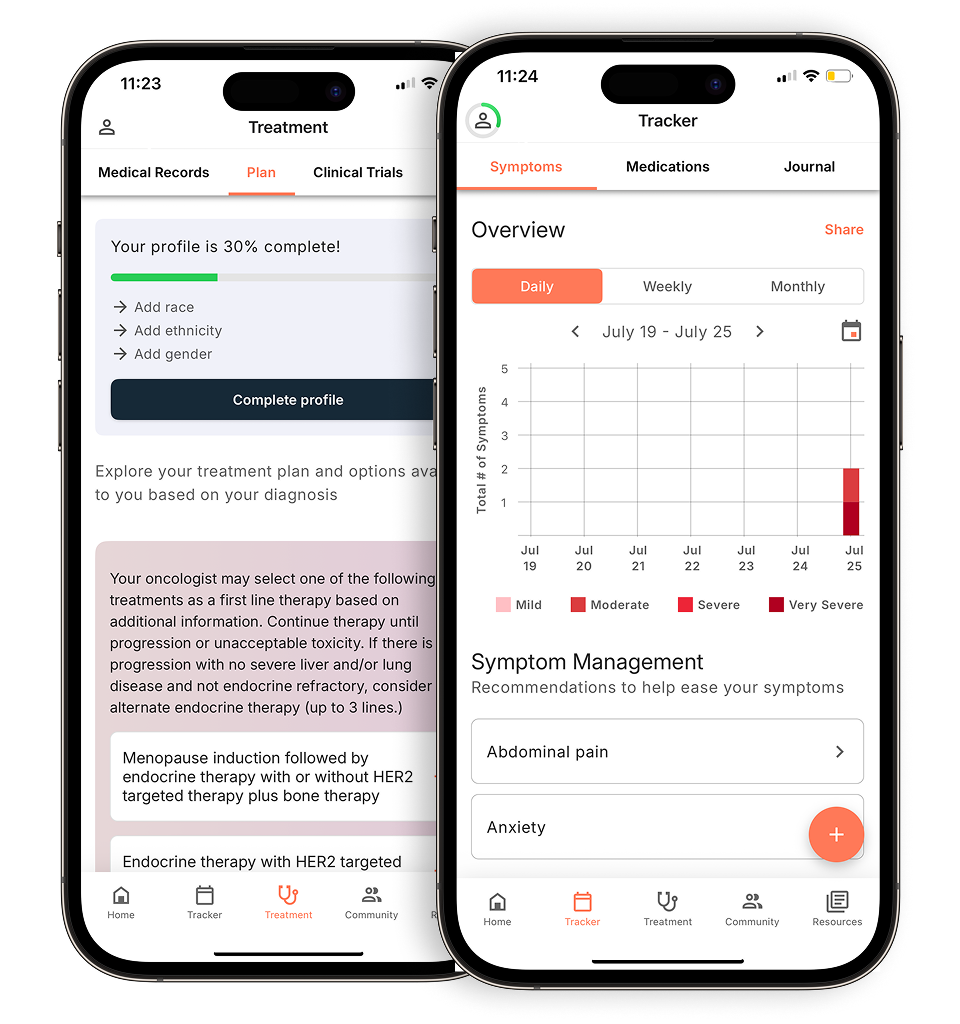
- High fever above 101°F, which could indicate infection or a rare systemic absorption event
- Inability to void, which should be reported to your care team right away rather than managed at home, as it may require prompt medical attention
- Heavy blood clots in urine, distinct from light pink discoloration; large clots signal active bleeding that warrants prompt evaluation
- Severe skin rash, especially with Mitomycin-C, which may cause allergic or sensitivity reactions in some patients, occasionally affecting the palms and genital area. If you notice unusual skin changes in these areas after treatment, let your care team know.
As you move through the induction schedule, distinguishing predictable irritation from these signals becomes part of your recovery literacy. The next section covers practical strategies, from dietary adjustments to comfort measures, that directly reduce that irritation day to day.
Managing urinary irritation and chemical cystitis
Simple measures ease the day-to-day friction. A heating pad placed low on the abdomen can relieve bladder spasm pressure, while some patients find that over-the-counter urinary analgesics like phenazopyridine may help ease the burning sensation between instillations. Ask your care team whether this option is appropriate for you. Dietary adjustments matter just as much. Some people find that spicy foods worsen nausea or other side effects during bladder cancer treatment, so temporarily avoiding them may help. When sudden urgency strikes, slow diaphragmatic breathing and deliberate pelvic floor relaxation can help you regain control instead of rushing to the bathroom. Questions about how long TURBT recovery takes often come down to how consistently these small habits are applied. As your bladder stabilizes, the next layer of awareness involves a different treatment entirely, one with its own distinct complications to recognize.
Recognizing rare immunotherapy complications (BCG-specific)
BCG is immunotherapy, not chemotherapy. Unlike a single immediate instillation after TURBT with agents like Mitomycin-C, BCG actively stimulates the immune system, which means systemic reactions are possible. Most people experience localized irritation that resolves within a couple of days. But when flu-like symptoms, fever, chills, fatigue, and muscle aches persist longer than 48 hours, that warrants serious attention. This pattern may indicate “BCG-osis,” a rare systemic infection requiring prompt evaluation and, in some cases, antitubercular treatment.
If you’re receiving BCG immunotherapy for bladder cancer, knowing what side effects to expect, such as flu-like symptoms, bladder burning, frequent urination, and blood in the urine, can help you recognize when to contact your doctor. Contact your care team immediately if systemic symptoms don’t resolve quickly. The BCAN resource on treatment side effects offers additional guidance on recognizing these signals. That contrast between agents, and how providers choose among them, is exactly what the next section unpacks.
Comparative analysis: chemotherapy vs. immunotherapy agents
Knowing which agent is in your bladder, and why, shapes what to expect after TURBT in terms of both side effects and intravesical chemo recovery time.
The three most common intravesical chemotherapy agents each carry a distinct profile. Mitomycin-C is cytotoxic and destroys cancer cells directly. Its most recognized side effects are bladder irritation and, less commonly, a hypersensitivity skin reaction. Gemcitabine is usually well tolerated with few serious side effects, while Mitomycin C may cause bladder irritation and pain with urination. Intravesical chemotherapy drugs are used when intravesical immunotherapy with BCG doesn’t work. Valrubicin may cause urgency and burning sensations in some patients, and these effects are typically confined to the bladder rather than affecting the whole body. BCG activates the immune system rather than destroying cells chemically.
Providers weigh several factors when selecting an agent: tumor grade, prior treatment history, and how your bladder has responded before. Your personalized care plan reflects those variables, which is why the same diagnosis can lead to different agents for different patients. Talk with your care team about the rationale behind your specific choice.
Technical deep dive. Success rates and long-term outlook
A single immediate intravesical chemotherapy instillation after TURBT can meaningfully reduce early recurrence. Long-term outcomes depend heavily on tumor biology, treatment adherence, and structured follow-up.
When patients ask “what is the cure rate for bladder cancer with chemotherapy?”, the more precise lens is recurrence-free survival. For low-grade, non-muscle-invasive tumors treated promptly, intravesical therapy significantly lowers the short-term recurrence risk. Individual results vary based on the risk of cancer returning, which treatment is used, and how well the cancer responds to treatment. Skipping or delaying instillations may reduce the benefit of the full treatment course. Your care team can explain how consistent scheduling supports your treatment plan. Follow-up cystoscopies are how care teams confirm whether treatment is working and catch early recurrence before it progresses. And if you’ve wondered “can you go home after TURBT,” most patients are discharged the same day, making adherence to outpatient instillation appointments the next critical variable in your personalized care plan. How providers formally assess that response, and what findings trigger a change in strategy, is exactly what the next section addresses.
Cancer care guidance for every step of your journey
Get treatment options, clinical trials, and support tailored to your diagnosis--all in one place.
Get started
See treatment options, manage symptoms, and stay informed—all in the app
View treatment options and trials personalized to your diagnosis—plus track progress in real time.
Continue in appMethodology: how providers evaluate treatment response
Monitoring after intravesical chemotherapy is a structured process that directly shapes how to manage TURBT recovery and whether your personalized care plan needs to change.
Your care team may use tools like urine cytology and blue-light cystoscopy to detect residual or recurring cancer cells with greater precision than standard white-light exams. Your care team may use bladder symptom scores or similar tools to help monitor how your bladder function changes during recovery. During follow-up visits after treatment, your doctors will perform exams, lab tests, and imaging tests to check for signs of cancer returning or new cancer growth. If intravesical chemotherapy or other initial treatments are not effective, your doctor may recommend more definitive treatment options such as surgical removal of the bladder. Understanding that this evaluation process is built into your care is itself reassuring. But those same protocols also surface important limitations in who intravesical therapy can realistically serve, which the next section addresses directly.
Limitations, considerations, and trade-offs
Intravesical chemotherapy is a powerful tool within a defined scope, and understanding where that scope ends is as important as knowing what it can do.
Muscle-invasive bladder cancer (MIBC) is outside the scope of intravesical therapy. Intravesical therapy works by bathing the bladder lining in a chemotherapy agent, which means it only reaches the innermost layers. Once cancer has penetrated the muscle wall, localized instillation cannot follow it. For MIBC, systemic treatment or surgery becomes necessary.
Even within non-muscle-invasive disease, trade-offs exist. Repeated instillations of intravesical therapy can cause bladder irritation and, over time with multiple procedures, scar tissue may form in the bladder. Patients with a small functional bladder volume may find intravesical instillations more challenging to tolerate. If you have concerns about your bladder capacity, discuss them with your care team. Urinary tract infections are a known side effect of intravesical chemotherapy and should be reported to your doctor right away if they develop during treatment.
Knowing when to call your doctor after TURBT matters here: worsening urgency, significant pain, or signs of infection between sessions warrant prompt attention. And for some patients, particularly those facing logistical barriers to frequent clinic visits, watchful waiting or systemic options may be a more realistic path. Those practical and clinical limits are exactly what the next section addresses.
When intravesical therapy isn’t the right fit
Intravesical chemotherapy works within a defined set of conditions, and certain clinical or personal factors can make it the wrong choice, regardless of tumor stage.
Gross hematuria may be a reason to delay or reconsider intravesical therapy, and your care team can help determine whether it is safe to proceed in your situation. If blood in urine is heavy after TURBT, your care team may recommend delaying instillation, as a bladder lining that is irritated or damaged may affect how the drug is absorbed. Ask your doctor whether waiting is appropriate for your situation. Bladder perforation during resection may affect how the chemotherapy drug is absorbed, which is why your care team will monitor you closely if this occurs. Some patients may experience difficulty tolerating intravesical instillations, and various strategies can help manage treatment-related lower urinary tract symptoms to improve treatment adherence. And for long-term maintenance schedules, financial and logistical barriers, repeated clinic visits, copays, and time off work, are practical realities your care team should factor into your personalized care plan. These are worth an honest conversation before treatment begins. Many patients also carry misconceptions about what this therapy actually does to the body, and those beliefs deserve direct attention next.
Common misconceptions about bladder instillations
Bladder cancer treatment after TURBT comes loaded with fears that the evidence simply doesn’t support, and clearing those up directly can make recovery feel far less daunting.
The most persistent myth is that intravesical chemo causes whole-body toxicity. Because the drug stays inside the bladder, systemic absorption is minimal. You won’t lose your hair or experience the nausea associated with IV chemotherapy. A related confusion involves timing. The immediate post-TURBT dose and a maintenance schedule serve distinct purposes and carry different side effect profiles. Localized irritation from intravesical chemotherapy, such as pain or burning when urinating or bladder lining irritation, is temporary and will go away once treatment stops. Permanent incontinence is not typically reported as a side effect of intravesical therapy, though urinary symptoms during and shortly after treatment are common and usually resolve. Temporary urinary frequency is a common side effect after intravesical therapy, particularly with BCG treatment. These distinctions matter for your personalized care plan, and they’re also a preview of how the field is evolving to make treatment even more targeted.
Future implications. The evolving landscape of bladder care
The future of intravesical chemotherapy after TURBT involves better drugs and smarter, more personalized delivery systems that put your quality of life at the center of every decision.
In 2026, drug-delivery innovation is reshaping what’s possible. Chemo-releasing hydrogels are designed to coat the bladder wall and release agents gradually. Genomic profiling is also gaining traction to help care teams match each patient to the agent most likely to work for their specific tumor biology.
Equally significant is the shift toward risk-stratified treatment. Your care team may tailor intravesical chemotherapy schedules based on your individual risk factors, with the goal of balancing treatment intensity with your specific situation. Ask your doctor how risk stratification might apply to your treatment plan.
Simple recovery habits, like drinking water after intravesical chemotherapy to flush residual drug from the bladder, remain part of good post-treatment care. But the broader framework is evolving. Your personalized care plan is increasingly built around your biology, your risk level, and your life, not just your diagnosis. The next section explores the cutting-edge delivery methods making that vision a clinical reality.
Innovative delivery methods on the horizon
Bladder cancer intravesical chemotherapy is entering a new era, where smarter delivery, not just stronger drugs, is driving better outcomes.
Some intravesical chemotherapy formulations, such as mitomycin gel, are designed to activate and release medication slowly within the bladder to maximize contact with bladder tissue. HIVEC is an option that your care team may discuss with you if you have higher-risk non-muscle-invasive bladder cancer, as it represents an approach being explored for these cases. Researchers are exploring nanoparticle carriers that may help deliver chemotherapy more effectively to bladder tissue while potentially reducing surface irritation, though these approaches are still in development. Some patients and care teams are exploring telehealth tools to help track and discuss side effects between in-person visits. Ask your doctor whether remote check-ins might be an option for your care. These advances point toward a more responsive, personalized care plan, and the key takeaways from everything covered here are worth pulling together clearly.
Summary: what you need to know
Intravesical chemotherapy side effects are real but manageable, and knowing what to expect puts you in a stronger position to recover with confidence.
The treatment itself is localized, the drug stays inside the bladder, which is why systemic effects are uncommon. Most patients experience urinary symptoms such as a burning feeling in the bladder and the need to urinate often, as well as blood in the urine. Recovery centers on three practical pillars: staying well-hydrated, following care team safety precautions around urine handling, and managing symptoms as they arise. Severe symptoms, fever, inability to urinate, or signs of infection warrant prompt attention, but many patients experience manageable side effects from intravesical chemotherapy and recover without needing additional treatment, though recovery experiences vary. Your personalized care plan, built around your specific risk profile, remains your clearest guide.
Where to look next
Your care team is your most reliable starting point, but the right resources help you ask sharper questions and understand the answers you get.
For agents like mitomycin C after TURBT, institutional patient information pages offer agent-specific guidance your personalized care plan can build on. National urological association guidelines and peer-reviewed oncology journals carry the clinical evidence behind every protocol.
Disclaimer: The information provided in this article is for informational purposes only and is not intended to be a substitute for professional medical advice, diagnosis, or treatment. Outcomes4Me is not acting as your caregiver, and any suggestions or guidance offered should not replace the advice of your healthcare provider or qualified medical professional. Always seek the guidance of your physician or other qualified health provider with any questions you may have regarding a medical condition.
Personalized support for real care decisions
Understand your diagnosis, explore clinical trials, and track symptoms--all in one place.
Get started
Compare treatments, prepare for appointments, and track side effects—all in the app
Built for your diagnosis, Outcomes4Me gives you the tools to make confident, informed decisions—right when you need them.
Continue in app