Lenalidomide is an immunomodulatory drug that enhances the function of the immune system by activating T cells and natural killer cells to recognize and destroy myeloma cells. The goal isn’t eradication. It’s about measuring how long the treatment works before the cancer starts to grow again, a key way doctors understand how much benefit you’re getting from the medication.
That framing matters because it shapes the central question most patients ask. Is this a fixed course with an end date, or a treatment you stay on indefinitely until the disease moves?
How long do people stay on lenalidomide?
Many hematologists continue lenalidomide maintenance therapy to help extend remission length, though the ideal duration of treatment remains uncertain and should be individualized based on a patient’s response and side effects. Some international protocols use a fixed two-year course instead. Risk stratification drives the choice between fixed-course and continuous therapy, with standard-risk disease allowing more flexibility, while high-risk cytogenetics usually push toward continuous therapy, often with an added agent.
Clinical benchmarks
Randomized trials have examined whether lenalidomide maintenance after transplant extends disease control, with studies demonstrating improvement in progression-free survival but mixed results on overall survival benefit. Longer exposure to lenalidomide correlates with longer disease control, though the overall survival picture is more nuanced and varies by risk group. Multiple myeloma lenalidomide maintenance duration can run for many years in patients who tolerate it well.
When a break is necessary. Managing toxicity and side effects
The “warning” signals that prompt a pause are usually measurable. Neutrophil or platelet counts dropping below the threshold your hematologist set, a rash that’s spreading rather than settling, diarrhea that’s disrupting your ability to eat or work, or a new blood clot. These typically trigger either a short hold or a step down in dose rather than permanent discontinuation.
Then there’s treatment fatigue, the slow erosion of willingness to take a pill every day, forever. It’s a legitimate clinical concern, because maintenance only works if you actually take it. A planned break that keeps you on therapy for five more years beats perfect adherence that collapses at month eighteen.
Evidence-based guidance powered by NCCN Guidelines®
Personalized treatment plans shaped by the latest oncology standards—tailored to your diagnosis.
Get started
View your personalized treatment plan in the Outcomes4Me app
Use your diagnosis to unlock personalized NCCN Guidelines®-aligned recommendations.
Continue in app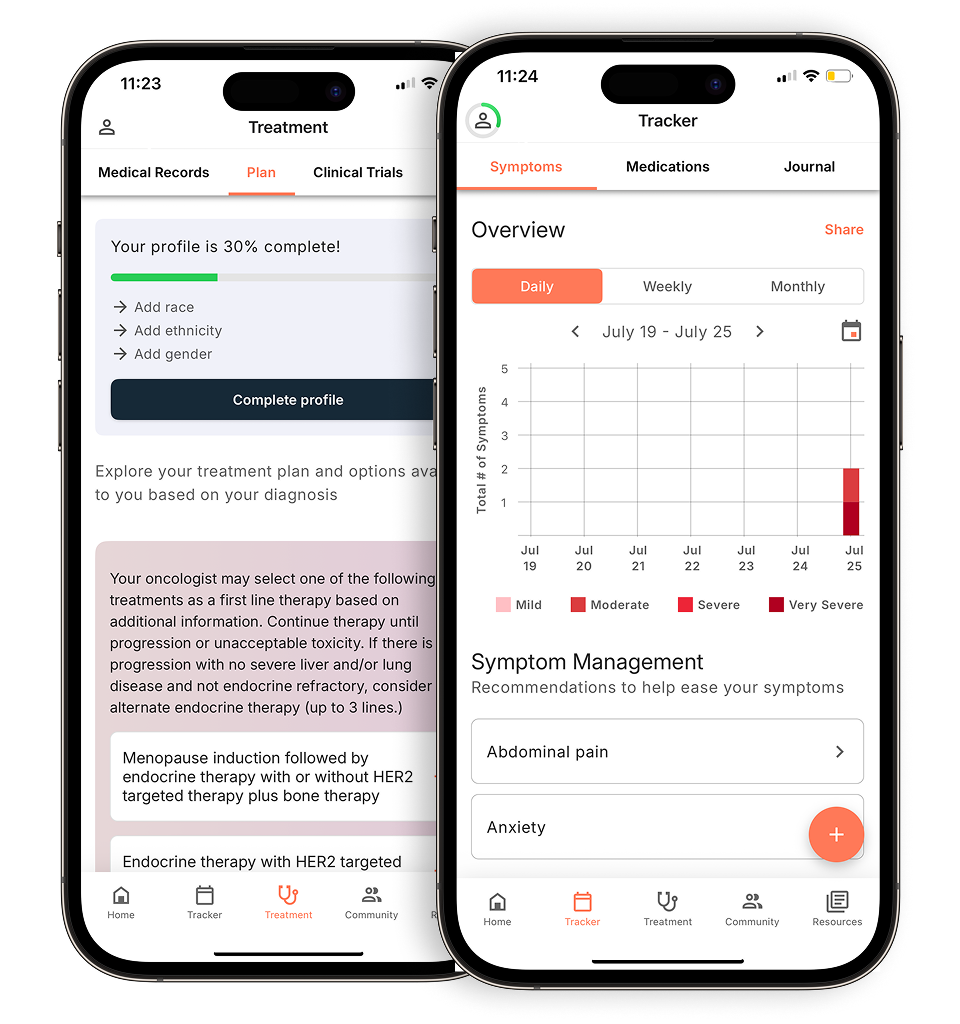
Common physical thresholds for pausing
Neutropenia, or low white blood cell counts, is among the reasons why some patients may need to take a break from lenalidomide maintenance therapy. Your care team can discuss whether this applies to your situation. Chronic diarrhea and persistent rash are the next most common reasons for pausing lenalidomide maintenance after neutropenia. Fatigue is harder to parse. Distinguishing lingering post-transplant recovery from drug-induced exhaustion usually takes a trial pause to sort out.
Secondary cancers and long-term risks
Among lenalidomide maintenance long term side effects, the most discussed is a small increase in secondary primary malignancies, including other blood cancers and skin cancers. Providers monitor for this with routine blood counts, dermatologic checks, and age-appropriate screening. The risk-benefit conversation is worth having explicitly with your care team, because for most patients, the disease-control advantage has outweighed this risk.
Life during maintenance. Staying athletic and active
One of the most common questions in myeloma patient forums is whether you can stay athletic once maintenance starts. The short answer is often yes, with adjustments. Fatigue, cramping, and reduced aerobic capacity are real, but they respond to pacing. Many patients find their training load settles about one notch below pre-diagnosis baseline and stays there productively for years.
Timing helps. Taking your dose in the evening lets peak side effects land while you sleep rather than mid-workout. Scheduling harder sessions during your lenalidomide maintenance 7-day break, if your regimen includes one, is another common strategy.
Adjusting for performance
Cognitive fog tends to be worst in the first hours after dosing, so front-load demanding mental work earlier in the day. Hydration matters more than most people expect, particularly with cramping. For high-impact athletics after transplant, work with physical therapy on a graded return rather than resuming at your old volume.
Cancer care guidance for every step of your journey
Get treatment options, clinical trials, and support tailored to your diagnosis--all in one place.
Get started
See treatment options, manage symptoms, and stay informed—all in the app
View treatment options and trials personalized to your diagnosis—plus track progress in real time.
Continue in appThe psychology of maintenance
Long-term maintenance carries a particular kind of anxiety. The sense that every lab draw could bring bad news. Many patients describe a turning point where the daily pill becomes background noise instead of a daily reminder of illness. That shift usually takes months, not weeks. Peer support groups, especially ones with members years into maintenance, help normalize the emotional impact of a decade-long treatment horizon.
What happens when you quit?
When you stop lenalidomide, nothing dramatic happens immediately. There’s no withdrawal syndrome. Side effects like fatigue, cramping, and low counts typically improve over several weeks. What changes is the level of surveillance.
It’s worth distinguishing two scenarios. A planned holiday is a defined pause, weeks to months, with a clear plan to restart. Permanent cessation means you and your hematologist have decided the risk-benefit calculation has shifted.
Either way, monitoring intensifies. M-protein levels, serum free light chain assays, and complete blood counts are tracked more closely, often monthly at first, to catch any biochemical rise early. The question of when can you stop lenalidomide maintenance usually comes down to how deep and how durable the remission is, and for a subset of patients in sustained deep response, stopping becomes a genuinely reasonable option.
Criteria for a successful exit
Sustained MRD negativity is the strongest argument for stopping, typically confirmed on more than one occasion, separated by time. The two-year and five-year marks often prompt formal re-evaluation of lenalidomide maintenance. And patient-driven stopping is valid too. When cumulative toxicity genuinely degrades daily life, that belongs in the calculation alongside the statistics.
Relapse monitoring post-maintenance
After stopping lenalidomide, your doctor will monitor your MRD (minimal residual disease) levels at follow-up visits to watch for any signs of disease recurrence. Bone marrow biopsies are usually reserved for when blood markers shift. Warning signs include a rising M-protein, climbing light chains, new bone pain, or anemia. If disease returns, salvage regimens, often incorporating immunotherapy, are the standard next step.
Common questions about long-term lenalidomide
How long do you take lenalidomide maintenance? For most US patients, until progression or intolerance. Some protocols stop at two years. Your risk category is the deciding factor.
How is it administered? Lenalidomide is administered orally, in 28-day cycles. Lenalidomide maintenance treatment can follow different schedules, which may include daily dosing on days 1 to 21 followed by a seven-day rest period, or continuous daily dosing. Your care team will determine which schedule is right for your situation. Lenalidomide maintenance doses can be adjusted based on side effects, with reductions possible down to as low as 5 mg, and dosing schedules that can vary to help improve tolerability.
What about a missed dose? Generally, skip it and resume the next day rather than doubling up, but confirm with your care team.
How long can people live with multiple myeloma? Survival has improved substantially with modern sequencing of therapies, and many patients now live many years in sustained remission.
Navigating your maintenance process
Here’s what matters most as you think through how long you can stay on lenalidomide maintenance:
- Maintenance is tailored, not standardized. Your cytogenetics, response depth, kidney function, and personal goals all shape the plan.
- Duration is usually “until progression,” but the two-year mark is a common point for formal reassessment with your hematologist.
- Dose reductions and treatment holidays are standard tools, not evidence that therapy has failed. A lower dose you can sustain beats a higher dose you can’t.
- MRD status and risk stratification drive the stopping conversation. Sustained MRD negativity in standard-risk disease makes cessation a reasonable discussion; high-risk disease typically argues for continuing.
- Quality of life belongs in the equation. Raise lifestyle goals, side effects, and financial strain directly, they’re clinical data, not complaints.
The question of lenalidomide maintenance after ASCT duration doesn’t have one answer. It has your answer, built with your care team over time.
Disclaimer: The information provided in this article is for informational purposes only and is not intended to be a substitute for professional medical advice, diagnosis, or treatment. Outcomes4Me is not acting as your caregiver, and any suggestions or guidance offered should not replace the advice of your healthcare provider or qualified medical professional. Always seek the guidance of your physician or other qualified health provider with any questions you may have regarding a medical condition.
Personalized support for real care decisions
Understand your diagnosis, explore clinical trials, and track symptoms--all in one place.
Get started
Compare treatments, prepare for appointments, and track side effects—all in the app
Built for your diagnosis, Outcomes4Me gives you the tools to make confident, informed decisions—right when you need them.
Continue in app