
Radical cystectomy removes the bladder, and with it the body’s storage tank for urine. The kidneys keep working, so the surgeon has to build a new route for urine to leave the body. That rebuild is called urinary diversion, and it happens during the same operation.
Two approaches dominate the conversation. An orthotopic neobladder uses a segment of your small intestine to construct an internal reservoir, connected to your urethra so you can void through the usual channel. An ileal conduit, commonly called a urostomy, routes urine through a short intestinal segment to a stoma on the abdomen, where it drains continuously into a pouch.
The distinction is continence. A neobladder holds urine; a conduit urinary diversion does not. Both support a full, active life.
Which urinary diversion is best for your lifestyle?
Both options accommodate swimming, weight training, and long flights. The difference is where the management happens. A neobladder moves the work inside your body and onto your schedule. A urostomy moves it outside, onto a pouching system you change on a set interval. Modern low-profile appliances sit flat enough to disappear under fitted clothing.
Who is a good candidate for a neobladder?
Your healthcare team will evaluate several factors to determine if you’re a candidate for neobladder reconstruction, including:
- Adequate kidney function, since the intestinal reservoir reabsorbs some urine content
- A healthy, cancer-free urethra with an intact sphincter mechanism
- Tumor location away from the bladder neck and urethral margin
- Sufficient bowel length without inflammatory bowel disease or prior radiation damage
- Manual dexterity and vision adequate for catheterization if needed
After surgery, you’ll need to learn to follow a voiding schedule as part of your recovery and adjustment to your new bladder.
Neobladder vs. ileal conduit
The neobladder vs ileal conduit comparison starts in the operating room. Neobladder surgery often takes about 4 to 7 hours because the procedure involves using a piece of your small intestine to create a new pouch and connecting it to your ureters and urethra. A conduit is the shorter, more straightforward reconstruction.
The learning curves diverge sharply. Neobladder patients retrain the brain to recognize fullness without the nerve signals a native bladder provides, learning pressure and timing instead of urge. Urostomy patients learn a mechanical skill: measuring the stoma, cutting the wafer, sealing the barrier.
Evidence-based guidance powered by NCCN Guidelines®
Personalized treatment plans shaped by the latest oncology standards—tailored to your diagnosis.
Get started
View your personalized treatment plan in the Outcomes4Me app
Use your diagnosis to unlock personalized NCCN Guidelines®-aligned recommendations.
Continue in app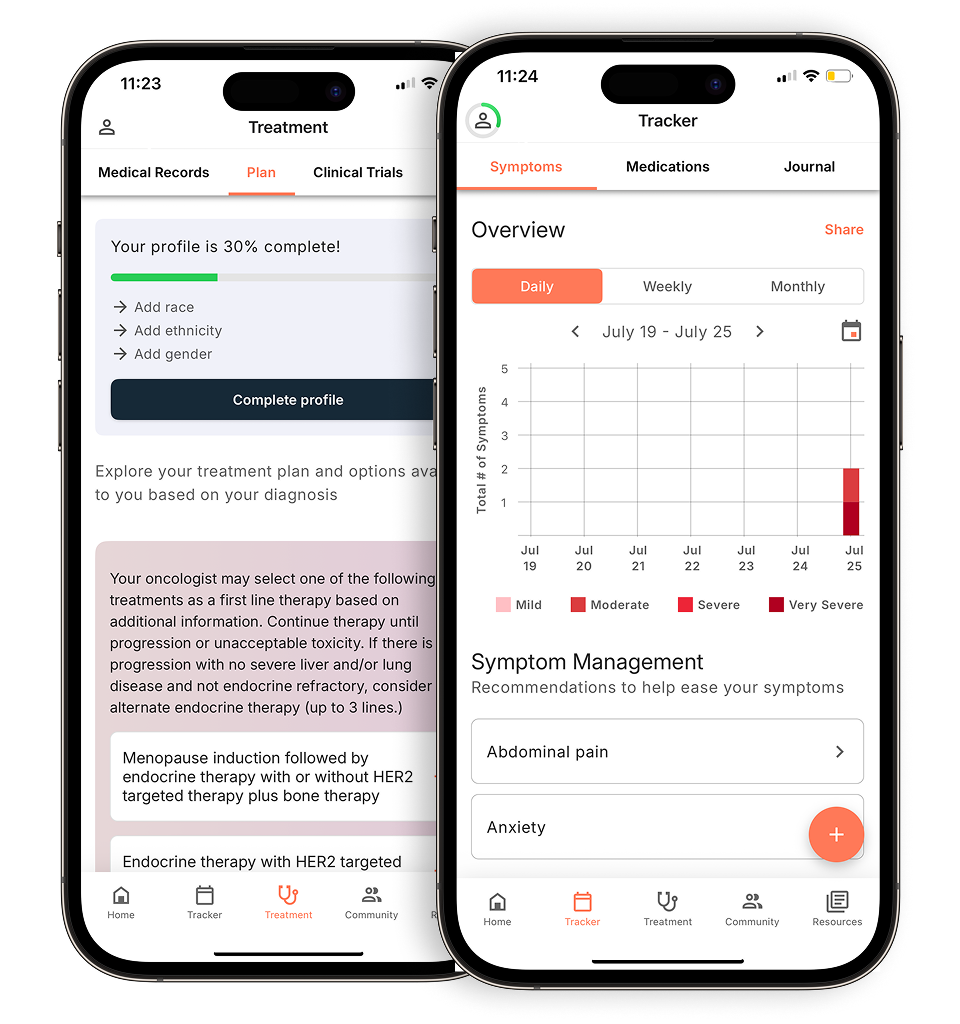
The most significant differences occur at night. With a neobladder, the reservoir fills without waking you, so you must set alarms and get up to void. With a urostomy, you connect a larger night drainage bag and sleep through.
Oncologic outcomes and long-term recurrence rates don’t hinge on which diversion you choose.
Neobladder: training a new system
A timed voiding schedule is typical for the first half-year after neobladder construction, voiding by the clock and lengthening intervals as the reservoir stretches and capacity grows. Some neobladder patients never fully empty by relaxing the pelvic floor and abdominal pressure alone, and neobladder self catheterization becomes part of the routine, either occasionally or daily. After neobladder construction, pelvic floor exercises are part of your recovery plan to help strengthen the muscles that support bladder control, which typically improves over the first 6 to 12 months.
Urostomy: reliability and simplicity
After cystectomy, caring for an ileal conduit requires learning and practice, but involves routine maintenance tasks such as skin care, pouch changes, and leak prevention. Empty the pouch when it’s a third full and change the wafer on a predictable schedule. A certified ostomy nurse can make the difference between frequent leaks and months of uneventful wear. Modern appliances use charcoal filters and skin-level barriers, so odor and leakage are managed problems, not daily realities.
The insider perspective
Patients worry about leaking. The underrecognized problem is the opposite. Some neobladder patients may experience difficulty emptying the pouch even when it stores urine well, a situation sometimes referred to as hyper-continence. If you’re considering a neobladder, ask your care team about how often this occurs and what management options might be available.
Residual urine and mucus buildup in a neobladder can block the catheters, requiring regular irrigation to prevent complications such as infection. The intestinal segment in a neobladder keeps producing mucus, and neobladder patients learn to irrigate and increase fluids to prevent plugging.
Neobladders made from bowel segments can lead to metabolic changes including acidosis, which may require treatment with bicarbonate supplementation. Longer bowel segments in a neobladder can require long-term monitoring of vitamin B12.
Cancer care guidance for every step of your journey
Get treatment options, clinical trials, and support tailored to your diagnosis--all in one place.
Get started
See treatment options, manage symptoms, and stay informed—all in the app
View treatment options and trials personalized to your diagnosis—plus track progress in real time.
Continue in appDifferent urinary diversion techniques have varying complication profiles, with ileal conduits generally considered the least complication-prone option compared to continent diversions.
Long-term maintenance and troubleshooting
Neobladder complications cluster around neobladder incontinence at night, incomplete emptying, reservoir stone formation, and ureteral narrowing. Urostomy complications include parastomal hernia, stomal retraction or stenosis, and peristomal skin breakdown from barrier leaks.
Infections present atypically in both. Cloudiness or foul-smelling urine alone may not indicate infection in either diversion type, so your care team can help you understand what symptoms warrant further evaluation. Contact your healthcare provider if you notice signs of a urinary tract infection, such as fever, chills, nausea or vomiting, back or abdominal pain, or cloudy urine with a strong smell.
Questions to ask your urologic oncologist
Ask how many of each diversion the surgeon performs annually, and what their own continence and catheterization rates look like. Ask what “near-normal function” means on their timeline, as neobladder recovery time differs meaningfully from urostomy recovery after cystectomy. Request introduction to a peer mentor who had the exact procedure you’re considering, and ask whether your plan could change intraoperatively.
When a neobladder isn’t right
Neobladder reconstruction surgery typically takes between two and six hours to complete. Neobladder reconstruction involves a more complex surgical procedure than some other urinary diversion options, which may affect factors such as operative time and recovery. A higher early complication burden comes with the internal reservoir of a neobladder. Some patients find the prospect of lifelong catheterization harder to accept than a visible stoma, as the psychological weight lands differently depending on the person.
Clinical factors close the door outright for some. Compromised kidney function makes the metabolic load of a large intestinal reservoir unsafe. Some patients and care teams consider Crohn’s disease when weighing the choice between a conduit and a neobladder, as bowel disease may present additional considerations. Talk with your surgeon about how your specific medical history might affect which option could work best for you. Prior pelvic radiation is a clinical factor that points toward a conduit rather than a neobladder. Cancer at the urethral margin is a factor your surgical team may consider when discussing whether a conduit or neobladder might be more appropriate for your situation. Ask your care team how this finding applies to your specific case.
The disadvantages of urostomy, the appliance and the body image adjustment, are more visible but also more predictable.
There is no universal best urinary diversion after cystectomy. “Better” depends on which trade-offs you can live with.
Navigating your diversion choice
Both routes support long survival and a high quality of life. Both neobladder and urostomy patients reported favorable long-term quality of life outcomes, with satisfaction appearing to depend more on individual patient characteristics and careful surgical selection than on the type of diversion chosen.
The practical difference is that neobladders require ongoing work, scheduled voiding, pelvic floor therapy, possible catheterization, and mucus management. Urostomies demand an appliance routine that becomes automatic. Neither is passive.
Match the choice to your manual dexterity, your vision, your tolerance for troubleshooting, and the support you have at home. A patient living alone with arthritis faces a different calculus than one with a partner and steady hands.
Cancer clearance comes first. Functional restoration follows, and only within the margins the tumor allows.
Frequently Asked Questions
How long can you live without a bladder? Normal lifespan. The diversion manages urine flow; survival is determined by the cancer.
Does diversion type change recurrence risk? No. Oncologic outcomes depend on stage, margins, and lymph node status.
Can I switch from a urostomy to a neobladder later? Some patients and surgeons have explored the possibility of converting from a urostomy to a neobladder, though this is uncommon. If you’re interested in learning whether conversion might be an option for you, ask your surgical team whether an intact, cancer-free urethra would be necessary.
Disclaimer: The information provided in this article is for informational purposes only and is not intended to be a substitute for professional medical advice, diagnosis, or treatment. Outcomes4Me is not acting as your caregiver, and any suggestions or guidance offered should not replace the advice of your healthcare provider or qualified medical professional. Always seek the guidance of your physician or other qualified health provider with any questions you may have regarding a medical condition.
Personalized support for real care decisions
Understand your diagnosis, explore clinical trials, and track symptoms--all in one place.
Get started
Compare treatments, prepare for appointments, and track side effects—all in the app
Built for your diagnosis, Outcomes4Me gives you the tools to make confident, informed decisions—right when you need them.
Continue in app