
The role of surgical staging in endometrial cancer treatment
Endometrial cancer staging surgery is the primary way your care team determines how far the cancer has spread, and it shapes every treatment decision that follows.
Staging is determined by testing tissue removed during endometrial cancer surgery to determine how far the cancer has spread and to confirm the stage of the disease. Your personalized care plan depends on what those results actually show, not just what imaging suggested beforehand. Following pre-op instructions carefully ensures your care team has the clearest possible picture before surgery.
Comprehensive surgical staging typically involves the uterus, cervix, adnexa (the ovaries and fallopian tubes), and nearby lymph nodes, all assessed together to map any spread. How quickly endometrial cancer progresses varies by tumor grade and type, which is precisely why staging exists, to replace uncertainty with evidence.
Key procedures. What happens during staging surgery
Surgical staging for endometrial cancer follows a defined sequence of steps, each one designed to give your care team the clearest possible evidence of how far the disease has spread.
The standard starting point is a total hysterectomy with bilateral salpingo-oophorectomy (BSO), removal of the uterus, cervix, both ovaries, and both fallopian tubes. From there, your surgeon will typically collect peritoneal washings: pelvic washings may be collected during endometrial cancer surgery to help determine how far the cancer has spread and guide staging. Your care team will also assess pelvic and para-aortic lymph nodes, removing samples to test for metastasis, a critical factor in determining post-op care for endometrial cancer and any additional treatment you may need. These steps work together as a single, coordinated diagnostic process. Before those findings are confirmed, though, your care team relies on imaging to plan the approach, which is where the next section picks up.
Diagnostic precision. The role of imaging and technology
Imaging gives your care team a critical roadmap before surgery, but it informs the plan rather than replaces the procedure.
MRI is particularly effective at assessing how deeply a tumor has invaded the uterine wall, while CT scans help identify enlarged lymph nodes or spread to distant organs. But imaging has limits. Surgery remains the gold standard for definitive staging because only tissue analysis can confirm what scans suggest. For eligible patients, sentinel lymph node (SLN) mapping, a technique that uses dye to identify the first lymph nodes cancer would reach, can reduce the number of nodes removed, lowering surgical risk without sacrificing diagnostic accuracy. This also has downstream implications for endometrial cancer surgery pain management, since less extensive dissection typically means a smoother recovery. Imaging serves as the preliminary analysis, while the operating room provides definitive answers.
Preparing for surgery: a chronological timeline
Getting from diagnosis to the operating room follows a structured sequence, and knowing what happens at each step helps you feel prepared rather than reactive.
Before your surgery, your healthcare provider will review which medicines you should and should not take, and you may need to complete special preparations such as skin cleansing or bowel prep. Your care team will review any blood thinners, supplements, or hormonal medications that need to be paused, and you’ll likely complete bloodwork, an EKG, and a chest X-ray.
The night before, NPO (nothing by mouth) guidelines apply, usually no food or liquids after midnight. In practice, most patients move from diagnosis to surgery within two to six weeks, depending on staging workup complexity.
Key questions to raise during your pre-op consultation include:
- How long is endometrial cancer surgery expected to take in your specific case?
- What does normal endometrial cancer surgery bleeding after operation look like versus a warning sign?
- Which medications should be restarted, and when?
The anesthesiology consult is crucial, as it covers your full medication history, airway assessment, and pain management preferences.
Evidence-based guidance powered by NCCN Guidelines®
Personalized treatment plans shaped by the latest oncology standards—tailored to your diagnosis.
Get started
View your personalized treatment plan in the Outcomes4Me app
Use your diagnosis to unlock personalized NCCN Guidelines®-aligned recommendations.
Continue in app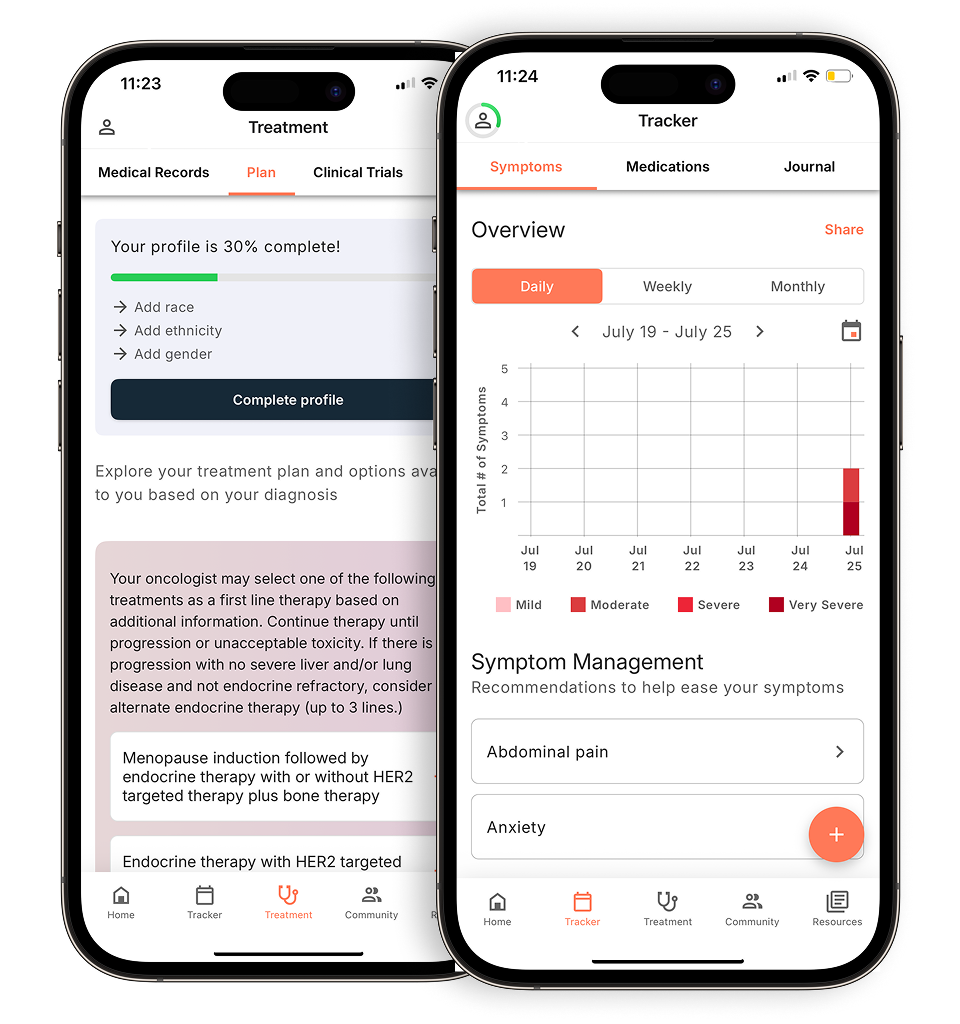
Medical clearances and physical readiness
Before endometrial cancer staging surgery can proceed, your care team needs to confirm that your body is ready to handle both the procedure and recovery.
If you have underlying heart or lung conditions, your care team may recommend cardiac or pulmonary clearance before surgery to help ensure you’re as prepared as possible for the procedure. Your anesthesiologist will review these findings closely, since anesthesia decisions directly affect the risk of endometrial cancer surgery complications.
Pre-habilitation, deliberate physical conditioning before surgery, is increasingly recommended by care teams. Simple strategies like short daily walks, light resistance exercises, and nutritional adjustments can meaningfully improve how your body tolerates and recovers from the procedure. Entering surgery in better physical condition can lead to a steadier recovery. With clearances confirmed and your body prepared, the focus naturally shifts to what actually happens on the day of surgery itself.
Managing expectations. The day of the procedure
On the day of endometrial cancer staging, the structured process can be reassuring once you know what to expect.
Check-in and the holding area move quickly. You’ll confirm your identity, change into a hospital gown, and have an IV line placed. Your care team will review your medication history one final time, and the anesthesiologist will introduce themselves before you’re wheeled to the operating room.
Surgical approach matters for endometrial cancer hysterectomy recovery time. Robotic-assisted and laparoscopic techniques use small incisions and typically mean shorter hospital stays and faster healing. Open laparotomy, a single larger incision, is used when anatomy or disease extent requires it, and recovery is comparatively longer. Your care team will have determined the right approach well before this day.
Procedure duration typically runs two to four hours, followed by one to three hours in the post-anesthesia care unit (PACU), where your vitals are monitored as anesthesia wears off. That PACU time sets the tone for everything that follows in recovery.
Navigating the recovery timeline. First 48 hours to 6 weeks
Recovery from an endometrial cancer staging procedure follows a predictable arc, and knowing the milestones helps you move through each phase with confidence rather than worry.
Most patients undergoing minimally invasive surgery are discharged home the same day, while those who undergo open surgery typically stay in the hospital for several days. That early window focuses on three core goals: managing pain, getting you moving, and confirming your bladder is functioning normally. Early ambulation, typically within 24 hours, reduces the risk of blood clots and supports the digestive system as it reawakens after anesthesia.
The six-week period that follows endometrial cancer staging after surgery is structured around graduated recovery. For the first two weeks, lifting anything heavier than 10 pounds is off-limits, and driving is not permitted while you’re still on prescription pain medication. Weeks three through six bring a gradual return to light activity, though strenuous exercise and penetrative intercourse remain restricted until your care team confirms healing is complete at your follow-up appointment.
Knowing when to call your care team is equally important. Contact your doctor immediately if you experience worsening pain, fever, heavy vaginal bleeding, or persistent vomiting, as these may be signs of a complication, infection, or bowel problem. Prompt reporting of any of these protects your recovery. The short-term milestones that follow, managing incision care, fatigue, and the transition off prescription pain medication, deserve their own focused attention.
Short-term recovery milestones
The weeks immediately after endometrial cancer staging surgery involve predictable physical milestones, and knowing what to manage at each stage puts you in a much stronger position.
Incision care is your first daily responsibility. Keep the site clean and dry, and watch for warmth, unusual redness, or discharge that signals infection. Fatigue and bloating are normal side effects, particularly in the first two weeks. Emotional shifts, from relief to grief to anxiety, are equally common and don’t require a diagnosis to deserve attention.
Cancer care guidance for every step of your journey
Get treatment options, clinical trials, and support tailored to your diagnosis--all in one place.
Get started
See treatment options, manage symptoms, and stay informed—all in the app
View treatment options and trials personalized to your diagnosis—plus track progress in real time.
Continue in appPain management typically transitions from hospital-prescribed medication to over-the-counter options like acetaminophen or ibuprofen within the first week, guided by your care team. If endometrial cancer lymph node removal was part of your staging procedure, standard under FIGO staging endometrial cancer protocols, incision soreness may be more diffuse. Your care team will confirm when that transition is appropriate. Some patients navigate this phase smoothly; others need a longer overlap period, and both outcomes are within the expected range. These short-term adjustments set the foundation for the longer physical changes your body will work through next.
Long-term physical adjustments
Beyond the first six weeks, the physical changes that follow endometrial cancer staging surgery require just as much attention as the early recovery milestones. Three areas tend to shape the months ahead most significantly.
Surgical menopause is often the most immediate long-term adjustment. When the ovaries are removed, standard in most staging procedures, estrogen levels drop abruptly, triggering hot flashes, sleep disruption, and vaginal dryness more sharply than natural menopause. Your care team can discuss options to manage these symptoms based on your diagnosis and stage.
Pelvic floor health and intimacy recover gradually, and the timeline varies. Pelvic floor physical therapy may help address bladder control problems and sexual dysfunction that can occur after endometrial cancer surgery, and your care team can advise you on whether this therapy is right for your recovery.
Lymphedema monitoring matters especially if sentinel lymph node mapping for endometrial cancer identified nodes requiring removal. Leg swelling, heaviness, or tightness that develops weeks or months post-surgery should be reported promptly, as early intervention such as compression and specialized physical therapy makes management significantly more effective. Once you understand these longer-term physical shifts, the next natural focus becomes interpreting what your surgical findings actually mean, which is exactly what your pathology report will tell you.
Understanding your results. From surgery to treatment plan
Your pathology report will be reviewed with you at your post-op appointment, which takes place 7 to 14 days after your surgery, to help guide your ongoing treatment plan.
Whether your procedure involved robotic surgery for endometrial cancer or a conventional laparoscopic approach, the tissue samples collected during staging tell the same essential story. The FIGO system then assigns a stage from 1 to 4 based on those findings. How deeply the tumor invaded the uterine wall, whether it reached the cervix or surrounding structures, and whether lymph nodes tested positive. Stage 1 generally means cancer confined to the uterus, Stage 4 indicates spread beyond the pelvis.
Those results directly shape what comes next. Early-stage findings may require no further treatment, while higher-stage results typically lead your care team to recommend adjuvant therapies, radiation, chemotherapy, or both, to address microscopic disease that surgery alone can’t reach. The specific combination depends on your FIGO stage, tumor grade, and individual health profile as part of your personalized care plan.
A question that comes up often. Will a hysterectomy cure endometrial cancer? For many Stage 1 patients, surgery does result in long-term remission, but the more precise term is remission rather than cure, since ongoing surveillance remains essential regardless of stage. Even thorough endometrial cancer surgery preparation and a clean surgical outcome don’t eliminate the need for follow-up monitoring. The specifics behind that distinction, tumor grade, margins, and lymphovascular involvement, are exactly what the pathology report’s detailed markers will clarify next.
Interpreting pathology markers
Grade, stage, and lymphovascular space invasion (LVSI) are three markers in your pathology report that shape your personalized care plan more than almost any other post-surgical finding.
Grade vs. stage aren’t interchangeable. Stage describes how far the cancer has spread, grade describes how abnormal the cancer cells look under a microscope and how aggressively they’re likely to behave. A Stage 1 tumor can still carry a high grade, which changes adjuvant treatment decisions significantly. Clear margins, meaning no cancer cells detected at the surgical edges, are one factor your care team may consider when assessing the extent of your cancer. LVSI indicates whether cancer cells were found inside blood or lymphatic vessels near the tumor, and its presence can prompt additional radiation or systemic therapy even when stage and grade appear favorable. Understanding how these three markers interact helps clarify what you’re recovering toward, because knowing your diagnosis matters as much as managing the physical process itself. How these markers translate into actual treatment paths, and why two patients at the same stage can follow very different protocols, is what the next section addresses directly.
When surgery isn’t the first step
For some patients, the path to the operating room runs through chemotherapy, hormonal therapy, or a carefully considered decision to avoid surgery altogether.
For some advanced-stage presentations, your care team may recommend chemotherapy to help shrink the tumor, which may then make it possible to remove it with surgery. For patients who want to preserve fertility, hormonal therapy is an established alternative when the disease is caught early and meets specific criteria. For elderly patients with endometrial cancer, minimally invasive surgical approaches such as laparoscopy and robotic surgery may offer better outcomes than open surgery, including lower complication rates and improved survival. Your doctor can help determine whether you are a good candidate for surgery based on your overall health and ability to tolerate the procedure.
Pelvic washings may be collected during endometrial cancer surgery to help determine how far the cancer has spread and guide staging. Endometrial cancer surgery and recovery timelines look very different depending on which of these paths applies to you, and why your care team landed there is exactly the kind of question worth raising with a specialist.
The importance of a second opinion
Getting a second opinion on your endometrial cancer staging is an informed decision you can make before committing to a surgical plan. A gynecologic oncologist may have additional training in lymph node removal procedures used during endometrial cancer staging. You may want to ask your care team whether they perform the full range of lymph node assessment techniques, as practices can vary. If your surgical plan differs from standard guidelines, ask your care team to walk you through the rationale, and consider requesting a pathology review of surgical slides at a major cancer center before finalizing next steps. Endometrial cancer surgery recovery time varies enough between approaches that understanding exactly what procedure you’re facing, and why, shapes everything that follows.
What you need to know: key takeaways
Staging surgery is the most reliable foundation for a personalized care plan, and understanding its core principles helps you move forward with clarity rather than uncertainty.
Surgical staging remains the most accurate method for determining how far endometrial cancer has spread, which directly shapes every treatment decision that follows. Endometrial cancer surgery side effects, from fatigue and lymphedema risk to hormonal shifts, are real, but they’re also manageable when your care team addresses them proactively. Recovery typically spans six weeks before full activity returns, though the timeline varies by surgical approach and individual health factors. The pathology report, which is determined by examining tissue removed during surgery, provides information about the cancer’s stage and helps doctors determine the best treatment approach for your situation. Proactive communication with your care team throughout this process is reassuring and also clinically meaningful.
Disclaimer: The information provided in this article is for informational purposes only and is not intended to be a substitute for professional medical advice, diagnosis, or treatment. Outcomes4Me is not acting as your caregiver, and any suggestions or guidance offered should not replace the advice of your healthcare provider or qualified medical professional. Always seek the guidance of your physician or other qualified health provider with any questions you may have regarding a medical condition.
Personalized support for real care decisions
Understand your diagnosis, explore clinical trials, and track symptoms--all in one place.
Get started
Compare treatments, prepare for appointments, and track side effects—all in the app
Built for your diagnosis, Outcomes4Me gives you the tools to make confident, informed decisions—right when you need them.
Continue in app