
Understanding the shift toward molecular classification
Endometrial cancer diagnosis has fundamentally changed. DNA-based molecular classification gives patients a far more accurate picture of their disease than microscopic observation alone.
For decades, pathologists categorized endometrial tumors primarily by how cells looked under a microscope. That approach had real limitations. Tumors that appeared similar could behave very differently, leading to treatment decisions that didn’t always match a patient’s actual biology. Molecular classification changes that by looking at the genetic and molecular markers driving the cancer itself.
Today, researchers and clinicians recognize four primary molecular subtypes: POLEmut (POLE-mutated), MMRd (mismatch repair deficient), p53abn (p53 abnormal), and NSMP (no specific molecular profile). Each subtype carries distinct prognostic implications and responds differently to treatment, including immunotherapy. This matters enormously when your care team is building your personalized care plan.
The practical impact is significant. Rather than applying the same treatment approach across all endometrial cancer cases, molecular subtyping allows your care team to tailor therapy based on what’s actually happening in your tumor’s DNA. This represents a move toward precision medicine, treating your cancer according to its specific biology. The sections ahead explore each subtype in detail, starting with the POLE mutation and what it means when a tumor carries an ultramutated profile.
The POLE subtype: understanding the ultramutated profile
POLE is involved in proofreading DNA during replication, and problems with this gene may lead to a higher number of mutations in cancer cells.
When POLE mutates, tumors accumulate an extraordinarily high volume of genetic changes, earning the label “ultramutated.” This flood of mutations might sound alarming, but the reality is more nuanced. Because these tumors accumulate an extraordinarily high number of mutations, they may trigger a stronger immune response, which is why immunotherapy can be effective for patients with high tumor mutational burden. That immune recognition is a key reason POLE-mutated endometrial cancer carries the most favorable prognosis of all four molecular subtypes compared to other subtypes, even when the tumor appears high-grade under a microscope. In most cases, a POLE mutation is associated with a good outlook.
For example: a patient receives a high-grade endometrial cancer diagnosis that would typically prompt aggressive chemotherapy or radiation. Molecular testing then identifies a POLE mutation. Because of that result, her care team may consider a less intensive treatment approach, a meaningful shift that reduces side effects without compromising outcomes. This distinction between microscopic appearance and molecular behavior is exactly why the shift toward molecular classification matters so much.
Prognosis and treatment for POLE-mutated tumors
POLE-mutated endometrial cancer carries the most favorable prognosis of all four molecular subtypes and is reshaping how care teams approach treatment decisions.
Because these tumors accumulate an extraordinarily high number of mutations, they may trigger a stronger immune response, which is why immunotherapy can be effective for patients with high tumor mutational burden. The body’s T-cells recognize and attack them effectively, which explains the strong survival outcomes seen in real-world clinical data. This immune recognition is also why immunotherapy holds particular promise for POLE-mutated tumors, paralleling insights from therapy for ovarian cancer research, where tumor mutational burden increasingly guides treatment strategy.
For your personalized care plan, this subtype opens the door to de-escalation, meaning your care team may consider reducing or avoiding aggressive chemotherapy or radiation without compromising outcomes. That’s a meaningful shift supported by emerging molecular evidence. Not every case qualifies, but the conversation is worth having.
The p53 abnormal subtype: managing the most aggressive form
The p53 abnormal (p53abn) subtype is driven by mutations in the TP53 gene and represents the most clinically challenging endometrial cancer group, sharing biological features with high-grade serous ovarian cancer.
The p53 protein normally acts as a critical tumor suppressor, halting cell division when DNA damage is detected. When TP53 mutates, it can impair p53’s ability to regulate cell cycle checkpoints, including the G1/S and G2/M transitions. Pathologists may use several staining patterns to help identify the p53abn subtype, which can include patterns such as complete absence of p53 expression, diffuse overexpression, cytoplasmic mislocation, and subclonal staining. Ask your pathology team which methods they use to classify your tumor. Each pattern signals a different degree of dysfunction, but all carry serious clinical weight.
Evidence-based guidance powered by NCCN Guidelines®
Personalized treatment plans shaped by the latest oncology standards—tailored to your diagnosis.
Get started
View your personalized treatment plan in the Outcomes4Me app
Use your diagnosis to unlock personalized NCCN Guidelines®-aligned recommendations.
Continue in app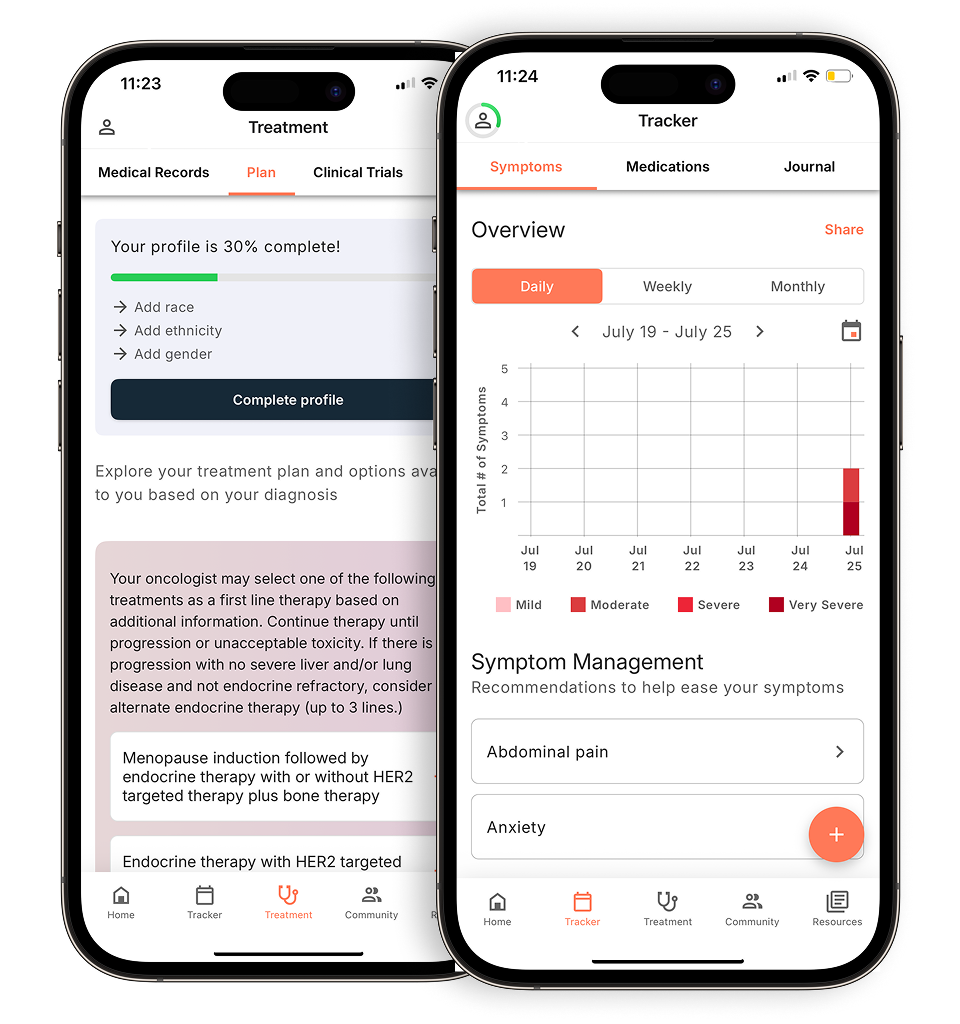
What makes p53abn particularly concerning is how closely it mirrors high-grade serous ovarian cancer, a notoriously aggressive disease. That molecular resemblance is clinically significant, part of why care teams often consider treatment protocols closer to chemotherapy for ovarian cancer than to standard endometrial cancer regimens. The overlap in biology demands an overlap in urgency.
The next section explores what that urgency means in practice, including why even early-stage p53abn tumors can require intensive management.
Prognosis and intensive management for p53abn subtype
The p53 abnormal subtype carries the poorest prognosis of all endometrial cancer molecular subtypes, with high recurrence rates that push care teams to treat aggressively, often from day one.
Unlike other subtypes where stage largely dictates intensity of treatment, p53abn frequently prompts chemotherapy and targeted therapies even at early stages. A Stage 1 p53abn patient, for example, may receive a treatment regimen typically reserved for Stage 3 disease, because the molecular risk outweighs what the surgical staging alone suggests. It’s also worth noting that TP53 mutations have been observed in ovarian cancer and are being studied to understand how this genetic change may relate to disease behavior across gynecologic cancers, including endometrial cancer. And while p53 testing guides critical decisions, interpreting those results accurately isn’t always straightforward, which is something your care team must navigate carefully.
When p53 testing is inconclusive: clinical failure models
p53 testing can produce misleading results when only part of the tumor carries the mutation, a pattern called subclonal expression, making accurate classification genuinely difficult.
Subclonal p53 expression occurs when just a portion of tumor cells show the mutation, causing IHC staining to appear patchy rather than the diffuse or complete absence pattern that signals true p53 abnormality. Pathologists can misread this as normal, assigning the wrong subtype entirely. It’s a real limitation, and one your care team should be aware of when reviewing results.
That’s why p53 testing should be paired with POLE and MMR testing for accuracy. POLE and MMR testing alongside p53 assessment is essential because overlapping molecular signals change both prognosis and treatment direction. Platinum-based chemotherapy outcomes differ based on molecular subtype in patients with advanced or recurrent endometrial cancer, which is why molecular profiling of tumors like POLE and p53 matters for treatment planning.
Not all subtypes carry this same interpretive complexity. The next section examines MMRd and NSMP, two profiles that together account for the majority of endometrial cancer diagnoses and present their own distinct clinical picture.
MMRd and NSMP: the middle ground of molecular profiles
Mismatch Repair deficiency (MMRd) and No Specific Molecular Profile (NSMP) together account for roughly 50–70% of all endometrial cancer cases, making them the most commonly encountered subtypes in clinical practice.
MMRd occurs when proteins that normally detect and correct DNA copying errors stop working. The result is a tumor with a high number of mutations, a state called microsatellite instability (MSI-H). Importantly, MMRd can be inherited, with roughly 30% of MMRd endometrial cancers linked to Lynch syndrome, a hereditary condition that also raises the risk for colorectal and other cancers. If you’ve recently received an MMRd diagnosis, germline testing is worth discussing with your care team.
NSMP is essentially a diagnosis by exclusion, with tumors that test negative for POLE mutations, MMRd, and p53 abnormalities. Sometimes called the “Type I” category, NSMP typically includes low-grade, estrogen-driven tumors and generally carries a favorable to intermediate outlook.
Both subtypes sit in the middle of the prognostic spectrum. MMRd shows intermediate recurrence risk, while NSMP outcomes range from good to moderate depending on grade and stage. Neither MMRd nor NSMP subtype calls for the aggressive intensification reserved for p53-abnormal disease, though treatment decisions still vary based on individual tumor characteristics. When chemotherapy is part of the plan for MMRd or NSMP, regimens like paclitaxel and carboplatin are often applied here as well.
The high prevalence of these subtypes, combined with the inherited implications of MMRd, gives them substantial clinical importance, a point the next section explores through the lens of immunotherapy and why MMRd tumors respond to it so distinctively.
MMRd: implications for immunotherapy
This happens through a process called microsatellite instability (MSI-H). When mismatch repair proteins fail, short repetitive DNA sequences called microsatellites accumulate errors, creating a highly mutated tumor environment. Checkpoint inhibitors like pembrolizumab essentially release the brakes on your immune system, allowing it to target those mutations directly.
Cancer care guidance for every step of your journey
Get treatment options, clinical trials, and support tailored to your diagnosis--all in one place.
Get started
See treatment options, manage symptoms, and stay informed—all in the app
View treatment options and trials personalized to your diagnosis—plus track progress in real time.
Continue in appAnd there’s a critical family health implication here. When MMRd is detected, your care team will typically recommend germline testing to rule out Lynch syndrome, an inherited condition that significantly raises lifetime risk for several cancers. If Lynch syndrome is confirmed, first-degree relatives should be tested too.
Of course, MMRd isn’t a uniform category, outcomes still vary depending on tumor grade and stage, which leads naturally into understanding NSMP, the subtype where that variability becomes even more pronounced.
NSMP: the complexity of the ‘no specific’ subtype
Hormone receptors are a key reason why. Most NSMP tumors express estrogen and progesterone receptors, which makes hormonal therapy such as progestins or aromatase inhibitors a relevant treatment option, particularly for patients who aren’t candidates for aggressive chemotherapy. However, tumor grade complicates the picture considerably: low-grade NSMP tumors tend to behave more indolently, while high-grade NSMP cases carry meaningfully worse prognoses. That variability is part of why understanding your specific tumor profile matters, and why getting the full molecular picture is a conversation worth having with your care team. Lynch syndrome can co-occur with NSMP and other molecular subtypes of endometrial cancer, so if you have been identified with Lynch syndrome, understanding how it relates to your tumor’s molecular profile may help guide your care decisions.
Industry insights. What most guides miss about molecular testing
Molecular subtype testing isn’t yet the standard of care at every hospital. Understanding why can help you advocate more effectively for your own personalized care plan.
In practice, academic cancer centers and large research hospitals have integrated POLE sequencing and mismatch repair testing into routine pathology workflows. But many community hospitals still lack the infrastructure, expertise, or reimbursement pathways to offer molecular testing automatically.
Molecular classification algorithms were developed to create clinically applicable classification systems that are relatively easy to implement for endometrial cancer. One such algorithm uses a structured, stepwise approach starting with MMR immunohistochemistry, then p53 staining, then POLE sequencing, designed to assign a molecular subtype using tests that most pathology labs can already perform in sequence, without requiring expensive next-generation sequencing upfront.
Cost and logistics remain real barriers. POLE sequencing, in particular, may not be covered by all insurance plans in community settings, and turnaround times can delay treatment decisions by weeks; however, knowing these barriers exist means you can take action.
One practical approach is requesting reflex testing directly, asking your pathologist or care team to automatically run the full molecular panel on your surgical specimen before you leave the hospital system. Understanding how these results shape your actual treatment plan is exactly what the next section covers.
How molecular results change your surgical and post-op plan
Your molecular subtype can directly reshape surgical decisions before you ever enter the operating room, not just influence the treatment plan afterward.
For example, a pre-operative POLE-mutant finding may lead your care team to limit the extent of lymph node dissection, given the excellent prognosis typically associated with that subtype. Conversely, a p53-abnormal result may influence decisions about adjuvant treatment intensity, such as chemotherapy combined with consideration of brachytherapy.
The shift toward a combined Molecular-Integrated Stage, moving beyond FIGO staging alone, means your biomarker profile now formally factors into how your disease is classified and treated. Before your next appointment, consider asking your care team:
- Which molecular subtype was identified, and how confident is the result?
- Does this finding change the planned extent of surgery?
- How does my molecular stage differ from my FIGO stage?
- What post-operative adjuvant therapy does this subtype support?
These questions help ensure your personalized care plan reflects the full picture. And keep in mind, molecular testing, while powerful, does carry important nuances worth understanding before drawing firm conclusions.
Limitations and considerations in genomic profiling
Molecular subtypes provide prognostic information that varies across patient groups. Within the same subtype, individual tumors can show variation in how they respond.
Understanding that distinction matters, especially as you work with your care team to build a personalized care plan.
The “multiple classifier” problem is one of the most clinically complex challenges in endometrial cancer molecular testing. A small subset of tumors carry more than one defining marker, for example a POLE mutation alongside a p53 abnormality. POLE mutations are associated with the most favorable prognosis among the molecular subtypes of endometrial cancer, and the five molecular subtypes together provide stronger prognostic information than traditional measures like grade or histotype alone. But the science is still evolving, and not every center applies the same decision rule consistently.
NSMP, no specific molecular profile, carries its own limitation. It remains a diagnosis of exclusion, meaning it’s assigned when testing rules out the other three subtypes rather than confirming a distinct biological identity. That makes risk stratification within NSMP genuinely harder, and ongoing research continues to search for molecular features that could subdivide NSMP more precisely.
And even when a subtype is clearly identified, DNA markers don’t exist in isolation. Your age, overall physical health, tumor stage, and lymph node involvement still carry real clinical weight. A POLE-mutated tumor caught at a late stage differs significantly from an early-stage one.
These nuances aren’t reasons to distrust genomic profiling, they’re reasons to ask informed questions. And that includes some surprisingly common misconceptions about what terms like “mutation” actually mean, which the next section addresses directly.
Common misconceptions about tumor markers
In molecular subtyping, a mutation isn’t always a warning sign. Sometimes it signals a highly favorable prognosis.
The POLE mutation is the clearest example of an alteration that actually signals a highly favorable prognosis, often associated with excellent treatment response. Not every genetic change drives cancer forward, some disrupt it entirely.
It’s also worth distinguishing between somatic and germline mutations. Somatic mutations are changes that occur in tumor cells themselves and are generally not thought to be inherited, though your care team can discuss whether genetic testing might be relevant for your situation. Germline mutations are hereditary and present in every cell. Molecular subtype classification in endometrial cancer identifies distinct tumor biology that guides treatment decisions and risk assessment for individual patients.
And then there’s the grade paradox. A tumor classified as grade 3 under traditional microscopy might behave far less aggressively once molecular subtyping identifies a POLE mutation, effectively acting more like a grade 1 tumor clinically. Molecular data can reframe what grade alone suggests, which is exactly why these classifications matter so much for your personalized care plan.
Understanding these distinctions helps you ask sharper questions, and the next section pulls the key takeaways together so you can navigate your subtype with confidence.
Key takeaways: navigating your subtype
Molecular subtypes, POLE, p53 abnormal, MMR-deficient, and NSMP, give your care team a far more accurate picture of your tumor’s behavior than cell appearance alone.
Understanding where your diagnosis fits within this framework matters because each molecular subtype carries distinct implications for prognosis and treatment intensity. Real-world evidence confirms that molecular classification translates meaningfully into clinical outcomes, not just in research settings, but in everyday oncology practice.
Here’s what to carry forward from everything covered in this article:
- POLE mutations generally signal a favorable outcome. Tumors in the POLE subtype respond well, and in some cases the care team may consider de-escalating treatment to reduce side effects without compromising results.
- p53 abnormalities identify the most aggressive tumors. A p53-abnormal diagnosis calls for proactive, intensive management and close monitoring, which puts your team in the best position to act.
- MMRd subtypes have immunotherapy potential, opening doors to targeted treatment options that wouldn’t apply otherwise.
- NSMP represents a broad middle category where prognosis varies, and additional biomarker work may sharpen the picture further.
One practical step you can take right now is to ask your care team whether your pathology report already includes molecular classification, or whether genomic sequencing still needs to be ordered. Not every report includes it automatically. And if you’re unsure how to interpret what’s already on record, that conversation is exactly where to start.
Disclaimer: The information provided in this article is for informational purposes only and is not intended to be a substitute for professional medical advice, diagnosis, or treatment. Outcomes4Me is not acting as your caregiver, and any suggestions or guidance offered should not replace the advice of your healthcare provider or qualified medical professional. Always seek the guidance of your physician or other qualified health provider with any questions you may have regarding a medical condition.
Personalized support for real care decisions
Understand your diagnosis, explore clinical trials, and track symptoms--all in one place.
Get started
Compare treatments, prepare for appointments, and track side effects—all in the app
Built for your diagnosis, Outcomes4Me gives you the tools to make confident, informed decisions—right when you need them.
Continue in app