
ALK-positive lung cancer is a distinct molecular subtype of non-small cell lung cancer, defined by a rearrangement in the anaplastic lymphoma kinase (ALK) gene that drives uncontrolled tumor growth.
This rearrangement occurs in roughly 3–5% of NSCLC cases, according to the LUNGevity Foundation. Though that percentage sounds small, it translates to tens of thousands of diagnoses each year, each one requiring a precise, personalized care plan.
Biomarker testing is the critical first step. Before your care team can recommend any treatment, they need to confirm the ALK rearrangement through tissue or liquid biopsy. Biomarker testing helps your doctor determine if your lung cancer is ALK-positive, which is important because this diagnosis guides your treatment options, including which ALK-inhibitor may be most appropriate for you.
Once ALK-positive NSCLC is confirmed, the standard of care shifts away from traditional chemotherapy toward targeted therapy, specifically, Tyrosine Kinase Inhibitors (TKIs). These drugs work by blocking the abnormal ALK signaling pathway that tells cancer cells to grow and divide. TKIs target the specific molecular driver, rather than attacking all rapidly dividing cells the way chemotherapy does.
This shift to precision medicine has meaningfully changed outcomes for patients with ALK-positive lung cancer. The next question is which TKI to start with, and that’s where the clinical landscape gets nuanced.
Identifying your ALK inhibitor options
Treatment for ALK-positive lung cancer has expanded significantly, moving from a single first-generation option to a growing class of targeted inhibitors with meaningfully different performance profiles.
Crizotinib is one of the FDA-approved targeted therapy drugs for ALK-positive NSCLC. However, next-generation TKIs have demonstrated superior outcomes across nearly every benchmark. Alectinib, brigatinib, and lorlatinib now define the modern treatment landscape.
One of the most clinically significant distinctions between generations is blood-brain barrier (BBB) penetration. ALK-positive non-small cell lung cancer carries a meaningful risk of central nervous system (CNS) metastases, and crizotinib has limited effectiveness against brain metastases, with intracranial disease control rates lower than systemic control and a median intracranial time to progression of only 7 months. Second-generation ALK inhibitors were developed to overcome limitations of first-generation drugs like crizotinib, including improved ability to penetrate the blood-brain barrier. Newer targeted therapies with brain penetration now offer better control of brain metastases, which are a significant challenge in ALK-positive NSCLC.
Progression-free survival (PFS) is one measure that researchers track when comparing ALK inhibitors in clinical trials, though your care team may consider other factors when discussing which option might be right for you. ALK-positive lung cancer has distinct biomarkers that require different targeted treatment approaches. Choosing the right inhibitor upfront directly shapes how many viable treatment lines remain available later, a point the next section explores in depth.
Evidence-based guidance powered by NCCN Guidelines®
Personalized treatment plans shaped by the latest oncology standards—tailored to your diagnosis.
Get started
View your personalized treatment plan in the Outcomes4Me app
Use your diagnosis to unlock personalized NCCN Guidelines®-aligned recommendations.
Continue in app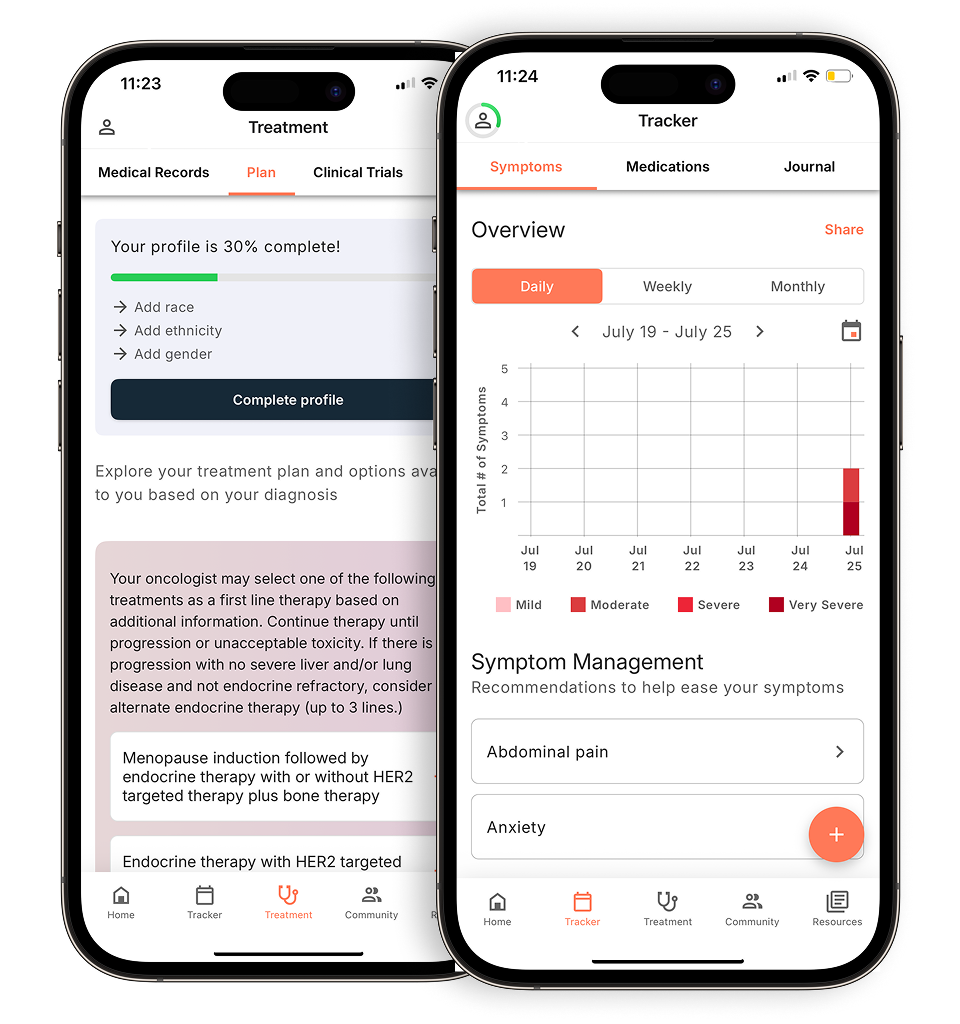
The evolution of first-line treatment standards
The shift from chemotherapy to targeted ALK inhibitors represents one of the most significant turning points in how oncologists approach ALK-positive NSCLC at initial diagnosis.
Before molecular testing became standard, patients with non-small cell lung cancer received platinum-based chemotherapy regardless of their tumor’s genetic profile. That approach delivered modest response rates and substantial side effects. The arrival of targeted therapy changed the equation entirely. Unlike chemotherapy, ALK inhibitors are designed to block the specific protein driving tumor growth, making them far more precise and, for most patients, more tolerable.
Most patients with ALK-positive NSCLC start treatment with an ALK inhibitor, a class of medicines that lung cancer generally responds well to. That first treatment decision carries forward-looking consequences. When ALK inhibitors are used, drug exposure can create selection pressure that leads to resistance and disease relapse, which may limit the effectiveness of future ALK-targeted therapies. Thoughtful treatment sequencing from the start helps preserve the viability of subsequent lines. Understanding which resistance mechanisms a first-line drug is likely to leave behind shapes what comes next, a topic the following section explores in depth.
Strategic sequencing: navigating treatment lines
In ALK-positive NSCLC, the order in which you use targeted therapies matters as much as the drugs themselves, because each choice shapes what options remain.
The clinical rationale is straightforward. ALK-positive non-small cell lung cancer tumors almost always develop resistance to any single TKI over time. Sequencing multiple ALK inhibitors extends the overall treatment window, buying durable disease control across years rather than months. The order of those drugs is driven by data, resistance biology, and your individual tumor’s behavior.
The “most potent first” versus “tiered approach” debate remains one of the more nuanced conversations in thoracic oncology. Most guidelines now favor the more potent-first strategy, though your care team will weigh factors like brain metastases, tolerability, and comorbidities.
Resistance mutations are the key variable that dictates what comes next. The G1202R mutation emerges commonly after second-generation TKI failure and is specifically addressed by lorlatinib, a third-generation inhibitor. Knowing which mutation is driving resistance, rather than just that progression has occurred, determines your next personalized care plan. Some doctors may use biopsy-based resistance profiling to help guide next treatment steps in ALK-positive NSCLC, though approaches vary. Ask your care team whether this type of testing might be helpful in your situation.
That’s where liquid and tissue biopsies become essential. Liquid biopsies can detect emerging resistance mutations earlier and with less procedural burden than tissue rebiopsy. Biomarker testing plays an important role in guiding treatment decisions for cancer patients. Advocating for timely testing helps ensure your care team can identify the best treatment options for your specific diagnosis.
Cancer care guidance for every step of your journey
Get treatment options, clinical trials, and support tailored to your diagnosis--all in one place.
Get started
See treatment options, manage symptoms, and stay informed—all in the app
View treatment options and trials personalized to your diagnosis—plus track progress in real time.
Continue in appProgression and second-line protocols
When an ALK tyrosine kinase inhibitor stops controlling tumor growth, the clinical term is “progression,” and knowing what comes next is just as important as the first treatment decision.
In practice, progression is confirmed when imaging shows new or enlarging lesions despite ongoing therapy. At that point, your care team will reassess the full picture before changing course. Progression doesn’t always look the same. Localized progression, where a single site grows while others remain stable, can sometimes be addressed with targeted radiation while you continue on the same ALK TKI, preserving a systemic therapy option for later.
When systemic progression occurs after a second-generation inhibitor like alectinib or brigatinib, lorlatinib is typically the next step. As a third-generation agent, it’s engineered to overcome the resistance mutations that earlier drugs cannot. This sequencing logic is precisely why the order of therapy lines matters so much, a point covered in the previous section.
When immunotherapy and chemotherapy fit in
For patients with ALK-positive metastatic NSCLC, immunotherapy is generally less effective than it is for other lung cancer subtypes, and understanding why shapes how your care team approaches treatment sequencing.
ALK-positive tumors may have lower PD-L1 expression and tumor mutation burden compared to some other types of lung cancer, which your care team may consider when discussing treatment options with you. Checkpoint inhibitors like pembrolizumab can be used to treat NSCLC in different situations, though they are typically not the first choice for ALK-positive disease. There’s also a meaningful safety concern. Combining certain ALK TKIs with immunotherapy carries a higher risk of severe toxicity, including serious lung inflammation, which is why most care teams avoid that combination.
For ALK-positive NSCLC, ALK tyrosine kinase inhibitors (TKIs) such as crizotinib, alectinib, and brigatinib are the standard first-line treatment options, with platinum-based chemotherapy regimens containing pemetrexed available as an alternative approach. It’s not a preferred path, but it remains a necessary tool in the overall treatment landscape.
When all TKI lines have been tried, combination strategies become the focus. Some patients move into chemotherapy-based regimens, sometimes with bevacizumab added for additional benefit. Others may be candidates for clinical trials exploring novel combinations. This is the stage where biomarker re-testing matters enormously, as resistance profiles evolve and new actionable targets can emerge.
Limitations and treatment considerations
ALK targeted therapy has transformed outcomes for many patients, but it comes with real trade-offs that deserve an honest look before you and your care team settle on a plan.
Side effects are common across the TKI class. Fatigue, nausea, diarrhea, and elevated liver enzymes show up frequently, and while they’re often manageable, they can affect quality of life in ways that matter. TKIs can cause side effects because they affect multiple targets in cells, not just the cancer cells, even though TKIs are far more selective than traditional chemotherapy.
Non-response is another challenge that surprises some patients. Not everyone with a confirmed ALK rearrangement responds to TKIs equally well. Several factors influence how well an ALK TKI therapy works for individual patients, including the specific mutations present in the tumor and how well the drug targets ALK compared to other proteins in the body.
Financial and accessibility barriers remain a significant concern. Next-generation ALK inhibitors like lorlatinib carry substantial costs. Out-of-pocket costs for ALK inhibitors differ significantly between insurance plans, with Medicare Part D beneficiaries facing substantially higher costs than those with commercial insurance. Patients in rural or underserved communities may also face limited access to specialists and biomarker testing. In practice, testing rates and treatment access for ALK-positive NSCLC may vary from what clinical guidelines suggest, and your care team can help you understand what options are available to you.
These limitations don’t diminish the value of targeted therapy, but they do raise practical questions worth bringing to your care team. The next section addresses some of the most common ones directly.
Common questions about ALK therapy
After an ALK-positive lung cancer diagnosis, understanding the condition and how it’s treated is one of the most important steps you can take.
How long does targeted therapy last? First-line ALK TKIs produce high response rates (70–80%), though many patients eventually develop resistance to their initial therapy, making sequential treatment strategies important.
What are the treatment options? ALK-positive NSCLC is primarily managed with oral TKIs: crizotinib, ceritinib, alectinib, brigatinib, and lorlatinib. ALK TKIs differ in their brain-penetration capabilities, with each successive generation showing improved activity in the central nervous system, though resistance profiles vary among individual drugs.
ALK-positive versus EGFR-positive NSCLC. Drugs developed for EGFR-positive NSCLC are generally not used to treat ALK-positive NSCLC, as these two types of lung cancer are driven by different genetic changes. Your care team can discuss which targeted therapies are appropriate for your specific ALK mutation. And if your disease progresses, discussing clinical trial eligibility with your care team can open access to emerging combination strategies before they reach standard approval. Work closely with your care team, ask questions, and use every tool available to stay informed and engaged at every step.
Disclaimer: The information provided in this article is for informational purposes only and is not intended to be a substitute for professional medical advice, diagnosis, or treatment. Outcomes4Me is not acting as your caregiver, and any suggestions or guidance offered should not replace the advice of your healthcare provider or qualified medical professional. Always seek the guidance of your physician or other qualified health provider with any questions you may have regarding a medical condition.
Personalized support for real care decisions
Understand your diagnosis, explore clinical trials, and track symptoms--all in one place.
Get started
Compare treatments, prepare for appointments, and track side effects—all in the app
Built for your diagnosis, Outcomes4Me gives you the tools to make confident, informed decisions—right when you need them.
Continue in app