
SCLC can recur or progress after initial treatment, and there are several treatment options available for patients with recurrent disease. But the interval between your last platinum-based chemotherapy and the point of recurrence carries significant clinical weight. Oncologists use your Platinum-free interval (PFI), the time between your last platinum-based chemotherapy and when your cancer returned, as the single most important data point for determining your relapse category and guiding which second-line treatment options are available to you.
A sensitive relapse occurs more than 90 days after completing platinum-based chemotherapy, suggesting the tumor still retains some vulnerability to that drug class. A resistant or refractory relapse occurs within 90 days, or during treatment itself, signaling that the cancer has developed mechanisms to evade the original therapy. Oncologists treat this timing as a surrogate marker for how biologically aggressive the tumor has become, because faster recurrence typically reflects a more treatment-resistant disease profile.
Understanding where your relapse falls on this timeline is foundational. The sections ahead explore how these two scenarios lead down meaningfully different treatment paths.
Clinical criteria for sensitive vs. resistant relapse
The platinum-free interval (PFI) is the single most important clinical variable guiding relapsed SCLC treatment decisions and determines your care team’s approach to either rechallenge or a mechanistic switch.
In practice, a sensitive relapse, defined by a PFI greater than 90 days, signals that SCLC chemotherapy after relapse can reasonably revisit platinum-based doublets like carboplatin or cisplatin combined with etoposide. The tumor’s response window hasn’t fully closed. A resistant or refractory relapse, by contrast, requires agents with a different mechanism of action entirely, since re-exposing the cancer to platinum compounds it has already evaded offers little benefit.
Initial assessment and staging for recurrent disease
Before your care team can weigh options like topotecan for SCLC or SCLC immunotherapy after relapse, they need a precise map of where the disease has returned and whether your body can tolerate what comes next.
Restaging typically begins with a PET/CT scan to identify new or expanded metastatic sites. Brain imaging is an important part of monitoring SCLC because cancer can spread to the brain, a condition called brain metastasis. Your healthcare team will regularly order scans to check for metastasis to the brain and other parts of your body. Even when a prior diagnosis is firmly established, your care team may request a repeat tissue biopsy. Acquired resistance can develop during SCLC treatment, and biomarkers may help guide the selection of second-line therapies. And beyond imaging, Eastern Cooperative Oncology Group (ECOG) performance status is used as a criterion to determine eligibility for second-line SCLC treatment, with most trials requiring a status of 0 or 1. It tells your care team whether you’re physically strong enough to handle the demands of intensive second-line agents or whether a gentler regimen better fits your situation. These three inputs, imaging, biopsy, and performance status, work together to build the clearest possible foundation for your personalized care plan before treatment selection begins.
Second-line treatment options. Standard care and emerging agents
Topotecan has been the long-standing standard of care for relapsed SCLC for decades. It works by inhibiting topoisomerase I, an enzyme cancer cells rely on to replicate DNA, and remains a widely referenced option across clinical guidelines for both sensitive and, in some cases, resistant relapse. However, its tolerability challenges mean it isn’t right for everyone.
More recently, lurbinectedin for SCLC has emerged as a meaningful alternative. The FDA granted accelerated approval for lurbinectedin in patients who’ve progressed on or after platinum-based chemotherapy, offering a different mechanism of action. Lurbinectedin is a novel anticancer agent that works by inhibiting transactivated transcription and modifying the tumor microenvironment in SCLC. For patients with a platinum-free interval exceeding 90 days, a platinum-etoposide rechallenge may be appropriate, per current clinical guidance.
Evidence-based guidance powered by NCCN Guidelines®
Personalized treatment plans shaped by the latest oncology standards—tailored to your diagnosis.
Get started
View your personalized treatment plan in the Outcomes4Me app
Use your diagnosis to unlock personalized NCCN Guidelines®-aligned recommendations.
Continue in app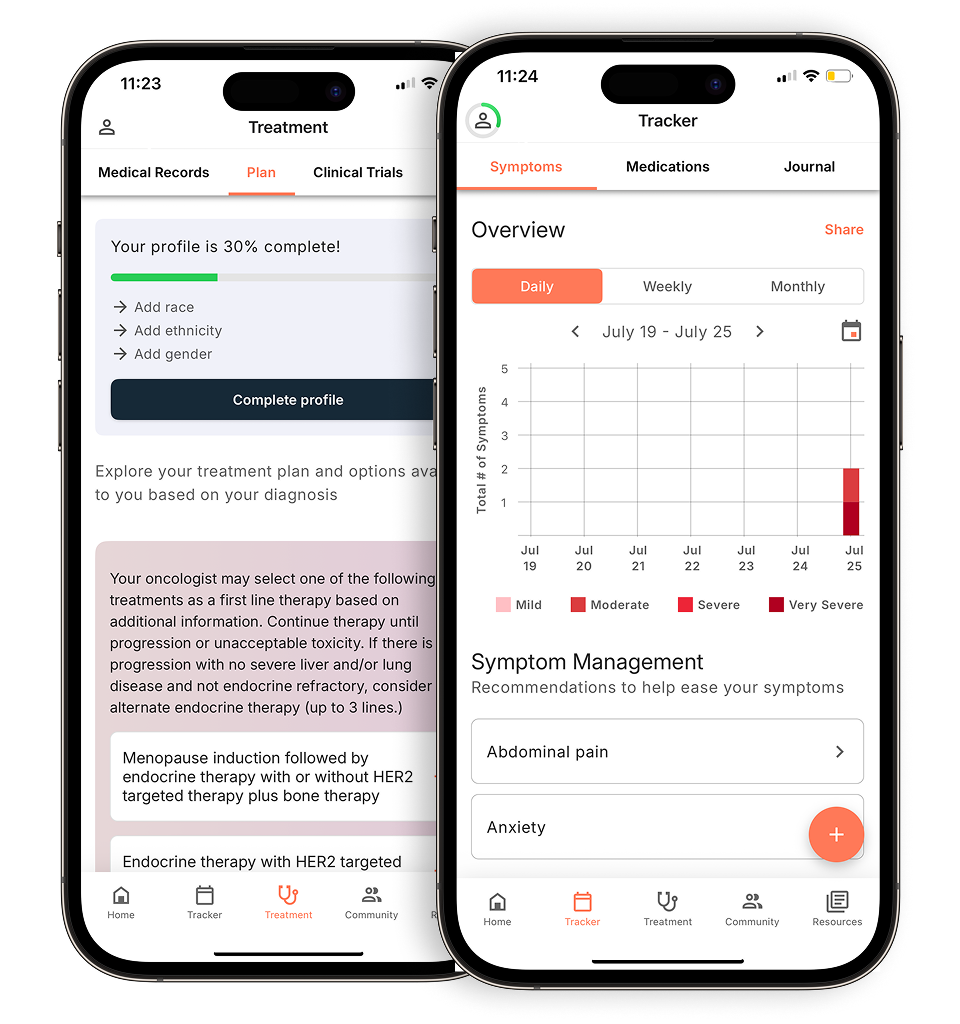
Researchers are actively developing new treatment approaches for SCLC based on laboratory findings, with emerging agents such as antibody-drug conjugates and bispecific antibodies already moving into clinical trials alongside established chemotherapy and immunotherapy options.
Chemotherapy rechallenge and topotecan protocols
Topotecan remains the most widely used second-line chemotherapy for relapsed SCLC, and how it’s administered and how well you tolerate it depends on factors your care team will weigh carefully before starting.
Both oral and intravenous (IV) formulations are available. IV topotecan is typically dosed at 1.5 mg/m² daily for five consecutive days every 21 days, while oral topotecan is formulated at a different dose than the intravenous form, which may relate to how the body absorbs it differently. Your care team can explain how the dosing works for the form recommended for you. Topotecan is available as a treatment option for patients with relapsed small cell lung cancer, and both intravenous and oral formulations have been used in clinical practice. For patients with sensitive relapse, topotecan is an option for second-line treatment, though response rates vary and prognosis remains poor even with currently available treatments.
Hematologic toxicity is the most significant management challenge. Neutropenia and anemia are common hematologic toxicities with topotecan. Your care team will monitor blood counts closely between cycles, and dose reductions or delays are sometimes necessary to keep treatment on track without compromising your safety. Growth factor support may be added when neutropenia risk is high.
Topotecan protocols represent just one part of a broader decision framework. Agents like tarlatamab are producing durable responses in select patients. Options available through SCLC clinical trials after relapse are increasingly relevant considerations, particularly for patients who don’t respond to or can’t tolerate standard chemotherapy. The next section looks more closely at those targeted and next-generation approaches.
Targeted therapies and next-generation approaches
Beyond standard recurrent small cell lung cancer chemotherapy and platinum rechallenge SCLC protocols, a new class of agents is reshaping what’s possible at relapse.
Lurbinectedin works differently from traditional cytotoxics. It acts as a transcription inhibitor that works through a distinct mechanism, offering patients who’ve progressed after first-line treatment a mechanistically distinct option with a manageable side-effect profile. BiTE therapies are precision-targeted antibody-based agents designed to bring immune cells together to attack tumor cells expressing specific markers like DLL3, which is present in most SCLC. As these options expand, so does the complexity of where disease has spread, something your care team will need to address directly alongside treatment selection.
Managing metastasis and symptomatic relapse
When SCLC returns, it rarely does so in one place. The liver, brain, bones, and adrenal glands are the most common sites of spread when SCLC returns, and where the disease lands shapes both systemic and local treatment decisions.
Metastatic pattern matters because different sites create different urgent symptoms. Liver involvement can compromise organ function; bone metastases cause pain and fracture risk; adrenal spread is often asymptomatic but detected on imaging. Brain involvement carries its own distinct management pathway, one the next section addresses in depth.
For localized symptoms, palliative radiation is a well-established tool your care team can use alongside systemic therapy. Bone pain and airway obstruction often respond quickly to short radiation courses, providing meaningful relief without pausing the broader treatment plan.
In sensitive relapse SCLC, your care team weighs response rates while also factoring in which regimen allows room for concurrent supportive and palliative interventions. Integrated supportive care runs in parallel with active treatment from the moment relapse is confirmed. Managing new brain lesions is one of the more complex decisions that follow.
Cancer care guidance for every step of your journey
Get treatment options, clinical trials, and support tailored to your diagnosis--all in one place.
Get started
See treatment options, manage symptoms, and stay informed—all in the app
View treatment options and trials personalized to your diagnosis—plus track progress in real time.
Continue in appTreatment for brain and liver metastases
When SCLC returns at multiple sites simultaneously, your care team must weigh second-line treatment decisions across both systemic and local disease, and the brain and liver often demand attention at the same time.
Brain involvement is an important consideration in SCLC treatment. For SCLC patients with brain involvement, treatment approaches differ based on whether metastases are present. Prophylactic cranial irradiation (PCI) has traditionally been standard for patients without confirmed lesions, while whole brain radiation therapy or stereotactic radiosurgery is used when imaging confirms active metastases, though evidence now suggests stereotactic radiosurgery alone may be sufficient for limited disease. Therapeutic whole-brain or stereotactic approaches take priority once disease is established intracranially.
Hepatic spread creates a separate challenge. Liver function may play a role in how well patients tolerate systemic chemotherapy, so your care team may check your liver health before and during treatment. Hepatic arterial embolization is an interventional technique that your care team may discuss if there is significant tumor burden in the liver, though its role in SCLC relapse is still being explored.
Balancing all of this requires close coordination. Concurrent chemoradiation requires careful management, as combining these treatments can increase side effects compared to either treatment alone. Sequencing them thoughtfully is where your personalized care plan makes the most difference. How your airway itself is affected is another dimension worth addressing directly.
Interventional pulmonology for airway obstruction
When tumors press against the bronchial tubes in resistant relapsed SCLC, airway obstruction can become as urgent as the cancer itself, and interventional pulmonology offers targeted tools to restore breathing while systemic therapy continues.
Bronchial stents are placed endoscopically to physically hold narrowed or compressed airways open, providing rapid relief that systemic chemotherapy alone can’t deliver quickly enough. For platinum sensitive SCLC relapse, where systemic agents may still produce a response, stenting buys critical time. Laser therapy and photodynamic therapyoffer complementary approaches for endobronchial tumor control by ablating tissue that’s actively blocking airflow. When symptom burden is high and quality of life is deteriorating, your care team may prioritize these local interventions over aggressive systemic regimens. Relieving obstruction first makes further treatment possible.
How long disease can be controlled and what realistic expectations look like from here is what the next section addresses directly.
Expert analysis. Prognosis and survival expectations
For most people asking about life expectancy following recurrence, the data reflects a difficult reality. In a randomized phase 3 trial of second-line SCLC treatment, median overall survival ranged from 6.9 to 7.4 months across different chemotherapy regimens. The term “cured” is rarely applied at this stage. Your care team will instead frame goals around disease control, symptom management, and preserving function as long as possible.
Prognosis isn’t uniform, and several factors push outcomes in a more favorable direction. When SCLC recurs after initial treatment, further treatment options depend on the location and extent of the cancer, what treatments you’ve already received, and your overall health. Performance status, as earlier sections noted, is an important factor in treatment selection. Among the promising SCLC treatment options, emerging agents like tarlatamab are producing durable responses in select patients, though 5-year survival in second-line settings remains rare across the broader SCLC population.
What these numbers don’t capture is the individual variation that your personalized care plan is designed to address. The next section examines the statistical realities across sensitive and resistant cohorts in closer detail, including how clinical trial participation continues to shift the survival curve.
Statistical realities of second-line response
Survival outcomes differ substantially depending on whether your relapse is classified as sensitive or resistant.
For patients with sensitive relapse, topotecan is an option for second-line treatment, though response rates vary and prognosis remains poor even with currently available treatments. Patients with resistant relapse small cell lung cancer have limited treatment options and generally experience poor survival outcomes. These figures describe populations, not individuals. Performance status is an important factor that doctors consider when choosing a second-line treatment for relapsed SCLC, along with prior treatment history, tumor platinum sensitivity, and other patient characteristics. And clinical trial participation continues to push the upper boundary: emerging agents like tarlatamab are producing durable responses in select patients that population-level statistics don’t yet reflect. Where those trials fit into your sequencing is the question the next section addresses directly.
When to transition to clinical trials
Clinical trials are often the most strategically sound option to consider after a first or second treatment line fails.
Unlike many other cancers where trials are reserved for late-stage exhaustion of standard options, SCLC’s rapid resistance patterns mean when choosing a second-line treatment for relapsed SCLC, doctors consider several factors including your organ function, prior treatments, and overall health status to help determine the best option for you. Eligibility criteria, including adequate kidney, liver, and bone marrow function along with a defined number of previous lines of therapy, are assessed at enrollment, making earlier referral critical. Trials testing novel immunotherapy combinations and PARP inhibitors are actively recruiting for relapsed SCLC. Your care team can identify matches based on your specific relapse profile. The next section takes a harder look at where the limits of aggressive treatment lie and how patient goals must lead what comes next.
Balancing toxicity with quality of life
Choosing the right SCLC second-line treatment means weighing whether the physical cost of continuing therapy aligns with what you’re realistically hoping to gain.
Treatment fatigue, the cumulative burden of side effects across multiple lines of therapy, can quietly erode both function and motivation, making it harder for your care team to assess whether further treatment is medically worthwhile. Discussing your treatment options with your cancer care team and family helps ensure your choices reflect what matters most to you and fits your individual needs. When the emotional challenges of treatment outweigh realistic clinical benefit, that’s a signal worth taking seriously, and one that points naturally toward a deeper conversation about supportive care.
Supportive and palliative care
When second-line treatment for SCLC has run its course, palliative care isn’t about giving up. It’s a deliberate shift toward care that centers comfort, dignity, and what matters most to you.
A common misconception is that choosing palliative care means abandoning hope. In practice, it means redirecting the focus of care toward symptom relief and emotional support rather than tumor control. Research consistently links early palliative care involvement with better emotional outcomes for families, not just patients.
Summary: key takeaways for SCLC relapse
When navigating recurrent SCLC treatment options, the platinum-free interval remains the single most critical factor your care team will use to determine what comes next.
From there, the path forward typically involves one of three standard agents, topotecan, lurbinectedin, or platinum rechallenge, selected based on your relapse timing and overall health. Clinical trials expand that landscape further, offering access to next-generation mechanisms like antibody-drug conjugates that are currently in clinical evaluation as precision-targeted agents. And at every stage, quality of life is a core treatment goal, not an afterthought.
Disclaimer: The information provided in this article is for informational purposes only and is not intended to be a substitute for professional medical advice, diagnosis, or treatment. Outcomes4Me is not acting as your caregiver, and any suggestions or guidance offered should not replace the advice of your healthcare provider or qualified medical professional. Always seek the guidance of your physician or other qualified health provider with any questions you may have regarding a medical condition.
Personalized support for real care decisions
Understand your diagnosis, explore clinical trials, and track symptoms--all in one place.
Get started
Compare treatments, prepare for appointments, and track side effects—all in the app
Built for your diagnosis, Outcomes4Me gives you the tools to make confident, informed decisions—right when you need them.
Continue in app