Stage 2 non-small cell lung cancer (NSCLC) is a localized or regional stage of the disease that has not yet metastasized to distant organs. Survival rates at this stage provide valuable insights into prognosis and treatment outcomes for patients. The following is an overview of the survival rates for stage 2 NSCLC based on current research.
Survival Rates for Stage 2 NSCLC:
According to the American Cancer Society, the five-year survival rate for stage 2A NSCLC is approximately 60% to 75%, while for stage 2B NSCLC, it ranges from about 40% to 55%. These survival rates represent the percentage of patients who are alive five years after diagnosis, with rates varying based on individual factors such as age, overall health, and response to treatment.
Factors Influencing Survival Rates:
- Treatment Response: The type of treatment received and how well the cancer responds to it can significantly impact survival rates. Treatments may include surgery, chemotherapy, radiation therapy, targeted therapy, and immunotherapy.
- Tumor Characteristics: The size and location of the tumor within the lung, as well as its involvement of nearby lymph nodes, can affect survival rates.
- Overall Health: The patient’s overall health and ability to tolerate treatment play a crucial role in determining survival rates. Patients in better health may have a more favorable prognosis.
- Advances in Treatment: Advances in medical care, including new treatment modalities and approaches, may improve survival rates for patients with stage 2 NSCLC over time.
Conclusion:
In conclusion, survival rates for stage 2 non-small cell lung cancer vary depending on individual factors and treatment options. While these can rates provide important information about prognosis, it’s essential to consult with healthcare professionals to develop a personalized treatment plan tailored to each patient’s needs.
Sources:
American Cancer Society. (2022). Survival Rates for Non-Small Cell Lung Cancer. https://www.cancer.org/cancer/lung-cancer/detection-diagnosis-staging/survival-rates.html
FAQ's
How do Stage 2 lung cancer survival rates vary by age?
Survival rates generally decrease with increasing age. For example, five-year survival for Stage II lung cancer is about 83% in patients under 50, 67% for those between 50–64, and drops to around 54% for those aged 65 and above.
What is a typical prognosis for non-small cell lung cancer?
The prognosis depends on disease stage, overall health, and treatment effectiveness. For Stage II NSCLC, the five-year survival rate is typically around 50–60%, and two-year survival can range from approximately 72% to 87%.
What is the average life expectancy for Stage 2 lung cancer?
While life expectancy varies, one study found Stage II lung cancer survival with treatment averages between 56 and nearly 60 months (about 4.7 to 5 years) Lung Cancer Group. This aligns with five-year survival estimates of roughly 53–60%.
Is Stage 2 lung cancer curable?
Yes—Stage II NSCLC is considered potentially curable, particularly with a complete surgical resection. Patients may be viewed as “cured” if all detectable tumor is eliminated, and long-term survival is possible in many cases
What are common Stage 2 lung cancer treatment options?
Standard treatment typically combines surgery (like lobectomy or segmentectomy) with adjuvant therapies such as chemotherapy and/or immunotherapy. Neoadjuvant (preoperative) chemo or immunotherapy may also be given, depending on tumor size, nodal involvement, and guidelines
How aggressive is non-small cell lung cancer?
NSCLC is generally less aggressive than small cell lung cancer, but that doesn’t mean it’s slow-growing—it can still spread, especially into nearby lymph nodes. Stage II is an early phase where the cancer remains localized or regional, making timely treatment key to improving outcomes
Related Topics
Personalized support for real care decisions
Understand your diagnosis, explore clinical trials, and track symptoms--all in one place.
Get started
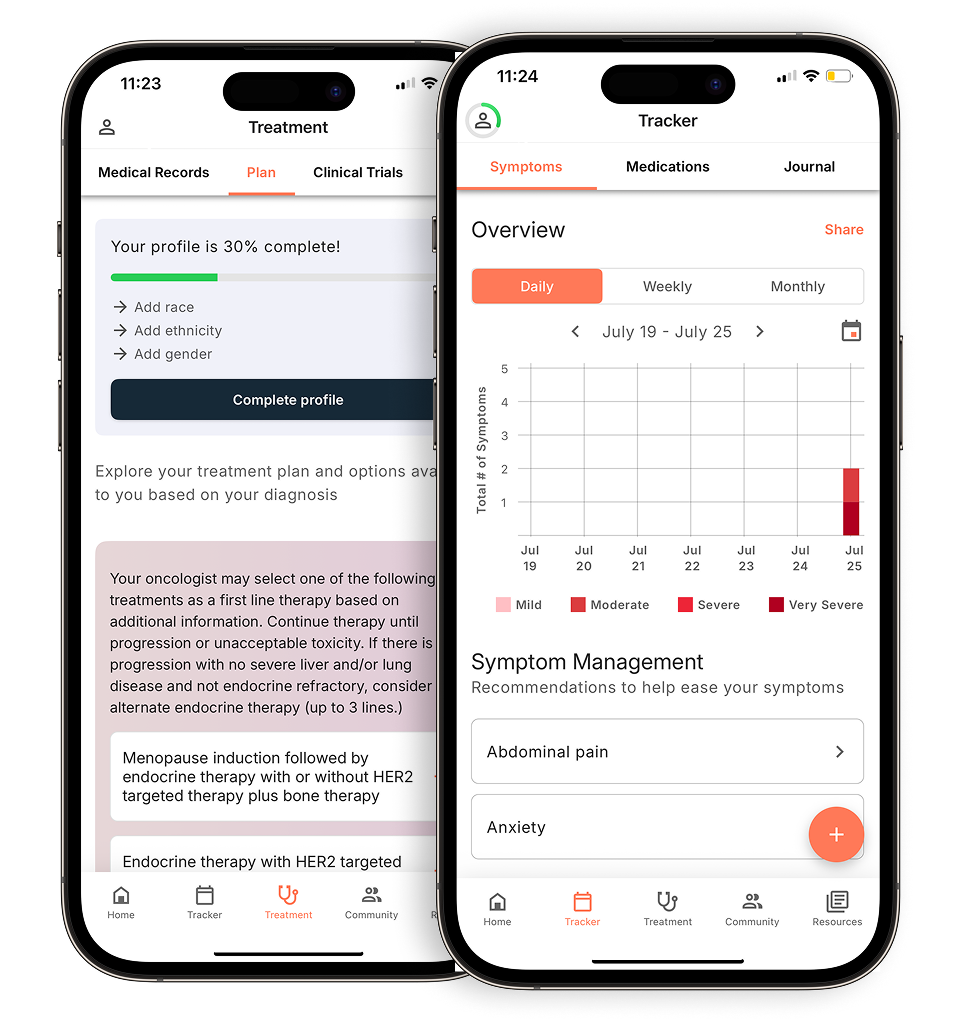
Compare treatments, prepare for appointments, and track side effects—all in the app
Built for your diagnosis, Outcomes4Me gives you the tools to make confident, informed decisions—right when you need them.
Continue in app