Chronic lymphocytic leukemia (CLL) is the leading type of leukemia in adults, making up about a third of all cases. CLL affects a type of white blood cell called lymphocytes, which play a role in the immune system. Unlike some other cancers, CLL is often slow-growing, and many people are diagnosed during routine blood tests before symptoms appear.
What does a diagnosis mean for your health and what should you expect in the future? Preparing questions for your doctor is a good way to get clarity and feel more in control of your care.Your first post-diagnosis appointment may feel overwhelming; refer to this list so you don’t miss out on information that is important to you.
Consider asking:
- What stage is my CLL, and how will that affect my treatment plan?
- Do I need treatment right away, or is “watchful waiting” appropriate?
- What treatment options are available if I do need therapy?
- Is CLL curable?
- What are some fertility preservation options? (if you’re considering parenthood)
- What are the possible side effects of these treatments?
- How can biomarker testing help guide my treatment plan?
- How will treatment affect my immune system and infection risk?
- Are there clinical trials available that I should consider?
- How often will I need check-ups and blood tests?
- What resources are available for? (Palliative care, mental health support, or financial counseling)
- What lifestyle changes can help support my health while living with CLL?
Prior to your appointment, remember to bring along a notepad and a pen. Jotting down the answers can help you process the information later. You can also ask a trusted friend or family member to come along. They can help you remember details and remind you of any additional questions that you may have.
Understanding whether treatment is needed right away is one of the first big questions in CLL. Many patients do not require immediate therapy and are monitored through a strategy called “watchful waiting.” Knowing why or why not treatment is recommended can help you feel more comfortable with the plan.
Biomarker and genetic testing are critical in CLL. For example, testing for certain mutations such as TP53 or chromosome changes like deletion 17p can affect how well certain therapies will work. These results can guide your doctor in selecting the most effective treatment when the time comes.
It’s also important to discuss how treatment may influence your immune system. Some CLL therapies can increase infection risk, so your doctor may recommend vaccines, preventive medications, or lifestyle steps to help protect you.
Supportive resources can make living with CLL easier. Palliative care teams can help manage symptoms such as fatigue, even if you’re not in active treatment. Social workers and financial navigators may be available to help with the cost of care. Some centers also offer counseling or nutrition guidance. Asking about these services ensures you have access to the full range of support available.
Since CLL is a chronic condition, follow-up care is ongoing. Asking how often you’ll need blood tests or imaging helps you prepare for long-term management. Beyond clinical care, prioritize your mental health and consider joining a community where you can connect with others who understand what it’s like navigating CLL.
You’re not alone. Join the Outcomes4Me Community for a safe space to share your story and connect with others who share your diagnosis.
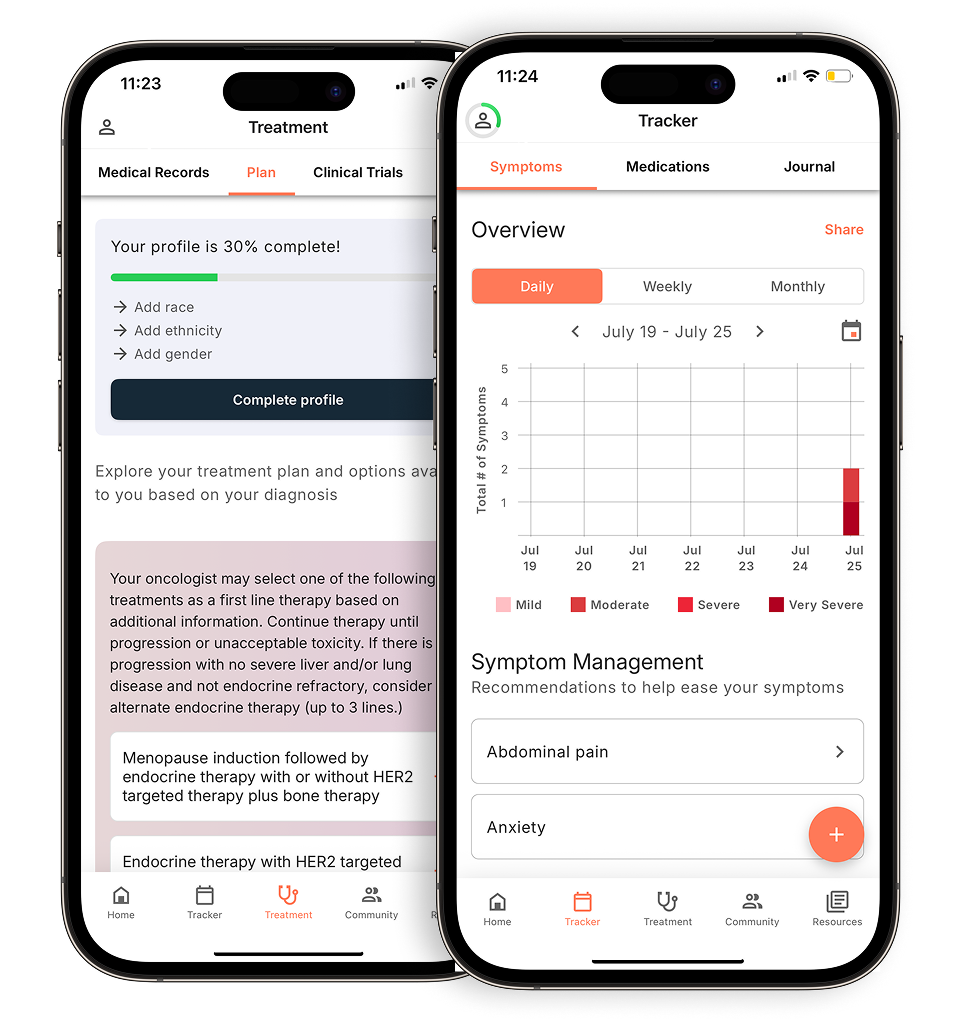
Personalized support for real care decisions
Understand your diagnosis, explore clinical trials, and track symptoms--all in one place.
Get started
Compare treatments, prepare for appointments, and track side effects—all in the app
Built for your diagnosis, Outcomes4Me gives you the tools to make confident, informed decisions—right when you need them.
Continue in app