Neither Outcomes4Me nor any participants in or contributors to any webinar, article or content endorses or recommends any products or services. Consult your physician regarding any treatment or therapy.
In this third part of the series, Dr. Cohen, a medical oncologist, and Dr. Shanahan, patient advocate and president of Metavivor, describe how ORSERDU was evaluated in clinical trials, including the outcomes and side effects that were observed, to support more informed discussions with your healthcare team.
In this chapter, Dr. Cohen and Dr. Shanahan walk through what researchers have reported about ORSERDU’s effectiveness and safety, helping clarify what these findings may mean when talking with your care team about treatment options.
Watch to learn:
how ORSERDU was studied in the EMERALD clinical trial
what researchers observed in terms of effectiveness
the types of side effects that were reported
how clinical data can inform treatment conversations
questions you may want to consider asking your healthcare team
This chapter provides a clear, approachable overview of the available research, offering helpful context for anyone exploring how ORSERDU has been evaluated as a potential option within ER+/HER2- ESR1 mutated metastatic breast cancer care.
Evidence-based guidance powered by NCCN Guidelines®
Personalized treatment plans shaped by the latest oncology standards—tailored to your diagnosis.
Get started

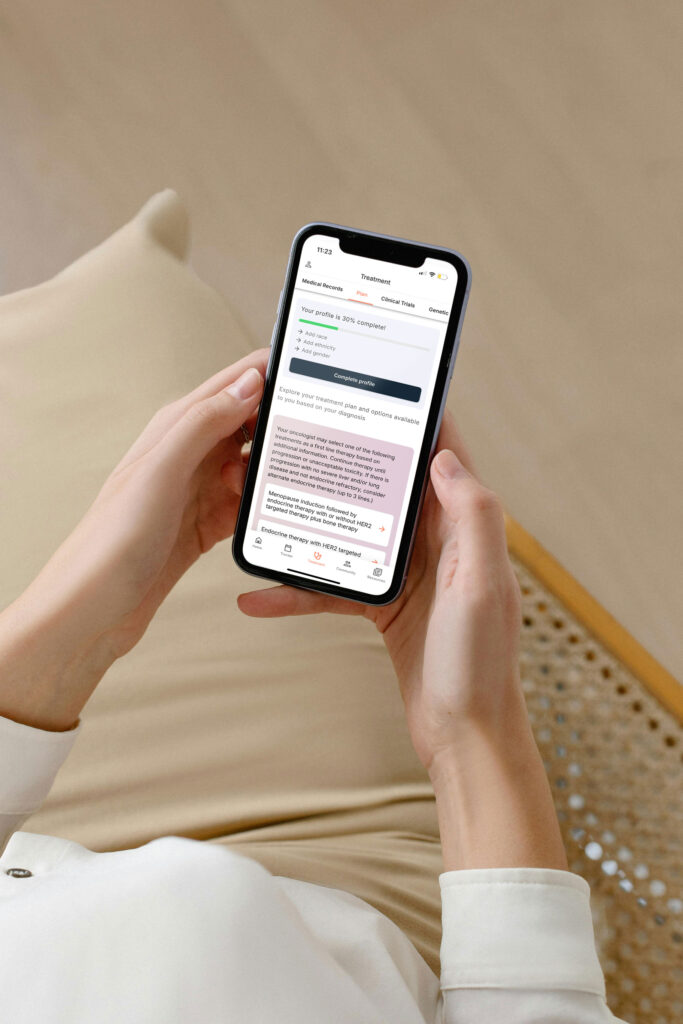
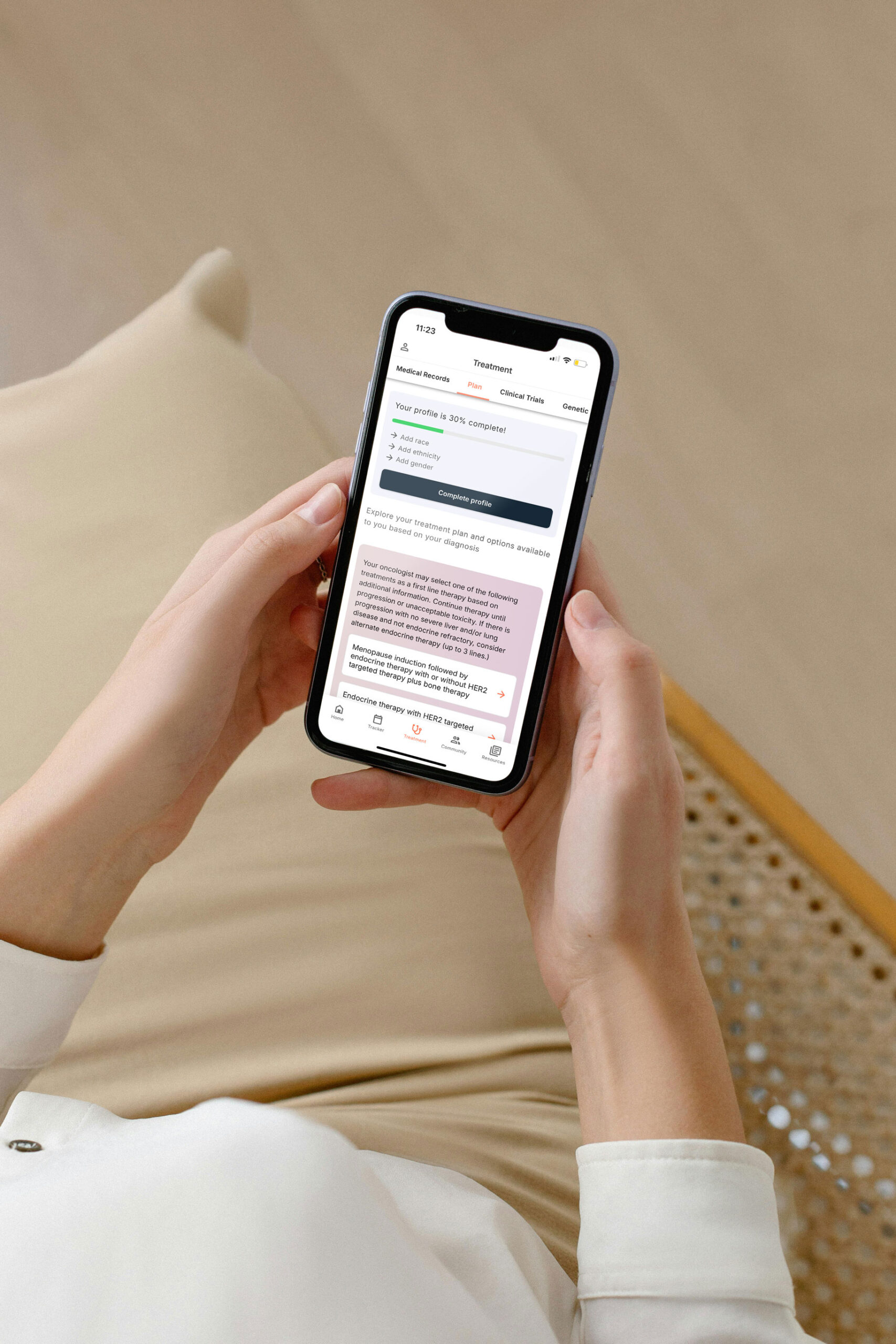
View your personalized treatment plan in the Outcomes4Me app
Use your diagnosis to unlock personalized NCCN Guidelines®-aligned recommendations.
Continue in app
Dr. Cohen is a paid consultant of Stemline and this program has been sponsored by Stemline Therapeutics, Inc. Dr. Kelly Shanahan is the President of the Board of Directors of Metavivor, a metastatic breast cancer advocacy organization that has been compensated by Outcomes4 me for this project, and has received funding from Stemline Therapeutics, Inc.
IMPORTANT SAFETY INFORMATION
ORSERDU may cause serious side effects, including:
- Increased fat (lipid) levels in your blood (hypercholesterolemia and hypertriglyceridemia). Your healthcare provider will do blood tests to check your lipid levels before and during your treatment with ORSERDU
Before taking ORSERDU, tell your healthcare provider about all your medical conditions, including if you:
- Have liver problems
- Are pregnant or plan to become pregnant. ORSERDU can harm your unborn baby
- Your healthcare provider may do a pregnancy test before you start treatment with ORSERDU
- You should use effective (contraception) birth control during treatment with ORSERDU and for 1 week after the last dose
- Tell your healthcare provider right away if you become pregnant or think you may be pregnant during treatment with ORSERDU
- You should use effective (contraception) birth control during treatment with ORSERDU and for 1 week after the last dose
Females who are able to become pregnant:
Males with female partners who are able to become pregnant:
- Are breastfeeding or plan to breastfeed. It is not known if ORSERDU passes into your breast milk. Do not breastfeed during treatment with ORSERDU and for 1 week after the last dose
Tell your healthcare provider about all the medicines you take, including prescription and over-the-counter medicines, vitamins, and herbal supplements. ORSERDU and other medicines may affect each other causing side effects. Know the medicines you take. Keep a list of them to show your healthcare provider or pharmacist when you get a new medicine.
The most common side effects of ORSERDU include:
- Muscle and joint (musculoskeletal) pain
- Nausea
- Increased cholesterol and triglyceride levels in your blood
- Increased liver function tests
- Tiredness
- Decreased red blood cell counts
- Vomiting
- Decreased salt (sodium) levels in your blood
- Increased kidney function test
- Decreased appetite
- Diarrhea
- Headache
- Constipation
- Stomach-area (abdominal) pain
- Hot flush
- Indigestion or heartburn
Your healthcare provider may decrease your dose, temporarily stop, or completely stop treatment with ORSERDU, if you develop certain side effects.
ORSERDU may affect fertility in males and in females who are able to become pregnant. Talk to your healthcare provider if this is a concern for you.
ORSERDU is available as 345 mg and 86 mg tablets.
These are not all the possible side effects of ORSERDU. Call your doctor for medical advice about side effects. You may report side effects to the FDA at 1-800-FDA-1088 or visit www.fda.gov/medwatch.
INDICATION
ORSERDU (elacestrant) is a prescription medicine to treat women who have gone through menopause and adult men with estrogen receptor (ER)-positive, human epidermal growth factor receptor 2 (HER2)-negative, ESR1-mutated advanced breast cancer or breast cancer that has spread to other parts of the body (metastatic), and whose disease has progressed after endocrine therapy.
Your healthcare provider will perform a test to make sure that ORSERDU is right for you.
It is not known if ORSERDU is safe and effective in children.
Please see IMPORTANT PATIENT INFORMATION about ORSERDU.
Intended for US residents only.
For more information about ORSERDU, visit ORSERDU.COM
Personalized support for real care decisions
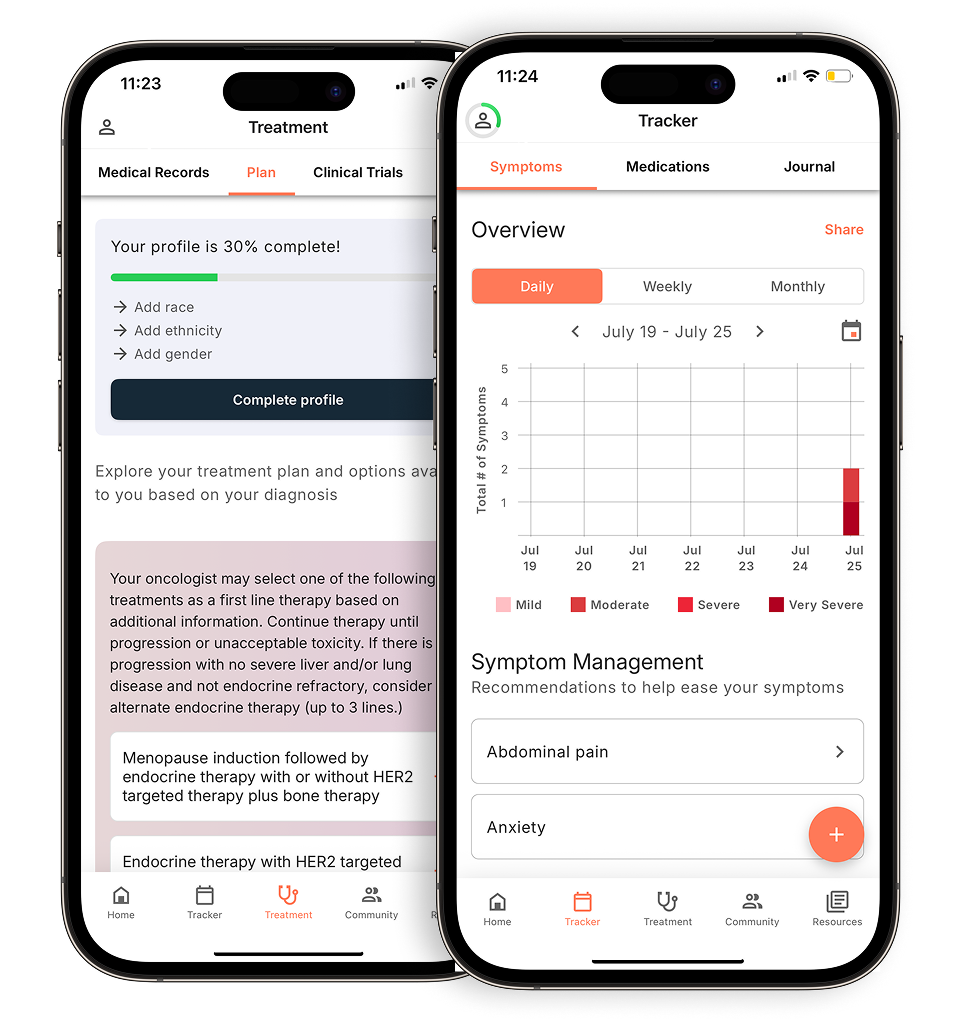
Understand your diagnosis, explore clinical trials, and track symptoms--all in one place.
Get started

Compare treatments, prepare for appointments, and track side effects—all in the app
Built for your diagnosis, Outcomes4Me gives you the tools to make confident, informed decisions—right when you need them.
Continue in app