
A new bladder cancer diagnosis can bring a lot of questions, especially around treatment options. Your exact treatment plan depends on your specific diagnosis, but there are some general guidelines that your care team will follow.
We’ve asked Fox Chase Cancer Center’s Dr. Elizabeth Plimack to walk through the standard treatment options at each stage of bladder cancer and what patients should know when making treatment decisions.
Non–muscle invasive bladder cancer: Preserving the bladder when possible
The first major step after diagnosis is determining whether the cancer is non–muscle invasive, muscle invasive, or metastatic. Dr. Plimack emphasizes that this distinction guides everything that follows.
For non–muscle invasive bladder cancer, the long-standing standard of care remains BCG (Bacillus Calmette-Guérin), which is given directly into the bladder. Dr. Plimack explains that while BCG is an older therapy, “it can be very effective at clearing the bladder of non–muscle invasive bladder cancer in many cases.”
BCG doesn’t work for everyone and current shortages have made access more challenging. Fortunately, the field is expanding quickly. Dr. Plimack notes a growing list of newer treatments, including TAR-200, a device that steadily releases gemcitabine into the bladder, as well as promising combinations like gemcitabine plus docetaxel, now in late-stage clinical testing.
Evidence-based guidance powered by NCCN Guidelines®
Personalized treatment plans shaped by the latest oncology standards—tailored to your diagnosis.
Get started
View your personalized treatment plan in the Outcomes4Me app
Use your diagnosis to unlock personalized NCCN Guidelines®-aligned recommendations.
Continue in app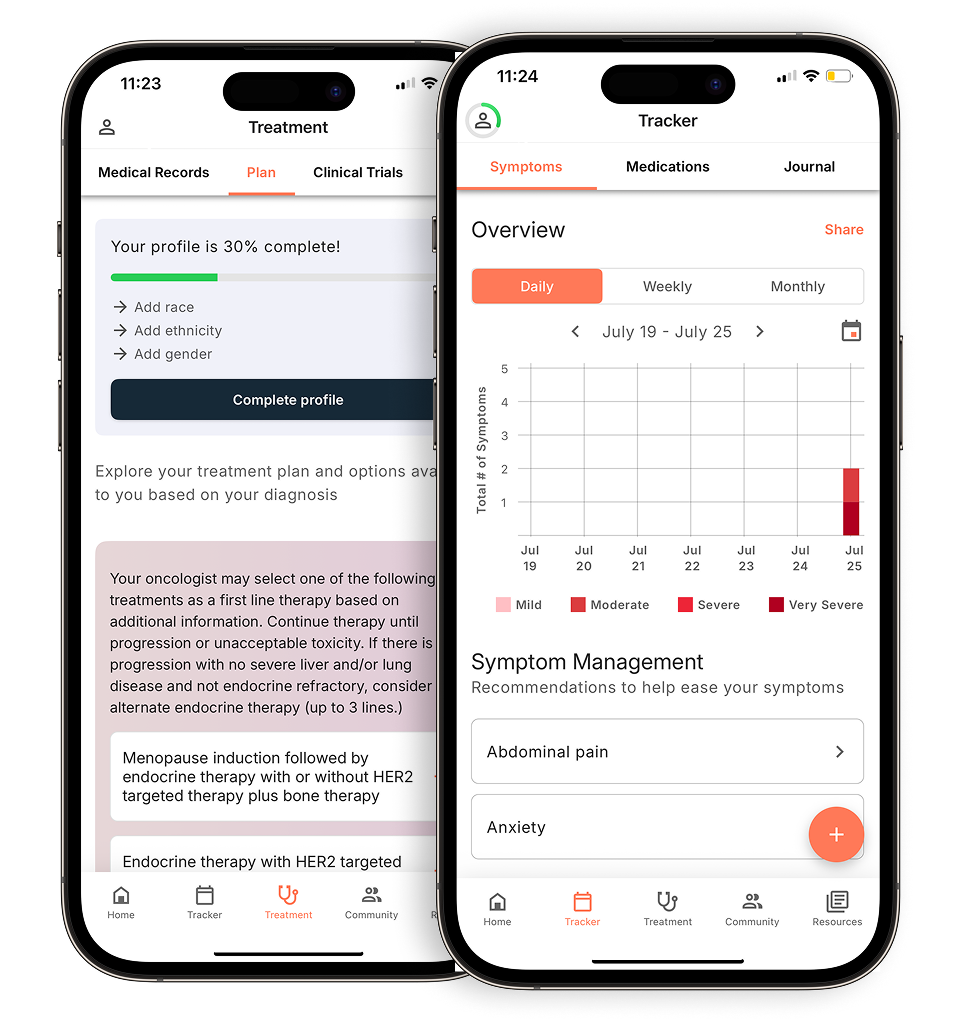
Through all these options, Dr. Plimack stresses that the goal for this group of patients is cure. Although the goal is to avoid bladder removal when possible, surgery is still an option if bladder-directed therapies aren’t effective. She encourages patients to discuss all available treatments with their urologist and stay aware of new options emerging through clinical trials.
Muscle-invasive bladder cancer: Moving toward more effective combinations
When cancer invades the bladder muscle, treatment may be more intensive. Patients are typically referred to a medical oncologist to discuss neoadjuvant therapy, which is treatment given before bladder removal to help shrink the cancer.
In the past, the standard approach was cisplatin-based chemotherapy, like gemcitabine/cisplatin, but research is moving quickly. Adding durvalumab, an immunotherapy, has improved outcomes, and even more promising results have come from combining enfortumab vedotin with pembrolizumab (EV+P).
Dr. Plimack explains that EV+P has “really dramatic effects on clearing the bladder of muscle-invasive bladder cancer,” and many centers are now using this approach, especially in clinical trials. She emphasizes it’s essential for patients to stay informed. “This is a rapidly changing field, and it’s important for patients to talk with their medical oncologist about the newest treatments and clinical trials that could be right for them,” she adds.
Surgery or bladder preservation
Following neoadjuvant therapy, most patients move on to bladder removal, which Dr. Plimack calls “the surest path to cure.” Still, she highlights important exceptions. Radiation may be an option when surgery isn’t safe, and some clinical trials are exploring bladder preservation for patients whose cancer appears to have been completely cleared by systemic treatment.
Therapy after surgery (Adjuvant therapy)
Post-surgery treatment depends on what was given before. She notes:
- Patients who began with gemcitabine/cisplatin + durvalumab typically continue durvalumab.
- Those treated with EV+P receive additional EV+P.
- Patients treated only with older chemotherapy regimens may qualify for adjuvant nivolumab, particularly if they have high-risk features.
For anyone with muscle-invasive bladder cancer, Dr. Plimack advises patients to seek care from both “a trained urologist who knows how to remove bladders well” and “a trained medical oncologist who’s on the cutting edge of systemic therapies” if possible.
New research on metastatic bladder cancer
When bladder cancer has spread beyond the bladder, either at diagnosis or after previous treatment, the goals shift. While metastatic bladder cancer is not considered curable, Dr. Plimack says there is now “a lot more optimism” because of highly effective modern combination therapy.
EV+P has become the leading first-line treatment for metastatic disease. According to Dr. Plimack, this combination is “extremely effective in shrinking cancers,” and in some cases leads to long-lasting responses even after treatment is reduced or stopped.
This approach works for a broad range of patients, including those who may not qualify for older chemotherapy options, which is why Dr. Plimack recommends that “everyone with metastatic bladder cancer should at least talk about EV+P to determine whether it is appropriate.”
After EV+P, treatment decisions become more individualized and often depend on genomic biomarkers, prior therapies, and overall health.
How to talk to your care team about new therapies
Bladder cancer treatments are evolving quickly, and it’s important to know how to discuss newer options like EV+P with your doctor. Dr. Plimack emphasizes that even if your community oncologist doesn’t see bladder cancer often, “it makes sense to be connected to a center or clinician who is actively involved in conversation with experts.”
She encourages patients to be proactive. If your oncologist doesn’t mention EV+P, it’s appropriate to ask about it, since it’s “so dramatically effective that all clinicians should be aware of it as an option,” she shares. Getting a second opinion at an NCI-designated cancer center can also help because specialists there can coordinate with your local care team.
She adds key steps for patients include:
- Understanding your cancer stage early
- Meeting with both a urologist and a medical oncologist
- Asking about EV+P and other emerging therapies
- Considering clinical trials
- If possible, seek care at a center with coordinated, multidisciplinary expertise
Watch the full discussion with Dr. Plimack here or visit part one of our discussion recap.
Personalized support for real care decisions
Understand your diagnosis, explore clinical trials, and track symptoms--all in one place.
Get started
Compare treatments, prepare for appointments, and track side effects—all in the app
Built for your diagnosis, Outcomes4Me gives you the tools to make confident, informed decisions—right when you need them.
Continue in app