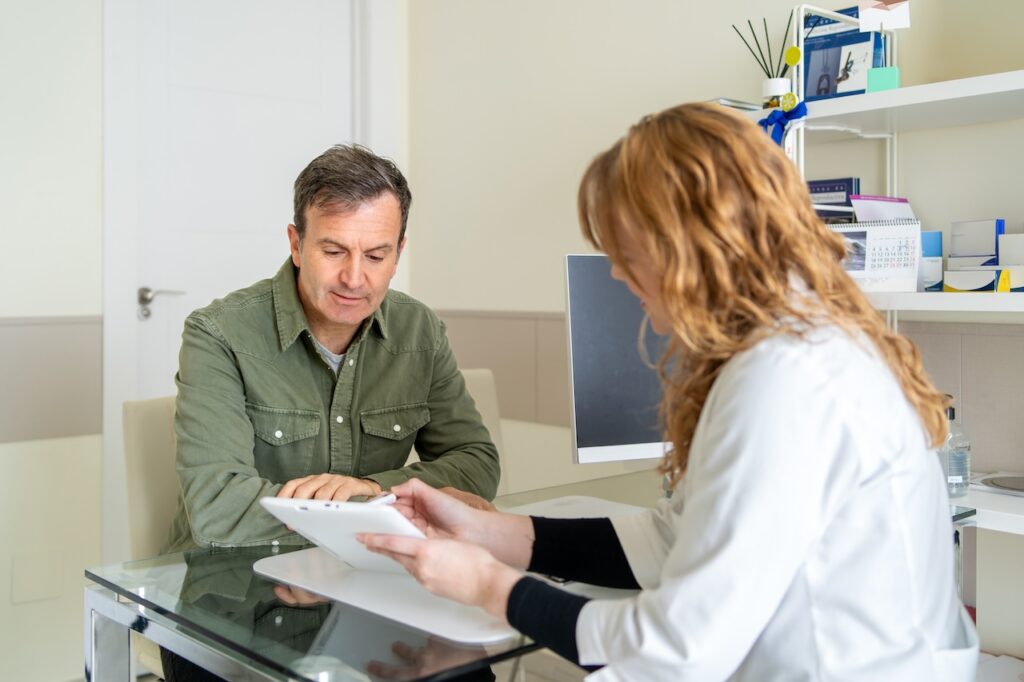
1) When a patient first comes in for an appointment, what questions should they be asking?
Dr. Plimack: First, make a list of questions because there’s only so much you can absorb. It’s a really high-level conversation. We talk about critical concepts, and it’s emotional. You’re thinking about your life, your bladder, a new diagnosis of cancer, and what that means. There’s a lot going on in the room when you’re having the conversation, so just give yourself some grace to observe what you can.
Evidence-based guidance powered by NCCN Guidelines®
Personalized treatment plans shaped by the latest oncology standards—tailored to your diagnosis.
Get started
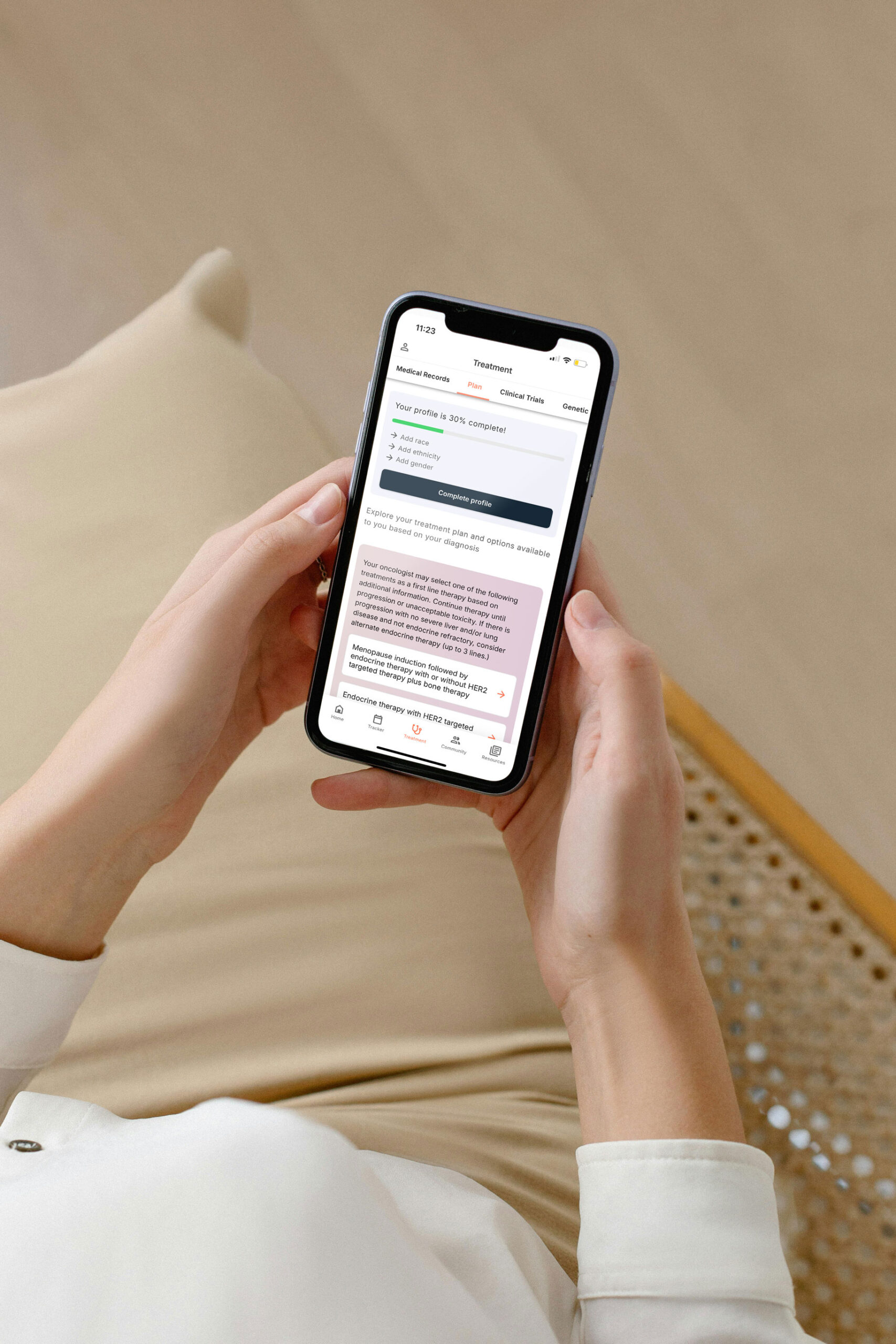
View your personalized treatment plan in the Outcomes4Me app
Use your diagnosis to unlock personalized NCCN Guidelines®-aligned recommendations.
Continue in app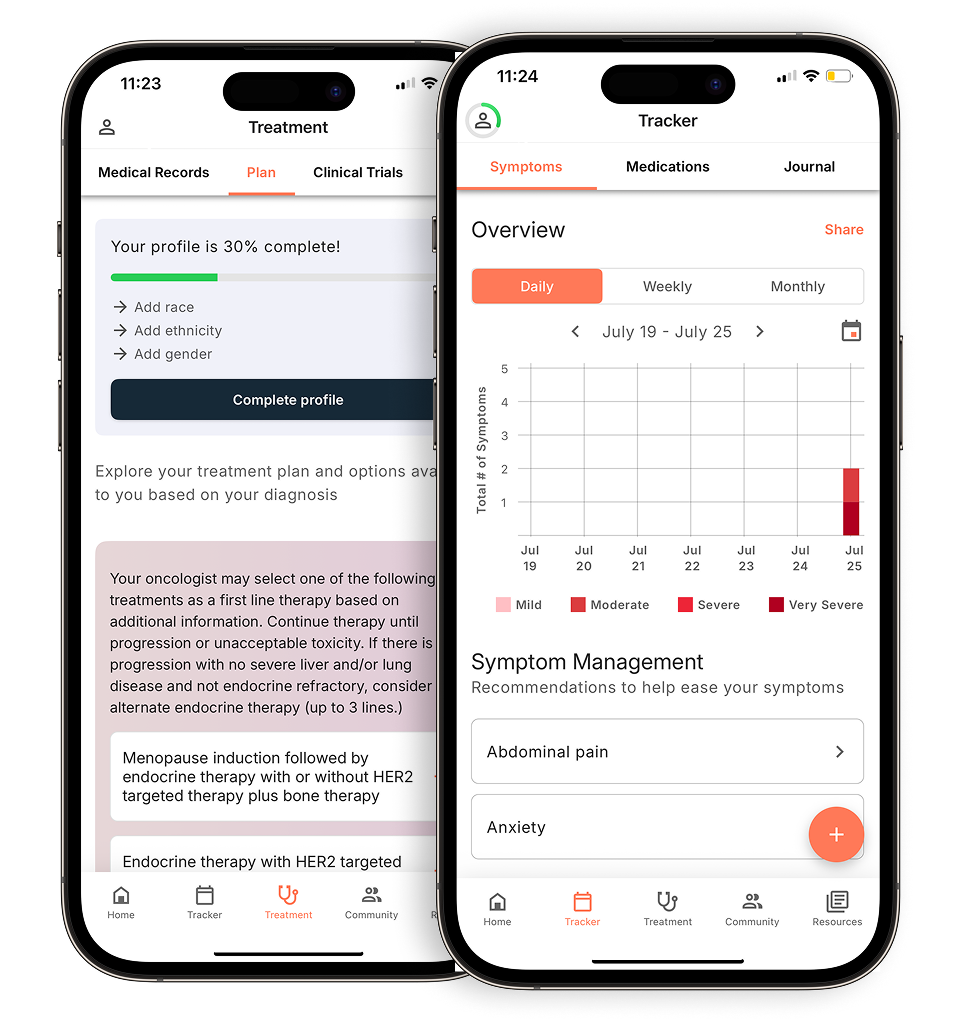
Try to have someone take notes. I provide a written summary to my patients of the visit, just because I know a lot of what I say is helpful to write down. I think leaving with an understanding of what your diagnosis is, what it means for you, and what your goals are is key. For most people, the goal is cure, but for some, especially older patients, quality of life takes precedence over aggressive approaches. Knowing your values and sharing those with your care team is really helpful.
You’re also going to hear a lot of big drug names, treatment names, and surgeries. Try to understand the big picture, and then come back to your clinician with questions later if you have any that aren’t answered.
2) Are there any nutritional lifestyle supportive care strategies you recommend after a bladder cancer diagnosis?
Dr. Plimack: Build your village. Keep your team close. Share with your family what you’re going through so they can help you. We see a lot of people want to keep things secret and worry about how it will be perceived, but the support your community, family, friends, and spiritual friends can provide, is really incredible. Without even knowing it, you’re helping other people going through this by sharing your experience and showing openness.
The biggest thing I recommend is to really take stock of what’s important to you and use this as a silver lining to focus the lens on your life and what means the most to you. So, the sorts of things you want to do and where you want to spend your time. We all have one life to live, and once mortality comes into sharper focus, I think there’s an opportunity to embrace that and live life to the fullest, which we see a lot of our patients do. They’re really an inspiration to us.
In terms of lifestyle, being active, as best your body can, is the best medicine. If you tend to be sedentary, but your body’s able to walk and get outside, do so. Eat a healthy diet. There’s so much advice out there, but I don’t have any specific cancer diet. Just eat foods your grandma would recognize, grown from the earth, and try to limit processed foods.
During treatment, the patients who do the best focus on hydration. Measure how much water you’re drinking, especially if you’re on chemotherapy or systemic therapy. People may think they drink a lot, but often they don’t. Staying hydrated is really helpful for bladder cancer patients, even though it can be hard if you’re leaking urine, but it’s essential for kidney health.
To learn more from Dr. Plimack, read the recap on bladder cancer staging and treatment options.
Personalized support for real care decisions
Understand your diagnosis, explore clinical trials, and track symptoms--all in one place.
Get started
Compare treatments, prepare for appointments, and track side effects—all in the app
Built for your diagnosis, Outcomes4Me gives you the tools to make confident, informed decisions—right when you need them.
Continue in app