
The following questions and responses have been lightly edited for grammatical purposes.
1) Can you explain the differences between a SERM (selective estrogen receptor modulator), a SERD (selective estrogen receptor downregulator), and an aromatase inhibitor? How do the findings from the phase III lidERA trial fit into this?
Dr. Kelly McCann: This is very exciting data that was presented from the lidERA trial. There are really three major ways we currently target the estrogen receptor that are FDA-approved.
One option is tamoxifen, which is a SERM, or selective estrogen receptor modulator. It binds to the estrogen receptor and has different effects in different tissues. In breast tissue, it shuts down estrogen signaling, but it has a mild stimulatory effect in the bones. That’s why it’s called a “modulator.”
Evidence-based guidance powered by NCCN Guidelines®
Personalized treatment plans shaped by the latest oncology standards—tailored to your diagnosis.
Get started
View your personalized treatment plan in the Outcomes4Me app
Use your diagnosis to unlock personalized NCCN Guidelines®-aligned recommendations.
Continue in app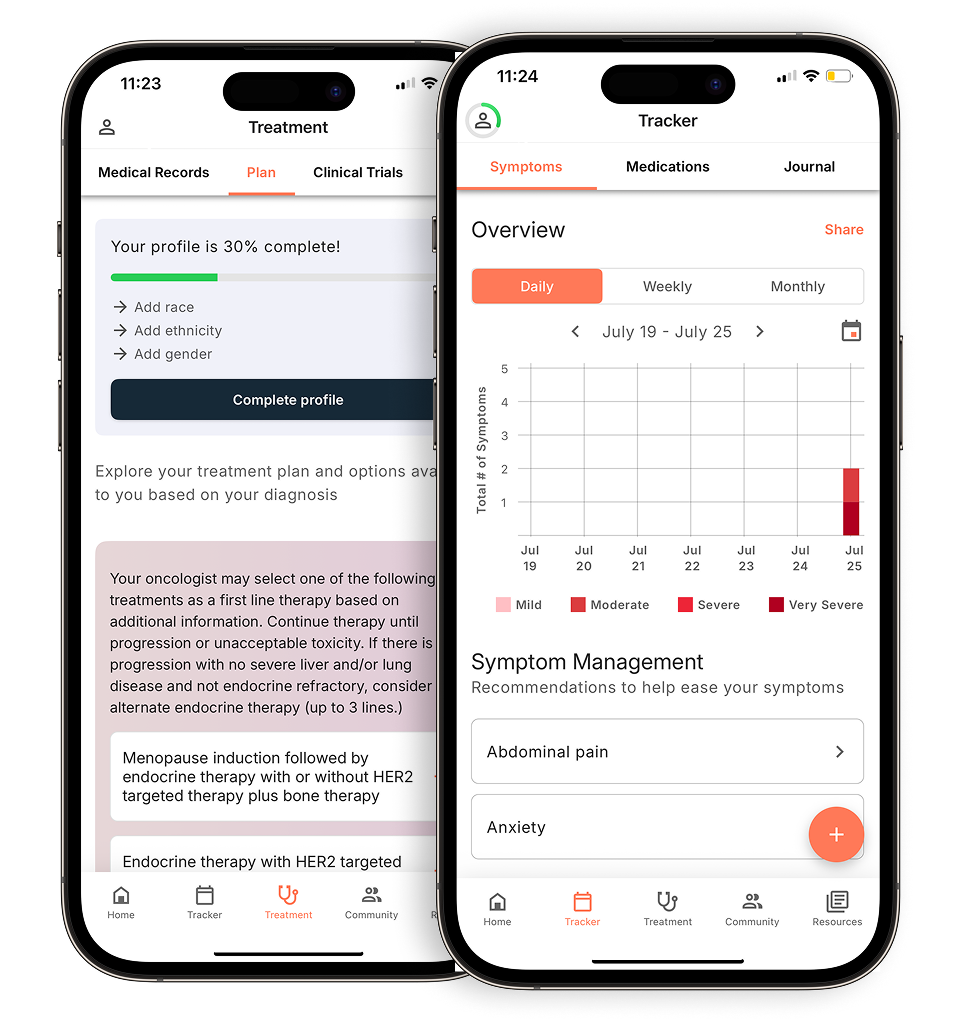
Aromatase inhibitors have been around since the 1990s, while tamoxifen has been used since the 1970s. They work by further depleting estrogen levels. In postmenopausal women, most of the small amount of estrogen the body still makes comes from fat tissue and the adrenal glands, which sit on top of the kidneys. Aromatase inhibitors block estrogen production in those areas.
If a woman is premenopausal, most estrogen is coming from the ovaries. If we use an aromatase inhibitor in that setting, we also need to shut down ovarian estrogen production.
Oral SERDs are medications that cause degradation of the estrogen receptor itself. There are several of them. Two are approved in the metastatic setting: elacestrant and imlunestrant. Giredestrant is the only one so far that has been reported in the curative, or early-stage, setting.
We’re fairly familiar with this class of drugs, but this trial was especially exciting because it’s the first time an oral SERD has shown benefit in the curative setting. That’s a huge development.
2) Can you break down the findings of the trial and explain what it means for patients?
Dr. Kelly McCann: In this trial, patients were randomized to receive either giredestrant or standard of care, which could be tamoxifen or one of the aromatase inhibitors. The standard-of-care option was chosen by the treating physician.
At three years, the main outcome measured was whether patients developed cancer again. In the giredestrant arm, 92.4% of patients had no cancer recurrence, compared with 89.6% in the standard-of-care arm.
In ER-positive breast cancer, these cancers tend to grow more slowly and can recur later, so I expect that over time, we’ll see even more benefit. When I talk to patients about tamoxifen or aromatase inhibitors, I’m often talking about benefits 20 years down the line. This is work you do upfront after diagnosis that can have very long-term impact. More data will continue to come out as we follow patients for additional years.
3) Is giredestrant approved yet?
Dr. Kelly McCann: I do expect it will be approved in the future. Typically, we see these large trials presented at major conferences, and FDA approvals often follow within a few months.
One concern I have, and others share this, is cost. When drugs are first approved, they’re often very expensive. Tamoxifen and aromatase inhibitors are inexpensive because they’ve been around for decades and are available at local pharmacies.
Another question I think about is why giredestrant showed better outcomes at three years. Is it because the drug itself works better biologically, or because it’s better tolerated and fewer patients stop taking it?
With aromatase inhibitors, many patients experience significant joint pain, or arthralgias, which leads some to discontinue treatment. According to the clinical trial, giredestrant caused fewer joint symptoms, so one reason it may appear more effective is that patients were able to stay on it longer.
I always tell my patients: my favorite drug for you is the one you’re actually going to take. If someone struggles with letrozole, we might switch to exemestane, or then to tamoxifen. It’s an ongoing conversation about finding the medication that works best and is tolerable enough for each individual patient.
Get the full SABCS 2025 recap from Dr. Kelly McCann and watch the full webinar.
Personalized support for real care decisions
Understand your diagnosis, explore clinical trials, and track symptoms--all in one place.
Get started
Compare treatments, prepare for appointments, and track side effects—all in the app
Built for your diagnosis, Outcomes4Me gives you the tools to make confident, informed decisions—right when you need them.
Continue in app