
After a breast cancer diagnosis, the amount of information can feel overwhelming, and the time between doctor’s appointments can feel long. You’re left with questions, new symptoms to track, and a need for emotional support that doesn’t operate on a 9-to-5 schedule. This is precisely the gap that a support app is designed to fill. It acts as your partner in care, helping you stay organized and feel less alone. A quality app to connect with breast cancer patients provides a community that gets it, while also offering features that empower you to have more productive conversations with your oncologist. Here, we’ll break down the best apps available to help you find the support you need, 24/7.
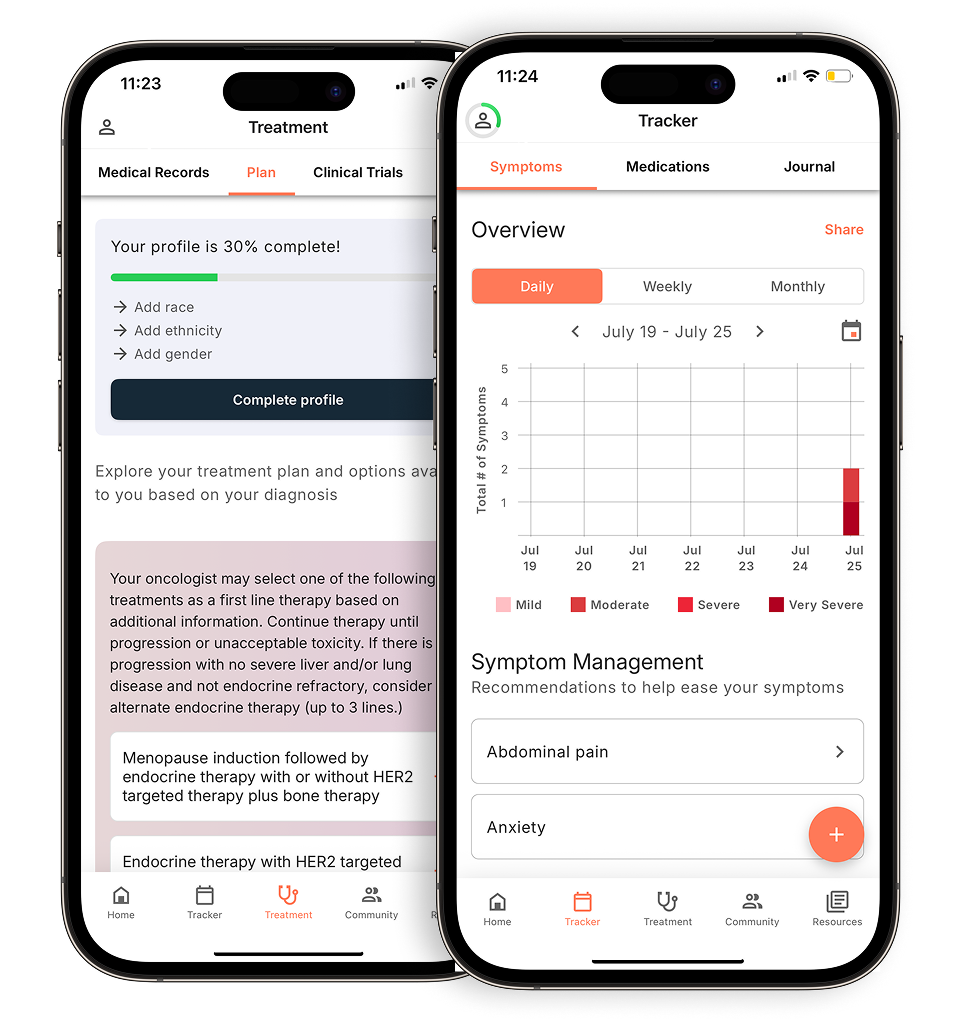
View your personalized treatment plan in the Outcomes4Me app
Use your diagnosis to unlock personalized NCCN Guidelines®-aligned recommendations.
Key Takeaways
- Choose an app with personalized guidance: Look for a tool that provides credible information tailored to your specific diagnosis, helping you understand your treatment options and feel more prepared for doctor’s appointments.
- Prioritize finding a supportive community: Connecting with peers who truly understand your experience is essential for emotional well-being and helps reduce feelings of isolation.
- Use practical tools to track your health: Features like symptom and medication logs empower you to be an active partner in your care, leading to more productive conversations with your oncology team.
What to Look For in a Breast Cancer Support App
When you’re managing a breast cancer diagnosis, the right support can make all the difference. While your care team is essential, a support app can fill the gaps between appointments, offering community, information, and a sense of control right from your phone. But with so many options available, how do you choose the one that’s right for you?
The best apps go beyond simple information-sharing. They offer a safe space to connect with others, manage your health, and find guidance that’s tailored to your specific situation. Think of it as adding a new, specialized member to your personal support system. When you’re exploring different apps, focus on three key areas: the community it builds, the privacy it guarantees, and the quality of the guidance it provides. Finding an app that excels in all three areas will ensure you get the helpful, secure, and reassuring experience you deserve.
Find Your Community
Going through breast cancer can feel isolating, but you are not alone. A great support app connects you with people who truly understand what you’re experiencing because they’re living it, too. Look for an app that prioritizes creating a genuine sense of community where you can share your story, ask questions, and offer encouragement. Some apps are designed specifically to foster these peer-to-peer connections. This kind of support focuses on your emotional well-being, reminding you that there’s a whole community of people ready to listen and share their strength. Finding your people can be one of the most powerful parts of your journey.
Protect Your Privacy and Security
When you use a health app, you’re sharing some of your most personal information. That’s why it’s so important to choose an app that takes your privacy seriously. Before downloading, look for a clear and easy-to-understand privacy policy. The app should explain exactly what data it collects and how it’s used and protected. Trustworthy apps prioritize user security to ensure your medical details and personal conversations remain confidential. Your peace of mind is non-negotiable, and you should feel confident that your personal health information is safe and secure while you focus on your health and well-being.
Get Guidance You Can Trust
When you have questions about your health, you need answers you can rely on. The best breast cancer support apps provide evidence-based information that is personalized to your unique diagnosis and treatment plan. Look for apps that offer customized recommendations and resources based on your specific needs. For example, some tools provide personalized coaching to support you through therapy, while others help you understand your options. The goal is to find an app that empowers you with credible, relevant information, so you can feel more prepared and confident when discussing your care with your oncologist and making decisions about your health.
The Best Apps for Breast Cancer Support and Community
Finding the right support system after a breast cancer diagnosis can feel like a job in itself. While your care team, family, and friends are essential, connecting with people who truly understand what you’re going through offers a unique kind of comfort. Digital communities and support apps can fill that gap, providing a safe space to ask questions, share your story, and find solidarity any time of day or night. But with so many options available, it’s hard to know where to start.
That’s why we’ve put together this list of the best apps for breast cancer support. Each one offers something a little different, whether you’re looking for data-driven guidance to help you make informed decisions, a social network to find friends on a similar path, or a simple forum to ask a question without judgment. Think about what you need most right now—is it information, emotional connection, or practical tools? Your answer will help you find the app that feels like the right fit for you. These platforms are designed to connect you with resources and people who can make the journey feel a little less lonely.
Outcomes4Me: AI-Driven Personalized Guidance
If you’re looking for a tool that helps you make sense of your diagnosis and treatment plan, Outcomes4Me is an excellent choice. This app uses artificial intelligence to provide you with personalized information based on your specific medical records. It helps you understand the latest treatment options, find relevant clinical trials, and manage your symptoms, all based on established clinical guidelines. It’s like having a digital health advocate in your pocket, empowering you to have more informed conversations with your oncologist. For patients who want to take an active role in their care and get evidence-based information tailored just for them, this app is a powerful resource.
MyBreastCancerTeam: Social Networking for Patients
Think of MyBreastCancerTeam as a private social network exclusively for people who have been impacted by breast cancer. It’s a place to find and connect with others based on your specific diagnosis, treatment stage, and location. You can share updates, post photos, and offer emotional support in a feed-style format that feels familiar and easy to use. The platform focuses on building genuine friendships and creating a positive, judgment-free environment. If you’re craving the daily connection and camaraderie that comes from a dedicated social community, this app is a fantastic way to build your personal support team and remember you aren’t alone.
Breast Cancer Support by Inspire: Forum-Based Community
For those who prefer a more topic-focused approach to community, Breast Cancer Support by Inspire is a great option. This platform is built around discussion forums where you can ask specific questions and share experiences with thousands of other patients, survivors, and caregivers. You can search for conversations about particular treatments, side effects, or emotional challenges and get perspectives from people who have been there. It’s less about creating a social profile and more about tapping into a vast well of collective knowledge and experience. If you have a pressing question or just want to read through others’ stories, Inspire provides a safe and anonymous space to do so.
Cancer Support Community: Comprehensive Support Platform
The Cancer Support Community offers a truly comprehensive approach to emotional and practical support. Beyond just connecting you with peers, this platform gives you access to a wide range of resources, including online support groups moderated by licensed professionals, educational materials, and a helpline for immediate assistance. It’s an all-in-one resource designed to address the full spectrum of challenges that come with a cancer diagnosis. Whether you need to talk to a counselor, find a local support group, or simply learn more about your condition, this app provides a trusted and professionally vetted environment to find the help you need.
PinkPad: Peer-to-Peer Connection App
Sometimes, you just want to talk to one person who really gets it. PinkPad is a mobile app designed to facilitate these meaningful peer-to-peer connections. It matches breast cancer patients and survivors for one-on-one conversations, allowing you to build a more personal and direct support system. You can find a mentor who has completed treatment or a friend who is at the same stage as you. This app is perfect for anyone who finds large groups overwhelming and is instead seeking a deeper, more individualized connection. It’s a simple yet powerful way to share advice, offer encouragement, and build a lasting bond with someone on a similar journey.
The Most Helpful Features in a Support App
When you’re looking for a support app, you’ll find they aren’t all created equal. The best ones go beyond just providing information; they offer a mix of practical tools and genuine human connection that can make a real difference in your day-to-day life. From tracking your symptoms to finding someone who truly understands what you’re going through, these key features are what transform an app from a simple resource into an indispensable part of your support system.
Connect with People Who Understand
One of the most powerful things a support app can offer is a connection to people who just get it. Finding peers who share similar experiences means you don’t have to explain the nuances of your diagnosis or the emotional weight of treatment. This shared understanding is crucial for your emotional well-being and can help you feel less isolated on your journey. Whether it’s a one-on-one chat with someone your age who has the same subtype of breast cancer or a group discussion about managing side effects, these connections create a space where you can be completely yourself and find validation and encouragement from others walking a similar path.
Track Symptoms and Manage Medications
Managing treatment involves keeping track of a lot of details, from medication schedules to fluctuating symptoms and side effects. A great support app provides simple, intuitive tools to log this information. Consistently tracking how you feel can help you and your care team identify patterns, manage side effects more effectively, and make informed decisions about your treatment plan. It also empowers you to have more productive conversations with your doctor because you can provide specific data instead of just trying to remember how you felt weeks ago. This feature helps you take an active role and improve health after treatment.
Join Community Forums and Chats
Beyond individual connections, community forums and group chats provide a space for collective wisdom and support. These features allow you to ask questions, offer your own advice, and simply read through conversations to learn from the experiences of others. It’s a place where you can share their stories, find answers from both peers and experts, and celebrate small victories with people who understand their significance. Participating in a larger community can be incredibly validating, reminding you that you are part of a resilient group of people who are navigating cancer together. You can contribute when you feel up to it and draw strength from the community when you need it most.
Stay Informed with Educational Content
Access to accurate, easy-to-understand information is critical. The internet can be overwhelming, but a trustworthy app cuts through the noise by providing vetted educational resources. Look for apps that offer articles, videos, and expert-led webinars on topics relevant to your diagnosis, treatment options, and life after cancer. Having a go-to source for reliable information about cancer care helps you feel more in control and better prepared for conversations with your healthcare team. This knowledge empowers you to ask smarter questions and participate more fully in decisions about your own health.
Access Emotional Support, 24/7
Cancer doesn’t keep business hours, and sometimes you need support at 2 a.m. The most helpful apps recognize this and offer around-the-clock access to emotional support. This might come in the form of active community forums, resource libraries with guided meditations, or even direct lines to trained counselors. For example, some apps connect you with cancer information specialists who are available day or night. Knowing that help is just a few taps away, anytime you need it, can provide immense peace of mind and a crucial safety net during the most challenging moments.
How Support Apps Can Improve Your Emotional Well-being
A breast cancer diagnosis brings a wave of emotions, from fear and uncertainty to loneliness. While your care team focuses on your physical health, managing your emotional well-being is just as critical. Support apps provide a unique and accessible way to find community, gain confidence, and feel understood. They offer a lifeline right in your pocket, connecting you with resources and people who can help you process your experience and feel more in control. These digital tools are designed to address the emotional side of cancer, offering comfort and strength whenever you need it.
Feel Less Alone by Connecting with Peers
One of the most isolating parts of a cancer diagnosis is feeling like no one truly understands what you’re going through. Support apps bridge this gap by connecting you with others who have similar diagnoses, treatment plans, or life situations. Apps like Bezzy Breast Cancer are built around community connection, linking you with peers who share your specific experiences. Whether you’re dealing with the side effects of chemotherapy or figuring out life after treatment, finding someone who can say, “I’ve been there,” is incredibly powerful. This shared understanding validates your feelings and reminds you that you are part of a larger community, turning isolation into solidarity.
Find Hope Through Shared Stories
When you’re in the thick of treatment, it can be hard to imagine what life will look like on the other side. Reading stories from people who have walked a similar path can be a powerful source of hope and inspiration. Apps like Becca are designed to share inspiring stories from others who are finding their own “new normal” after a breast cancer diagnosis. These narratives provide a realistic yet optimistic glimpse into the future. Seeing how others have handled challenges, embraced change, and found joy after cancer can help you envision your own path forward and provide the encouragement you need to keep going on difficult days.
Gain Confidence with Expert Reassurance
Anxiety often stems from the unknown. Having access to reliable information can quiet your fears and help you feel more confident in your decisions. Some apps offer direct access to cancer information specialists who can answer questions about everything from emotional health to financial concerns. The ACS CARES program, for example, provides trustworthy guidance on topics that go beyond medical treatment. Getting clear, expert-backed answers helps you understand what to expect and how to manage different aspects of your life with cancer. This reassurance empowers you to take an active role in your care and face challenges with greater certainty.
Find a Safe Space to Share Your Concerns
Sometimes you need to talk about your fears and frustrations without worrying about burdening family or friends. Support apps can provide a safe, confidential space to express yourself freely. Many platforms connect users with trained volunteers who have gone through similar cancer experiences themselves. This peer-support model creates an environment of deep empathy and understanding. Knowing you’re sharing with someone who has been in your shoes allows you to be vulnerable and honest about your concerns. It’s a place where you can ask tough questions and share your deepest worries without judgment, which is essential for emotional processing and healing.
Build Resilience with Your Community
Resilience isn’t something you build in a day; it’s forged over time through connection and shared strength. Apps that foster a strong sense of community help you develop this emotional fortitude. Platforms like OncoBuddy offer community support features where patients, survivors, caregivers, and even medical experts can interact. By sharing stories, offering advice, and providing encouragement, this network becomes a powerful source of emotional support. Regularly engaging with a community that lifts you up can help you better cope with the ups and downs of your cancer journey. This collective strength reinforces your own, helping you build the resilience needed to face whatever comes next.
How a Support App Can Work With Your Care Team
A support app doesn’t replace your oncology team, but it can be a powerful partner in your care. Think of it as a bridge that connects you to information, community, and your own health data, especially during the time between appointments. Using an app helps you organize your thoughts, track your experiences, and show up to your appointments feeling more prepared and confident. It transforms the dynamic from a one-way conversation to a true collaboration between you and your providers. By centralizing your resources and support system in one place, you can work more effectively with your care team to make sure your treatment plan aligns with your life and your goals. This partnership is crucial because you are the expert on your own body and daily experiences. An app gives you the tools to communicate those experiences clearly and effectively, ensuring your voice is a central part of every decision. It’s about turning passive waiting into active participation, which can make a significant difference in how you feel about your treatment journey.
Fill the Gaps Between Doctor’s Appointments
The days and weeks between oncologist visits can feel long, and it’s easy to feel disconnected or anxious when questions pop up. A support app provides a constant source of connection and information right at your fingertips. You can use features like symptom trackers to log how you’re feeling each day, which creates a detailed record to share with your doctor. This is so much more reliable than trying to remember everything on the spot. Many apps also offer access to virtual support groups and educational resources, giving you a place to turn for ongoing emotional support and answers whenever you need them, not just during office hours.
Prepare Better Questions for Your Oncologist
Walking into an appointment with a clear list of questions can completely change the quality of the conversation with your care team. A support app helps you do just that. As you learn more about your diagnosis and track your side effects, you can jot down specific questions as they arise. Instead of feeling rushed or forgetting what you wanted to ask, you’ll have an organized list ready to go. This preparation helps you lead the conversation and ensures you get the information you need to understand your care plan. Having an accessible platform for information and self-tracking makes it easier to pinpoint what you need to discuss, turning your appointments into productive, collaborative sessions.
Access Resources Specific to Your Diagnosis
One of the most overwhelming parts of a cancer diagnosis is sifting through the vast amount of information online. A great support app cuts through the noise by providing resources tailored to you. Platforms like Outcomes4Me use your specific diagnosis, stage, and medical history to deliver personalized guidance, including treatment options and relevant clinical trials. This means you’re getting information that’s actually relevant to your situation, often based on trusted sources like the NCCN Guidelines for Patients®. This level of personalization helps you understand your options more clearly and reduces the anxiety that comes from searching for answers on your own.
Supplement Your Current Therapy or Counseling
If you’re seeing a therapist or counselor, a support app can be an excellent tool to use between sessions. It acts as an extension of your mental health care, helping you apply the coping strategies you’re learning in a real-world context. You can use features like a mood journal to track your emotional state or connect with peer support groups when you need to talk to someone who gets it. These digital tools and integrated support networks are valuable for reinforcing your progress. Sharing your tracked data or experiences from the app with your therapist can also provide deeper insights and make your sessions even more productive.
Feel Empowered to Make Informed Decisions
Ultimately, a support app can help you feel more in control of your health journey. By giving you access to credible information, a supportive community, and tools to track your own experience, it empowers you to become an active participant in your care. This confidence is key to practicing shared decision-making with your oncology team. When you understand your diagnosis and treatment options, you can have more meaningful conversations with your doctors and make choices that feel right for you. This shift from being a passive patient to an informed advocate for your own health can make a world of difference in your cancer experience.
Related Articles
- Top 5 Apps for Breast Cancer Symptom Tracking
- Recommended Support Apps? | Outcomes4Me Community
- Is This App for Breast Cancer Patients Only? | Outcomes4Me Community
- Best Breast Cancer Guidance (Awareness & Mobile App) | Outcomes4Me
- How To Support Someone With Breast Cancer | Outcomes4me
View your personalized treatment plan in the Outcomes4Me app
Use your diagnosis to unlock personalized NCCN Guidelines®-aligned recommendations.
Frequently Asked Questions
How do I choose the right app for me when there are so many options? The best way to start is by thinking about what you need most right now. Are you looking for data-driven information to help you understand your treatment options? Or are you craving a connection with people who are on a similar journey? Some apps are designed to provide personalized, evidence-based guidance, while others focus on building a social community. Pinpointing your primary need will help you narrow down the choices and find an app that feels like the right fit for you.
Is my personal health information actually safe on these apps? This is a completely valid and important concern. Reputable health apps take your privacy very seriously and use security measures to protect your data. Before you commit to an app, take a moment to find its privacy policy. It should be easy to find and clearly explain what information is collected and how it is kept confidential. You should feel confident and secure with any tool you choose to use for your health.
Can a support app really help me have better conversations with my oncologist? Absolutely. Using an app to track your symptoms, side effects, and questions as they come up creates a detailed record of your experience between visits. Instead of trying to remember everything on the spot, you can walk into your appointment with organized, specific information. This helps you lead the conversation, ask more targeted questions, and work with your doctor as a collaborative partner in your own care.
What if I’m not looking for a big community and just want information? That’s perfectly fine, and there are apps designed just for that. Not everyone is looking for a forum or social network. Some of the most powerful apps are focused on delivering personalized guidance based on your specific diagnosis and medical history. These tools can help you understand clinical guidelines, learn about treatment options, and find relevant clinical trials without requiring you to participate in group discussions.
Are most of these support apps free to use? Yes, many of the best and most comprehensive breast cancer support apps are available at no cost to patients and their families. The goal of these platforms is to make support and information as accessible as possible. While some may offer premium features, the core functions for community, education, and health tracking are typically free. You can always confirm any costs in the app store description before you download.