For people living with chronic lymphocytic leukemia (CLL), treatment decisions often come with an important question: Is this something I’ll need to take indefinitely, or is there an option that allows for a break? CLL treatment can follow either approach. New data from a large international study is helping clarify how these strategies compare and what that could mean for you.
Why treatment duration matters
Some CLL treatments, like ibrutinib, are taken continuously, meaning patients stay on the medication as long as it’s working. Other options, like venetoclax combined with obinutuzumab (VO) or ibrutinib (VI), can be given for a fixed period and then stopped if the treatment is successful.
The key question has been whether these fixed-duration therapies can work just as well as continuous treatment. The CLL17 trial shows that they can.
How the treatments compare
After nearly three years of follow-up in 909 patients, the study found that the fixed-duration therapy combinations performed similarly to continuous therapy. Here’s a closer look:
- Progression-free survival (PFS): Patients were equally likely to stay free from disease progression. Three-year PFS was 81.1% with VO, 79.4% with VI, and 81.0% with ibrutinib.
- Overall survival: Three-year survival was also comparable, 91.5% for VO, 96.0% for VI, and 95.7% for ibrutinib.
- Complete response rates: More patients achieved no detectable disease with fixed-duration therapy, 51.5% for VO, 46.2% for VI, and 8.3% for ibrutinib.
- Undetectable measurable residual disease (MRD): VO led to 73.3% of patients reaching undetectable MRD, VI 47.2%, and ibrutinib 0%, indicating deeper remissions with venetoclax combinations.
- Side effects: Infections, stomach problems, and low blood counts were common across all groups. Heart-related side effects were most frequent with ibrutinib (34.6%), less with VI (23.8%), and least with VO (13.9%).
Who might benefit most from fixed-duration therapy
Depending on your diagnosis, fixed-duration therapy can be especially appealing for patients who want a treatment break. According to Stanford University’s Dr. Bita Fahkri, one of the benefits of fixed-duration therapy is how “you don’t have to worry about time toxicity, coming to see your doctor, and drawing labs all the time.” She adds, “ In addition to time toxicity and financial toxicities, these side effects [with continuous therapy] might happen at any point throughout your CLL journey.”
Dr. Fakhri notes that while there are certainly circumstances where indefinite therapy is the right option for a patient, fixed-duration therapy helps lower the risk of potential resistance mutations. She shares, “I think in this time and age, we’re moving in a time-limited fashion.”
Why is this study significant?
The CLL17 study is a big step forward for CLL care. It’s one of the largest trials comparing fixed-duration and continuous therapy directly. The results show that patients can achieve deep remissions without staying on treatment forever, which can reduce the burden of long-term therapy and its side effects. For many patients, this means the possibility of enjoying periods off medication while still keeping CLL under control.
The study also provides valuable guidance for doctors, helping them make treatment decisions based on patient goals, overall health, and genetic risk factors.
Learn more about living with CLL from Dr. Bita Fakhri and tune into our full “Ask the Expert” episode.
Personalized support for real care decisions
Understand your diagnosis, explore clinical trials, and track symptoms--all in one place.
Get started
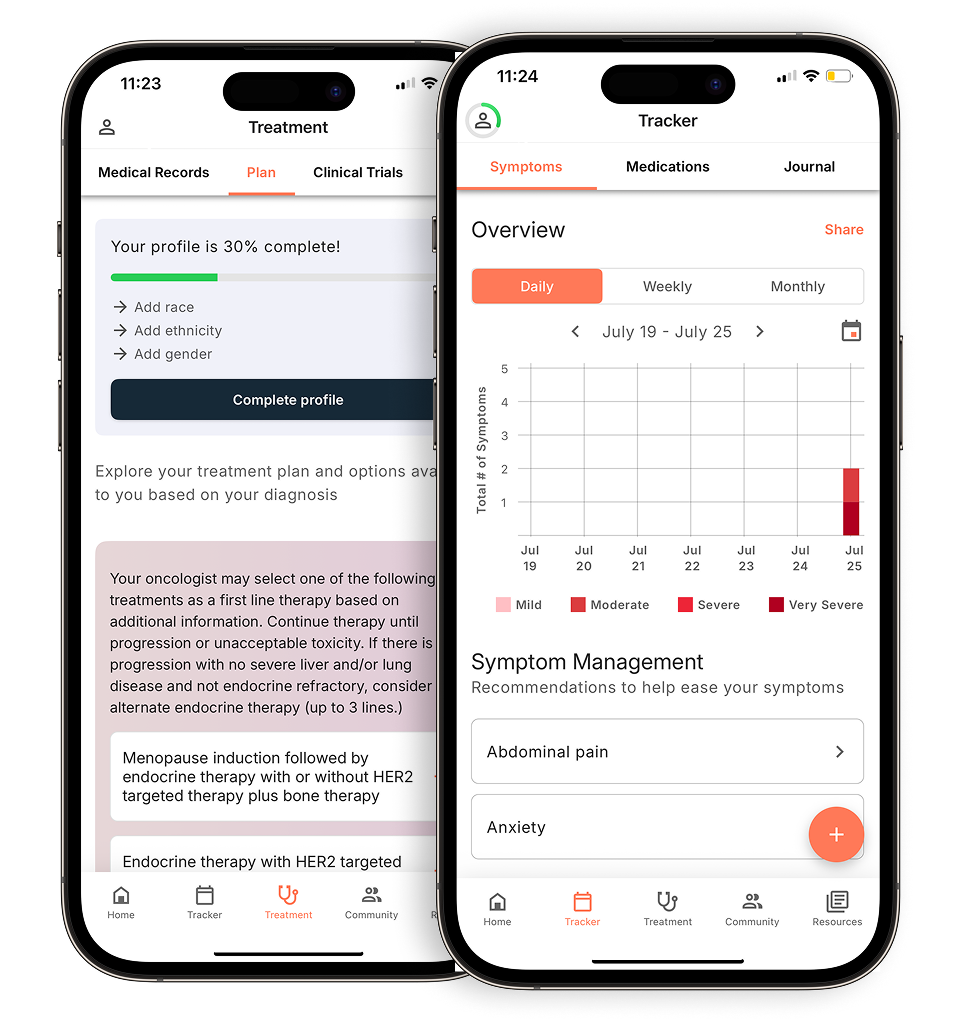
Compare treatments, prepare for appointments, and track side effects—all in the app
Built for your diagnosis, Outcomes4Me gives you the tools to make confident, informed decisions—right when you need them.
Continue in app