When you’re living with multiple myeloma, monoclonal gammopathy of undetermined significance (MGUS), or smoldering multiple myeloma (SMM), your lifestyle choices can play a meaningful role in your overall health. Emerging research suggests that dietary fiber may slow disease progression and aid in recovery.
While fiber has long been associated with heart and gut health, recent data shows it may also be beneficial for people with blood cancers.
Fiber and early-stage multiple myeloma
One study focused on people with MGUS and smoldering multiple myeloma, conditions that can, but don’t always, progress to active multiple myeloma. Researchers wanted to know whether improving diet quality, particularly by increasing fiber intake, could help reduce that risk.
In a small, year-long pilot study called NUTRIVENTION, participants followed a high-fiber, plant-based diet, supported by ready-made meals and nutritional coaching. The goal wasn’t just to change what people ate, but to improve overall metabolic health, inflammation levels, and the gut microbiome.
Evidence-based guidance powered by NCCN Guidelines®
Personalized treatment plans shaped by the latest oncology standards—tailored to your diagnosis.
Get started
View your personalized treatment plan in the Outcomes4Me app
Use your diagnosis to unlock personalized NCCN Guidelines®-aligned recommendations.
Continue in app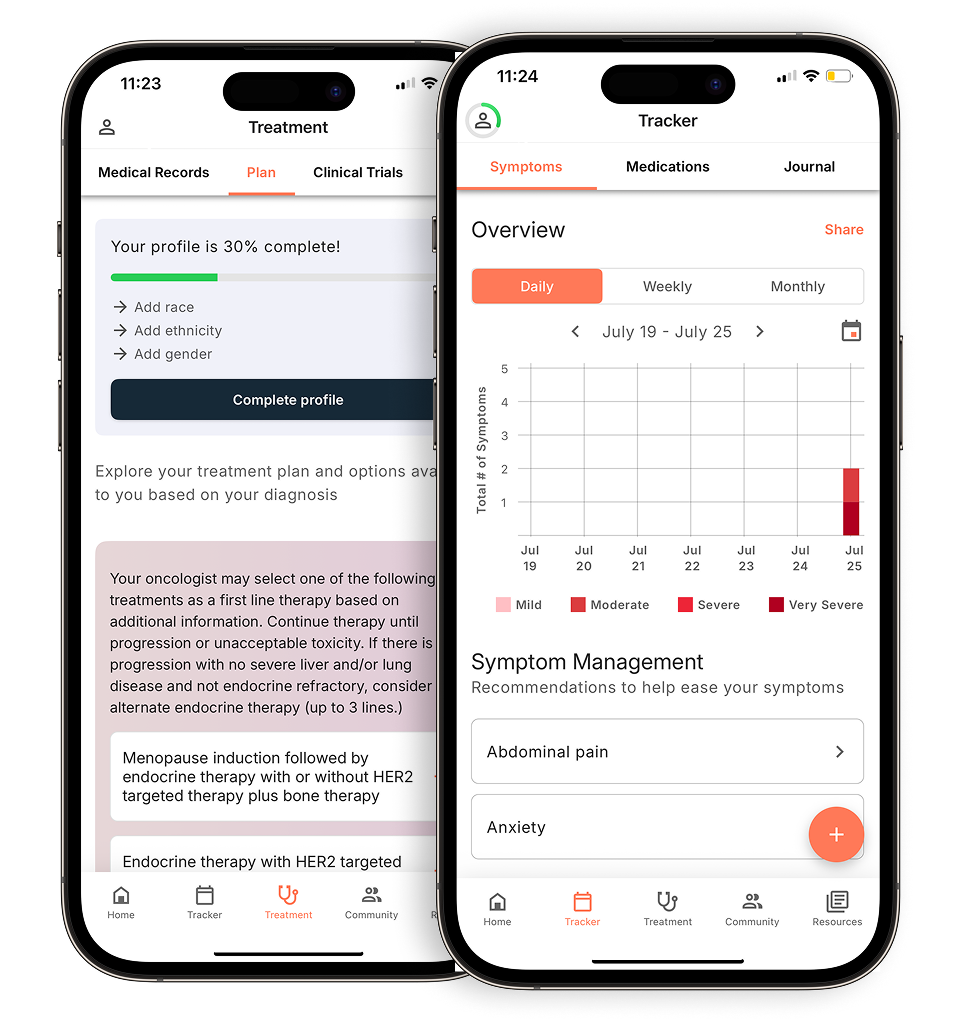
The results were encouraging:
- Participants maintained high adherence to the diet
- Many experienced sustained weight loss and better blood sugar control
- Markers of inflammation improved
- Gut microbiome diversity increased
Two patients who had signs of disease progression saw their disease stabilize during the study. While the trial was small and not designed to prove cause and effect, these findings suggest that dietary changes may help influence disease biology in early myeloma.
Lead investigator Urvi A. Shah, MD, at Memorial Sloan Kettering, emphasized that lifestyle-based approaches, like diet, may be especially important in precursor conditions, where early drug treatment remains controversial. Larger follow-up studies are already underway.
Fiber, gut health, and stem cell transplant outcomes
A second study looked at people undergoing allogeneic hematopoietic stem cell transplantation (allo-HCT)—a treatment sometimes used in blood cancers, including advanced multiple myeloma in some cases.
After transplant, patients are at risk for graft-versus-host disease (GVHD), a serious complication where donor immune cells attack the body. The gut plays a central role in GVHD, but transplant diets often restrict raw fruits and vegetables to reduce infection risk, unintentionally lowering fiber intake.
Researchers analyzed dietary data from 173 transplant patients and found that those who consistently ate more fiber before and after transplant had:
- Better overall survival
- Lower rates of gastrointestinal GVHD
- Greater gut microbiome diversity
Patients with higher fiber intake also had increased levels of butyrate, a short-chain fatty acid produced by gut bacteria that supports the gut lining and helps regulate immune responses.
This myeloma-focused research mirrors findings seen across other cancers, where patients with more diverse, balanced gut bacteria tend to respond better to treatments such as immunotherapy and experience fewer side effects. While researchers are still uncovering the exact mechanisms, these studies reinforce a central idea: supporting gut health may be one way to support the body’s ability to fight cancer.
What this means for patients
These studies don’t suggest that fiber can replace treatment, but they do emphasize that diet is not just supportive care. It may actively shape how the immune system behaves, how inflammation is regulated, and how disease progresses.
To incorporate more fiber into your diet, Rachel Beller, MS, RD recommends eating more plant-based proteins. “Plant-based proteins are an easy way to hit your fiber goal,” she says. “They contain fiber, boost our gut health, help us with our weight management, balance out hormones, and contain anti-inflammatory properties. Garbanzo beans, green lentils, shelled edamame are all great options.”
If you’re interested in making dietary changes, ask your care team or a registered dietitian how to do so safely and sustainably for your specific diagnosis and treatment plan.
Remember that you can always reach out to an oncology nurse practitioner at Outcomes4Me to help you better understand your diagnosis.
Personalized support for real care decisions
Understand your diagnosis, explore clinical trials, and track symptoms--all in one place.
Get started
Compare treatments, prepare for appointments, and track side effects—all in the app
Built for your diagnosis, Outcomes4Me gives you the tools to make confident, informed decisions—right when you need them.
Continue in app