
After a cancer diagnosis, your first instinct might be to search for answers online. But the internet is often filled with conflicting and scary information. A high-quality app, like the “my cancer coach” app, helps you cut through that noise. It provides personalized, evidence-based guidance you can actually trust. The best apps offer clinical decision support for oncology by using the same guidelines your own doctor uses, like the NCCN Guidelines®. This means you get recommendations vetted by experts and tailored to your specific diagnosis, giving you a solid foundation for more confident conversations with your care team.
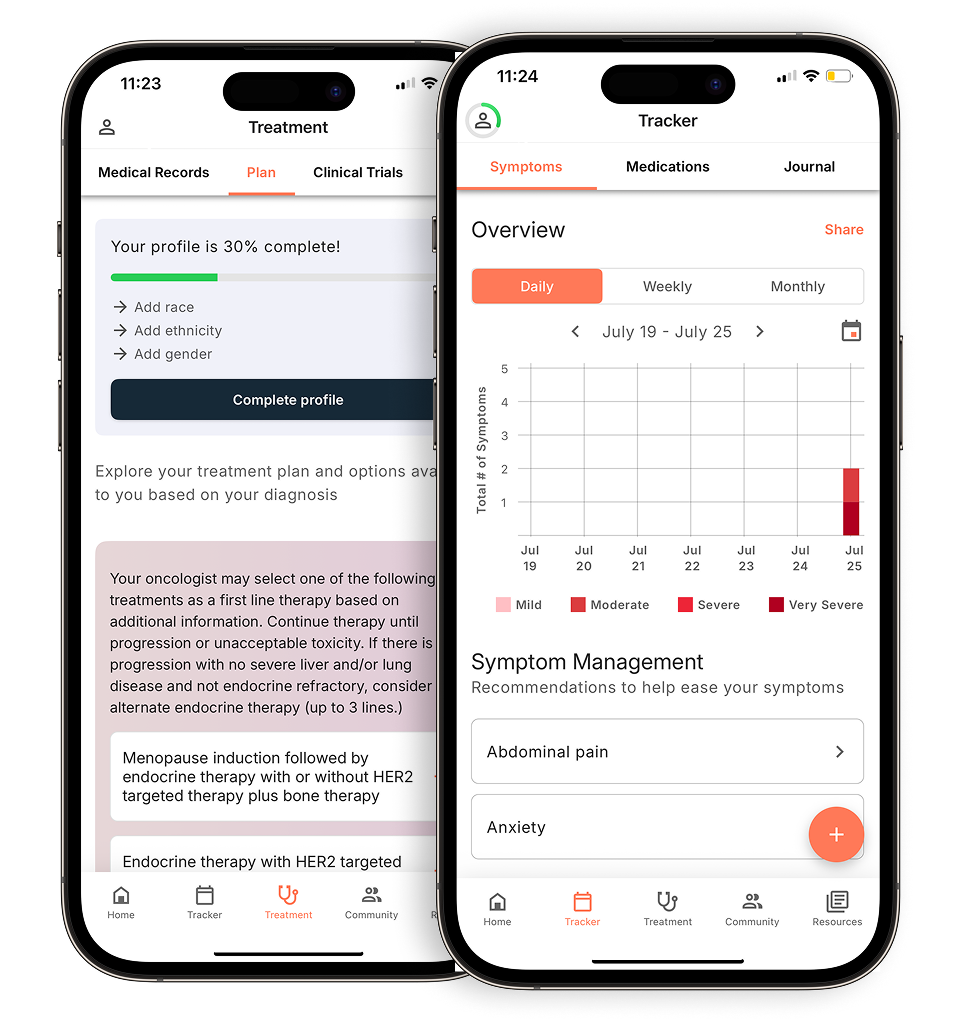
View your personalized treatment plan in the Outcomes4Me app
Use your diagnosis to unlock personalized NCCN Guidelines®-aligned recommendations.
Key Takeaways
- Find clarity with personalized, evidence-based information: A quality app translates complex clinical guidelines into treatment options and clinical trial matches relevant to your specific diagnosis, helping you feel more in control of your care.
- Choose a trustworthy digital partner: When selecting an app, verify that its information is based on established clinical guidelines from reputable sources and that it has a clear privacy policy to protect your personal health data.
- Make your doctor’s appointments more productive: Use your app to track symptoms, log medications, and prepare questions ahead of time. This helps you have more focused, effective conversations and make shared decisions with your care team.
What is a cancer treatment support app?
Think of a cancer treatment support app as a personal health assistant that lives right on your phone. When you’re facing a cancer diagnosis, the amount of information can feel overwhelming, from doctor’s appointments and medication schedules to new medical terms. These apps are designed to help you organize all those details and feel more in control of your health. They provide a central place to track your medications, manage appointments, and monitor your symptoms and side effects, so you can see patterns and share clear updates with your doctor.
Beyond just organization, the best apps act as a source of reliable, personalized information. They can help you better understand your specific diagnosis and learn about potential treatment options available to you. Many also offer a sense of community, connecting you with other patients who understand what you’re going through. The ultimate goal of these tools is to empower you, giving you the resources you need to manage your cancer journey and have more informed conversations with your care team. They put valuable information and support directly into your hands, whenever you need it.
How do these apps create your personalized plan?
You might see the term “AI” and wonder what it means for your care. In the best cancer support apps, artificial intelligence works behind the scenes to personalize the information you receive. It analyzes vast amounts of medical data to help identify the most effective treatment options based on your unique diagnosis, stage, and medical history. This technology makes it possible to deliver guidance that’s truly tailored to you.
But AI doesn’t work alone. To ensure the information is trustworthy, top-tier apps integrate established clinical guidelines, like the NCCN Guidelines®, which are the same evidence-based standards your oncologist uses. This powerful combination means you get recommendations that are both personalized by technology and vetted by medical experts, improving cancer therapeutic decision-making for you and your doctor.
Could a cancer support app be right for you?
Cancer support apps are helpful for a wide range of people, no matter where they are in their cancer experience. If you’re newly diagnosed, an app can help you make sense of your condition and see a clear path forward. If you’re already in treatment, it can help you manage the day-to-day logistics and track how you’re feeling. These tools are also valuable for caregivers who need to stay organized and informed.
Ultimately, these apps are for anyone who wants to take a more active role in their care. They provide a comprehensive support system by helping you understand your diagnosis, find potential treatment options, explore clinical trials, and communicate more effectively with your doctors. By keeping you informed and organized, cancer apps can help patients and their providers work together more effectively.
What to look for in a cancer support app
When you’re managing a cancer diagnosis, having reliable information at your fingertips can make a world of difference. A good support app can feel like a knowledgeable friend in your pocket, helping you organize information and understand your options. But with so many apps available, it’s important to know what features truly matter. The best apps go beyond simple information delivery; they offer personalized, credible guidance that works with your specific situation. They should help you feel more in control and less overwhelmed by the sheer volume of information you encounter.
Think of a cancer support app as a personal health co-pilot. It should help you make sense of complex medical information, keep track of your health, and feel more prepared for conversations with your care team. Look for tools that are built on a foundation of trust, personalization, and practical support. These features ensure the app is a genuinely helpful resource throughout your treatment journey, empowering you to take a more active role in your care. The goal is to find an app that simplifies complexity, provides clarity, and supports you in making informed decisions alongside your doctors.
Look for evidence-based treatment options
The most critical feature of any cancer support app is the quality of its information. You need to be sure the guidance you’re receiving is credible and trustworthy. Look for apps that base their treatment information on established, evidence-based clinical guidelines. For example, some apps use the NCCN Clinical Practice Guidelines in Oncology, which are developed by experts from 33 leading cancer centers. This means the options presented are backed by rigorous scientific research and approved by oncologists, giving you confidence that you’re exploring the current standard of care. An app built on this foundation ensures you’re getting reliable, up-to-date medical information, not just generic advice.
Find guidance that’s tailored to you
Cancer is not a one-size-fits-all disease, and your support app shouldn’t be either. A truly helpful app provides guidance that is personalized to your unique diagnosis. It should allow you to input your specific medical history, including your cancer type, stage, and biomarker status. The app can then filter the vast amount of information available and present only what’s relevant to you. This tailored approach saves you from wading through confusing or inapplicable information and helps you focus on the treatment options and care strategies that make sense for your specific situation. This level of personalization makes the app a much more powerful tool for understanding your care path.
Help finding relevant clinical trials
Clinical trials can offer access to innovative treatments, but finding the right one can feel overwhelming. A high-quality cancer support app can simplify this process by identifying potential clinical trials that match your specific diagnosis and medical history. Some patients report that using an app makes them more likely to explore or enroll in a trial. By connecting you with relevant research opportunities, the app can open doors to new treatment possibilities you might not have discovered otherwise. This feature is invaluable for staying informed about the latest advancements in cancer care and discussing all potential avenues with your doctor.
Simple tools to track symptoms and medications
Managing the day-to-day logistics of cancer treatment is a job in itself. The best apps include practical tools to make this easier. Look for features that let you track your symptoms, log medications, and set reminders for appointments. Being able to record how you’re feeling or note the severity and timing of side effects creates a detailed health diary. This log is incredibly useful for your appointments, as it helps you have more productive and specific conversations with your care team. Instead of trying to remember everything, you’ll have a clear record to share, ensuring your doctor has a full picture of your experience.
A look at some popular cancer support apps
Finding the right app to help you manage your care can feel like a big task, but you don’t have to do it alone. To make it easier, we’ve reviewed some of the top cancer support apps available. Each one offers a unique set of tools designed to help you track information, understand your options, and feel more in control of your health journey.
The Outcomes4Me app
Outcomes4Me is a free app that acts as your personal guide through cancer care. It helps you make sense of your diagnosis by providing clear, personalized information based on your specific medical records. The platform gives you access to the latest treatment options, helps you find relevant clinical trials, and includes tools to track your symptoms and medications. It also connects you to a patient community, offering a network of support from others who understand what you’re going through. The goal is to arm you with trusted, evidence-based guidance so you can have more informed conversations with your doctor.
Cancer.Net Mobile
If you’re looking for one central place to organize all the details of your care, the Cancer.Net Mobile app is a comprehensive choice. It’s a detailed tool built to help you manage appointments, keep track of medications with helpful reminders, and log your symptoms and their severity over time. One of its most practical features is the ability to create a list of questions for your doctor and record their answers directly in the app. This helps ensure you remember every important detail from your medical consultations.
The “My Cancer Coach” app
Understanding your diagnosis is the first step toward making empowered decisions. My Cancer Coach is an app designed to do just that. It delivers personalized information based on your specific cancer type and stage, breaking down complex medical terms into clear, easy-to-understand language. By providing you with information tailored to your diagnosis and potential treatment paths, the app helps you prepare for conversations with your care team and feel more confident in the choices you make about your health.
Key features and tools
Staying organized during treatment can be a challenge, and the My Cancer Coach app offers several tools to help. It provides information on treatment options for breast, prostate, and colon cancer, and lets you track your treatments in one place. To help you make the most of your appointments, you can write down questions beforehand and take notes during your visit. The app also has a calendar for appointments and reminders, plus a library of additional resources when you want to learn more.
Who is it for?
My Cancer Coach is built for patients and caregivers dealing with a breast, prostate, or colon cancer diagnosis. Because it focuses on these specific cancers, the information and tools are highly relevant to the questions and challenges you might be facing. It’s a helpful resource whether you’re the person in treatment or a loved one providing support, offering clear and practical guidance for your journey.
Availability and cost
Getting the support you need shouldn’t add financial stress. The My Cancer Coach app is completely free, with no subscription fees or hidden costs. It’s available for both iPhones and Android devices, and you can download it from the Apple App Store or the Google Play Store. This makes it an accessible tool for anyone looking for help managing their care.
Development and recognition
The app was created with input from trusted patient advocacy organizations, including Breastcancer.org, the Men’s Health Network, and Fight Colorectal Cancer. These collaborations ensure the information is credible and centered on the patient experience. The app’s quality has also been recognized by health information sites like Healthline.com as a top resource for patients, highlighting its value to the community.
ACS CARES
From the American Cancer Society, the free ACS CARES app is a trusted resource for patients, families, and caregivers. It provides reliable, high-quality cancer information that adapts to your personal journey. As your situation evolves or as new research and guidelines are released, the app updates to give you the most current facts and support available. This makes it a dependable companion for finding personalized information you can count on throughout your treatment and beyond.
Direct access to specialists
Sometimes you have a question that just can’t wait for your next doctor’s appointment. The ACS CARES app offers a direct line to experts when you need it most. Through the app, you can speak directly with American Cancer Society cancer specialists anytime, day or night, every day of the year. This 24/7 availability provides a reassuring safety net, giving you access to knowledgeable professionals who can offer guidance and answer your questions outside of typical clinic hours. It’s a valuable resource for getting timely information and support whenever uncertainty strikes.
Peer support program
Connecting with someone who truly understands what you’re going through can be incredibly comforting. The app facilitates a peer support program where you can meet virtually with trained volunteers who have had similar cancer experiences. This isn’t just a random connection; you can connect with someone based on things like your diagnosis, where you live, your military background, or your race. This thoughtful approach to peer matching helps create genuine connections, reminding you that you are not alone on this journey and providing a space to share and learn from others who have walked a similar path.
Practical and emotional support
A cancer diagnosis affects more than just your physical health—it touches every aspect of your life. The ACS CARES app recognizes this by providing trustworthy information on important topics that go beyond medical treatment. You can find resources on how to deal with emotions, manage money matters, arrange for rides to appointments, and support your dependents. This holistic approach addresses the real-world challenges that come with a diagnosis, offering practical solutions and emotional support to help you manage the day-to-day logistics and maintain your well-being.
Additional ACS support resources
The support from the American Cancer Society extends beyond the digital world. While the app provides a wealth of virtual resources, the organization is also exploring other ways to connect with patients. In some special locations, which are currently pilot programs, you can get help from volunteers in person at clinics. This commitment to offering both online and in-person support demonstrates a deep understanding of the varied needs of patients and their families, ensuring that help is accessible in whatever form is most comfortable and convenient for you.
Other apps to consider
The world of health apps is always expanding, with options ranging from simple trackers to highly detailed care management platforms. While the apps listed here are excellent starting points, the most important thing is to find a tool that fits your specific needs. The right app can make a real difference in how you manage your cancer journey by helping you keep important information organized and connecting you with the support you deserve. Don’t hesitate to try a few to see which one feels like the best fit for you.
Taking a more active role in your cancer care
A cancer diagnosis can feel like you’ve lost the driver’s seat in your own life. Suddenly, your calendar is filled with appointments and your mind is filled with complex medical terms. Cancer support apps are designed to hand the steering wheel back to you. They act as a digital co-pilot, organizing the overwhelming amount of information and helping you become a more active partner in your own care. Instead of just receiving information, you can use these tools to process it, prepare for conversations with your doctors, and track your progress in a way that makes sense to you.
These apps put you in control by centralizing your health information and providing clear, actionable guidance. They help you understand your diagnosis on a deeper level, see all the potential paths forward, and communicate more effectively with your care team. By having everything in one place—from your treatment options and clinical trial matches to your daily symptoms and medication schedule—you can move from feeling overwhelmed to feeling empowered. This shift allows you to focus your energy where it matters most: on your health and well-being.
Get information that’s personalized for you
The most helpful cancer support apps go beyond generic articles you could find online. They provide information that is specific to you. By securely inputting your diagnosis, cancer type, and stage, you can receive personalized guidance. Apps like Outcomes4Me use this information to connect you with treatment options based on the latest clinical guidelines from leading cancer centers, such as the NCCN Clinical Practice Guidelines in Oncology® (NCCN Guidelines®). This means the information you receive isn’t just random advice; it’s evidence-based, oncologist-approved, and tailored to your unique situation, giving you a solid foundation for your treatment journey.
Have more productive talks with your care team
Walking into an oncologist’s appointment can be intimidating. It’s easy to forget the questions you wanted to ask or to feel lost in the medical details. A good support app acts as your personal organizer. You can use it to track your symptoms, note the severity and timing of side effects, and manage your medication schedule. Many apps have a feature to list questions for your doctor and even record their answers so you can review them later. This preparation helps you have more focused and productive conversations, ensuring you and your care team are always on the same page.
Feel more confident in your treatment decisions
When you have personalized information and clear communication, you can participate more fully in your treatment planning. This process is often called shared decision-making, where you and your doctor collaborate to choose the best path forward. A support app gives you the tools to understand your options, from standard treatments to relevant clinical trials. Having this knowledge at your fingertips allows you to ask smarter questions and have more meaningful discussions about your care plan. You can feel confident that the decisions being made are the right ones for your health, your goals, and your life.
Become a partner in your own care
Ultimately, these apps help you transition from being a passenger to being an active participant in your own healthcare. Managing a cancer diagnosis involves keeping track of countless details, and an app can serve as your central command center. It helps with the day-to-day tasks of tracking medications and appointments while also supporting you with the big-picture decisions about your treatment. By organizing the chaos and providing clear, reliable information, a cancer support app empowers you to take charge. It’s a powerful tool for managing your health and ensuring your voice is heard throughout your cancer journey.
How to talk to your doctor about using an app
A cancer support app is a powerful tool, but it works best as part of a team effort with you and your oncologist at the center. Think of it as your personal research assistant, helping you prepare for appointments and have more productive conversations about your care. Using an app doesn’t mean going it alone; it means showing up as a more informed and active partner in your treatment. Here’s how to make your app a valuable part of your collaboration with your doctor.
First, understand the information in the app
These apps can provide a wealth of information, often using advanced technology to sort through complex guidelines and research. For example, artificial intelligence (AI) has the potential to personalize treatments by analyzing vast amounts of data. Your job isn’t to become an expert overnight, but to use the app to get a clearer picture of your options. When the app suggests a treatment or a clinical trial, try to understand the reasoning behind it. This knowledge empowers you to ask your doctor more specific and insightful questions about your care plan.
Always confirm recommendations with your doctor
An app can offer suggestions, but your oncology team makes the final call. They have the full context of your health, and the quality of decisions made by experts like tumor boards is a critical factor for the best outcomes. Always treat the app’s information as a starting point for a conversation, not a final directive. Bring the recommendations to your next appointment and ask, “I saw this option in my app. Can we talk about whether it’s right for me?” This approach ensures you’re making a truly shared decision with your doctor.
Use the app as a tool for better conversations
One of the biggest benefits of a support app is how it can streamline communication. As research from the Cancer Therapy Advisor points out, these tools can help you track symptoms and medications, making it easier to share precise updates with your doctor. Instead of trying to remember how you felt last Tuesday, you can pull up your symptom log in the app. Use it to jot down questions as they arise, so you don’t forget them during your visit. This keeps your entire care team on the same page and focused on what matters most.
What do other patients think?
When you’re considering a new tool for your cancer care, hearing from people who have actually used it can make all the difference. Research and patient feedback give us a clearer picture of how these apps perform in the real world. From managing daily symptoms to exploring cutting-edge treatments, here’s what studies and user experiences tell us about the impact of cancer support apps.
Do these apps really help?
One of the biggest questions is whether these apps truly help. The answer seems to be a resounding yes, especially when it comes to daily management. A study on the feasibility of smartphone navigation found that 53% of patients said an app helped them keep track of their symptoms. This is a huge benefit, as organized symptom tracking can lead to more productive conversations with your care team and better management of side effects. Instead of trying to remember how you felt last Tuesday, you have a clear record right on your phone, making it easier to spot patterns and communicate your needs effectively.
Can they help you find clinical trials?
Clinical trials can feel like a whole other world, often difficult to access and understand. This is another area where support apps are making a real impact. The goal of a free cancer support app is to help you understand your diagnosis, find treatment options, and explore clinical trials in a way that makes sense for you. In fact, one study showed that after using an app, 33% of patients were more likely to explore or enroll in a clinical trial. By breaking down complex information and matching you with relevant studies, these apps can open doors to new treatment possibilities you might not have found otherwise.
How easy are these apps to use?
When you’re managing your health, the last thing you need is a complicated app that adds more stress. Usability is key, and developers are taking note. An evaluation of interactive mHealth applications looked at the quality of various cancer support apps and found that the best ones are intuitive and straightforward. For example, Outcomes4Me scored the highest in this particular study for overall quality. A well-designed app should feel like a supportive partner, not another chore. It presents complex medical information in a clear, organized way, helping you feel more in control without a steep learning curve.
What are some potential downsides to consider?
It’s also important to talk about the potential concerns. Some patients worry that relying on an app might reduce personal contact with their doctors. Research into the needs and preferences of patients also highlights that data security is a top concern. These are completely valid points. It’s helpful to remember that these apps are designed to supplement—not replace—your relationship with your care team. They are tools to help you prepare for appointments and have more informed discussions. Reputable apps also use strong security measures to protect your private health information, so you can feel confident in using them.
Do cancer support apps cost money?
When you’re managing a cancer diagnosis, the last thing you need is another unexpected expense. It’s completely normal to wonder about the costs of any new tool, including a support app. The good news is that many high-quality apps are available for free, while others offer paid subscriptions for more advanced features. Understanding the differences can help you find the right support without adding financial stress.
Understanding free vs. paid apps
Many of the best cancer support apps, including Outcomes4Me, are completely free for patients. These apps are often mission-driven, designed to make essential information and support accessible to everyone. A free app can provide core features like treatment option information, clinical trial matching, and symptom tracking. Some other apps operate on a “freemium” model, offering a free version with basic tools and a paid or premium version with more advanced features. A paid subscription might unlock one-on-one coaching, highly detailed analytics, or premium content. Before paying for an app, consider using the free version or a trial period to see if its basic features meet your needs.
What to know about subscription costs
If you’re considering a paid app, you’ll likely find that costs are structured as a monthly or yearly subscription. Annual plans often come at a discounted rate compared to paying month-to-month. It’s important to look closely at what you get for your money. Does the subscription give you access to healthcare professionals, personalized reports for your doctor, or a supportive patient community? Weigh the cost against the value those specific features bring to your care journey. Always read the fine print to understand the renewal and cancellation policies before you commit.
Does insurance cover these apps?
This is a common and important question. Right now, most health insurance plans don’t cover the cost of cancer support apps. However, the world of digital health is changing quickly, and some insurers are starting to see the value these tools provide in managing care. It’s always a good idea to check directly with your insurance provider to see if they offer any coverage or reimbursement for digital health tools. For broader questions about your policy, organizations like the American Cancer Society offer helpful resources for understanding health insurance laws and financial assistance programs.
How to choose the right app for you
With so many options available, picking the right cancer support app can feel like another overwhelming task on your to-do list. But finding the right tool can make a significant difference in how you manage your care. The best app for you will be a trustworthy partner that provides clear, accurate information and helps you work more effectively with your healthcare team. Think of it as a digital advocate that helps you stay organized and informed. To make your choice easier, focus on three key areas: clinical accuracy, collaboration with your doctor, and data privacy. These pillars will help you find an app that truly supports you on your own terms.
Make sure the information is clinically accurate
First and foremost, the information in any health app must be reliable. Your treatment decisions are incredibly important, and the quality of the information you receive is directly linked to achieving an optimal cancer outcome. Look for apps that are “evidence-based,” which means their guidance is built on established, peer-reviewed clinical guidelines from reputable organizations. The app should be transparent about where its information comes from. A trustworthy app will clearly state its sources and often involves oncologists and medical experts in its development. If you can’t easily find this information, consider it a red flag and move on to another option.
Choose an app that complements your doctor’s care
A cancer support app should never replace your doctor—it should enhance your relationship with them. The goal is to find a tool that helps you manage their care more effectively and become a more active partner in your treatment. The right app can help you prepare for appointments by organizing your questions, tracking symptoms, and providing you with relevant information to discuss with your oncologist. It should empower you to have more informed conversations and make shared decisions with your care team. Think of it as a bridge that helps you and your doctor stay on the same page, ensuring you feel heard and understood.
Confirm your data will be kept safe and private
Sharing your personal health information requires a great deal of trust. It’s completely normal to have concerns about data security and confidentiality when using a digital health tool. Before you download and create a profile, take a moment to review the app’s privacy policy. A reputable app will be transparent about what data it collects, how that data is stored, and how it is used. Look for clear language about security measures like encryption and secure logins. You have a right to know that your sensitive information is protected, so choose an app that takes your privacy as seriously as you do.
How to get started with your app
Once you’ve chosen an app, the next step is to make it a useful part of your care routine. Think of it as a new tool in your toolkit—one that works best when you know how to use it. Setting it up correctly and integrating it into conversations with your medical team will help you feel more prepared and in control. Here’s how to begin.
Setting up your profile and medical history
The power of a cancer support app comes from its ability to personalize information for you. The first thing you’ll do is create a profile and input your medical history. Be as thorough as you can. Details like your specific diagnosis, cancer stage, and past treatments allow the app to filter information and provide relevant guidance. A well-built app like Outcomes4Me uses this information to help you understand your diagnosis, see potential treatment paths, and find clinical trials that match your situation. Taking the time to complete this step accurately is the foundation for getting personalized support.
Tips for getting the most out of your app
After setting up your profile, explore all the features. Look for tools that let you track symptoms, manage medications, or take notes for your next appointment. The goal is to put you in the driver’s seat of your cancer journey by turning complex medical guidelines into clear, understandable information. Using these tools consistently can make a real difference. Studies show that using a mobile app for self-management can improve a patient’s well-being and confidence in seeking support. Find the features that feel most helpful and make them part of your routine.
How to partner with your care team for the best results
A support app is a powerful tool, but it’s even better when used in partnership with your care team. Use the app to prepare for appointments by bringing a list of questions or showing your doctor a log of the symptoms you’ve been tracking. This gives them a clearer picture of what you’re experiencing between visits. Some apps also help you connect with trained volunteers who have had similar cancer experiences, offering another layer of support. The app isn’t a replacement for your oncologist, but a bridge to help you have more informed and productive conversations about your care.
Related Articles
- The 5 Best Oncologist-Approved Cancer Apps
- Recommended Support Apps? | Outcomes4Me Community
- 5 Best Apps for Managing Cancer Symptoms in 2025
- 5 Best Lung Cancer Support Apps for Patients
View your personalized treatment plan in the Outcomes4Me app
Use your diagnosis to unlock personalized NCCN Guidelines®-aligned recommendations.
Frequently Asked Questions
Is my personal health information safe in these apps? This is a completely valid and important question. Reputable apps take your privacy very seriously. Before creating an account, look for a clear and easy-to-understand privacy policy. It should explain exactly what data is collected and how it’s protected. The best apps use strong security measures, like encryption, to keep your sensitive health information confidential and secure.
Will my doctor actually take information from an app seriously? Think of a support app as your personal research assistant, not a replacement for your oncologist. Its purpose is to help you come to your appointments more prepared. When you use the app to track symptoms or learn about guideline-approved treatment options, you can have more specific and productive conversations. You’re not presenting it as a final answer, but as a starting point for a discussion with the real expert in the room—your doctor.
Can an app really help me find new treatment options? Yes, it can. An app’s strength is its ability to process huge amounts of information and filter it based on your specific diagnosis. It can identify relevant clinical trials or treatment options from established guidelines that you might not have come across on your own. This doesn’t mean these options are automatically right for you, but it gives you a list of possibilities to discuss with your care team, ensuring you explore every potential path forward together.
I feel overwhelmed by all the options. What’s the single most important thing to look for? If you focus on just one thing, make it clinical accuracy. The information you use to make health decisions must be trustworthy. Look for an app that clearly states its information is evidence-based and comes from credible sources, like the NCCN Guidelines®, which are the same standards your oncologist uses. This ensures the guidance you receive is backed by science and expert consensus.
Do I have to pay for a good cancer support app? Not at all. Many of the most comprehensive and helpful apps, including some mentioned in this post, are completely free for patients. Their mission is to make quality cancer care support accessible to everyone. While some apps may offer premium features for a subscription fee, you can get excellent, reliable support without spending any money.