How does your oncologist decide what bladder cancer treatment plan is best for you? Biomarkers are important clues that your care team relies on to guide your care.
According to Fox Chase Cancer Center’s Dr. Elizabeth Plimack, biomarkers in bladder cancer generally fall into two important categories. One helps doctors understand whether a treatment is likely to work, and the other helps determine whether treatment is needed at all.
Do I need more treatment after bladder cancer surgery?
For many people with muscle-invasive bladder cancer, surgery to remove the bladder (or part of it) is a major step. Even after surgery, there can be uncertainty. As Dr. Plimack explains, when tumors are large, invade deeply into the bladder wall, or involve lymph nodes, doctors worry that “some cells might be left behind from the surgery,” even if scans look clear.
This is where adjuvant therapy (treatment given after surgery) comes into play. The challenge is knowing who truly needs it. “We don’t know when there’s a patient sitting in front of us that they’re already cured by surgery,” Dr. Plimack says. “Most of them aren’t, but we don’t know for sure.”
That uncertainty is where biomarkers are starting to make a real difference.
Circulating tumor DNA: A blood test that helps guide decisions
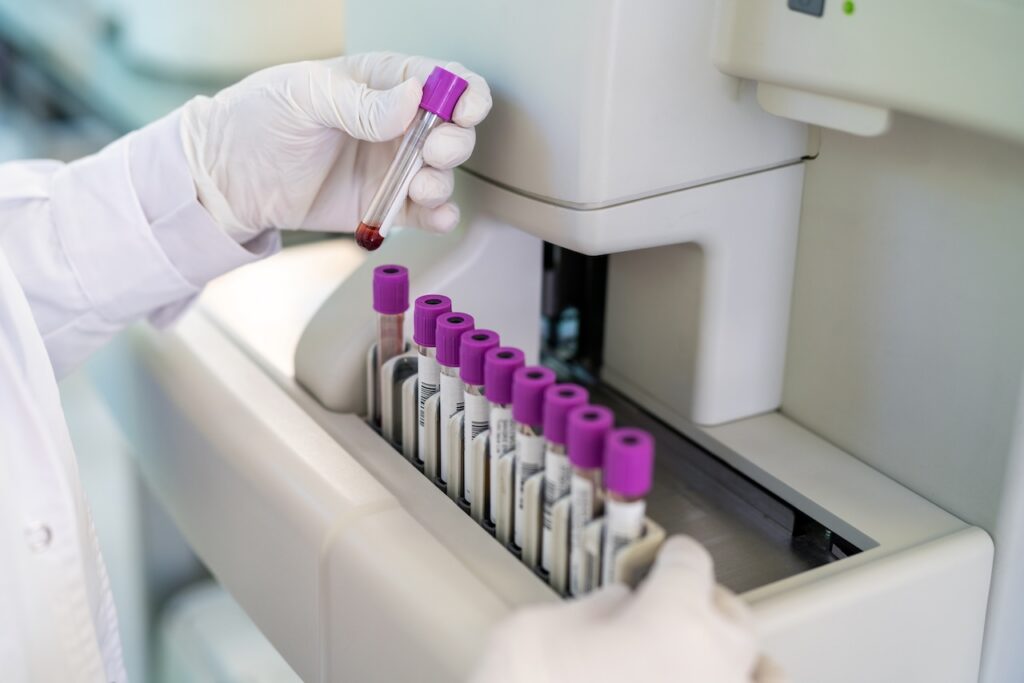
One of the most promising tools is circulating tumor DNA (ctDNA). This blood test looks for tiny fragments of cancer DNA that may still be circulating in the body after surgery.
Dr. Plimack shares that if ctDNA is positive, it means there is detectable tumor DNA floating around; if it’s negative, the test doesn’t find any evidence of remaining cancer DNA. As you might expect, “it’s better to have a negative test than a positive test.”
Recent studies have shown that ctDNA can help personalize post-surgery care. Patients with a negative ctDNA test may not need to start adjuvant therapy right away, even if they are considered high-risk. Instead, they can be closely monitored and begin treatment only if the test later becomes positive. On the other hand, patients who are ctDNA-positive tend to get the most benefit from adjuvant therapy, making it a powerful tool for deciding who should be treated and when.
Matching treatment to the cancer itself
The second major role of biomarkers comes into play when bladder cancer has spread or returned. In this setting, doctors often use next-generation sequencing (NGS) to analyze the tumor for specific mutations or vulnerabilities.
“This testing helps us look for features in the tumor itself that we can match to treatments,” Dr. Plimack explains. For example, some bladder cancers have FGFR mutations, which can make patients eligible for FGFR-targeted drugs like erdafitinib or similar therapies being studied in clinical trials.
Another important biomarker is HER2. Dr. Plimack notes that HER2 can be expressed on bladder cancer cells, and patients with HER2-positive tumors may benefit from targeted therapies such as trastuzumab deruxtecan.
These biomarkers don’t replace standard treatments, but they expand the options and help doctors plan what might work best next.
Looking ahead: A rapidly evolving field
Biomarker testing is already changing how bladder cancer is treated, and this is just the beginning. Dr. Plimack emphasizes, “watch this space, because it’s rapidly evolving.” Ongoing research is uncovering new biomarkers that could further refine treatment choices and make care even more personalized.
Want to learn more from Dr. Plimack? Read her patient-friendly overview of the latest bladder cancer treatment options.
Personalized support for real care decisions
Understand your diagnosis, explore clinical trials, and track symptoms--all in one place.
Get started
Compare treatments, prepare for appointments, and track side effects—all in the app
Built for your diagnosis, Outcomes4Me gives you the tools to make confident, informed decisions—right when you need them.
Continue in app