
A family history of cancer brings up a lot of questions about your own health. It’s natural to wonder what it means for you. Genetic testing can offer clarity, helping you understand inherited risk factors passed down through generations. This guide will walk you through the entire cancer genetic testing process. We’ll explain the different types of tests and what the results could mean for you and your family. We’ll also answer the big question—how is genetic testing for cancer done?—so you feel prepared every step of the way.
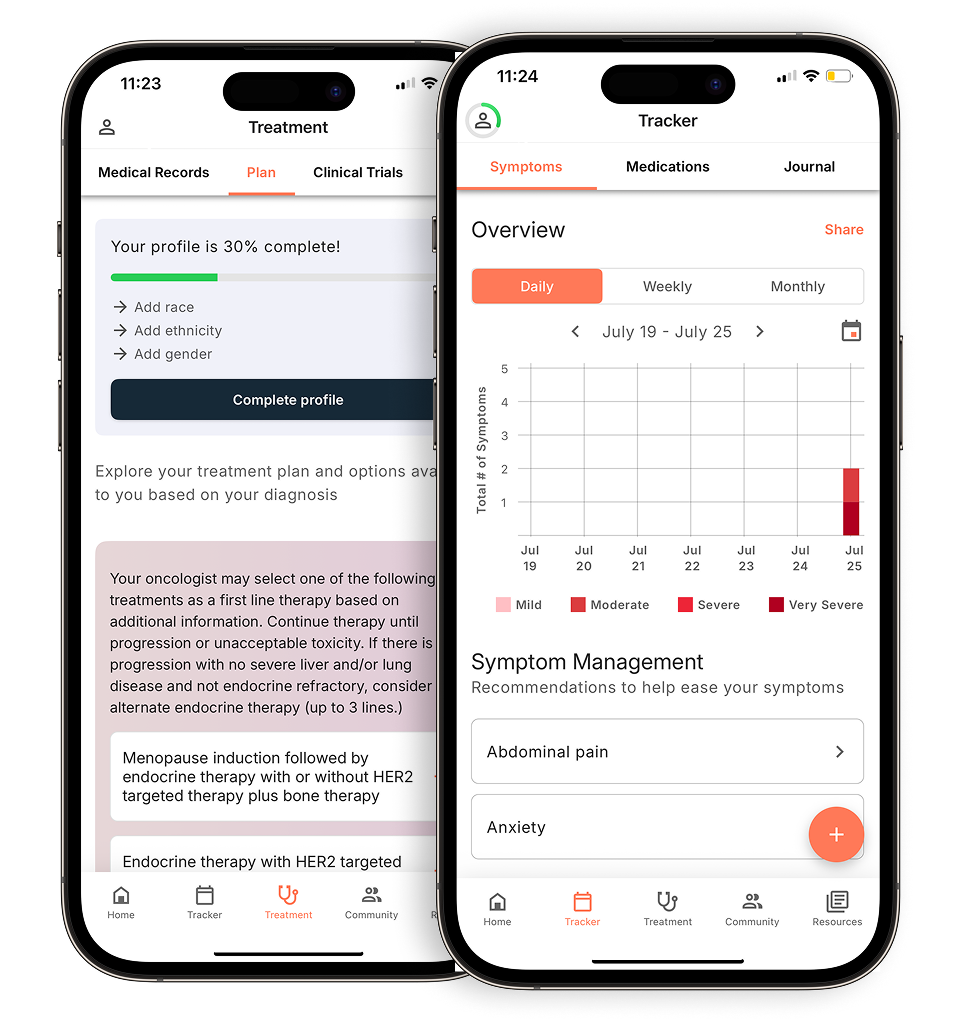
View your personalized treatment plan in the Outcomes4Me app
Use your diagnosis to unlock personalized NCCN Guidelines®-aligned recommendations.
Key takeaways
- Testing provides information, not a diagnosis: A positive result identifies an increased risk for certain cancers, not a guarantee you will get them. This knowledge helps you and your doctor create a proactive health plan with personalized screenings.
- A genetic counselor is your partner in this process: You don’t have to do this alone. A counselor helps you review your family history, decide if testing is right for you, and clearly explain what your results mean for your health.
- Your results can shape your future care: The information from your test can be used to tailor your screening schedule, guide specific treatment options, and provide valuable health insights that you can choose to share with your family.
What is genetic testing for cancer?
Let’s start with the basics. Genetic testing for cancer is a medical test that looks for specific changes, sometimes called mutations, in your DNA. Think of your DNA as your body’s instruction manual. Sometimes, there are changes in those instructions that can be passed down through families, and some of these changes can increase a person’s risk of developing certain types of cancer. This test helps identify if you have one of these inherited mutations. It’s not about predicting the future with certainty, but rather about understanding your personal risk factors more clearly. This information can be incredibly powerful for you and your healthcare team as you make decisions about your health.
Hereditary vs. sporadic cancer
It’s a common misconception that if cancer runs in your family, you’re destined to get it. The reality is that most cancers are considered “sporadic.” This means they happen by chance, resulting from a combination of factors like lifestyle, environmental exposures, or random cell changes that occur as we age. In contrast, only about 5% to 10% of all cancers are hereditary. Hereditary cancers are linked to a specific gene mutation passed down from a parent. Genetic testing for cancer risk is designed to find these inherited mutations. It’s important to distinguish this from tumor testing (sometimes called biomarker or genomic testing), which analyzes the genetics of the cancer cells themselves to help personalize your treatment plan.
What can genetic testing tell you about your health?
The results from genetic testing can be a valuable part of your health toolkit. If you currently have cancer, the information can help your doctors choose the best treatment for your specific situation, opening up more personalized care options. If you don’t have cancer but are concerned about your risk, knowing about an inherited mutation can help you and your doctor create a plan to lower that risk. This might include more frequent screenings to find cancer early, when it’s most treatable, or discussing other preventive measures. It’s all about giving you more information to make proactive choices for your well-being.
Is genetic testing for cancer right for you?
Genetic testing isn’t for everyone, but it can be particularly helpful for some people. You might want to talk to your doctor about it if you have a strong family history of cancer, like multiple relatives on the same side of the family who have had cancer, especially at a young age. Testing is also often recommended for people diagnosed with certain cancers, such as triple-negative breast cancer, ovarian, pancreatic, or metastatic prostate cancer. The best first step is always a conversation with your doctor or a genetic counselor. They can review your personal and family health history to help you decide if testing is a good option for you.
Specific cancer diagnoses and timing
If you’ve been diagnosed with certain cancers, genetic testing might be an important next step. The National Cancer Institute points to diagnoses like triple-negative breast cancer, ovarian cancer, pancreatic cancer, and metastatic prostate cancer as key reasons to consider testing. The timing of a diagnosis matters, too. For instance, a colorectal cancer diagnosis before age 50 is another significant indicator. These situations can be strong clues that an inherited risk factor is at play, and testing can offer valuable information for your treatment and future health.
A personal or family history of rare cancers
When a rare cancer appears in your family health tree, it’s worth paying attention to. Cancers like male breast cancer are uncommon, and their presence can be a sign of an inherited genetic risk. If you or a close relative has been diagnosed with a rare type of cancer, it’s a good idea to talk to your doctor or a genetic counselor. They can help you understand if this history suggests an increased risk for you or other family members and determine if genetic testing could provide more clarity.
Multiple types of cancer in one person
It’s important to consider if any single family member has had more than one type of cancer during their lifetime. This doesn’t mean a cancer that has spread, but rather two or more separate, primary cancers. For instance, someone might have had breast cancer and later developed ovarian cancer. This pattern can suggest an underlying genetic mutation that increases the risk for several different types of cancer. Seeing this in your family history is a significant reason to discuss the possibility of an inherited cancer syndrome with your healthcare provider.
Known genetic mutations in the family
If one of your relatives has already gone through genetic testing and was found to have a harmful gene change, this is a direct and compelling reason for you to consider getting tested as well. Knowing that a specific mutation, like a BRCA gene change or Lynch syndrome, runs in your family makes the path forward much clearer. Ideally, genetic counseling and testing should begin with a family member who has had cancer, as their results can provide the most useful information for everyone else. Your own test would then look for that specific, known mutation to see if you inherited it.
What are the different types of genetic tests?
When you hear about genetic testing, you might think it’s a one-size-fits-all process. But there are actually a few different types of tests your doctor might recommend, depending on your personal and family health history. Think of it like choosing the right tool for a specific job. Each test looks for genetic changes, or mutations, in slightly different ways. Understanding these options can help you and your care team decide which approach is the most helpful for you. Let’s walk through the main types of tests you might encounter.
Germline vs. somatic (tumor) testing
When you and your doctor discuss genetic testing, you’ll likely hear about two main types: germline and somatic testing. It’s helpful to think of germline testing as looking at the genetic “blueprint” you were born with. This test checks for inherited gene mutations that can be passed down through families and may increase the risk for certain cancers. In contrast, somatic testing, which is also called tumor testing, looks for genetic changes within the cancer cells themselves. These mutations are not inherited; they developed as the tumor grew. The results from somatic testing are key to personalizing your care, as they can help your doctor identify the most effective targeted therapies or clinical trials for your specific cancer.
Single-gene tests
A single-gene test does exactly what it sounds like: it looks for a change, or mutation, in one specific gene. This type of test is often recommended if there’s a known genetic mutation that runs in your family, like a specific BRCA mutation. It’s a very focused approach that can confirm if you carry that same genetic change. This information is valuable for creating a targeted plan for cancer risk screening and prevention with your doctor. It’s all about getting a clear answer to a very specific question about your genetic makeup.
Multi-gene panel tests
Sometimes, a wider lens is more helpful. Multi-gene panel tests look at a group of genes all at once. This is a common approach when your family history includes different types of cancer, or when your personal health history suggests that several genes could be involved. Instead of testing one gene at a time, a panel test can give you a more complete picture of your genetic risk factors in a single step. This broader view helps your care team understand your genetic predisposition to certain cancers and create a more comprehensive health plan.
Comprehensive genomic testing
For the most in-depth look at your genetic information, there’s comprehensive genomic testing. This type of test examines a very large number of genes to find mutations that could be related to cancer. It’s especially useful if you have a complex family history that doesn’t point to one specific gene or if you have been diagnosed with cancer. For people with a cancer diagnosis, this detailed analysis can sometimes identify genetic changes that inform treatment options. Recent studies show that this thorough approach can lead to better outcomes for cancer patients, helping to personalize care.
What to expect from the cancer genetic testing process
If you’re considering genetic testing, you might be wondering what the process actually involves. It’s often more straightforward than people imagine, broken down into a few clear steps. From your first conversation with a specialist to understanding your results, your healthcare team is there to guide you. The entire process is designed to give you information and support, putting you in control of your health decisions.
Your first step: meeting with a genetic counseling
The journey begins with a conversation, not a procedure. You’ll meet with a genetic counselor, a specialist trained to be your guide through this process. A genetic counselor helps you look at your family’s health history, figure out if testing is the right path for you, and decide which tests make the most sense. Most importantly, this is your decision. Genetic testing is only done if you and your healthcare team agree it’s the best step for you and your family, and you always have the right to say no.
Understanding the informed consent process
Before any test is ordered, you’ll go through a process called informed consent. This is much more than just signing a piece of paper; it’s a thorough conversation with your genetic counselor to make sure you understand everything involved. You must give your written permission before moving forward, and this step ensures you’re in the driver’s seat. The discussion will cover the purpose of the test, its potential benefits and risks, its accuracy, and any limitations. Your counselor will also explain how your genetic information is protected and what other options you have. The decision to get tested is entirely personal, and this process is designed to give you the confidence and clarity to make the choice that’s best for you.
Collecting your sample for the test
Once you decide to move forward, the next step is providing a sample for the lab. This part is typically very simple and quick. Most genetic tests use a small sample of blood, saliva, or cheek cells. A blood sample is collected just like any other routine blood test. For a saliva sample, you’ll simply spit into a small tube. A cheek swab involves gently rubbing a small brush on the inside of your cheek. Your doctor or genetic counselor will let you know which type of sample is needed for your specific test.
Who in the family should be tested first?
When deciding who should get tested, the general recommendation is to start with a family member who has been diagnosed with cancer, if possible. This might seem counterintuitive, but there’s a good reason for it. Testing someone who has had cancer gives you the best chance of finding a specific genetic mutation if one exists in your family. If a mutation is found, other relatives can then be tested for that specific change, which makes the results much clearer for everyone. According to the National Cancer Institute, this approach can provide the most valuable insights into the genetic risks present in the family. It helps create a clear roadmap for other family members who are considering testing.
From the lab to your results: what’s the timeline?
After your sample is collected, it’s sent to a specialized laboratory. There, trained technicians carefully analyze the DNA in your cells, looking for specific changes or mutations in your genes that are linked to cancer risk. This is a detailed and precise process. Results are not instant; it typically takes about two to three weeks for the lab to complete its analysis and send a report back to your doctor. Your genetic counselor will then schedule a follow-up appointment to go over the results with you and discuss what they mean.
How is a sample collected for genetic testing?
If you and your care team decide that genetic testing is a good next step, you might wonder what the process of giving a sample is actually like. The good news is that it’s usually a very simple and straightforward part of your health journey. Most genetic tests for cancer risk use a small sample of your blood, saliva, or cells from the inside of your cheek. The type of sample needed can depend on the specific test being done, but your doctor or genetic counselor will let you know exactly what to expect.
The main goal is to get a high-quality sample of your DNA, which holds the genetic information the lab will analyze. This can be done at a clinic, a lab, or sometimes even from the comfort of your own home with a special kit. No matter which method is used, it’s designed to be as easy and comfortable for you as possible. It’s also important to remember that this is just one step. Before any sample is taken, you’ll have a chance to talk with a professional, usually a genetic counselor, to discuss your family history and make sure you’re getting the right test. This ensures the entire process is tailored to you. Your care team is there to answer any questions you have and make sure you feel prepared.
Giving a blood sample
One of the most common ways to collect a sample for genetic testing is through a simple blood draw. If you’ve ever had routine blood work done, the process will feel very familiar. A healthcare professional, like a nurse or phlebotomist, will clean a small area on your arm and use a thin needle to draw a small amount of blood into a vial. The whole thing usually takes just a few minutes. While the thought of a needle can be a little stressful, it’s a very routine procedure. The American Cancer Society explains this is a standard way to get a high-quality DNA sample for testing.
Using a saliva or cheek swab sample
If a blood draw isn’t necessary or convenient, your doctor might recommend a saliva or cheek swab test instead. These methods are completely painless and non-invasive. For a saliva test, you’ll simply spit into a collection tube until you’ve provided enough of a sample. For a cheek swab, you’ll gently rub a small, soft brush or cotton swab against the inside of your cheek to collect cells. As MD Anderson Cancer Center notes, these tests are very effective and can sometimes be completed with a kit that’s mailed to your home, making the process even more convenient for you.
Using a skin sample
In addition to blood or saliva, genetic testing can also use a skin sample, another gentle and non-invasive option that avoids needles. The process is simple: a special adhesive tape is applied to your skin to lift off surface cells containing the DNA needed for analysis. This makes it a great alternative if you feel uneasy about blood draws, as it minimizes discomfort and can be done quickly in a clinic. This approach helps make genetic testing more accessible, allowing more people to get the information they need without added stress or worry about the collection process.
This technique is a reliable way to retrieve genetic information from the skin’s surface. Once collected, the cells are sent to a lab to be checked for specific genetic mutations. The method is especially useful for certain tests, such as panels that analyze genes linked to a hereditary risk for skin cancers like melanoma. Identifying these mutations can help you and your doctor create a proactive plan for skin health and screenings. It’s one more tool that offers personalized information to help guide your healthcare decisions.
How to prepare for your sample collection
Before your sample is collected, you’ll likely have an appointment with a genetic counselor. To get the most out of this meeting, it helps to do a little prep work. The most important thing you can do is gather your family’s health history. Try to find out who in your family has had cancer, what type they had, and at what age they were diagnosed. This information helps your genetic counselor understand your family’s health patterns and recommend the most appropriate tests for you. This conversation is a key part of the genetic counseling process, as it ensures your testing plan is truly personalized.
How to understand your genetic test results
After your sample is collected, the next step is waiting for your results. When they arrive, they will likely fall into one of three categories: positive, negative, or variant of uncertain significance. Understanding what each of these means can help you and your care team decide on the best path forward for your health. A genetic counselor is the best person to help you interpret these results in the context of your personal and family health history.
If your result is positive
A positive result means the test found a harmful gene change that is associated with an increased risk of developing cancer. It’s important to remember that this is not a cancer diagnosis. Instead, think of it as valuable information. If you currently have cancer, this result can help guide your treatment plan. If you don’t have cancer, it can help you and your doctor create a plan for managing your future risk. This might include more frequent or earlier screenings, certain medications, or preventative surgical options. It’s all about using this knowledge to be proactive about your health.
If your result is negative (and what that means)
A negative result means that no harmful gene changes were found in the genes that were tested. If a specific
True negative vs. uninformative negative results
A “true negative” is the most straightforward and reassuring outcome. This result occurs when a specific harmful gene change is already known to run in your family, and your test confirms that you did not inherit it. According to the American Cancer Society, this means your risk of developing a related cancer is likely similar to that of the general population. It provides clear information that can help you and your doctor make decisions about your future health screenings without the concern of that specific inherited risk factor.
An “uninformative negative” result is a bit more complex. This can happen if you have a strong family history of cancer, but no specific gene mutation has been identified in any of your relatives. In this case, your negative result means no harmful gene change was found in the genes that were tested, but it doesn’t completely rule out an inherited risk. As the National Cancer Institute explains, there could still be an undiscovered genetic factor at play. Your genetic counselor will help you understand this result and may still recommend more frequent checkups based on your family history.
What does a “variant of uncertain significance” mean?
Sometimes, a test finds a gene change, but there isn’t enough research yet to know if it increases cancer risk. This is called a “variant of uncertain significance,” or VUS. It can feel confusing, but it’s helpful to know that most VUS results are eventually reclassified as harmless as more research becomes available. For now, a VUS is not typically used to make medical decisions. The best step is to stay in touch with your doctor or genetic counselor. They can let you know if new information comes out that clarifies what your specific VUS means for your health.
When might you need to be retested?
If you’ve had genetic testing in the past, you might wonder if you ever need to do it again. Since your genes don’t change, a specific test result is generally good for life. However, science is always moving forward. Retesting might be a good idea if your original result was an “uninformative negative,” meaning no mutation was found, but your family history still strongly suggests a hereditary risk. As researchers discover new genes linked to cancer and testing technology improves, a new test might provide a clearer answer. The National Cancer Institute notes that retesting could also be considered if you or a close relative develops a new cancer, as this might point to a gene that wasn’t included in your initial test.
Hereditary risk vs. shared family habits
It’s important to know the difference between a true hereditary cancer risk and cancer that seems to run in a family due to shared habits. Only about 5% to 10% of all cancers are caused by harmful gene changes passed down from a parent. In many other cases, families might see more cancer simply because they share similar lifestyles, like diet and exercise habits, or live in the same environment. The clues that point to a possible inherited risk include things like cancer being diagnosed at a very young age, multiple relatives having the same type of cancer, or someone in your family having a rare cancer. If you see these kinds of patterns, it’s a good reason to talk with a genetic counselor to better understand your personal risk.
What to do after you get your results
Receiving your genetic test results can bring up a lot of questions. It’s helpful to think of these results not as a final answer, but as a new piece of information to help guide your health journey. Whether your results are positive, negative, or uncertain, they provide valuable insights that you and your care team can use to make informed decisions. This knowledge empowers you to be proactive about your health and your treatment.
Your results can influence everything from your treatment options to your screening schedule and can even provide important health information for your family members. Working with your doctor or a genetic counselor is the best way to understand what your specific results mean and to figure out the most supportive and effective path forward for you. Let’s walk through some of the key ways your results can be put into action.
Working with your doctor on a care plan
Your genetic test results are a key part of creating a care plan that’s tailored specifically to you. If a specific genetic mutation is found, it can sometimes point toward targeted therapies that are designed to work against cancers with that exact mutation. This information helps your oncology team recommend treatments that may be more effective for you. Beyond treatment, the results can inform other aspects of your health management, helping you and your doctor make decisions about your overall wellness and long-term care strategy. It’s all about using this genetic information to build a more personalized care plan that fits your unique situation.
Exploring preventive options
If you don’t have cancer, a positive result can feel overwhelming, but it’s also a powerful tool for proactive health management. Knowing you have an inherited mutation allows you and your doctor to create a personalized plan to lower your risk. This might involve more frequent screenings, like mammograms or colonoscopies, or starting them at an earlier age to catch any potential issues when they are most treatable. Your doctor might also discuss other preventive measures that are right for you. This knowledge puts you in the driver’s seat, empowering you to make informed decisions and take control of your long-term health with a clear, preventive strategy.
What to do if insurance denies coverage
The cost of genetic testing can be a concern, but don’t let an initial denial from your insurance company stop you. Your genetic counselor is your best advocate in this situation. They can help you understand your insurance policy, navigate the appeals process, and work with your doctor to provide the necessary documentation to your insurance provider. A genetic counselor can also discuss more affordable testing options or payment plans if coverage remains an issue. There are often pathways to getting the testing you need, and your care team is there to help you find them.
Keeping your health information organized
One of the most helpful things you can do is to keep your health information in one organized place. This starts with gathering your family’s health history—who had cancer, what type, and at what age they were diagnosed. This information is vital for your genetic counselor to recommend the right tests. Once you have your results, keeping them alongside your other medical records makes it easier to share with your care team. Using a secure app like Outcomes4Me can help you manage all of this information, from your family history to your test results and treatment plan, ensuring you have everything you need for future appointments and health decisions.
Adjusting your future cancer screenings
If you test positive for a gene mutation that increases cancer risk, one of the most important next steps is to review your screening schedule with your doctor. This doesn’t mean something is wrong; it just means you can be more proactive. Your doctor might recommend starting certain screenings, like mammograms or colonoscopies, at an earlier age or having them more often than is typically suggested. This allows for closer monitoring and helps catch any potential issues as early as possible. You can work with your doctor to create a new screening plan that makes sense for you, which might also include lifestyle changes or discussing risk-reducing options.
Talking to your family about the results
A positive test result can also have implications for your relatives. Because you share genes with your family, there is a chance that your parents, siblings, and children could have the same mutation. Deciding to share this information is a personal choice, but it can be incredibly helpful for them. Knowing about a potential risk allows your family members to make their own informed decisions about whether to pursue genetic counseling and testing. If you have a positive result, it’s worth thinking about sharing this information with family members who might also want to understand their own risk and take proactive steps for their health.
What to consider before genetic testing
Deciding to get genetic testing is a personal choice, and it’s completely normal to have questions. Beyond the medical side of things, it’s helpful to think through a few key areas. Considering the cost, the potential emotional impact on you and your family, and how your privacy is protected can help you feel more prepared and confident in your decision.
Weighing the pros and cons of testing
Thinking through the pros and cons is a really important step. On one side, knowledge can be incredibly empowering. A test result provides information, not a diagnosis, which can help you and your doctor create a proactive health plan with personalized screenings. If you’re currently in treatment, this information can sometimes help guide your care. On the other side, the results can bring up a lot of emotions, and it’s okay to feel anxious about what you might learn. It’s a deeply personal decision, and there’s no right or wrong answer. The best approach is to think about what this information would mean for you and how you would use it. Talking with a genetic counselor can help you sort through these feelings and make a choice that feels right for you.
Will insurance cover genetic testing?
Figuring out the financial side of things is a practical and important step. The good news is that most health insurance plans cover genetic counseling and testing if you meet certain national guidelines. These guidelines often relate to your personal or family history of cancer. A genetic counselor is a great resource here. They can help you figure out if your appointment and test are covered by your insurance and what, if anything, you might have to pay out of pocket. Don’t hesitate to ask them directly about costs so you can have a clear picture before moving forward.
The emotional side of genetic testing
Your genetic test results are about you, but they can also have a ripple effect on your family. Learning that a cancer-related gene mutation runs in the family can bring up a lot of emotions for everyone involved. A positive result can change some family relationships, as relatives may feel a mix of anxiety, guilt, or responsibility. It’s helpful to think about who you might want to share your results with and how you’ll approach those conversations. A genetic counselor can also help you plan for these discussions and offer support for navigating these feelings.
How is your genetic privacy protected?
It’s natural to wonder who will see your genetic test results and how that information will be used. You can rest assured that your results are part of your private medical record, protected by the HIPAA Privacy Rule. There are also federal laws in place to protect you. The Genetic Information Nondiscrimination Act (GINA) makes it illegal for health insurance companies and most employers to treat you differently based on your genetic information. This means a health insurer can’t use your results to set your premiums, and an employer can’t use them in hiring or firing decisions.
Understanding the limitations of GINA
While GINA offers important protections, it’s helpful to know where they don’t apply. The law prevents health insurance companies and most employers from using your genetic information against you. However, these protections don’t extend to every type of insurance. For example, companies that provide life insurance, disability insurance, or long-term care insurance can still ask about your genetic test results. It’s also important to know that GINA’s protections are for genetic information only, not for a health condition you may already have. So, while GINA is a huge step in protecting your privacy, understanding these limits can help you make fully informed decisions.
Common myths about genetic testing, debunked
Genetic testing can feel like a big step, and with so much information out there, it’s easy to come across some confusing or outdated ideas. When you’re making decisions about your health, you deserve to have the clearest picture possible. Let’s walk through a few common misunderstandings about genetic testing for cancer so you can feel more confident and informed. Clearing up these myths can help you have more productive conversations with your doctor or genetic counselor about what’s right for you.
Myth: A positive test means you will get cancer
One of the biggest fears about genetic testing is that a positive result is a guarantee you’ll get cancer. Thankfully, that’s not the case. A positive result for a gene mutation means you have an increased risk of developing certain types of cancer, but it doesn’t predict the future. Think of it less like a crystal ball and more like a detailed weather forecast. It gives you valuable information so you can prepare—in this case, by working with your care team to create a personalized screening and prevention plan. Many people with a known mutation never develop cancer, but understanding your risk empowers you to take proactive steps for your health.
Myth: BRCA mutations only affect certain people
You may have heard that mutations in the BRCA1 and BRCA2 genes are only a concern for people of certain backgrounds, like those with Ashkenazi Jewish heritage. While these mutations are more common in some populations, they can and do occur in people of all races and ethnicities. Genes don’t discriminate. Important genetic mutations that increase the risk for breast, ovarian, prostate, and pancreatic cancers have been found in families all over the world. Your personal and family health history is much more important than your ancestry when considering if genetic testing is a good option for you.
Myth: You need a family history of cancer to get tested
While a strong family history of cancer is a very common reason to consider genetic testing, it’s not the only one. You can still carry a genetic mutation even if you don’t know of any relatives who’ve had cancer. Sometimes, family health history is incomplete or unknown. Other times, a mutation can be passed down for generations without causing cancer in every person who has it. Your own health history, such as a cancer diagnosis at a young age, can also be a reason to get tested. A genetic counselor can help you look at the whole picture to determine if testing makes sense for your situation.
Myth: At-home tests are just as good as medical-grade tests
With the rise of direct-to-consumer (DTC) genetic tests, it’s easy to think they offer the same information as the tests your doctor would order. While at-home kits can be a fun way to explore your ancestry, they are not a substitute for medical-grade testing when it comes to your health. The tests ordered by your healthcare team are more comprehensive and are held to higher quality standards because they are used to make important decisions about your care. Understanding the differences can help you see why a conversation with a professional is the best first step.
Limited scope of at-home tests
Most at-home genetic tests provide a very narrow view of your genetic information and are not meant for making medical decisions. For example, the only FDA-approved DTC test for inherited cancer risk looks for just three specific changes in the BRCA genes that are common in people of Ashkenazi Jewish descent. According to the National Cancer Institute, this limited scope means the test misses about 80% of other cancer-causing BRCA changes. Relying on this type of test could give you a false sense of security, as it doesn’t provide the complete picture that a medical-grade test ordered by your doctor would.
Privacy concerns and HIPAA
When your doctor orders a genetic test, your results become part of your medical record and are protected by the Health Insurance Portability and Accountability Act (HIPAA) Privacy Rule. Additionally, a federal law called the Genetic Information Nondiscrimination Act (GINA) prevents health insurance companies and most employers from treating you unfairly based on your genetic information. The privacy policies of at-home testing companies can be very different, and they may not offer the same level of protection for your sensitive data. It’s important to be aware that your information may be used in ways you don’t expect.
Lack of quality control standards
Labs that perform medical-grade genetic testing must follow strict quality standards under the Clinical Laboratory Improvement Amendments (CLIA). This certification helps ensure the lab’s procedures are accurate and reliable. However, direct-to-consumer genetic testing labs are not required to follow these same rules. While some DTC labs may have CLIA certification, this doesn’t guarantee that the test itself is medically useful or that the results are interpreted correctly for your health. For something as important as your cancer risk, you want to be sure the information is coming from a lab held to the highest possible standards.
How can a genetic counselor support you?
Going through genetic testing is a personal process, and you don’t have to do it alone. A genetic counselor is a healthcare professional with special training in both medical genetics and counseling. Think of them as your guide—someone who can partner with you before, during, and after testing. They are there to provide information, answer your questions, and offer support, helping you make informed decisions about your health that feel right for you. Their goal is to make sure you understand every step of the process, from deciding whether to get tested to figuring out what your results mean for your future.
Deciding if testing is the right choice for you
Before you even provide a sample, a genetic counselor can help you explore if testing is a good fit for your situation. They will review your personal and family medical history to get a clear picture of your potential risk. During this conversation, they can explain which genetic tests might be most useful and what the possible outcomes could be. This is also your time to ask questions and talk through any concerns. A counselor can help you think about the emotional, financial, and family impacts of testing, ensuring you feel confident and prepared for the path ahead.
Explaining your results and planning next steps
When your test results are ready, they can feel complex and overwhelming. A genetic counselor is skilled at translating the technical information from the lab report into plain language you can understand. Your counselor will carefully explain what your results mean for your health and what the implications might be for your family members. Together, you can create a plan for what comes next. This might include developing a personalized cancer screening schedule, discussing risk-reducing options, or figuring out how to share this information with relatives.
Your partner for long-term support and resources
A genetic counselor’s role often extends beyond just delivering your results. Learning about your genetic information can bring up a mix of emotions, and counselors are trained to provide support as you process this new information. They can also be a valuable bridge to other resources, connecting you with specialists or support groups that can help. Science is always evolving, and your genetic counselor can remain a trusted contact for years to come. You can find a genetic counselor in your area to help you get started on your journey.
Related Articles
- Should you get genetic testing for breast cancer?
- Should you get genetic testing for breast cancer?
- Genetic testing for breast cancer risk: a family guide
- Genetic testing for breast & ovarian cancer 101
View your personalized treatment plan in the Outcomes4Me app
Use your diagnosis to unlock personalized NCCN Guidelines®-aligned recommendations.
Frequently Asked Questions
What’s the first step if I think I should get genetic testing? The best place to start is by having a conversation with your doctor or a genetic counselor. You can begin by gathering as much of your family’s health history as you can, focusing on who has had cancer, the type of cancer, and their age at diagnosis. Bringing this information to your appointment will help your care team understand your situation and guide you on whether testing is a good option for you.
If I test positive for a gene mutation, does that mean my children will have it too? Not necessarily. If you have a specific gene mutation, each of your children has a 50% chance of inheriting it from you. It’s like a coin flip for each child. A positive result for you provides important information that you can choose to share with your family, allowing them to make their own informed decisions about their health and potential testing.
How is medical genetic testing different from the at-home DNA tests I see advertised? This is a great question. Medical-grade genetic testing, ordered by your doctor, is a diagnostic tool that analyzes specific genes thoroughly for harmful mutations. The results are interpreted by a genetic counselor or doctor to create a personalized health plan. At-home consumer tests are often less comprehensive and are not meant for medical decision-making. For your health, it’s always best to go through a medical professional.
Will my genetic test results affect my ability to get health insurance? You can feel secure knowing there are legal protections in place. A federal law called the Genetic Information Nondiscrimination Act (GINA) makes it illegal for health insurance companies and most employers to treat you unfairly based on your genetic information. This means your results can’t be used to determine your eligibility or set your premium rates.
My test came back with a ‘variant of uncertain significance’ (VUS). What should I do now? Receiving a VUS result can feel confusing, but it simply means the lab found a gene change that isn’t fully understood yet. Currently, a VUS is not used to make medical decisions. The best thing to do is stay in touch with your genetic counselor. As scientists learn more, many of these variants are reclassified, and your counselor can keep you updated if the meaning of your result changes.