
A cancer diagnosis can sometimes make you feel like you’ve lost control. Taking an active role in your care is one way to regain a sense of agency, and the right app can be a powerful tool. But with so many options, how do you choose? Many people start by checking out outcomes4me app reviews to see what real users think. A quality app helps you track your journey, prepare for appointments, and learn about treatment options from reliable sources. It’s a way for you and your care team to understand cancer together, making you a more informed partner in your own healthcare.
View your personalized treatment plan in the Outcomes4Me app
Use your diagnosis to unlock personalized NCCN Guidelines®-aligned recommendations.
Key Takeaways
- Use an app as your digital organizer: Keep track of appointments, medications, and symptoms in one central place to feel more in control and have more productive conversations with your care team.
- Prioritize personalized, expert-vetted information: The most helpful apps offer guidance tailored to your specific diagnosis and based on established clinical guidelines, empowering you to be an active participant in your care.
- Find strength in shared experiences: You don’t have to go through this alone. Connecting with a support community of peers who understand your journey can provide invaluable emotional comfort and practical advice.
How can an app support you after a cancer diagnosis?
After a cancer diagnosis, it can feel like you’re suddenly managing a full-time job you never applied for. Between doctor’s appointments, new medications, and a lot of new information, it’s easy to feel overwhelmed. This is where a specialized app can make a real difference. Think of it as a digital organizer and resource library that fits in your pocket, designed to bring a little more order to the chaos.
At their core, these apps offer practical tools to help you manage your care. You can track your appointments, get reminders to take medications, and log symptoms or side effects you’re experiencing. Having all of this in one place not only helps you stay on top of your treatment plan but also makes it easier to share clear, accurate updates with your care team.
Beyond organization, the right app can also be a source of reliable, personalized information. Instead of falling down an internet rabbit hole, you can find resources tailored to your specific situation. These tools can help you understand your diagnosis and treatment options, empowering you to have more informed conversations with your doctors. While they are not a substitute for medical advice, they serve as a valuable educational resource to support you along the way. Many also offer a connection to a support network, which can be an incredible comfort.
The challenge of finding a quality cancer app
What experts say about cancer app quality
With so many apps available, you’d think finding a helpful one would be easy. But the reality is that quality can vary dramatically. In fact, a study evaluating dozens of cancer management apps found that very few earned a “good” rating, and none were considered “excellent.” This can be frustrating when you’re looking for a reliable tool to support you. The research highlighted a significant gap between what patients need and what most apps offer, leaving many people with resources that look helpful on the surface but lack the depth and functionality to make a real difference in managing their care journey.
So, what separates a great app from a mediocre one? Experts point out that many apps provide generic health information rather than personalized, actionable tools. They might tell you about the links between certain behaviors and health but don’t offer features to help you track symptoms, manage medications, or adhere to your treatment plan. To get the most benefit, doctors recommend looking for apps that combine reliable educational content with practical features. The best resources are often developed with input from professional organizations and provide easy-to-understand information alongside tools that help you actively participate in your care.
5 helpful apps for managing your cancer care
When you’re dealing with a cancer diagnosis, it can feel like there’s a mountain of information to manage. From appointments and medications to symptoms and questions for your doctor, keeping everything straight is a challenge. It’s completely normal to feel overwhelmed. While your care team is always your primary source of guidance, several apps can act as a helpful sidekick on your journey. Think of them as a digital notebook, a personal librarian, and a support group, all in your pocket.
These tools are designed to help you feel more in control by making it easier to organize the details of your care. You can track how you’re feeling day-to-day, set reminders for your medications, and jot down questions as they pop into your head so you don’t forget them at your next appointment. Some apps also provide access to a wealth of reliable, expert-vetted information, helping you better understand your diagnosis and treatment options. Others connect you with communities of people who are on a similar path, offering a space to share experiences and find emotional support. Using an app won’t change your diagnosis, but it can make the process of managing it feel a little less chaotic. Here are five apps that many people find helpful.
Outcomes4Me: AI-driven personalized guidance
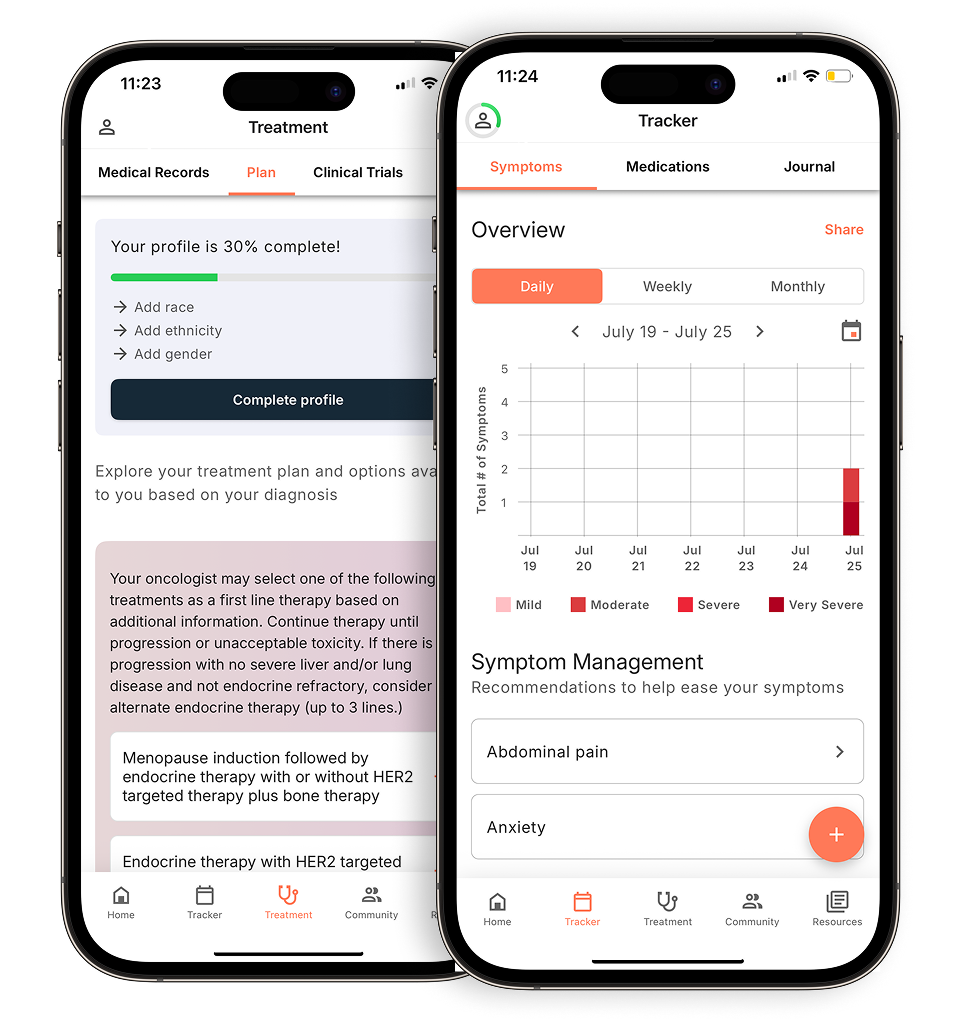
It’s one thing to read general information about cancer, but it’s another to find resources that apply specifically to you. The Outcomes4Me app provides personalized guidance to help you better understand your unique diagnosis and treatment plan. By using your specific health information, the app connects you with relevant treatment options, potential clinical trials, and other resources that are tailored to your situation. This can help you feel more informed and prepared when you talk with your care team. The goal is to give you clear, evidence-based information that makes sense for your individual journey, taking some of the guesswork out of your research.
How Outcomes4Me works
Outcomes4Me is a free app that uses artificial intelligence (AI) to make complex medical information easier to understand. When you securely share your diagnosis and health records, the app processes that information to give you personalized guidance. It translates the often-confusing language of oncology into clear, actionable insights about your specific situation. This helps you move from feeling overwhelmed by data to feeling empowered by knowledge, so you can have more productive conversations with your healthcare team about what comes next.
Key features
What makes Outcomes4Me unique is that it’s the only app that directly integrates with the NCCN Clinical Practice Guidelines in Oncology (NCCN Guidelines®), which are developed by experts from 32 leading cancer centers. This means the treatment options you see are aligned with the latest expert recommendations for your specific diagnosis. Beyond this core feature, the app also helps you find potential clinical trials, track your symptoms and medications, and keep your medical records organized in one place. You’ll also receive personalized news and articles relevant to your health, helping you stay informed without having to search for it.
Cost, availability, and ratings
The Outcomes4Me app is completely free for patients and is available for download on both the Apple App Store and Google Play. It has been well-received by the patient community, earning strong ratings from thousands of users who rely on it to help manage their care. This widespread use and positive feedback reflect its value as a supportive tool for people living with cancer. The commitment to keeping the app free ensures that everyone has access to these resources, regardless of their financial situation.
Cancer.Net Mobile: Trusted information from oncologists
Finding trustworthy information online can be difficult, but this app makes it easier. The Cancer.Net Mobile app is a resource from the American Society of Clinical Oncology (ASCO), so you can feel confident that the information is credible and up-to-date. It offers articles and guides on more than 125 types of cancer. Beyond being an information hub, the app also has practical tools to help you keep track of your symptoms, log your medications, and save questions you want to ask your doctor. This helps you organize important details in one place, making it easier to prepare for your appointments and share updates with your care team.
MediSafe: For simple medication reminders
Managing multiple medications can be one of the most stressful parts of treatment. Remembering what to take and when can feel like a full-time job. MediSafe is an app designed specifically to simplify this process. It acts as a virtual pillbox, sending you reminders when it’s time to take your medications. You can also track your doses, so you always know if you’ve taken your medicine for the day. The app can even send you alerts when it’s time for a refill. By helping you stay on schedule, it can reduce anxiety around your medication routine and free up your mental energy for other things.
BELONG — Beating Cancer Together: Connect with others who understand
Going through cancer can feel isolating, but you don’t have to do it alone. The BELONG app connects you to a large online community of other people with cancer, as well as caregivers and healthcare professionals. You can join support groups tailored to your specific cancer type, allowing you to share experiences and advice with people who truly understand what you’re going through. It’s a space to ask questions, find encouragement, and feel a sense of connection. Having that peer support can make a huge difference in how you cope with the emotional and practical challenges of a cancer diagnosis.
CancerLife: A simple way to organize your care
Between tracking symptoms, managing medications, and keeping up with appointments, there are a lot of moving parts to your care. The CancerLife app is a tool that helps you bring all of those details together in one place. You can use it to log your symptoms and side effects, which can help you and your doctor see patterns over time. It also includes features for tracking your medications and appointments, so nothing falls through the cracks. The app aims to be a comprehensive journal for your cancer journey, making it easier to coordinate your care and communicate effectively with your healthcare providers.
MyChart: For direct access to your medical records
Keeping your health information organized is much easier when it’s all in one place. Many hospitals and clinics use MyChart, a patient portal that gives you direct access to your medical records. Through the app, you can review test results, see your appointment history, and communicate securely with your healthcare providers. This empowers you to be a more active participant in your care. Having your medical history at your fingertips means you can prepare more effectively for appointments and have more informed discussions about your treatment plan, helping you feel more in control of your health journey.
ACS CARES: For connecting with an American Cancer Society specialist
Sometimes, you need to talk to someone who understands the complexities of a cancer diagnosis but is outside of your immediate circle. The ACS CARES program connects you with trained specialists from the American Cancer Society who can offer personalized support and information. Through their app, you can get guidance on your diagnosis, treatment options, and other available resources. This service provides a valuable layer of support, helping to answer questions and reduce feelings of isolation. Having a dedicated person to reach out to can provide comfort and clarity as you manage your care.
Stupid Cancer: For young adults with cancer
A cancer diagnosis presents unique challenges at any age, but for young adults, it can intersect with pivotal moments in life like building a career or starting a family. Stupid Cancer is an organization that provides a community and resources specifically for young adults affected by cancer. Their app offers a platform to connect with peers who understand these specific challenges. It’s a space to share experiences, find solidarity, and access information tailored to your stage of life, helping you cope with both the emotional and practical sides of your diagnosis alongside others who truly get it.
What makes a cancer support app helpful?
With so many apps available, it can be tough to know which one is right for you. The best app is one that fits your specific needs and makes managing your health information feel a little less overwhelming. Think of it as a digital organizer and a supportive resource that lives right on your phone. A great app can help you keep track of the moving parts of your care, from appointments and medications to symptoms and questions for your doctor. It centralizes everything, so you don’t have to rely on scattered notes or memory alone.
When you’re exploring your options, look for tools that are easy to use and provide clear, reliable information. The goal is to find something that reduces stress, not adds to it. A well-designed app can help you feel more prepared for conversations with your care team and more in control of your journey. It can translate complex medical information into something you can understand and act on. Ultimately, the right app empowers you by putting essential tools and knowledge at your fingertips. Below are a few key features that can make a big difference in finding an app that truly supports you.
Guidance that’s tailored to you
Your cancer journey is unique, so the information you receive should be, too. Look for an app that offers guidance tailored to your specific diagnosis, including your cancer type and stage. The most helpful apps use established clinical guidelines to provide you with a clear understanding of your potential treatment options. This kind of personalized support can empower you to have more informed discussions with your oncologist and make decisions that feel right for you. It helps you see the road ahead and understand the different paths your care might take.
Easy symptom and side effect tracking
Managing symptoms and treatment side effects is a daily reality for many people with cancer. An app with a symptom tracker can be an invaluable tool. It allows you to log how you’re feeling each day, noting the severity and frequency of any symptoms like fatigue or nausea. Over time, this creates a detailed record that you can share with your doctor. This log makes it easier to spot patterns and helps your care team better manage your side effects, ensuring you get the support you need to feel your best during treatment.
Medication reminders and management tools
Juggling multiple medications, dosages, and schedules can be complicated. A good app can simplify this by providing tools to manage your treatment plan. Features like medication reminders can help you stay on track, while a digital log lets you record when you’ve taken each dose. Some apps also offer reminders for prescription refills so you never run out unexpectedly. Having all this information in one place can bring peace of mind and free up mental space, allowing you to focus more on your well-being and less on logistics.
Reliable, easy-to-understand resources
When you have questions, you need answers you can trust. An app that provides access to a library of reliable educational content is a huge plus. Look for resources that are reviewed by medical experts and are easy to understand. Having a go-to source for information on different treatments, medical terms, and the latest research can help you feel more knowledgeable and confident. The National Cancer Institute is another excellent source for trusted information, and a good app will often pull from similar, evidence-based sources.
A connection to a supportive community
You don’t have to go through this alone. Connecting with others who understand what you’re experiencing can be incredibly comforting and validating. Many apps include a community feature where you can join support groups, share your story, and learn from the experiences of your peers. Finding your people can provide emotional strength and practical advice from those who have walked a similar path. These support groups can be a safe space to ask questions and find encouragement whenever you need it.
How an app can help you stay on top of your care
Going through cancer treatment can feel like taking on a second full-time job. Between appointments, medications, and managing new symptoms, it’s a lot to keep straight. This is where a good app can become an invaluable part of your toolkit. Instead of relying on scattered notes or memory alone, an app centralizes your health information, giving you a clear, organized picture of your journey. It can help you feel more in control by turning the chaos of information into clear, actionable insights you can use to advocate for yourself and communicate effectively with your care team. Think of it as a personal health assistant that lives right on your phone, ready to help you manage the day-to-day details so you can focus more of your energy on healing.
Make informed treatment decisions
One of the most significant parts of your cancer journey is understanding your treatment options, and a good app can be a powerful ally in this process. It can translate complex medical information into something you can understand and act on, helping you feel more prepared for conversations with your care team. The most helpful tools offer guidance that is tailored to your specific diagnosis and based on established clinical guidelines, empowering you to be an active participant in your care. For instance, the Outcomes4Me app provides personalized guidance based on your unique health profile, connecting you with relevant treatment options and potential clinical trials. This kind of tailored information helps you formulate better questions for your doctor and make decisions that feel right for you, putting you in a more active role in your own treatment plan.
Track your symptoms to see how you’re doing
Trying to remember exactly when a new side effect started or how your fatigue has changed over the past two weeks can be tough, especially when you’re not feeling your best. Using an app to track your symptoms creates a reliable health diary. You can log how you’re feeling each day, note the severity of symptoms like nausea or pain, and see how they connect to your treatment schedule. Over time, this log can reveal important patterns that you and your doctor might not otherwise notice. Having a clear, data-driven report of your experiences makes conversations with your care team more specific and productive, ensuring you get the support you need right when you need it.
Get reminders to stay on track with medications
Juggling multiple medications—each with its own schedule and instructions—can be overwhelming. An app with medication management tools can lift a huge mental weight. You can set up reminders for each dose so you never have to wonder, “Did I take that pill already?” Many apps also help you keep a complete list of your medications and dosages, send alerts when it’s time for a refill, and even check for potential drug interactions. Consistently taking your medications as prescribed is a critical part of your treatment plan, and these simple reminders can make it much easier to stay on track without the stress.
Prepare for your doctor’s appointments
Have you ever left a doctor’s appointment and immediately remembered the three questions you forgot to ask? It happens to everyone. Appointments can be short and stressful, making it hard to recall everything you wanted to discuss. An app gives you a dedicated place to jot down questions as they pop into your head. During the appointment, you can take notes or even record your doctor’s answers (with their permission, of course) so you can review the information later. Coming to your appointments prepared with a list of concerns helps you make the most of your time and ensures you leave feeling informed and confident in your care plan.
Share updates easily with your care team
Cancer care involves a team effort, and clear communication is key. This includes not only your doctors and nurses but also your personal support system of family and friends. Apps can make sharing information simple and seamless. The symptom reports you generate can be easily shared with your oncologist, providing them with a detailed look at how you’re doing between visits. Some apps also have features designed to help you coordinate with your loved ones, allowing you to post updates or ask for help with specific tasks like a ride to treatment or a home-cooked meal. This keeps everyone in the loop and makes it easier for people to offer meaningful support.
Where to find trustworthy information and support
When you’re dealing with a cancer diagnosis, it can feel like you’ve been handed a stack of books in a language you don’t speak. The internet is full of information, but it’s hard to know what’s accurate, what’s relevant to you, and what’s just noise. On top of that, there’s the emotional weight of it all, and the feeling that no one in your life can truly understand what you’re going through. This is where a good app can become an essential part of your toolkit.
The best cancer support apps act as your personal guide, helping you find two of the most important things you need on this journey: reliable information and a supportive community. They cut through the clutter to bring you clear, expert-vetted knowledge tailored to your specific situation. At the same time, they connect you with other people who are on a similar path, creating a space where you can feel seen, heard, and understood. It’s about having a trusted resource in your pocket that addresses both the practical and the emotional sides of a cancer diagnosis, helping you feel more in control and less alone.
Understand your treatment options better
A cancer diagnosis comes with a whole new vocabulary. It’s easy to feel overwhelmed by medical terms and complex treatment plans. The best apps help by translating this information into plain, easy-to-understand language. Instead of spending hours searching online and trying to figure out what’s relevant to you, an app can provide clear, personalized explanations about your specific diagnosis and treatment options. This empowers you to have more confident and informed conversations with your healthcare team, ensuring you’re an active participant in your own care journey.
Find others with a similar diagnosis
While friends and family are an incredible source of support, there’s a unique comfort in connecting with people who are walking a similar path. Many apps offer access to online communities and support groups tailored to your specific cancer type. This is a space where you can ask questions, share experiences, and find emotional support from others who truly get it. Whether you’re looking for advice on managing a particular side effect or just need to talk to someone who understands, these peer support groups can make you feel less alone.
Know your information is medically reviewed
When it comes to your health, the quality of information matters. A reliable cancer app provides educational content that has been reviewed and approved by oncologists and other medical experts. This ensures that the information you’re receiving is accurate, evidence-based, and up-to-date with the latest research and treatment standards. Look for apps that base their guidance on established clinical guidelines from trusted organizations like the National Comprehensive Cancer Network (NCCN). This gives you peace of mind, knowing you’re getting credible information to help you make decisions.
Share your experience with people who get it
Beyond structured support groups, having a place to simply share your story can be incredibly healing. The right app can provide a safe and welcoming environment to connect with peers on your own terms. You can share updates on your treatment, celebrate small victories, or ask for practical help, like tips for dealing with chemo brain. This sense of community fosters a powerful network of mutual support. It’s a space where you can be open about your challenges and find strength in the shared experiences of others who are on a similar journey.
How to know if an app’s information is reliable
When you’re looking for support after a cancer diagnosis, you want to know the information you’re getting is trustworthy. With so many resources available, it can be tough to sort through what’s helpful and what’s not. So, how can you tell if an app is a reliable resource? There are a few key things to look for that can give you peace of mind.
A trustworthy app will be transparent about where its information comes from and who reviews it. It won’t make big promises or offer “miracle” solutions. Instead, it will provide clear, evidence-based information that complements the care you receive from your oncology team. By checking for a few simple markers of quality, you can feel more confident in the tools you choose to support you on your journey.
Look for information reviewed by medical experts
Think of it like getting a second opinion for the information you read. When an app’s content is reviewed by medical experts—like oncologists, oncology nurses, and researchers—you can feel more secure that the information is accurate, safe, and relevant to your care. An evaluation of interactive mHealth applications for people with cancer found that expert review is essential for ensuring quality. Before you download or start relying on an app, check its website for a medical advisory board or a clear statement about its content review process. This transparency is a great sign that the app is committed to providing high-quality information.
Check that it follows clinical guidelines (like NCCN)
Clinical guidelines are like a roadmap for cancer care, created by experts based on the latest evidence from research and clinical trials. They help doctors make decisions about the best treatment plans. The most reliable apps align with established clinical guidelines to make sure the guidance they provide is based on solid research. Look for mentions of well-respected sources like the National Comprehensive Cancer Network (NCCN) or the American Society of Clinical Oncology (ASCO). When an app bases its information on these guidelines, you know you’re getting information that is in sync with the standards your own care team follows.
Look for partnerships with trusted cancer organizations
A good sign of a credible app is seeing who it works with. When an app is used or recommended by well-known cancer centers, advocacy groups, or research institutions, it’s like a vote of confidence from the medical community. Partnerships with reputable cancer organizations can add a layer of trust, showing that the app is recognized as a valuable resource. Check the app’s website for a list of partners or collaborators. Seeing familiar and respected names can help you feel more comfortable using the app as part of your support system.
Make sure the content is up-to-date
Cancer treatment and research are constantly moving forward, so the information you use should be, too. A reliable app will be committed to keeping its content current with the latest medical advancements. It’s crucial for health apps to regularly update their content to reflect the latest findings, ensuring you have access to the most relevant information about treatments, clinical trials, and side effect management. Look for dates on articles and educational materials, or check the app’s “About” section for information on how often its content is reviewed. This shows a commitment to providing you with up-to-date knowledge.
Understanding app privacy and data security
When you’re managing your health, the last thing you want to worry about is your personal information. It’s completely understandable to be cautious about sharing sensitive details about your diagnosis and treatment, and your privacy is incredibly important. Any app you use should treat it that way. Trustworthy health apps are built with strong security measures to protect your data because they understand the responsibility that comes with handling your health information. They should be open and clear about how they keep it safe, giving you one less thing to be concerned about on your journey.
Before you start using an app, it’s a good idea to get a sense of its approach to privacy. Reputable apps are transparent about what information they collect and why. Often, this data is used to personalize your experience—for example, to provide you with guidance relevant to your specific diagnosis and treatment history. The key is that the app should clearly explain this process. A strong commitment to data security and privacy is another sign of a high-quality resource, helping you feel confident that your information is in good hands while you focus on your care.
Why you should read the privacy policy
I know, I know—nobody actually reads the privacy policy. They’re long, full of legal jargon, and it’s just easier to click “agree.” But when it comes to your health information, taking a few minutes to scan it is worth the effort. A good privacy policy will clearly explain what data is collected, including sensitive health details, and how it’s used for things like personalizing your experience or improving the app’s features. Look for information on whether your data is shared with third parties and if it is de-identified first, which means all personal information is removed. You don’t need to understand every word, but a quick look can give you a strong sense of how seriously an app takes your data privacy.
How to choose the best app for your needs
When you’re navigating a cancer diagnosis, a mobile app can be a powerful tool to help you understand and manage your health. But the “best” app is different for everyone. It really comes down to what you need most and what you’re comfortable using. Some apps are very simple and focus on one thing, like tracking symptoms, while others offer many features all in one place.
Before you start exploring, it’s helpful to think about what kind of support would make the biggest difference for you right now. Are you looking for a simple way to remember your medications? Do you want help organizing your questions for your next doctor’s appointment? Or would you prefer an all-in-one tool that also connects you with a community? The LUNGevity Foundation advises thinking about what you need most as the first step to finding the right fit.
Many apps also create a personalized experience by asking you to build a profile based on your diagnosis and circumstances. This allows them to provide you with more relevant information, support, and services. The American Cancer Society, for example, uses this approach to match people with resources that fit their unique situation. Keep in mind that the most helpful app for you can also depend on personal factors. Research shows that things like your specific type of cancer, how long it’s been since your diagnosis, and your current treatment plan can all play a role. By taking a little time to think about your personal needs, you can find an app that feels like a true partner on your journey.
Finding an app you’ll use consistently
The most feature-packed app in the world won’t help if you never open it. The key is to find a tool that fits so naturally into your routine that using it feels helpful, not like another chore. When you’re exploring options, prioritize ease of use. The goal is to find something that reduces stress, not adds to it. A well-designed app should feel intuitive, providing clear, reliable information that empowers you. Many of the most helpful apps create a personalized experience, using your diagnosis to provide more relevant guidance. This ensures the information you see is actually useful for your specific situation. Ultimately, the best app is one that makes managing your health feel a little less overwhelming and helps you feel more prepared for conversations with your care team.
Related Articles
- 5 Best Apps for Managing Cancer Symptoms in 2025
- Top 6 Cancer Treatment & Symptom Tracker Apps
- The 5 Best Oncologist-Approved Cancer Apps
- 5 Best Lung Cancer Support Apps for Patients
View your personalized treatment plan in the Outcomes4Me app
Use your diagnosis to unlock personalized NCCN Guidelines®-aligned recommendations.
Frequently Asked Questions
Are these apps meant to replace advice from my doctor? Not at all. Think of these apps as a supportive sidekick to your medical care, not a substitute for it. They are designed to help you organize information, track how you’re feeling, and understand your treatment plan more clearly. The goal is to empower you to have more productive and informed conversations with your healthcare team, who should always be your primary source for medical advice.
With so many features, I feel overwhelmed. Where’s a good place to start? It’s completely normal to feel that way. Instead of trying to use every feature at once, start by identifying your single biggest challenge right now. Is it remembering to take your medications on time? Is it keeping track of your symptoms? Or is it finding reliable information? Pick an app that excels at solving that one problem for you. Once you get comfortable with that, you can explore other features or apps as you need them.
Is my personal health information safe in these apps? This is a really important question. Reputable health apps take privacy and security very seriously. Before you start using one, it’s a good idea to look for its privacy policy, which is usually available on its website or in the app store. This document should explain how your data is collected, used, and protected. Choosing apps that are transparent about their security measures can give you peace of mind.
Can my family or caregivers use these apps to help me? Yes, many apps are designed with your support system in mind. Some have specific features that allow you to add a caregiver or family member to your account, which can help them stay in the loop with appointments or medication schedules. Others make it simple to export and share your symptom reports. This can make it easier for your loved ones to provide meaningful support and help coordinate your care.
Do I need to use more than one app? You definitely don’t have to. For some people, one comprehensive app that does a little bit of everything is the perfect solution. For others, using a combination of two specialized apps—perhaps one for medication reminders and another for community support—works best. The right approach is whatever makes your life easier, not more complicated. The goal is to find tools that reduce your stress and help you feel more in control.