Ovarian cancer research has made tremendous strides in recent years, from understanding how the disease starts to finding better ways to prevent, detect, and treat it. Here’s what’s new and why it matters.
Understanding ovarian cancer risk
In the past, doctors often recommended surgery to remove both the ovaries and fallopian tubes for women who carry mutations in the BRCA1 or BRCA2 genes because they face an increased risk of ovarian cancer. Although the procedure dramatically reduces the risk of ovarian cancer, it causes immediate menopause, which can bring its own health challenges.
Recent research has revealed that most ovarian cancers begin in the fallopian tubes, not the ovaries themselves. This discovery is reshaping prevention strategies and even some routine surgeries. Ongoing research is studying whether it’s safe for some women with BRCA mutations to keep their ovaries, which would avoid early menopause.
Treatment advances: Targeted therapies and beyond
Ovarian cancer treatment typically includes surgery and chemotherapy. For early-stage disease, surgery can be curative. For advanced cancer, the goal is to remove as much cancer as possible and then use chemotherapy to target what remains. Researchers are developing new drugs that can target what’s driving the cancer cells. These next-generation drugs include targeted therapies, PARP inhibitors, and antibody-drug conjugates (ADCs).
Depending on your specific diagnosis, these new therapies can be given in addition to chemotherapy or alone. Biomarker testing allows your care team to understand if you’re a good match for these treatment options.
In May 2025, the combination of avutometinib and defactinib was approved for patients with KRAS-mutated low-grade serous ovarian cancer, a rare form of ovarian cancer. Current research is examining whether this combination can be effective in other use cases.
Detecting ovarian cancer earlier
Early detection remains one of the biggest challenges in ovarian cancer. Most women are diagnosed when the disease is already advanced, which makes treatment harder.
Currently, there’s no single screening test proven to detect ovarian cancer early, but research is moving quickly:
- CA-125 blood test and transvaginal ultrasound (TVS) are sometimes used together. When analyzed with a special algorithm, these tests have been shown to catch earlier-stage cancers and reduce late-stage diagnoses by up to a third.
- New biomarkers, when combined with CA-125, may significantly improve early detection.
- Lipidomics and microRNA testing use advanced lab techniques and artificial intelligence to spot early molecular changes linked to ovarian cancer.
- Advanced imaging tools are being tested to detect early signs of disease in the fallopian tubes that standard methods can miss.
Fighting recurrence and resistance
Even after successful treatment, ovarian cancer can sometimes return. New research is focused on catching and treating recurrence earlier. Liquid biopsies can analyze bits of tumor DNA circulating in the blood can detect hidden cancer cells long before symptoms appear.
Spatial transcriptomics can map how genes behave in individual cancer cells within tumors. This helps scientists understand why some cells resist treatment and how to better match drugs to patients’ unique tumor types.
Looking ahead
Ovarian cancer research is advancing faster than ever. From preventing the disease before it starts to developing smarter, more personalized therapies, these breakthroughs offer new hope to patients and families affected by ovarian cancer.
Join the Outcomes4Me Community for a safe space to share your story and connect with others who share your diagnosis.
Personalized support for real care decisions
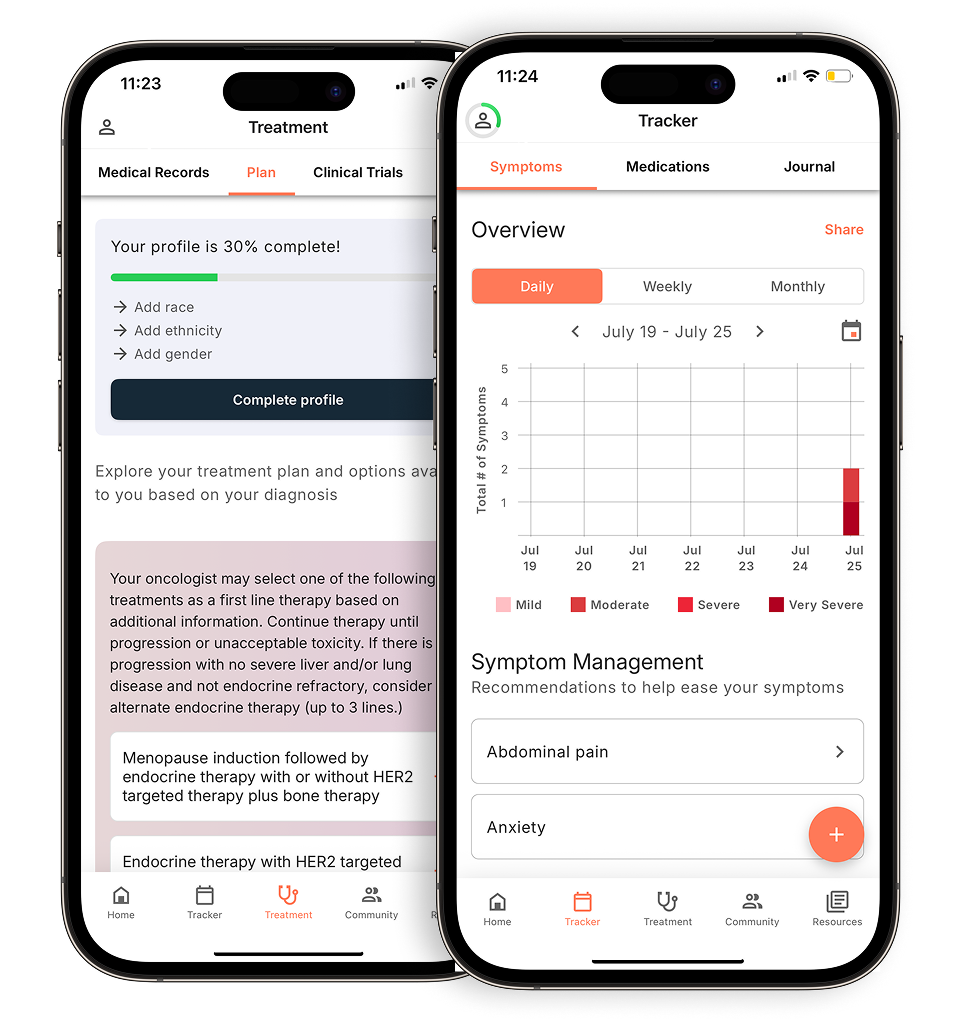
Understand your diagnosis, explore clinical trials, and track symptoms--all in one place.
Get started
Compare treatments, prepare for appointments, and track side effects—all in the app
Built for your diagnosis, Outcomes4Me gives you the tools to make confident, informed decisions—right when you need them.
Continue in app