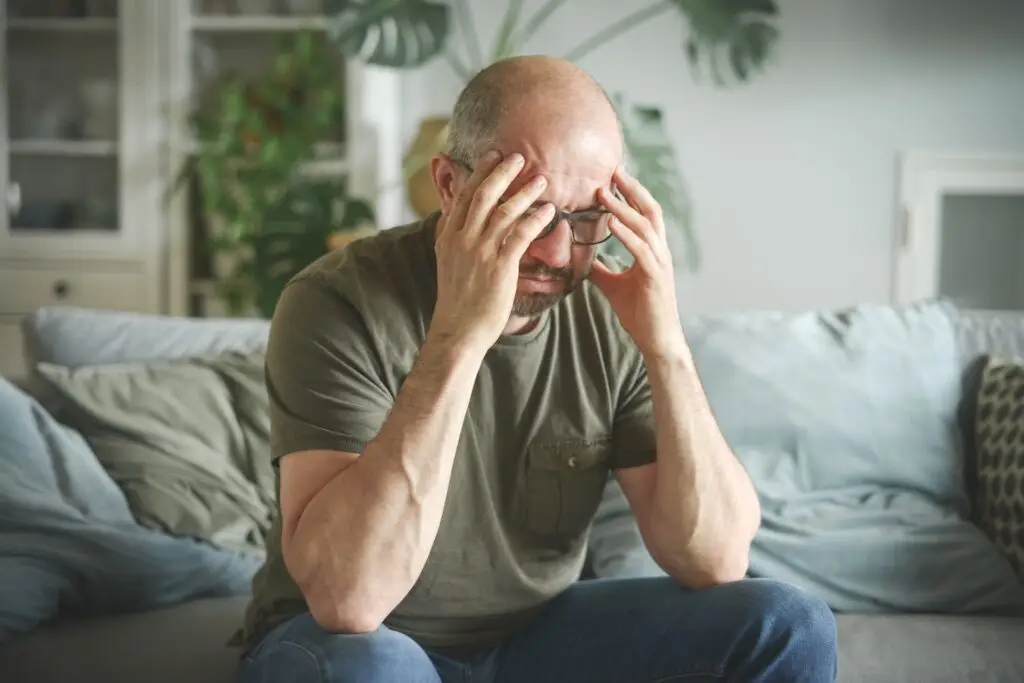
You’re not alone, and it’s not “all in your head.” Many men feel a drop in sex drive after prostate cancer and it can feel shameful, embarrassing, or even like you lost a part of yourself. Not to mention, the unintended impact on your partner and your relationship.
Libido means sexual desire. It is the “want to” part. This is different from erections, which are the “can do” part. Some men still want sex but struggle with erections. Others can have an erection but do not feel desire. Many men with a prostate cancer diagnosis, unfortunately, deal with both.
Prostate cancer treatment can lower libido in several significant ways. Hormone therapy (also called androgen deprivation therapy (ADT) ) is a major culprit. This treatment, which about 50% of prostate cancer patients receive, lowers testosterone. Testosterone plays a big role in sexual desire. So when testosterone drops, libido often drops too. Studies show that sexual function worsens during ADT, and many men feel more distress about sex over time.
Evidence-based guidance powered by NCCN Guidelines®
Personalized treatment plans shaped by the latest oncology standards—tailored to your diagnosis.
Get started
View your personalized treatment plan in the Outcomes4Me app
Use your diagnosis to unlock personalized NCCN Guidelines®-aligned recommendations.
Continue in app
Surgery (like radical prostatectomy) and radiation can affect nerves, blood flow, and orgasm. Even when nerves are spared, temporary or permanent nerve injury is common and can lead to erectile dysfunction, changes in orgasm, or loss of ejaculation. When erections or orgasms change, sexual activity often becomes less predictable or less satisfying, which can reduce sexual desire over time.
Research in sexual medicine also shows that repeated experiences of difficulty or failure during sex can condition the brain to associate sex with anxiety, frustration, or disappointment rather than pleasure, leading to a true drop in libido, not just avoidance. This is why advice like “just push through it” often misses the mark. Sexual desire is shaped by hormones, nerves, and emotions, not effort alone.
What helps (evidence-based steps):
1. Name what is really going on
Start with one clear sentence to your care team: “I’m having low sexual desire, not just erection issues, and I want help.” This matters because low libido and erectile dysfunction are related, but they are not the same problem and they may need different support.
2. Get support for you and your partner
Many cancer centers offer sexual health clinics, “sexual rehab,” or survivorship programs. Ask for a referral. There is good evidence that counseling with a partner can help sexual recovery and intimacy after prostate cancer treatment. One randomized study from MD Anderson tested a sexual counseling program for couples and showed improvements in several areas of sexual function and satisfaction over time.
3. Treat the whole person
Sleep, pain, depression, anxiety, and low desire can be linked to depression, anxiety, poor sleep, alcohol use, and some medications like your ADT therapy.
4. Give yourself time and a new definition of intimacy
After prostate cancer, intimacy may need to change. Many couples do better when they widen the definition of sex beyond intercourse and focus on closeness, touch, and pleasure. Couples-focused interventions often teach this kind of “expand the menu” approach.
Some men describe ADT as taking away their sexual self. One survivor wrote that without testosterone, he felt “very unsexual” and emotionally low during hormone therapy. That is one man’s experience, but it matches what research shows about ADT and desire. Another shared that he did not fully understand how much surgery could affect his sex life and had to look for information on his own. And yet another described having “zero sex drive” after a Lupron shot, and how he and his partner worked through it over time.
You are not the only one. Low libido after prostate cancer is common. It is also treatable and manageable for many men, especially when you get the right kind of help. You do not have to “power through.” You deserve real care for this part of survivorship, too.
How Outcomes4Me can help
If you’re dealing with low libido after prostate cancer, you shouldn’t have to guess what is normal, what is treatable, and what to ask next.
Outcomes4Me can help you understand how your specific treatment (surgery, radiation, ADT) can affect sex drive and intimacy, build a short list of questions to bring to your oncologist or urologist, and feel less alone by connecting with education and community.
Personalized support for real care decisions
Understand your diagnosis, explore clinical trials, and track symptoms--all in one place.
Get started
Compare treatments, prepare for appointments, and track side effects—all in the app
Built for your diagnosis, Outcomes4Me gives you the tools to make confident, informed decisions—right when you need them.
Continue in app