The following questions and responses have been lightly edited for grammatical purposes.
1) Can patients who’ve had heart-related side effects from breast cancer treatment still exercise?
Dr. Jennifer Ligibel: So in that setting, working with a cardiologist is really important from a safety perspective because there are a lot of different heart-related things to consider. Sometimes, people’s hearts are in an abnormal rhythm that can happen after cancer treatment.
Evidence-based guidance powered by NCCN Guidelines®
Personalized treatment plans shaped by the latest oncology standards—tailored to your diagnosis.
Get started
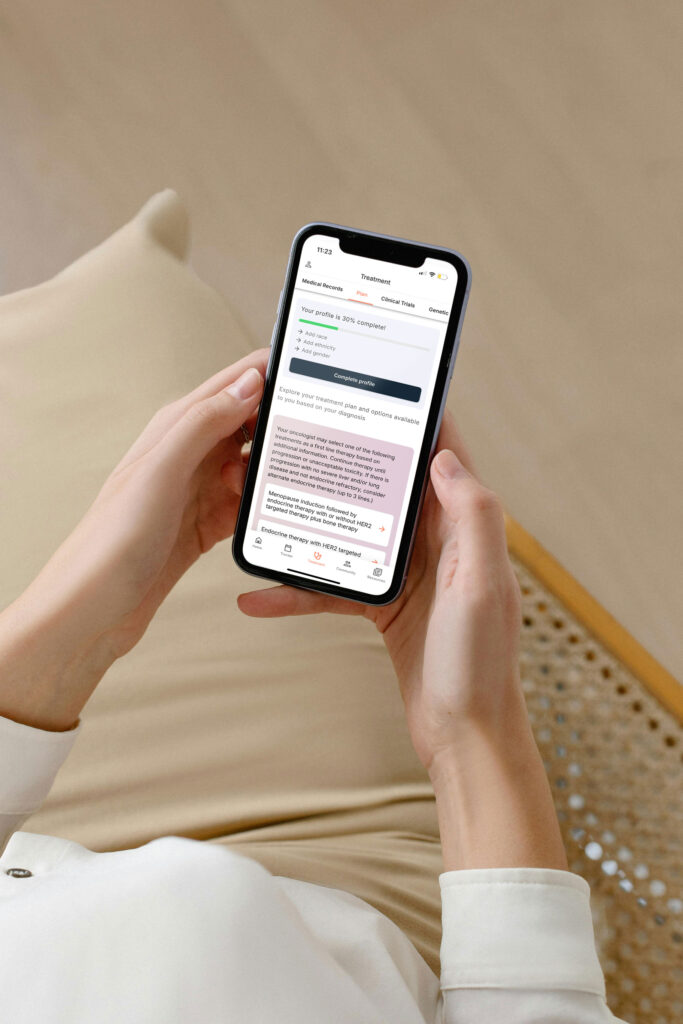
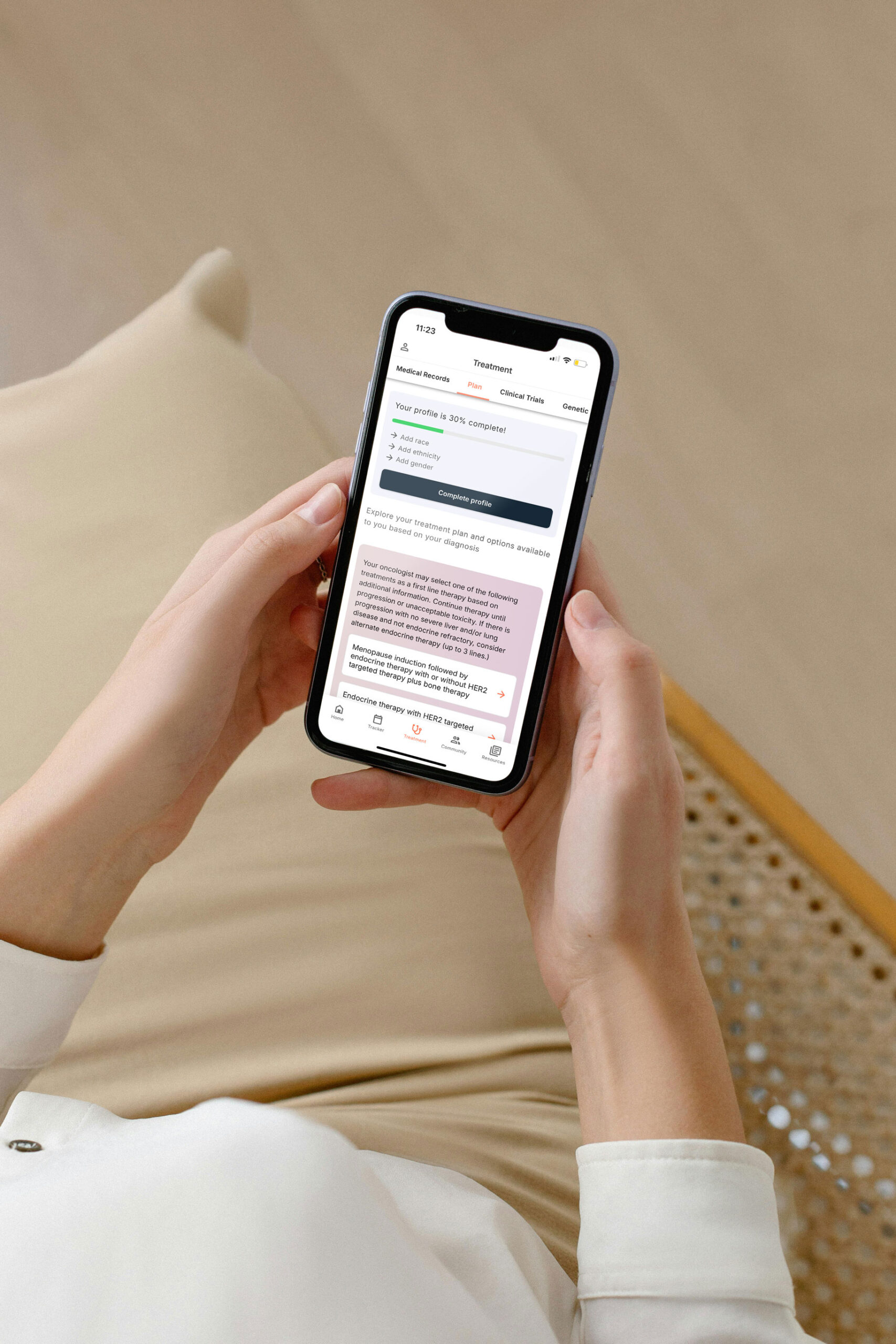
View your personalized treatment plan in the Outcomes4Me app
Use your diagnosis to unlock personalized NCCN Guidelines®-aligned recommendations.
Continue in app
There are times when people’s hearts don’t pump as well, and that’s something that’s often seen with things like anthracyclines or with some HER2-directed therapy. The considerations regarding exercise are really different for those two conditions. There are also people who develop blockages in their arteries. That was something we used to see more with radiation therapy, but that has a very different kind of consideration from an exercise perspective.
I will say that one of the first widespread uses of exercise was in people with heart disease. That led to the development of cardiac rehab programs that provide structured exercise to people who’ve had heart attacks and have heart failure. Exercise has been shown to be very beneficial in that situation, but it’s usually given in a pretty supervised and prescribed way. Anybody who’s had heart damage from their breast cancer treatment, I strongly recommend working with a cardio-oncology professional or a cardiologist to determine what’s safe, what you need to watch out for, and if there are things that you shouldn’t be doing if you have a risk of developing a heart attack.
I think that’s a population of people where it’s really important to talk to your doctor. Not that everybody shouldn’t mention to their doctor that they’re thinking about doing an exercise program, but if you have heart issues either related to your cancer treatment, or just as a separate medical issue, it’s really important to enlist the advice of your physicians before engaging in any kind of exercise program.
2) How can patients with HER2-positive breast cancer improve their bone health?
Dr. Jennifer Ligibel: In terms of lifestyle and bone density, there are definitely many connections between lifestyle and bone density. There are some simple things, like smoking, that are very bad for bone density. When you are actively smoking, you lose bone density. Your diet is important for bone density. You need to have enough calcium in your diet. You absorb calcium a lot better from diet than you do from supplements. You need to have enough vitamin D. We now think you probably need much less vitamin D than was recommended a few years ago, but that’s an important piece of bone density.
Some data also shows that weight-bearing exercise helps build bone density. There is some debate about what weight-bearing exercise is. I will say that we often tell people to walk in terms of bone density because you’re bearing your weight, but the data that walking preserves bone density is probably not the strongest data. There are things that have a higher impact, like jogging, which probably has a little bit more of an impact on bone density. There are other downsides to that in terms of wear and tear on your joints, but there is pretty good evidence that weight training, where you’re strengthening those large muscle groups that surround your bones, can be very beneficial for maintaining bone health.
View part one of Dr. Jennifer Ligibel’s webinar recap here.
Personalized support for real care decisions
Understand your diagnosis, explore clinical trials, and track symptoms--all in one place.
Get started
Compare treatments, prepare for appointments, and track side effects—all in the app
Built for your diagnosis, Outcomes4Me gives you the tools to make confident, informed decisions—right when you need them.
Continue in app