
The International Association for the Study of Lung Cancer hosted its annual World Conference on Lung Cancer this week. Recognized as the largest global meeting focused on advancements in lung cancer treatment, this year’s event took place in Barcelona, Spain.
In this post, we’ve summarized the major advancements unveiled at the conference related to non-small cell lung cancer (NSCLC). Read more about how treatment innovation is unfolding in NSCLC below.
NSCLC headlines from WCLC 2025
1) FLAURA-2 improved overall survival in EGFR-mutated NSCLC
The phase III FLAURA-2 trial generated attention by showing that adding chemotherapy to osimertinib (Tagrisso) as a first-line treatment in advanced EGFR-mutated NSCLC significantly improved overall survival (OS). Findings revealed that the addition of chemotherapy to osimertinib extended OS by nearly 10 months. This is significant because up to 15% of NSCLCs are EGFR-positive and this new data can redefine the standard of care for patients.
2) HARMONi trial: Ivonescimab plus chemo for EGFR-resistant NSCLC
Results from the HARMONi phase III trial were mixed. While the study showed that adding ivonescimab to chemotherapy extended progression-free survival (PFS) in patients with EGFR-mutated NSCLC following disease progression after treatment with tyrosine kinase inhibitors, it did not reach statistical significance in overall survival. There was a promising trend toward overall survival, however, so this is a space to watch closely.
Evidence-based guidance powered by NCCN Guidelines®
Personalized treatment plans shaped by the latest oncology standards—tailored to your diagnosis.
Get started
View your personalized treatment plan in the Outcomes4Me app
Use your diagnosis to unlock personalized NCCN Guidelines®-aligned recommendations.
Continue in app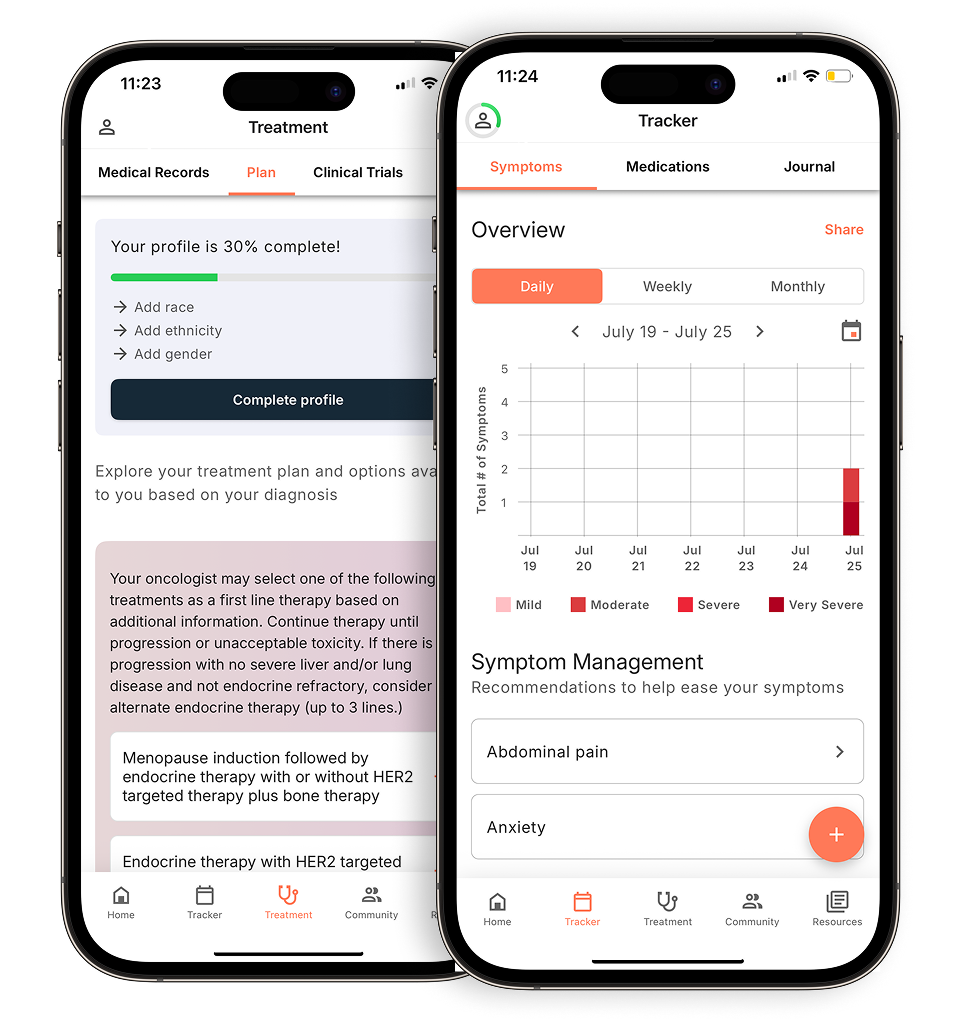
3) Immunotherapy drug beneficial for patients with resectable NSCLC
The CheckMate 77T trial found that giving nivolumab before and after surgery helped outcomes for patients with resectable lung cancer without diminishing their quality of life. The treatment event free survival and complete response rates compared to chemotherapy alone. These findings suggest that perioperative (treatment before and after surgery) immunotherapy can improve both outcomes and well-being for patients with stage III lung cancer.
4) Combating treatment resistance following ROS1-targeted therapies
The drug zidesamtinib showed promising results in patients with advanced ROS1-positive lung cancer who had already received other targeted therapies. In the ARROS-1 trial, about 44% of patients responded to treatment, and some saw long-lasting benefits even after multiple prior therapies. These results suggest zidesamtinib could be an effective option for patients whose disease has progressed after standard ROS1-targeted therapies.
5) PALOMA-2: Subcutaneous amivantamab + lazertinib
Early results from PALOMA-2—evaluating a subcutaneous (injection under the skin) formulation of amivantamab plus lazertinib as a first-line regimen—were featured. Dr. Stephen Liu highlighted that this subcutaneous version appears better tolerated and may even offer a survival advantage. This is important because it can be administered monthly versus bi-weekly, making it a more convenient method for patients while still maintaining efficacy.
6) MARIPOSA trial: Combination drug reduces treatment resistance
The MARIPOSA trial found that combining amivantamab with lazertinib may help prevent or delay resistance in patients with EGFR-mutated lung cancer compared to using osimertinib alone. Fewer patients on the combination developed treatment resistance. These findings are significant because this combination creates a front-line approach with prolonged effectiveness.
7) NADIM Adjuvant: Chemo-immunotherapy in early-stage NSCLC
The NADIM Adjuvant trial results compared adjuvant chemotherapy alone versus chemo-immunotherapy for stage IB–IIIA NSCLC following surgical resection. At three years, more patients in the chemo-immunotherapy group remained cancer-free than those who only received chemotherapy. This is significant because these findings suggest that adding immunotherapy could help patients reduce the risk of recurrence.
8) Dato-DXd helps control brain mets in advanced NSCLC
A new analysis from the TROPION-Lung01 trial showed that datopotamab deruxtecan (Dato-DXd; Datroway) may help control brain metastases in patients with advanced lung cancer. Patients treated with Dato-DXd went five months before their disease worsened, compared to three months with standard chemotherapy. This is significant because brain mets are especially challenging to treat in lung cancer and these findings suggest there may be a more effective option.
9) Cemiplimab + chemo significantly improved overall survival
A 5-year follow-up from the EMPOWER-Lung 3 Part 2 trial showed that adding cemiplimab to chemotherapy helped patients with advanced NSCLC live significantly longer than with chemotherapy alone. Patients on the combination treatment lived a median of 21.1 months compared to 12.9 months with chemotherapy only. This is significant because it shows that cemiplimab plus chemotherapy provides long-term survival benefits for people with advanced lung cancer.
Every year, the WCLC brings hope and innovation and this year was no exception. Research presented at the event revealed an array of advancements in NSCLC. Together, these developments reflect the ongoing shift to personalized treatment, heightened tolerability, and expanding options in early and advanced NSCLC.
If you have any questions about how these studies could influence your own care, please message our oncology nurse practitioner team via the Ask Outcomes4Me feature within our app.
Personalized support for real care decisions
Understand your diagnosis, explore clinical trials, and track symptoms--all in one place.
Get started
Compare treatments, prepare for appointments, and track side effects—all in the app
Built for your diagnosis, Outcomes4Me gives you the tools to make confident, informed decisions—right when you need them.
Continue in app