
We’ve all heard about vaccines for viruses like HPV that do an outstanding job of preventing cervical cancer, but now researchers are trying to train the immune system to recognize and attack breast cancer itself. This work has been in development for years, but progress in 2025 was so encouraging that researchers are starting to seriously ask what this could mean for the future of breast cancer prevention and treatment.
The immune system usually doesn’t see breast cancer cells as foreign because they come from your own tissues. That makes it hard for your immune system to notice and attack a tumor the way it would a virus. To overcome that, scientists are designing smart vaccines that teach your immune system to recognize specific proteins on breast cancer cells as threats.
Evidence-based guidance powered by NCCN Guidelines®
Personalized treatment plans shaped by the latest oncology standards—tailored to your diagnosis.
Get started
View your personalized treatment plan in the Outcomes4Me app
Use your diagnosis to unlock personalized NCCN Guidelines®-aligned recommendations.
Continue in app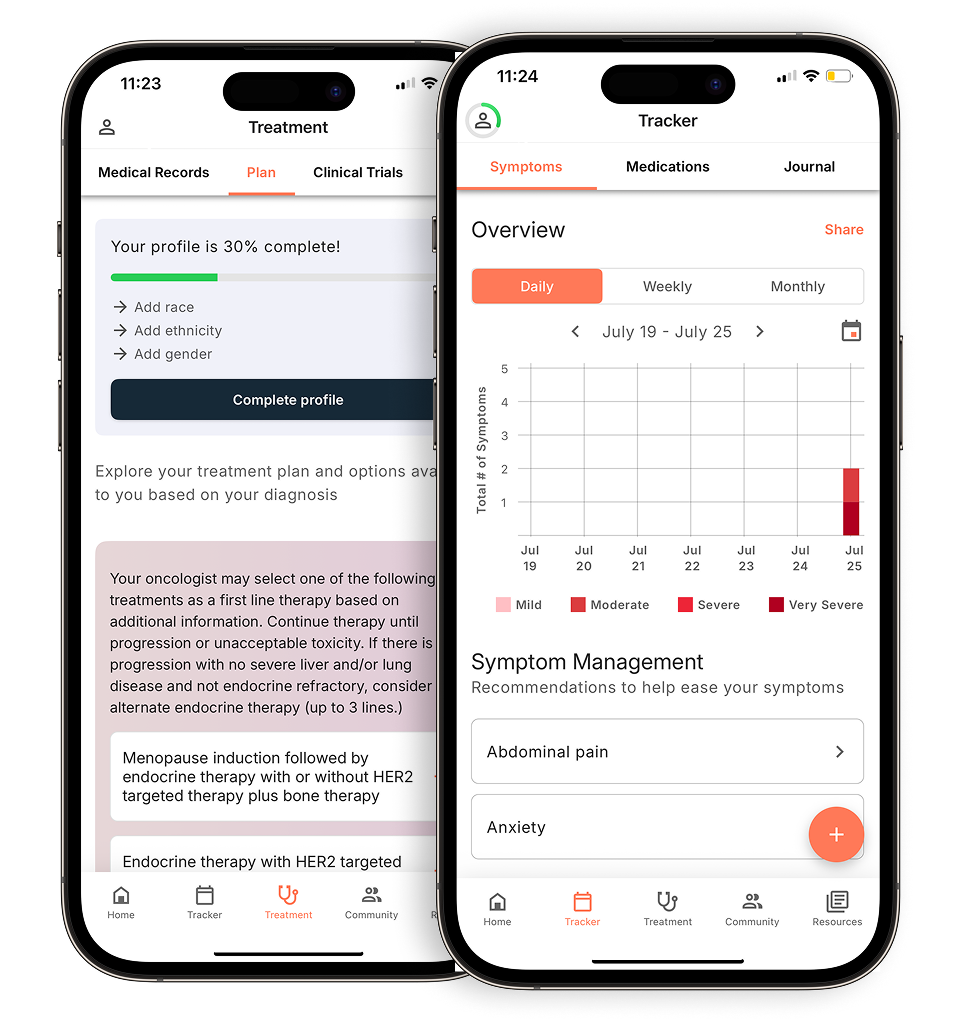
One of the most talked-about efforts targets a protein called alpha-lactalbumin, which normally shows up in breast tissue only during pregnancy and lactation. Many triple-negative breast cancers also make this protein, so teaching the immune system to react to it could help prevent or treat these aggressive tumors. The first Phase I clinical trial of this vaccine showed it was safe and well-tolerated and that most participants developed an immune response, which is exactly what researchers are trying to do when they design a vaccine. These findings were presented at the 2025 San Antonio Breast Cancer Symposium and are leading to plans for a larger Phase II trial.
That Phase I study included three types of participants:
- Women who had finished standard treatment for early triple-negative breast cancer and were at high risk of recurrence
- Women with high-risk genetic mutations like BRCA1 or BRCA2 who were getting preventive surgery
- Women getting immunotherapy after surgery
The immune responses seen in about three-quarters of participants tell scientists that the vaccine is doing what it was designed to do. The next step is to find out whether that immune response actually translates into fewer recurrences or new cancers.
It’s worth noting that cancer vaccine research isn’t limited to prevention. Scientists are also testing ways to train the immune system to attack tumors already present, to keep cancer from coming back after surgery, or to help existing immune treatments (immunotherapy) work better. Many different vaccine strategies are in the works, from vaccines targeting specific tumor proteins to mRNA-based approaches that were only made possible by the success of COVID-19 vaccines. Researchers see mRNA as a flexible platform that could be tailored to specific tumor types or even individual tumors, but that work is still early.
Other early-stage studies are looking at vaccines designed to help the immune system find and kill cancer cells in various subtypes of breast cancer, including HER2-positive disease and different stages of invasive cancer. Some studies are exploring whether combining vaccines with existing immune therapies like pembrolizumab (Keytruda) can make the immune response stronger.
As exciting as all of this is, it is important to remember that it is still under investigation. No breast cancer vaccine has yet been approved to prevent or treat breast cancer, and most of the current work involves small Phase I clinical trials in early stages. Those early trials focus on safety and immune response rather than showing whether the vaccine can definitively prevent cancer or recurrence. That means we’re not yet at the point where doctors can offer these vaccines as standard care, but many are very hopeful that this is our not-too-distant future.
So what does this mean for you today? If you are someone who is at higher risk for breast cancer because of family history or genetics, it might be worth asking your doctor about clinical trials for cancer vaccines. Breast cancer vaccines represent one of the most exciting and hopeful areas of cancer research right now. The science has moved past theory; early clinical trials are showing that the immune system can be trained to recognize cancer-related proteins, and larger trials are coming.
If you want to stay up to date on breakthroughs like this, understand how new research may relate to your diagnosis, or find clinical trials that match your specific situation, you can use the Outcomes4Me app. It pulls trusted guidelines, treatment updates, and trial options into one place so you can make informed decisions with your care team.
Personalized support for real care decisions
Understand your diagnosis, explore clinical trials, and track symptoms--all in one place.
Get started
Compare treatments, prepare for appointments, and track side effects—all in the app
Built for your diagnosis, Outcomes4Me gives you the tools to make confident, informed decisions—right when you need them.
Continue in app