The following questions and responses have been lightly edited for grammatical purposes.
1) How can AI be used in breast cancer care?
Dr. Nabhan: Artificial intelligence is here to stay. A lot of people don’t really understand what AI is, but I believe it’s going to have a huge impact on medicine, especially in how we take care of patients with cancer.
Without getting too deep into all of AI’s applications, because that’s a whole topic in itself, I’ll give you just a few use cases or examples.
Evidence-based guidance powered by NCCN Guidelines®
Personalized treatment plans shaped by the latest oncology standards—tailored to your diagnosis.
Get started
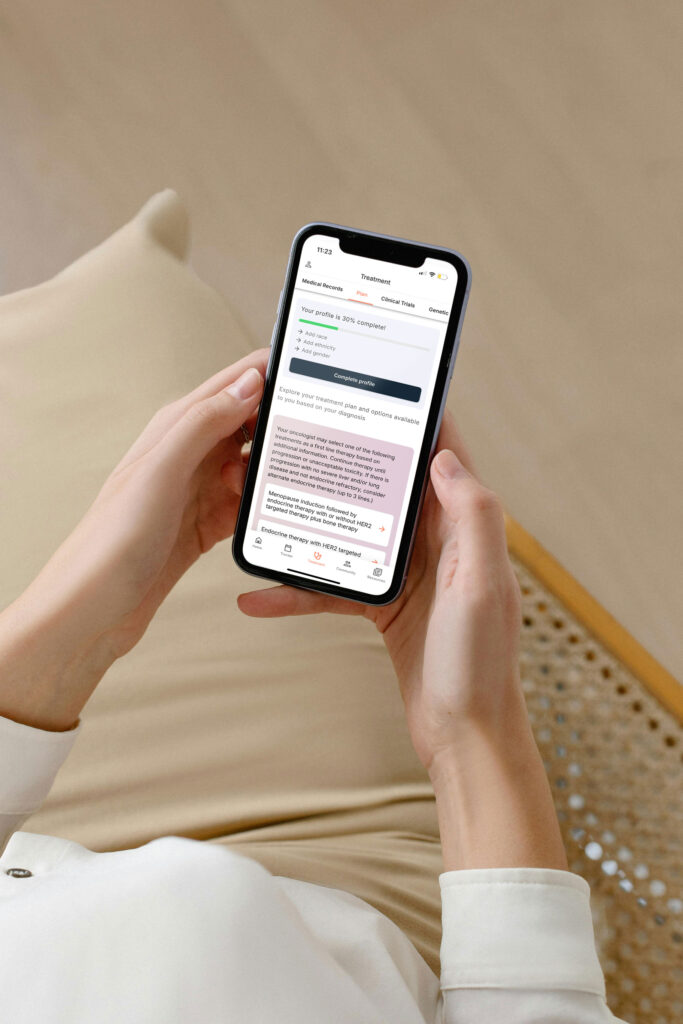
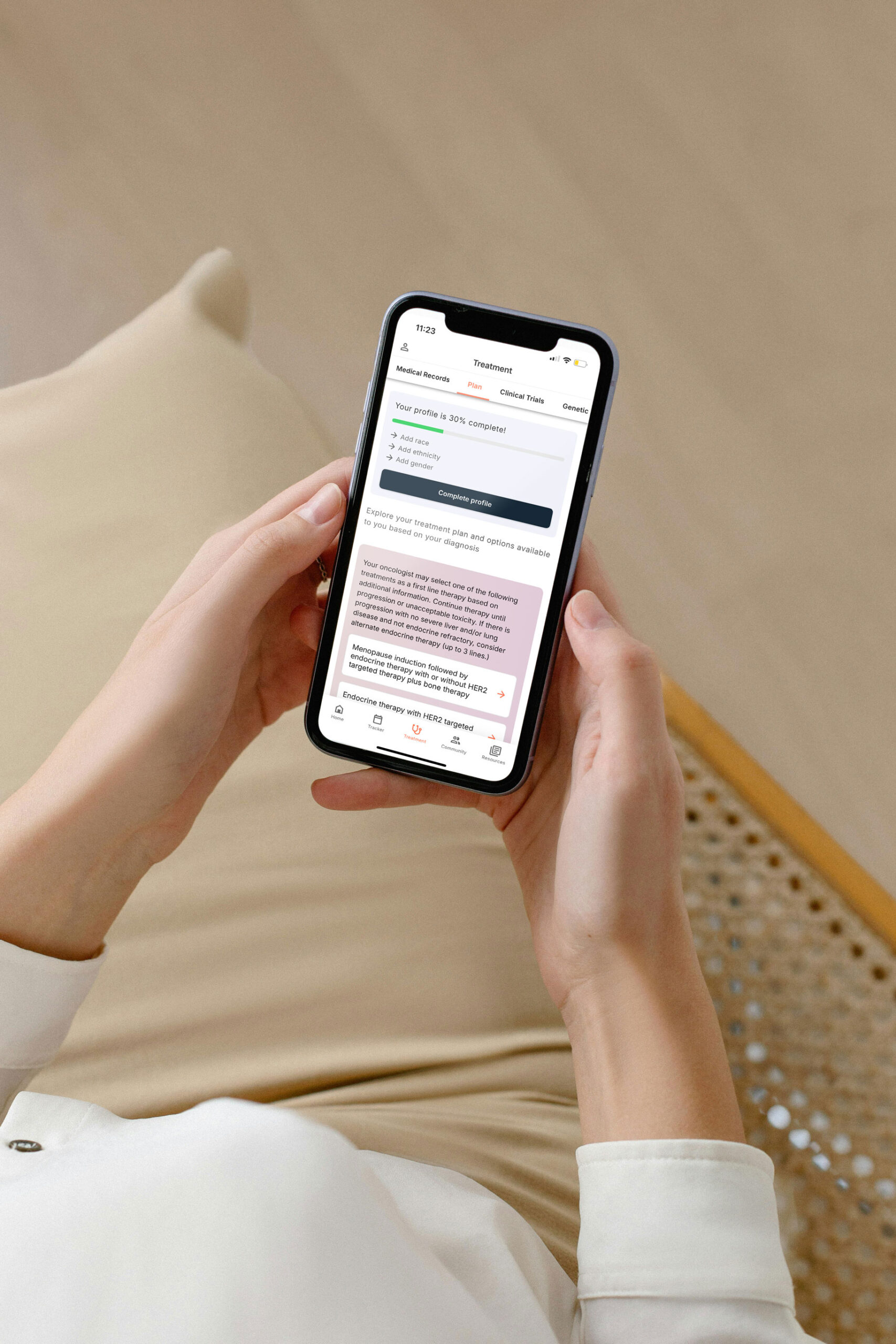
View your personalized treatment plan in the Outcomes4Me app
Use your diagnosis to unlock personalized NCCN Guidelines®-aligned recommendations.
Continue in app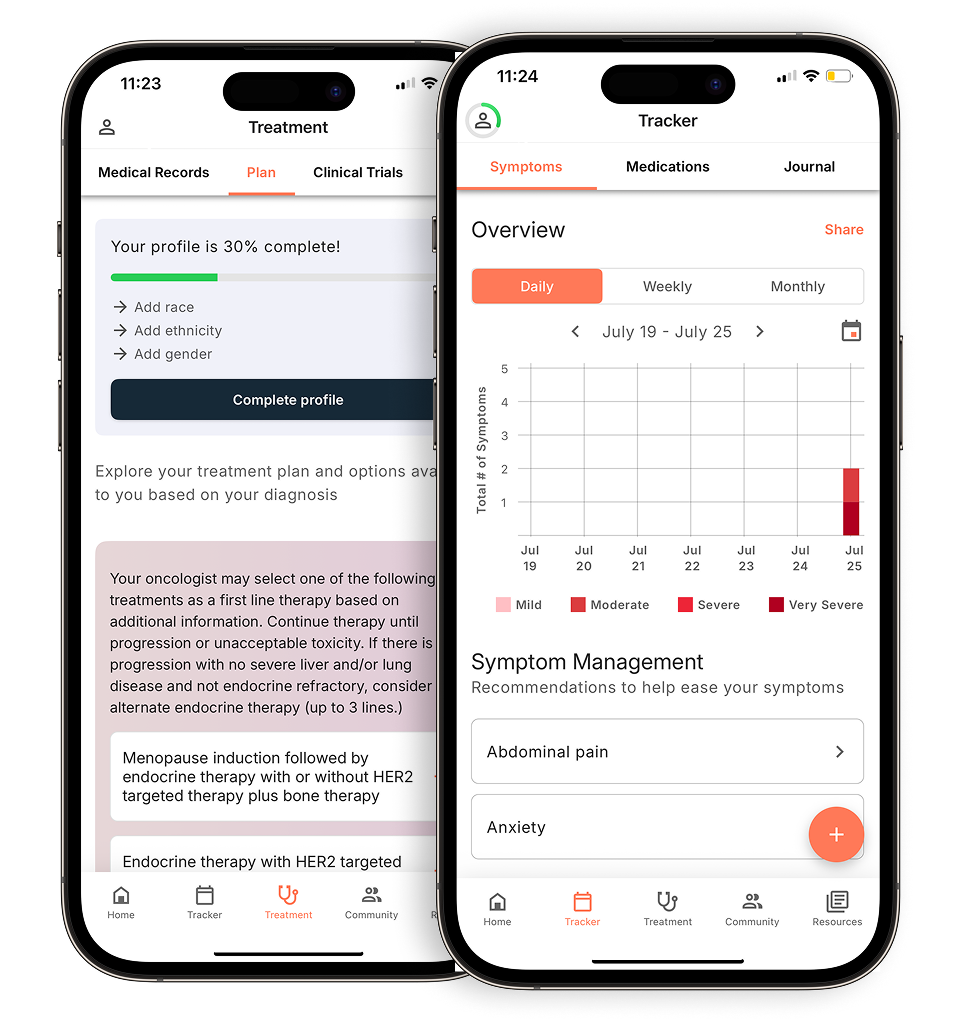
Take mammograms, for instance. Many women undergo mammograms for screening, but there’s a high recall rate. You get called back for additional testing because something looked uncertain. If AI could help improve the accuracy of mammograms, we’d likely see fewer recall rates and fewer unnecessary biopsies, especially when something appears to be very benign.
That’s just one example in screening. There are also a lot of AI applications in imaging studies, whether it’s chest CT scans, mammograms, or similar areas.
Beyond that, there’s a real opportunity in early detection. AI is also being used to create predictive and prognostic models.
Say someone has a certain type of cancer and there are three treatment options available. How do we know which one they’re most likely to respond to? It’s unlikely they’ll have the same response to all three. Typically, a doctor may choose based on familiarity or what they think the patient will tolerate best.
Now imagine using thousands of data points to help predict, for this specific patient, that Treatment A is more likely to work than Treatment B or C. That’s what predictive modeling can do.
Then there’s prognostic modeling, where the treatment might be the same, but based on certain tumor characteristics, we can predict the likely outcome and tailor monitoring or follow-up accordingly.
Here’s something provocative: AI is also being applied in drug development. If we’re sequencing all these tumors and identifying mutations and targets, AI can help determine which target to go after, and from there, we can develop the right drug for that specific target.
I haven’t even scratched the surface of how AI can support clinical research, like automating certain processes. Take informed consent. People spend 20 to 30 hours writing a consent form for a clinical trial. What if I told you AI could help generate one in less than 30 minutes and translate it into any language within minutes?
That’s the potential of AI: to help streamline processes. Ultimately, the goal of AI in healthcare, in my opinion, is to improve patient outcomes and quality of life while making physicians’ lives easier, so they can care for patients more efficiently.
2) Is it safe to use AI platforms to better understand my diagnosis?
Dr. Nabhan: I wouldn’t upload private information or medical images to open or non-secure platforms like the free versions of ChatGPT. Of course, if you’re using a paid or more secure version, that’s different, and the same goes for tools like Perplexity.
Still, I’d be cautious. Once something is uploaded, it’s out there. But asking questions? That’s totally fine. We all use Google for that. Perplexity is just a more sophisticated search engine. ChatGPT is another way to explore answers.
It would be naive to think people aren’t going to use these tools. Everyone uses Google, and AI will probably follow that same path.
That said, it’s still really important to talk about whatever information you find with your healthcare team. These tools aren’t seeing your full medical picture, and yes, I’ve seen some errors. So always circle back with your doctor.
I do embrace AI and I think all of us will need to get familiar with how to use it. Just be careful as you start exploring and dipping your toes into the world of AI.
To view the entirety of Dr. Nabhan’s Ask the Expert webinar, click here.
*When you purchase from a link on this page, we may receive a small affiliate commission.
Personalized support for real care decisions
Understand your diagnosis, explore clinical trials, and track symptoms--all in one place.
Get started
Compare treatments, prepare for appointments, and track side effects—all in the app
Built for your diagnosis, Outcomes4Me gives you the tools to make confident, informed decisions—right when you need them.
Continue in app