
Many people are surprised to find out that only a small number of breast cancer cases are caused by inherited (or germline) genetic mutations. Even if you have multiple family members who have received a breast cancer diagnosis this does not guarantee there is a genetic mutation. Family history is a piece of the risk puzzle but it is just one part. Families share environment and lifestyle factors too, and sometimes it can look like genetics when it’s not.
The fact is that only about 5 to 10 percent of breast cancer is linked to something you inherited from your parents. Most breast cancers develop from DNA mutations that accumulate in breast cells over time, driven largely by aging and lifetime exposure to hormones like estrogen, along with environmental, metabolic, and lifestyle factors.
You’ve probably heard about BRCA1 and BRCA2. Individuals with harmful BRCA1 or BRCA2 mutations face a higher risk of breast cancer over their lifetime. Women with a BRCA1 mutation have a 45% to 70% chance of developing breast cancer. Women with a BRCA2 mutation have roughly a 40 to 70 percent lifetime risk. Men can have BRCA mutations too and their cancer risks are different but still real and higher than the average.
Evidence-based guidance powered by NCCN Guidelines®
Personalized treatment plans shaped by the latest oncology standards—tailored to your diagnosis.
Get started
View your personalized treatment plan in the Outcomes4Me app
Use your diagnosis to unlock personalized NCCN Guidelines®-aligned recommendations.
Continue in app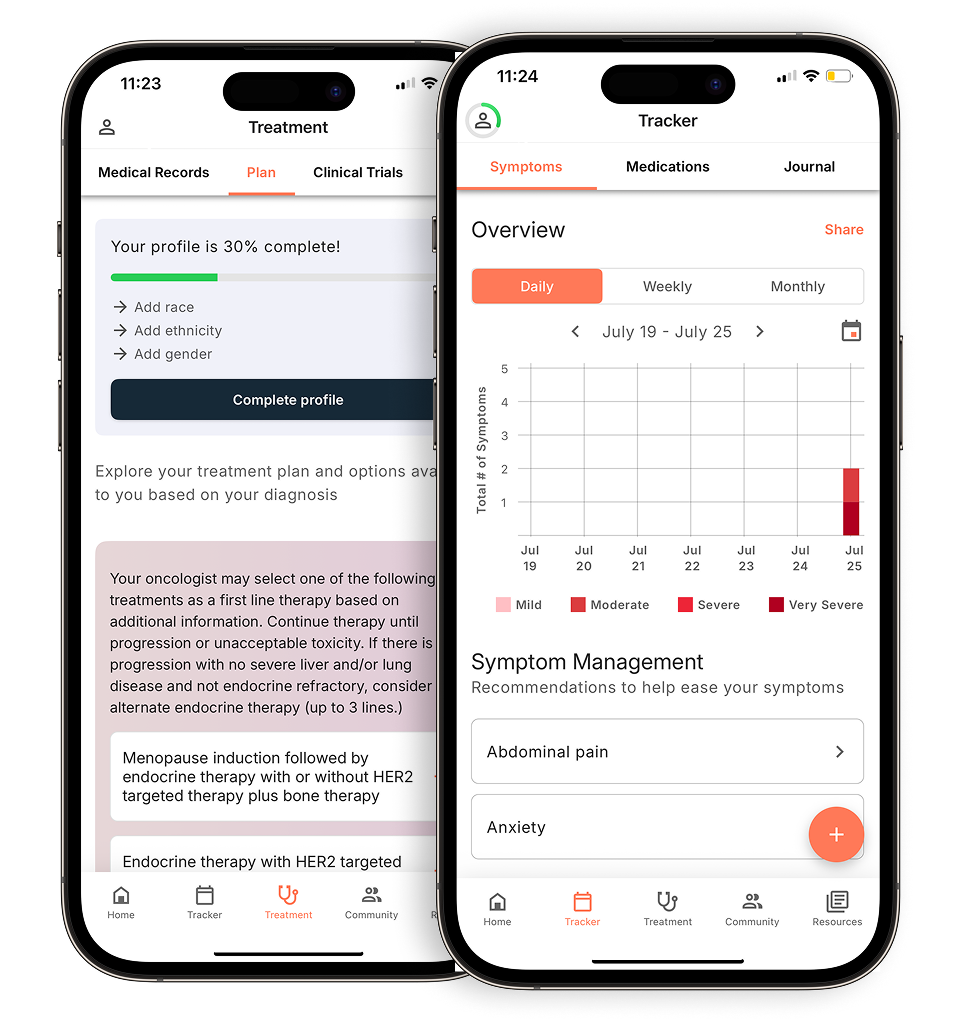
In recent years, researchers have found other inherited gene changes that can raise breast cancer risk too. These don’t get as much media attention, but they matter if you’re thinking about your risk and what a full genetic testing panel might show.
- TP53 This gene is linked to Li Fraumeni syndrome and can raise risk for many cancers including breast cancer.
- PTEN Changes here are related to Cowden syndrome and can increase breast cancer risk.
- PALB2 is a common gene, apart from BRCA, that can significantly increase the risk of breast cancer. CDH1 mutations can raise the risk of certain breast cancers, as well as stomach cancer and other conditions.
Genetic testing is a very personal decision that depends on your family history, your own health goals, and what you would realistically do with the results. People with strong family histories or known mutations in close relatives often choose genetic testing because the results can change how they are screened and how early screening starts. If you have multiple family members with breast cancer, especially at younger ages, a genetic counselor or doctor can help you decide whether testing would actually give you information you could use.
If you have already been diagnosed with breast cancer, genetic testing can still be incredibly important. Certain inherited mutations can directly influence which treatments are most effective for you. People with BRCA1 or BRCA2 mutations might benefit from drugs called PARP inhibitors. These drugs target the weaknesses in cancer cells caused by these mutations. Different genetic mutations can influence the choice of treatments like platinum chemotherapy or immunotherapy, and even the suitability for clinical trials. Genetic test results also guide decisions about surgery, ongoing monitoring, and assessing future cancer risks.
Breast cancer is complicated, and genetics is one important piece of that story. For some people, an inherited mutation plays a role in why cancer develops and how it behaves. For most people, though, breast cancer arises from DNA changes that built up quietly over many years through aging, hormone exposure, and other biological processes we do not fully control. Both things can be true at the same time. What matters most is not blaming your genes or your body, but understanding what applies to you so you and your care team can make the smartest choices going forward
Understanding genetic risk and testing options can be challenging, especially if you have a cancer diagnosis or are feeling fearful.
Outcomes4Me is designed to assist in these situations. The app provides personalized, evidence-based information related to your diagnosis, treatment, and risk profile. You can explore genetic testing options, clinical trials, and questions to bring to your care team. It is free for all patients and designed to help you move from overwhelmed to informed so you can make decisions with clarity instead of fear.
Personalized support for real care decisions
Understand your diagnosis, explore clinical trials, and track symptoms--all in one place.
Get started
Compare treatments, prepare for appointments, and track side effects—all in the app
Built for your diagnosis, Outcomes4Me gives you the tools to make confident, informed decisions—right when you need them.
Continue in app