
Uterine (endometrial) cancer has seen significant advancements in both understanding and treatment in recent years. Scientists are learning more about how this cancer develops, how to detect it earlier, and how to treat it more effectively. Here’s a closer look at what’s new in uterine (endometrial) cancer research.
Understanding the genetics behind uterine (endometrial) cancer
In uterine (endometrial) cancer, researchers have discovered that specific genes play key roles in controlling how cells grow and divide. When these genes are damaged, it can lead to cancer.
Some families carry inherited changes in genes that are responsible for repairing DNA damage. One example is Lynch syndrome, a genetic condition that increases the risk of uterine (endometrial), colon, and other cancers. Around 5% of uterine (endometrial) cancers are linked to this inherited disorder. Today, doctors recommend that all women diagnosed with endometrial cancer be tested for Lynch syndrome, as it can help guide treatment and alert relatives who may also be at risk.
Early detection research
Currently, there’s no standard screening test for uterine (endometrial) cancer. Researchers are actively working to change that.
Evidence-based guidance powered by NCCN Guidelines®
Personalized treatment plans shaped by the latest oncology standards—tailored to your diagnosis.
Get started
View your personalized treatment plan in the Outcomes4Me app
Use your diagnosis to unlock personalized NCCN Guidelines®-aligned recommendations.
Continue in app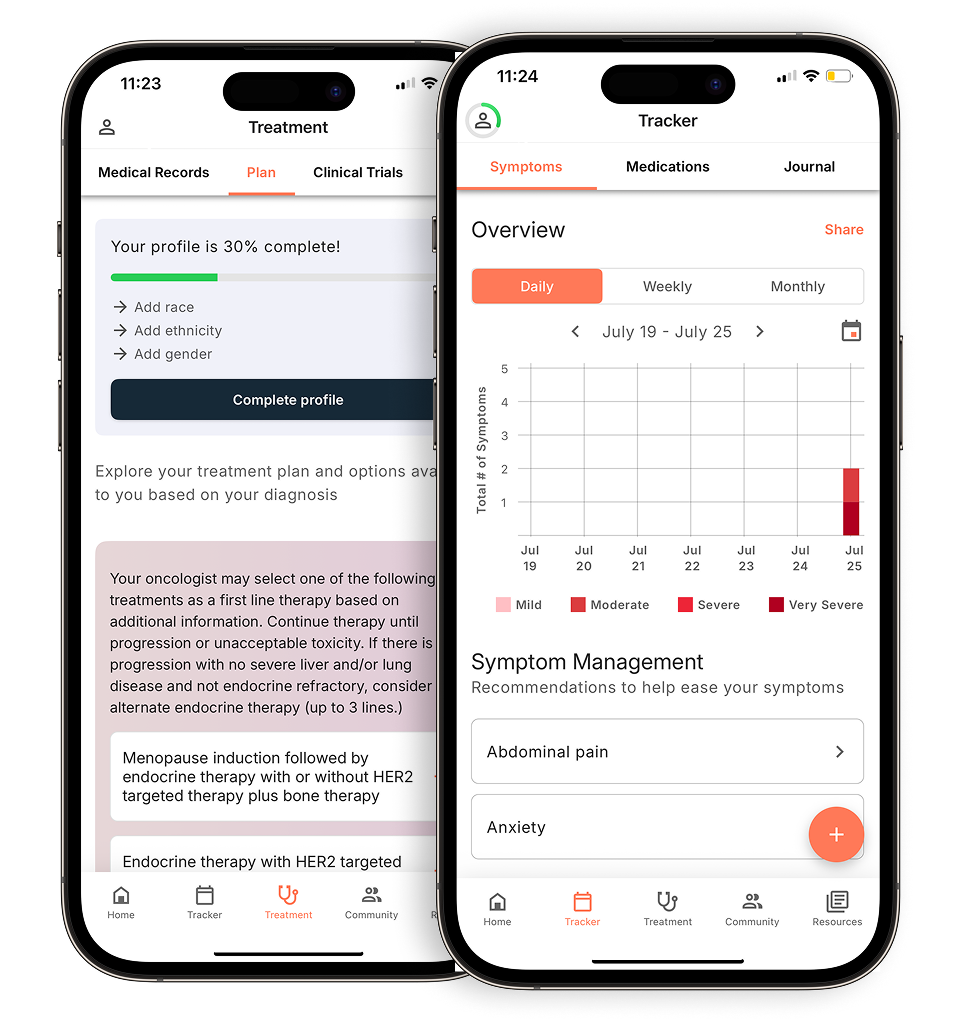
One promising direction involves studying biomarkers, exploring whether the presence of cancer cells can be found in samples collected using vaginal tampons. This could someday lead to a simple, noninvasive test for early detection.
It’s also important to note that the most common early symptom is abnormal vaginal bleeding, especially after menopause. While bleeding can happen for many reasons, it’s important to talk with your doctor if you experience it. Early follow-up can lead to earlier diagnosis and better outcomes.
Promising new treatments for uterine (endometrial) cancer
Research is leading to more personalized and effective treatment options. Targeted therapy and immunotherapy are two of the most promising areas:
- Targeted therapy drugs focus on specific genes or proteins that help cancer cells grow. These treatments are designed to block cancer growth while sparing healthy cells.
- Immunotherapy helps the body’s immune system recognize and attack cancer cells. Some uterine (endometrial) cancers use special proteins to hide from the immune system; immunotherapy drugs, known as checkpoint inhibitors, can block these “masks.”
Recent FDA-approved checkpoint inhibitors include pembrolizumab, dostarlimab, and durvalumab for advanced uterine (endometrial) cancers. Studies show that combining these immunotherapy drugs with chemotherapy may extend the time before the cancer returns.
Advancements in radiation and surgery
Radiation therapy continues to evolve, with new technology like MRI-guided radiation therapy allowing doctors to precisely target tumors while protecting healthy tissue.
On the surgical side, research is comparing traditional open surgery with less invasive approaches such as laparoscopic or robot-assisted surgery. Early findings show that robotic-assisted laparoscopy surgery has a small increase in overall survival over traditional laparoscopy, although there were no differences in progression-free survival.
Addressing rising rates and racial disparities
Uterine (endometrial) have been rising in recent years, particularly for more aggressive subtypes.
Data shows that Black women are more likely to be diagnosed with these aggressive forms and face higher death rates compared to other racial groups. Researchers are working to understand why these disparities exist and how to address them, examining potential differences in genetics, care access, and social support.
Looking ahead
Uterine (endometrial) cancer research is moving rapidly. If you’ve been diagnosed with uterine (endometrial) cancer, talk to your care team about whether biomarker testing, clinical trials, or newer treatment options may be right for you.
You’re not alone. Join the Outcomes4Me Community for a safe space to share your story and connect with others who share your diagnosis.
Personalized support for real care decisions
Understand your diagnosis, explore clinical trials, and track symptoms--all in one place.
Get started
Compare treatments, prepare for appointments, and track side effects—all in the app
Built for your diagnosis, Outcomes4Me gives you the tools to make confident, informed decisions—right when you need them.
Continue in app