When someone is diagnosed with breast cancer, one of the first things doctors determine is the type of cancer. That detail matters because different types of breast cancer grow and behave differently, and that can influence how the cancer is detected and treated. Most breast cancers are invasive ductal carcinoma (IDC), which begins in the milk ducts and accounts for about 70 to 80 percent of cases. The second most common type is invasive lobular carcinoma (ILC), which makes up about 10 to 15 percent of breast cancers.
It’s not uncommon for patients with lobular breast cancer to say they had never heard of this subtype before their diagnosis. If you’ve been diagnosed with lobular breast cancer, it helps to understand how it behaves. Lobular breast cancer often grows differently than ductal breast cancer, and those differences can influence imaging, surgery, and treatment planning.
Lobular breast cancer begins in the lobules, the milk-producing glands of the breast. Unlike ductal cancers, which often form a defined lump, lobular cancer cells tend to grow in thin, single-file patterns through the breast tissue. Because of this growth pattern, lobular tumors may spread through tissue without forming a clear mass. This growth pattern also helps explain why lobular breast cancer can be harder to detect. Many patients with lobular breast cancer never feel a distinct lump. Instead, they may notice subtle changes such as thickening in the breast, fullness in one area, or a change in breast shape. Lobular tumors can also be more difficult to see on mammograms because they do not always form the dense mass that ductal cancers often create.
Because lobular cancer can grow in a more spread-out pattern, it is sometimes diagnosed at a larger size than ductal breast cancer. In some cases it may also appear in more than one area of the breast. For this reason, many doctors recommend breast MRI before surgery to better understand how much of the breast is involved and to guide surgical planning.
Treatment may include surgery, radiation therapy, hormone therapy, chemotherapy, or targeted therapy, depending on the biology of the tumor. Because lobular cancer can involve larger areas of tissue or appear in more than one location, it is important to have detailed conversations with your care team about surgical options and treatment planning. Most lobular breast cancers are estrogen receptor-positive and HER2-negative. Because these tumors often rely on estrogen to grow, hormone therapy is usually a key part of treatment. Patients may also benefit from genomic testing, which analyzes the tumor’s biology to help determine whether chemotherapy is likely to be helpful.
Lobular breast cancer is an area where many patients and advocates are calling for more research. Because it is less common than ductal breast cancer, it has historically been studied less. Researchers are now working to better understand the biology of lobular disease and how treatments can be improved.
Understanding your diagnosis can help you ask informed questions about imaging, treatment options, and clinical trials. While treatment decisions depend on the individual biology of each tumor, understanding the unique behavior of lobular breast cancer can help patients have more informed conversations with their care team.
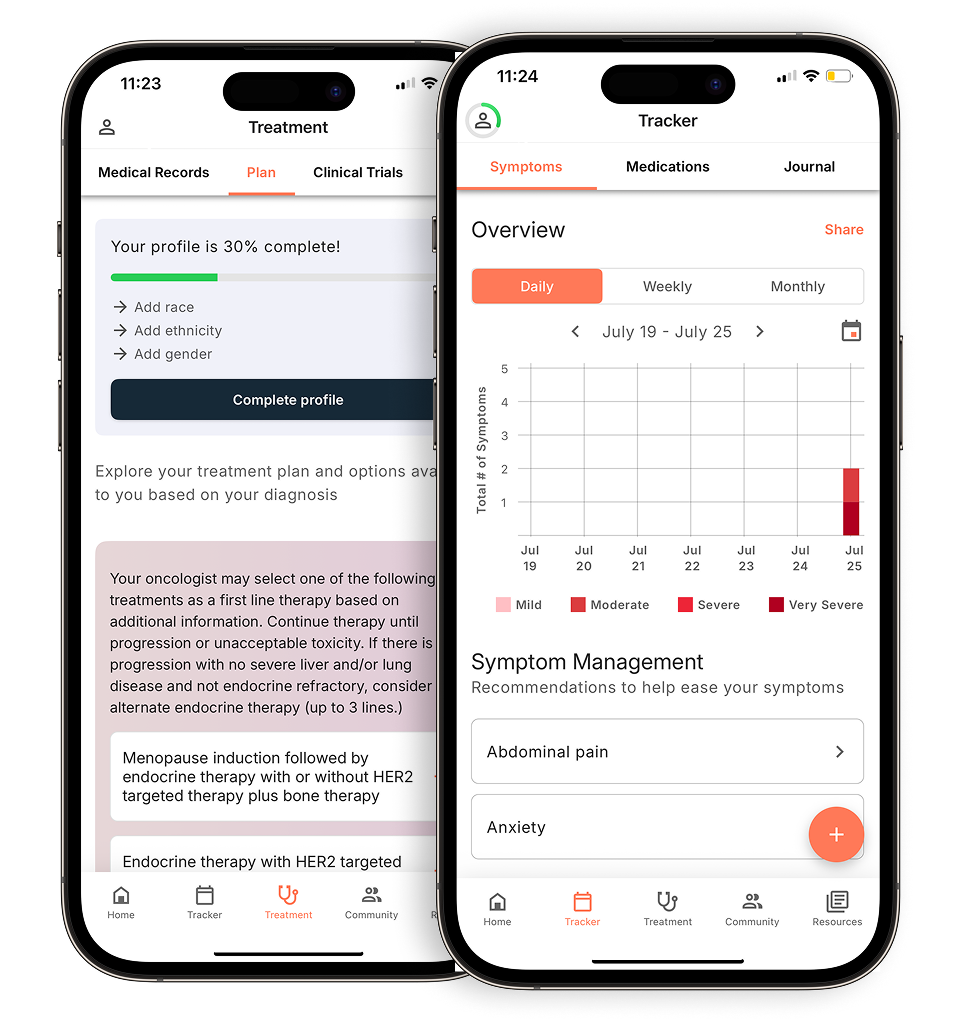
At Outcomes4Me, we believe patients deserve clear, evidence-based information about their diagnosis and treatment options. When patients understand their cancer and the choices in front of them, they are better prepared to partner with their care team and make informed decisions.
Personalized support for real care decisions
Understand your diagnosis, explore clinical trials, and track symptoms--all in one place.
Get started
Compare treatments, prepare for appointments, and track side effects—all in the app
Built for your diagnosis, Outcomes4Me gives you the tools to make confident, informed decisions—right when you need them.
Continue in app