November is Lung Cancer Awareness Month. Recently, we asked medical oncologists Dr. Jessica Lin and Dr. Catherine Meador to share what everyone should know about this disease. Their insights highlight the importance of raising awareness, challenging misconceptions, and ensuring that patients have access to the care, information, and resources they need.
Lung cancer can affect anyone with lungs
For both Dr. Meador and Dr. Lin, the idea that lung cancer is a smoker’s disease is the top myth they want to dispel. Dr. Meador says, “I have so many patients that have a history of tobacco use, and of course, that is a risk factor for lung cancer, but so many patients have a history of tobacco use, and do not have lung cancer. Many patients do not have that [history] and do get lung cancer, so I think that’s a myth we’re trying to dispel the most.”
“There is a lot of misconception about how lung cancers only affect patients who have heavily smoked cigarettes before. This is a stigma that many patients and families affected by lung cancer have to live with, and it is simply not true,” Dr. Lin agrees. “In fact, many of the patients that I treat in my clinic have never touched a cigarette in their entire lives,” she adds.
Evidence-based guidance powered by NCCN Guidelines®
Personalized treatment plans shaped by the latest oncology standards—tailored to your diagnosis.
Get started
View your personalized treatment plan in the Outcomes4Me app
Use your diagnosis to unlock personalized NCCN Guidelines®-aligned recommendations.
Continue in app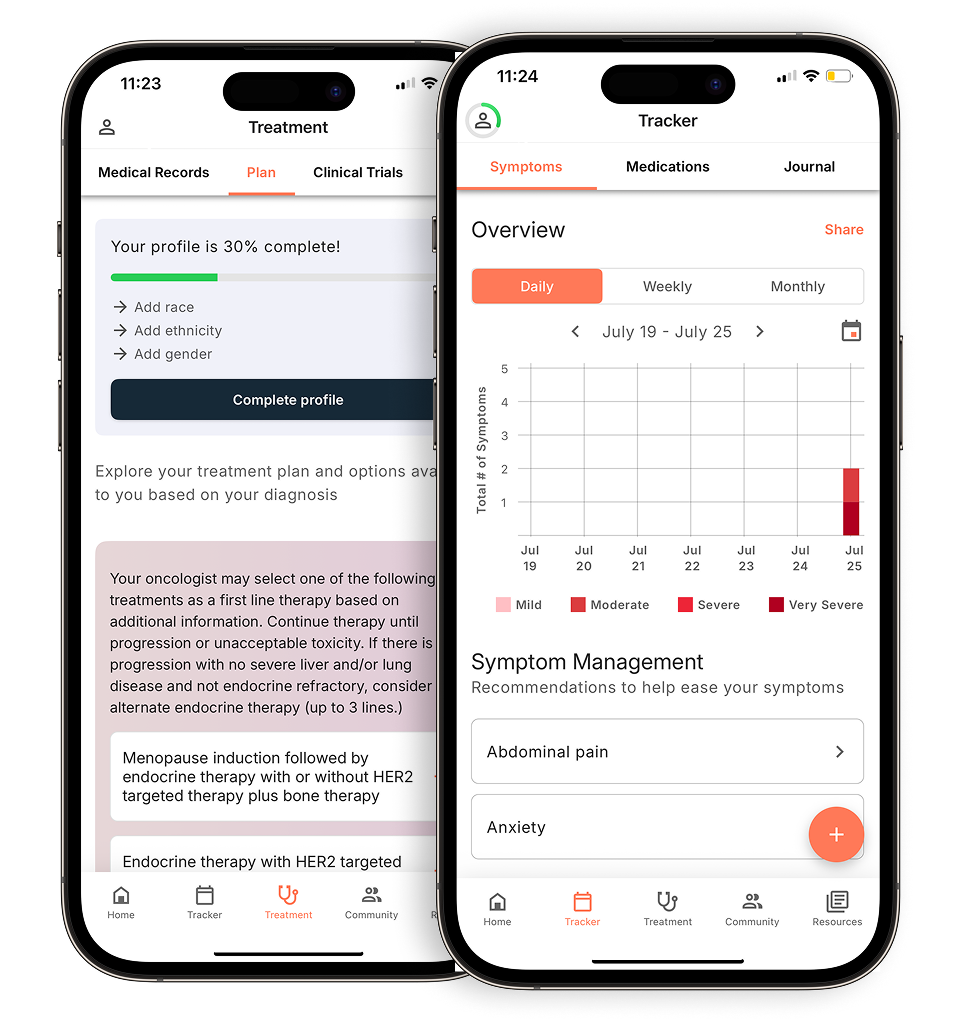
Some lung cancers are more common in non-smokers
New data show that 1 in 4 lung cancer cases occur in people who have never smoked, emphasizing the need for greater awareness that tobacco isn’t the only risk factor for lung cancer. Dr. Lin shares, “There are certain subtypes of lung cancer that are actually more common in patients who have never smoked before.”
For example, Dr. Meador tells us, “Young Asian females are at risk for EGFR mutant cancer. We don’t know why, but we just know that’s a fact. We know firefighters are at risk. I would just say, even though there are a lot of unknowns, there are so many people really invested in that research that are working on that.”
The research is only one piece of the puzzle. Dr. Meador says, “The first step is the answers. The second step is disseminating it throughout the community, and I think that the second step is actually more challenging than the first. We can get the answers, but actually enacting it, spreading the information, is very important.”
Second opinions are encouraged
After a lung cancer diagnosis, it’s understandable to feel a sense of urgency to start treatment straight away, but taking the time for a second opinion can be invaluable. A second opinion can confirm your staging, treatment options, and potentially provide you with clinical trial opportunities.
For Dr. Lin, second opinions are invaluable and encouraged. “Something that I hear a lot from patients, which is a concern, is that if you’re seeking a second opinion or consultation with an expert in the field, your primary oncology team or doctor may take offense or view it in an unfavorable way. That is simply not true.”
She reiterates, “You should definitely feel empowered to ask for second opinions and get consultations, particularly when you’re initially diagnosed with lung cancer, but also during the course of treatment. If you’re needing to change therapy or just at a challenging time point in your cancer therapy, it’s always good to consider [a second opinion.]”
Ask your doctor about clinical trials
Lung cancer care is progressing quickly, and participating in a clinical trial can help you access the latest therapies. For any lung cancer patient, Dr. Meador recommends bringing up the topic with your doctor. “I think there is a little bit of a stigma that’s out there that a clinical trial is a last-ditch effort or something. That’s not true. Clinical trials, while they’re not approved, known therapies, we open them at our institutions because we think they’re compelling,” she says. It’s a part of weighing all the options on the table.
Dr. Meador notes that each institution has different trials, and while some may require traveling and extra visits, they can be worth it. It’s “a life balance thing” patients should consider, she adds.
You’re not alone. Join the Outcomes4Me Community for a safe space to share your story and connect with others who share your diagnosis.
Personalized support for real care decisions
Understand your diagnosis, explore clinical trials, and track symptoms--all in one place.
Get started
Compare treatments, prepare for appointments, and track side effects—all in the app
Built for your diagnosis, Outcomes4Me gives you the tools to make confident, informed decisions—right when you need them.
Continue in app