
Each December, the prestigious San Antonio Breast Cancer Symposium (SABCS) unites the breast cancer community to discuss the latest innovations and future directions of MBC care. SABCS 2025 included several important updates for metastatic breast cancer across hormone-positive, HER2-positive, HER2-low, and triple-negative disease.
Here are the 7 highlights that stood out most for patients.
1) Smarter endocrine therapy options for HR-positive metastatic breast cancer
Endocrine therapy options for hormone-positive metastatic breast cancer are becoming more flexible and personalized. Newer medicines called oral SERDs like elacestrant, imlunestrant, giredestrant, and camizestrant are stronger endocrine options, and for some patients, they may be used on their own rather than immediately combined with a CDK4/6 inhibitor. This can be especially relevant for people with ESR1 mutations or slower-growing disease. At the same time, combination therapy remains important for many patients, and researchers are increasingly focused on sequencing treatments and using tools like blood tests (ctDNA) to know when it’s time to adjust therapy. The exciting update is a shift toward matching treatment intensity to the biology and pace of each person’s cancer.
2) Enhertu is a powerful later-line option for HER2-positive metastatic breast cancer
Evidence-based guidance powered by NCCN Guidelines®
Personalized treatment plans shaped by the latest oncology standards—tailored to your diagnosis.
Get started
View your personalized treatment plan in the Outcomes4Me app
Use your diagnosis to unlock personalized NCCN Guidelines®-aligned recommendations.
Continue in app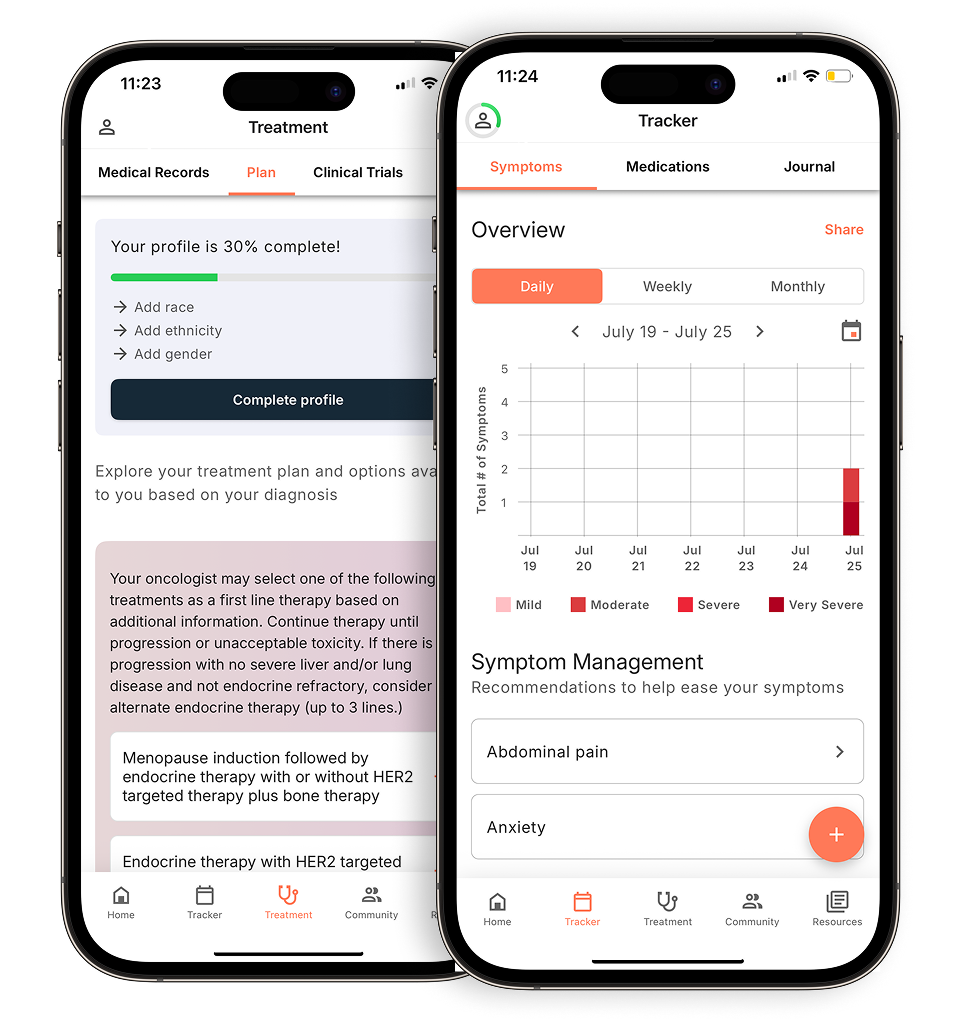
Enhertu (T-DXd) remains one of the most impactful drugs in metastatic breast cancer, and SABCS 2025 reinforced its role in HER2-positive disease. New analyses continued to show strong and durable responses, including in people who had already received multiple prior treatments. There was also ongoing discussion around optimizing sequencing and managing side effects, particularly lung-related toxicity, so patients can stay on treatment safely for as long as possible. For many living with HER2-positive metastatic breast cancer, Enhertu has become an important therapy, and research continues to refine how best to use it.
3) HER2-low remains a major focus in metastatic breast cancer
HER2-low breast cancer continues to be one of the biggest paradigm shifts in recent years, and SABCS 2025 added more clarity. Data reinforced that people with HER2-low metastatic disease can benefit from HER2-targeted antibody-drug conjugates, even though their cancer would not have been classified as HER2-positive in the past. Researchers also discussed the importance of accurate testing and re-testing, especially as tumors can change over time. For patients, this reinforces the value of understanding your HER2 status and asking whether re-biopsy or updated testing makes sense.
4) New targeted therapies for brain metastases
Brain metastases have historically been difficult to treat and often excluded from clinical trials. SABCS 2025 showed a growing inclusion of people with brain metastases in research which is such an important step forward. Studies presented continued to show that some newer targeted therapies, particularly tucatinib-based regimens in HER2-positive disease, can be effective in controlling brain metastases and delaying progression in the central nervous system.
5) Immunotherapy in metastatic TNBC
Researchers also shared updates on combining sacituzumab govitecan (Trodelvy) with the immunotherapy drug pembrolizumab (Keytruda) for metastatic triple-negative breast cancer. Sacituzumab is a targeted chemotherapy, while pembrolizumab helps the immune system recognize cancer. While this work is still focused on safety rather than proving longer survival, it highlights an important direction of carefully pairing targeted treatments with immunotherapy in ways that may help patients without adding unexpected side effects.
6) ctDNA and liquid biopsies are becoming more relevant in MBC care
Liquid biopsies, or blood tests that look for tumor DNA, continue to gain traction in metastatic breast cancer. Multiple presentations showed how ctDNA testing can help identify resistance mutations, track response to therapy, and guide treatment changes without needing repeated tissue biopsies. For many patients, this means less invasive testing and faster insight into what may or may not be working.
7) Earlier use of tucatinib helps extend control and delay chemotherapy (HER2CLIMB-05)
One of the more encouraging updates for HER2-positive metastatic breast cancer came from the HER2CLIMB-05 trial. Researchers looked at adding tucatinib (Tukysa) to maintenance therapy with trastuzumab and pertuzumab after initial chemotherapy. The results showed that people who received tucatinib stayed progression-free longer (about 25 months compared with 16 months) for those on trastuzumab and pertuzumab alone. That’s roughly 8 to 9 extra months of disease control. This benefit was seen across hormone receptor subtypes and even in people with a history of brain metastases. Just as importantly, the side effects looked similar to what doctors already expect with tucatinib, making this approach a promising way to extend time on targeted therapy and, for some, spend less time on traditional chemotherapy.
SABCS 2025 reinforced something many people living with metastatic breast cancer already know. Progress doesn’t always come in dramatic headlines, but it is real, steady, and meaningful. There are more treatment options, more ways to personalize care, and a growing emphasis on quality of life alongside disease control.
Staying informed can help you ask better questions, understand your options as they change, and feel more confident navigating care over time. Outcomes4Me is here to help bring the latest research into clear, patient-centered language and offer support when you need it.
Personalized support for real care decisions
Understand your diagnosis, explore clinical trials, and track symptoms--all in one place.
Get started
Compare treatments, prepare for appointments, and track side effects—all in the app
Built for your diagnosis, Outcomes4Me gives you the tools to make confident, informed decisions—right when you need them.
Continue in app