
Anxiety doesn’t keep business hours. Questions and worries about treatment can surface at any time, often in the middle of the night when your doctor’s office is closed. In these moments, having access to a supportive community can be a lifeline. This is where a breast cancer survivor forum comes in. These online communities for breast cancer survivors are available 24/7, right from your home. Unlike scheduled meetings, a good cancer survivor forum offers immediate connection. You can log on anytime to vent, ask about a side effect, or simply find people who are there to listen.
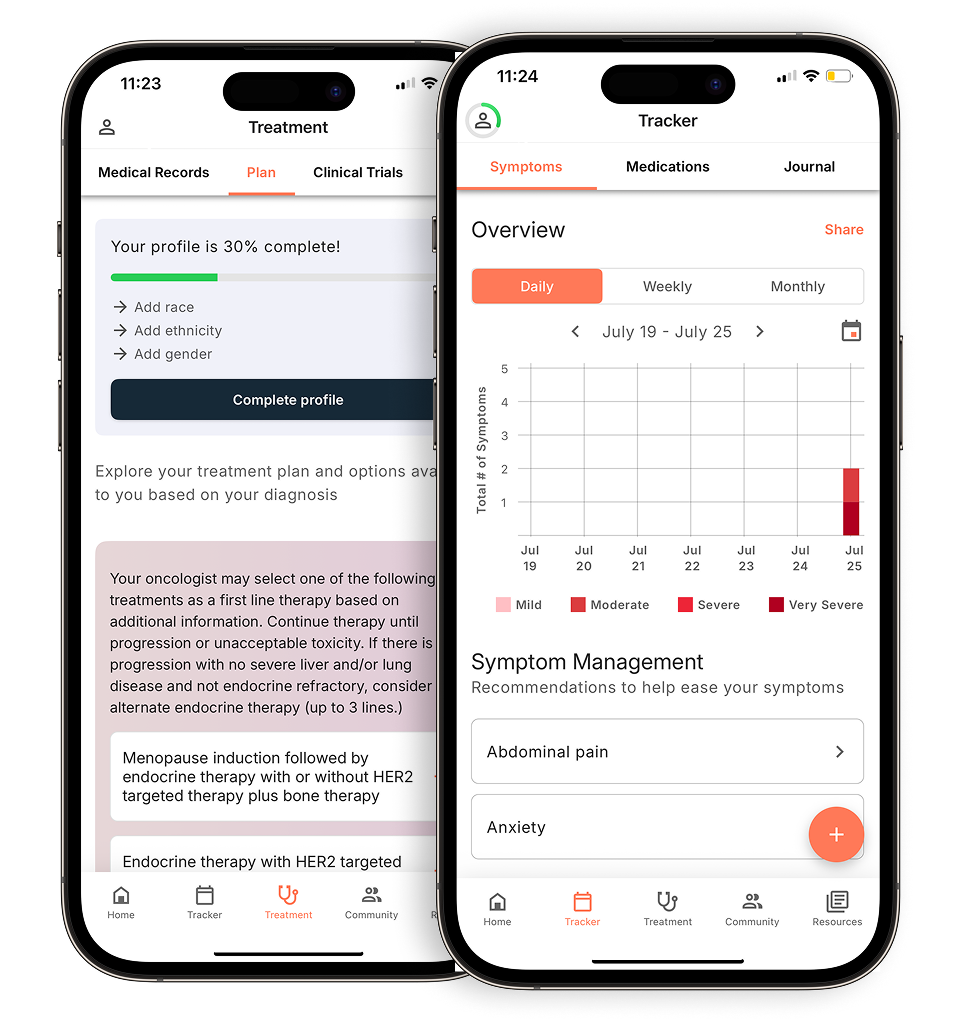
View your personalized treatment plan in the Outcomes4Me app
Use your diagnosis to unlock personalized NCCN Guidelines®-aligned recommendations.
Key Takeaways
- Connect with a community that truly understands: Online forums offer a unique space for emotional support and practical advice from people who have walked a similar path, helping you feel less isolated on your journey.
- Choose your space wisely for a better experience: Look for forums with active moderation, clear community rules, and strong privacy settings to ensure you’re joining a safe and supportive environment.
- Participate with confidence and clear boundaries: Protect your personal information by using an anonymous username and remember that forums are for peer support, not medical advice. Always bring treatment questions to your doctor.
What is a breast cancer survivor forum?
A breast cancer survivor forum is an online space where people affected by breast cancer can connect with one another. Think of it as a digital support group that’s available whenever you need it. These forums are places to ask questions, share your story, and find comfort in a community of people who truly understand what you’re going through. Whether you’re newly diagnosed, in the middle of treatment, or figuring out life after cancer, these communities offer a unique kind of support that can make a real difference in your journey. They break down geographic barriers, allowing you to connect with people from all walks of life who share a common experience.
How an online community can help
The main purpose of an online support community is to create a safe and welcoming environment for connection. When you’re dealing with a breast cancer diagnosis, it can feel isolating. Online cancer communities provide a platform where you can share your experiences, from the big milestones to the small daily challenges, without judgment. It’s a space to give and receive encouragement, exchange practical tips, and simply feel heard. The goal isn’t to replace medical advice from your care team but to supplement it with the emotional and practical support that can only come from peers who have walked a similar path. This shared understanding helps reduce feelings of loneliness and builds a sense of solidarity.
What kinds of forums are out there?
You’ll find a wide variety of forums out there, each with its own focus and community feel. Some are large, well-established platforms hosted by major cancer organizations. For example, the American Cancer Society’s Cancer Survivors Network offers discussion boards and peer support designed to foster connection among survivors. Others, like the forums hosted by Living Beyond Breast Cancer, are more specialized and may have dedicated sections for specific topics like metastatic breast cancer, young women with breast cancer, or life after treatment. The key is to find a community where the conversations feel relevant to you and the atmosphere feels supportive.
Dedicated sections for specific needs
To help you find exactly what you’re looking for, most breast cancer survivor forums are neatly organized into different categories. You’ll often find dedicated sections for various stages of the journey, from diagnosis and treatment to life after cancer. This structure is incredibly helpful because it allows you to connect with people who are in a similar situation. If you have a question about managing chemotherapy side effects, you can go straight to the treatment board. If you’re wondering about reconstruction options, there’s likely a space for that, too. This specialization makes the support feel more tailored and effective, ensuring the conversations are relevant to your immediate needs.
Spaces for friends and family
A cancer diagnosis impacts everyone, not just the person who receives it. Many online forums recognize this and provide dedicated spaces for friends, partners, and family members. These areas are a safe place for loved ones to connect with others who are also in a caregiving role. Here, they can share their own feelings, ask for advice on how to best support you, and gain insights from people who understand the unique challenges of supporting someone through cancer. It’s a valuable resource that helps your support system feel less alone, equipping them with the tools and encouragement they need to be there for you.
Casual “off-topic” areas
It’s not always about cancer, and that’s a good thing. To help build a true sense of community, many forums include casual “off-topic” areas where you can talk about anything and everything else. You might find threads about hobbies, favorite books, pets, or travel plans. These light-hearted spaces are important because they allow you to connect with others on a more personal level, beyond the shared experience of cancer. They provide a much-needed mental break from serious discussions and help foster genuine friendships. This focus on the whole person, not just the patient, is what makes these communities so strong and supportive.
Connecting with survivors around the world
One of the most powerful aspects of online forums is their global reach. You can connect with people from different countries and cultures, gaining diverse perspectives on living with and beyond breast cancer. Platforms like MyBCTeam are designed like social networks, making it easy to find and connect with others based on shared interests or diagnosis details. These online communities aren’t just for patients; they often welcome caregivers, family members, and friends, recognizing that a cancer diagnosis impacts everyone. This creates a rich, multifaceted support system where you can connect with other survivors, share your journey, and learn from the experiences of a worldwide community.
Why join a breast cancer survivor forum?
When you’re going through breast cancer, it can feel like your world has tilted on its axis. While your friends and family are an essential support system, they may not fully grasp what you’re experiencing. This is where an online forum can make a world of difference. It’s a dedicated space to connect with people who are on a similar path, offering a unique blend of understanding, practical advice, and emotional support that can be hard to find anywhere else. Joining a community of survivors and patients gives you a place to ask questions, share your fears, and celebrate small victories with people who truly get it.
Find emotional support from people who get it
There’s a special kind of comfort that comes from talking to someone who has walked in your shoes. In a breast cancer forum, you don’t have to explain the medical jargon or downplay your feelings. You can be completely honest about your good days and your bad ones. These online cancer communities are built on a foundation of shared experience, allowing you to form connections with others who understand the emotional and physical toll of treatment. It’s a space where you can find validation for your feelings and give and receive encouragement without judgment, creating a powerful sense of solidarity.
Share experiences and get practical advice
Beyond emotional support, forums are a goldmine of practical, real-world advice. Have a question about managing chemo-induced nausea? Wondering which products can soothe radiated skin? Chances are, someone in the community has been there and has a tip to share. These platforms become a collective knowledge base for everything from navigating insurance paperwork to finding comfortable post-mastectomy clothing. You can learn from the experiences of hundreds of others, gathering insights and life hacks that your medical team might not think to mention. It’s like having a team of mentors at your fingertips.
Get support anytime, day or night
Anxiety and difficult moments don’t stick to a 9-to-5 schedule. One of the biggest advantages of an online forum is its 24/7 availability. Whether you’re awake at 3 a.m. worrying about an upcoming scan or need to vent after a tough appointment, you can log on and find someone to talk to. Unlike in-person meetings, virtual support groups offer immediate access to a community. This constant connection can be a lifeline, providing a sense of security and reassurance whenever you need it most, right from the comfort of your own home.
Feel less alone on your journey
A breast cancer diagnosis can be an incredibly isolating experience. Even when surrounded by loved ones, you might feel like no one truly understands what you’re going through. Joining a forum instantly shatters that sense of isolation by connecting you with a global community of peers. Seeing that others share your fears, frustrations, and hopes can be profoundly comforting. In fact, studies show that participating in a support group can help reduce feelings of depression and anxiety for people living with breast cancer. It reminds you that you are part of a resilient community and not alone on this journey.
Find helpful resources and treatment information
Forums are excellent places to gather information and learn about resources you might not have known about. Members often share links to helpful articles, recommend financial assistance programs, or discuss their experiences with specific clinical trials. While it’s crucial to remember that forums are not a substitute for professional medical advice, they can help you formulate better questions for your doctor. Some forums, like the one hosted by Breast Cancer Now, even have sections where you can ask questions directly to oncology nurses, adding another layer of credible support to your information-gathering process.
Access a vast archive of shared experiences
The conversations happening in these forums don’t just disappear. They become part of a massive, searchable library of shared wisdom. Think of it as a collective knowledge base you can tap into anytime. If you have a specific question, chances are someone has asked it before. You can search through thousands of past discussions to find answers and perspectives. For instance, the Breast Cancer Now forum has a public archive with over 47,000 posts, covering everything from diagnosis to life after treatment. Similarly, the Cancer Survivors Network hosts more than 28,000 discussions on breast cancer alone. This incredible resource allows you to learn from the real-world experiences of countless others, finding practical tips on topics your medical team might not cover, like finding the best post-mastectomy bra or navigating insurance paperwork.
Common topics in a breast cancer survivor forum
Once you join a forum, you’ll find that the conversations cover nearly every aspect of the cancer experience. These communities are a space for honest, unfiltered discussion about the realities of diagnosis, treatment, and life beyond. From the practical to the emotional, members share insights you won’t always find in a doctor’s office. The topics are as diverse as the people in them, but a few common themes come up again and again.
Sharing treatment experiences and managing side effects
One of the most valuable aspects of these forums is the shared wisdom around treatment. While your care team provides the medical facts, fellow patients can describe what it actually feels like to go through chemotherapy, radiation, or surgery. As one study notes, forum users share information on issues that most health professionals have no direct experience of, such as how it really feels when undergoing treatment. You’ll find practical tips for managing side effects, like which foods help with nausea, how to care for your skin during radiation, or the best ways to cope with fatigue. This firsthand advice can make a huge difference in your day-to-day comfort.
Discussions on chemotherapy and hormone therapy
People often use breast cancer forums to ask questions and get advice on many topics, such as different cancer treatments and their side effects. You can find threads dedicated to specific experiences with chemotherapy and hormone therapy, where members discuss everything from what to pack in your chemo bag to how they managed hot flashes. These conversations provide a layer of understanding that complements your doctor’s advice, offering personal stories and encouragement from those who have been through it. It’s a place to learn about the human side of treatment and feel more prepared for what’s ahead.
Tips for managing low blood counts or body aches
When you’re dealing with challenging side effects like low blood counts or persistent body aches, practical advice from peers can be invaluable. Forums become a collective knowledge base where you can learn from the experiences of hundreds of others, gathering insights and life hacks that your medical team might not think to mention. You might find suggestions for gentle exercises that ease aches or learn about nutrient-rich foods that helped others support their blood counts. It’s like having a team of mentors at your fingertips, ready to share what worked for them.
Discussing coping strategies and mental health
A breast cancer diagnosis brings a wave of complex emotions, and you don’t have to process them alone. Forums are a safe place to talk about fear, anxiety, and sadness with people who truly understand. Research on breast cancer support groups shows that they can help reduce feelings of depression and anxiety while improving your ability to adapt to your new circumstances. Members share coping strategies that work for them, whether it’s mindfulness exercises, journaling prompts, or simply the freedom to vent without judgment. It’s a powerful reminder that your feelings are valid and that support is always available.
Sharing lifestyle adjustments and recovery tips
Life changes after a diagnosis, and these communities are a great resource for figuring out your new normal. Conversations often center on lifestyle adjustments, from nutrition and exercise to returning to work and managing daily responsibilities. Online cancer communities provide a platform for patients to connect and share experiences about what helps them feel their best during and after treatment. You might find recommendations for gentle yoga routines, recipes for nutrient-rich smoothies, or advice on how to pace yourself as you regain your strength. It’s all about sharing practical tips for living well.
Talking about family, relationships, and communication
Breast cancer doesn’t just affect you; it impacts your relationships with partners, children, family, and friends. It can be hard to talk about these challenges with the people involved. Forums offer an outlet to discuss these sensitive topics with others who have been there. These virtual support groups provide a safe setting to share personal experiences and get advice on everything from telling your kids about your diagnosis to maintaining intimacy with a partner. Hearing how others have handled similar situations can give you the confidence to communicate your own needs more clearly.
Discussing clinical trials and new research
Many forums are active hubs for information on the latest medical advancements. Members often discuss new research, share articles about promising treatments, and talk about their experiences with clinical trials. These platforms are a place where you can seek advice and offer encouragement as you and others explore different treatment avenues. While these discussions should never replace advice from your doctor, they can help you formulate questions for your next appointment and feel more informed about your care options. It’s a way to stay engaged with your treatment plan and learn from the collective knowledge of the community.
Navigating practical questions and major life decisions
Beyond the emotional and medical aspects, a breast cancer diagnosis comes with a long list of practical questions and life-altering decisions. How much time will I need off work? What does my insurance actually cover? What are my options for surgery? These are the real-world concerns that can feel just as overwhelming as the diagnosis itself. Online forums are an incredible resource for tackling these challenges. They provide a space to gather insights from people who have already been through it, offering a blend of practical advice and firsthand experience that can help you make informed decisions with confidence.
Understanding health insurance and recovery time
Figuring out the logistics of treatment can feel like a full-time job. In forums, you can ask practical questions about things like recovery time after surgery, what to wear when you’re feeling sore and tender, and how to make sense of your health insurance policy. While your doctor can give you a general timeline, hearing from others about their personal recovery experiences can provide a more realistic picture. Members often share tips for managing the costs of care and demystifying insurance paperwork, helping you prepare for the financial side of treatment so you can focus more on your healing.
Making choices about breast reconstruction
The decision about whether to have breast reconstruction—and what kind—is deeply personal. Forums offer a safe space to explore your options without pressure. You can read stories from women who have chosen different types of reconstruction, as well as from those who have decided to go flat. Some forums, like those hosted by Breast Cancer Now, even have nurses available to answer questions, blending peer support with professional guidance. Hearing about others’ experiences can help you clarify your own feelings and priorities, making it easier to have a productive conversation with your surgical team about what’s right for you.
Learning common medical abbreviations
Suddenly, you’re expected to understand a whole new language filled with acronyms like DCIS, ILC, ER+, and HER2. It can be incredibly disorienting. Many forums, such as the Cancer Survivors Network, help members get up to speed by providing lists of common abbreviations and explanations of medical terms. Learning this terminology is more than just academic; it empowers you to better understand your own pathology report, follow conversations about your treatment plan, and feel more in control during appointments. When you can speak the language, you can be a more active participant in your own care.
How to find a safe and supportive forum
Finding the right online community can feel like coming home. It’s a place where you’re understood without having to explain everything. But not all forums are created equal. The best ones are more than just message boards; they are safe, supportive, and well-managed spaces. Knowing what to look for can help you find a community that truly supports your healing and well-being.
A great forum should make you feel secure enough to share your story and empowered by the information you find. Think of it as choosing a new local spot—you want it to have a good vibe, be easy to get around, and have friendly regulars. Before you dive in and create a profile, take a moment to observe. Look for signs of a healthy, active community where members are respected and supported. This little bit of homework upfront can make a huge difference in your experience.
Look for active moderation and clear rules
A well-run forum feels like a safe conversation, and that’s usually thanks to active moderators. These are the people who ensure discussions stay respectful, supportive, and on-topic. They help create a space where you can feel comfortable sharing your experiences. Before joining, look for a page that outlines the community rules or guidelines. These rules show that the forum is committed to maintaining a positive environment. Online cancer communities are meant to be platforms where patients can connect and support each other, and clear rules are the foundation of that trust. If you can’t easily find any guidelines, that might be a red flag.
Choose a forum that’s easy to use
You’ve got enough on your plate without having to figure out a confusing website. A great forum should be easy to use, with a clean layout and a simple search function. You should be able to find relevant topics and conversations without getting frustrated. For example, some forums have special sections like an “Ask a Nurse” corner, which makes it incredibly easy to find expert advice. When a platform is thoughtfully designed, it shows that the creators care about your experience. A user-friendly interface encourages more people to participate, which leads to a more vibrant and helpful community for everyone.
Make sure your privacy is protected
Sharing personal health information online requires a high level of trust. That’s why strong privacy measures are non-negotiable. Before you sign up, check the forum’s privacy policy. Can you use an anonymous username? Can you control who sees your posts and personal information? Some public discussion boards can be found through internet searches, so it’s crucial to understand what you’re sharing. A trustworthy forum will be transparent about how it protects your data and will give you the tools to manage your own privacy settings. Your peace of mind is paramount.
Check for access to experts and verified information
While connecting with peers is invaluable, having access to verified information from professionals adds another layer of support. Some of the best forums have medical experts, nurses, or social workers who participate in discussions or host Q&A sessions. This ensures that you’re getting reliable, evidence-based information alongside personal advice. Platforms like Living Beyond Breast Cancer host active forums where you can not only share stories but also find credible guidance. This blend of peer support and expert knowledge can help you make informed decisions and feel more confident as you manage your health.
Find a community with a variety of topics
Your life isn’t just about cancer, and a great forum understands that. Look for a community that has a wide variety of discussion topics, from managing treatment side effects to navigating relationships, work, and mental health. A forum with a large number of archived posts often indicates that it has been a helpful resource for a long time. This diversity of topics means you can find support for all aspects of your life, not just the medical ones. It shows the community is a place where people discuss the full spectrum of the survivorship experience, making it a richer and more holistic source of support.
How to use a breast cancer forum
Jumping into an online forum for the first time can feel a little intimidating. With so many conversations happening at once, it’s easy to feel overwhelmed. But once you get the hang of the basic layout and features, you’ll find it’s a powerful tool for connection and support. Think of it like exploring a new library—it just takes a moment to learn where everything is. Let’s walk through the key features so you can feel confident participating in the conversations that matter most to you.
Understanding the forum’s structure
Categories, topics, and discussion threads
Most forums are organized into a simple structure to keep conversations tidy. At the top level, you have categories, which are broad subject areas like “Newly Diagnosed,” “In Treatment,” or “Living with Metastatic Disease.” Within each category, you’ll find individual topics or discussions started by members. For example, inside the “In Treatment” category, you might see a discussion titled “Tips for Managing Chemo Brain.” When you click on that discussion, you’ll see the thread, which is the series of replies from different members. This structure helps you find conversations relevant to your specific situation.
Finding conversations that matter to you
Using search filters and “Active Topics” links
You don’t have to scroll through every category to find what you’re looking for. The most direct way to find information is by using the search bar, which is often marked with a magnifying glass icon. You can type in keywords like “lumpectomy recovery” or “tamoxifen side effects” to find all the discussions where those terms are mentioned. Many forums also have an “Active Topics” or “Recent Posts” link on the homepage. This is a great way to see what conversations are happening right now and jump into a current discussion.
How to create a new post
Choosing a category and writing a title
When you’re ready to start your own conversation, look for a button that says “New Discussion” or “Start a New Topic.” The first step is to choose the most appropriate category for your question or story. This ensures the right people will see it. Next, write a clear and descriptive title. Something like “Question About Cold Capping” is much more helpful than a vague title like “Help!” A good title makes it easier for others to find your post and offer relevant advice.
Attaching files, adding tags, and saving drafts
When you write your post, you’ll usually have a few extra options. Many forums allow you to attach images or files, which can be helpful if you’re asking about something visual, like a skin reaction from radiation. Some platforms also use tags, which are like keywords you can add to your post to make it more searchable. If you’re writing a long or emotional post and need to step away, look for a “Save Draft” button. This lets you come back and finish your thoughts later without losing your work.
Managing your account and profile
Editing your posts and creating a signature
After you post something, you still have control over it. If you make a typo or want to add more information, you can typically edit your own posts. Look for three dots (…) or an “Edit” button next to your comment. You can also create a signature—a short piece of text that automatically appears at the bottom of all your posts. Many members use this to share a brief summary of their diagnosis (e.g., “IDC, Stage II, diagnosed 2023”), which provides helpful context without you having to type it out every time.
Bookmarking helpful discussions
As you browse the forum, you’ll likely come across threads filled with amazing advice that you’ll want to find again. Instead of trying to remember the title, you can use the bookmark feature. Look for a bookmark icon near the discussion title. Clicking it will save the thread to a special list in your profile, creating a personal library of your most helpful conversations. This makes it easy to revisit valuable tips or encouraging stories whenever you need them.
Customizing your profile picture and privacy settings
Your profile is your personal space within the community. To protect your privacy, it’s a good idea to choose an anonymous username and a profile picture that isn’t a photo of you—maybe a picture of a flower, a pet, or a favorite landscape. Take a few minutes to explore your account settings. Here, you can often control who can see your information and what notifications you receive. Taking charge of these settings helps you create an experience that feels safe and comfortable for you.
Communicating safely with other members
Sending private messages
Sometimes you might want to have a one-on-one conversation with another member. Most forums offer a private messaging (PM) or direct messaging (DM) feature for this. To send one, you can usually click on a person’s username and find a “Message” button. This is a great way to connect more deeply with someone, but always be cautious about sharing personal identifying information, like your full name, email address, or where you live. Keep conversations within the platform to stay safe.
Blocking users and protecting your space
Your comfort and safety are the top priority. If you ever interact with someone who makes you feel uncomfortable or who is violating the community rules, you have the power to block them. This will prevent them from contacting you or replying to your posts. To do this, go to that member’s profile page and look for an option like “Block User.” Don’t hesitate to use this feature to protect your peace of mind and ensure the forum remains a positive space for you.
How to get help and report issues
Using the “Report” button for inappropriate content
Reputable forums are committed to keeping the community safe and supportive. If you see a post that is spam, abusive, or breaks the community guidelines, you can help the moderators by reporting it. Look for a “Flag” or “Report” button, which is usually located near the post. You’ll likely be asked to provide a brief reason for the report. This helps moderators quickly address any issues and maintain a respectful environment for everyone.
Finding user guides and contacting moderators
If you have a question about how the forum works or run into a technical problem, the first place to look is the “Help” or “FAQ” section. These pages often have user guides that explain all the platform’s features. If you can’t find an answer there, or if you have a specific issue you need help with, you can contact the moderators directly. There is usually a “Contact Us” link or a list of moderators you can send a private message to for assistance.
How to participate safely and respectfully
Online forums can be a lifeline, offering connection and understanding when you need it most. To get the most out of these communities, it’s helpful to engage in a way that’s safe for you and supportive of others. Think of it as community care—you’re there to get support, but also to contribute to a space that feels welcoming and reliable for everyone.
This means being mindful of what you share, how you interact, and where you draw the line between peer advice and medical guidance. Protecting your privacy is just as important as offering an encouraging word to someone else. It’s also about learning to set healthy boundaries to protect your own emotional well-being and knowing how to identify and handle misinformation. By keeping these simple guidelines in mind, you can help build a community that is not only comforting but also a truly helpful resource on your cancer journey.
Give and get support in your conversations
The best conversations in these forums happen when people listen with empathy. When you share your story or respond to someone else’s, try to focus on the shared experience. Instead of offering unsolicited advice, sometimes the most powerful thing you can do is simply validate what someone is feeling. Phrases like, “That sounds so difficult,” or, “Thank you for sharing that,” can make someone feel seen and heard. You can also offer encouragement by celebrating small wins or reminding someone of their strength. Asking thoughtful, open-ended questions can also help others process their thoughts and feel less alone in their struggles.
How to protect your privacy and personal information
While it’s a space for sharing, it’s crucial to protect your personal information. Many forums are public, meaning posts can appear in internet searches. To stay safe, avoid sharing identifying details like your full name, home address, phone number, or specific dates of birth. The Cancer Survivors Network recommends creating a username that doesn’t reveal your real name. Think of it as creating a safe, semi-anonymous space where you can speak freely about your health without compromising your personal security. Before posting, always ask yourself if you’d be comfortable with a stranger reading what you’re about to share.
Supporting others while setting healthy boundaries
It’s natural to want to help everyone you connect with in a support group, but it’s also important to protect your own emotional energy. You are not responsible for solving anyone’s problems or being available 24/7. If a particular conversation feels overwhelming or triggering, it is perfectly okay to step away or not respond. Setting healthy boundaries means recognizing your own limits. You can be a supportive member of the community without carrying the emotional weight of every story. Remember, taking care of yourself first allows you to continue showing up for others in a sustainable way.
Knowing when to talk to your doctor
Forums are an incredible place to discuss things your medical team may not have firsthand experience with, like the day-to-day feeling of a certain side effect. However, they are not a substitute for professional medical advice. What works for one person’s treatment plan may not be appropriate or safe for yours. Always discuss any new symptoms, treatment ideas, or alternative therapies with your oncologist. They have a complete picture of your health and can provide guidance based on evidence. For reliable, oncologist-approved information, you can also reference resources like the NCCN Guidelines® for Patients.
How to spot and handle misinformation
In any online community, misinformation can spread, even when people have the best intentions. Be cautious of posts that promise a “cure” or promote unproven supplements and diets. As one forum user noted, the links between things like diet and breast cancer are often complex and not as simple as they seem. If you see a claim that sounds too good to be true, it probably is. If you feel comfortable, you can gently counter it by sharing a link to a credible source. Otherwise, the best course of action is to report the post to the forum moderators and always cross-reference health information with your doctor.
Ready to join? Here’s how to get started
Finding the right online community can feel like searching for a new friend group—you want a place where you feel understood, supported, and comfortable being yourself. With so many options out there, it helps to know what to look for. Taking a little time to find the right fit can make all the difference in your experience. Once you find a forum that feels like home, the next step is jumping in and making that first connection. Here’s a simple guide to help you choose a community and start participating.
Find a community that fits your diagnosis and needs
The breast cancer experience is incredibly personal, and your needs will be unique to your diagnosis, treatment plan, and life circumstances. Look for forums that have dedicated spaces for people with similar situations. You might find specific groups for metastatic breast cancer, young survivors, or those navigating survivorship after treatment ends. Some platforms host active forums where you can easily find conversations that align with your specific diagnosis. This ensures the advice and support you receive is relevant and comes from people who truly understand what you’re going through. Don’t be afraid to explore a few different communities until you find one that resonates with you.
Look for active and engaged members
A great forum is more than just a website; it’s a living community. Before you join, spend some time browsing the discussions to get a feel for the activity level. Are people posting recently? Are the replies thoughtful and supportive? A high number of members isn’t always the best indicator of a healthy community. Instead, look for signs of genuine engagement. For example, some forums have special sections where you can ask nurses questions and see hundreds of topics, which shows it’s a trusted and active resource. A large archive of posts also suggests the forum has been a helpful place for a long time.
Feeling nervous? How to write your first post
Taking that first step to post can feel a little nerve-wracking, but it’s the best way to start building connections. You don’t need to write a long, detailed story. Most forums have a dedicated section for new members to introduce themselves. A simple “hello” and a brief introduction is a perfect way to start. You can share as much or as little as you feel comfortable with. Just letting people know you’re there is enough. Remember, everyone in that forum was new once, and they’ll likely be happy to welcome you. Sharing your story can be a powerful step, but it’s perfectly fine to start small.
Related Articles
- Safely Join Online Cancer Discussions: A Guide
- Seeking Support and Advice as a New Breast Cancer Patient | Outcomes4Me Community
- Finding Support After a Breast Cancer Diagnosis | Outcomes4Me Community
- Is This Site Only for Breast Cancer? | Outcomes4Me Community
View your personalized treatment plan in the Outcomes4Me app
Use your diagnosis to unlock personalized NCCN Guidelines®-aligned recommendations.
Frequently Asked Questions
I’m an introvert and not sure I’m ready to share my story. Can I still benefit from a forum? Absolutely. Many people join these communities and simply read for a while before ever posting. There is immense value in just seeing that others share your feelings and experiences. You can absorb practical tips and feel a sense of connection without the pressure to contribute. When you feel ready, you can start small by simply thanking someone for their post or sharing a brief, encouraging comment. There’s no right or wrong way to participate.
How can I tell if the advice I’m reading is reliable? This is a great question. The golden rule is to view forums as a source of peer support and shared experience, not medical advice. While members share what worked for them, it’s essential to remember that every person’s health situation is unique. The most trustworthy communities have active moderators and sometimes even medical professionals who answer questions. Always bring any suggestions about treatments, supplements, or symptom management to your own doctor before trying them.
Are these forums just for patients, or can my family and friends join too? Many breast cancer forums welcome caregivers, partners, family members, and friends. They understand that a diagnosis impacts an entire circle of loved ones. Often, you’ll find dedicated sections or threads specifically for supporters to ask questions and connect with others in similar roles. It can be a wonderful resource for them to find their own support system and learn how to best help you.
With so many options, how do I find the one that’s right for me? Finding the right fit is about finding a place that feels comfortable and relevant to you. Start by looking for communities that have specific discussion areas for your diagnosis or life stage, whether that’s metastatic breast cancer or life after treatment. Before creating an account, spend some time browsing the conversations to check the tone. Is it supportive? Are the moderators active? A great community will feel welcoming and have clear rules that promote respectful conversation.
Is it okay to discuss things other than cancer? Yes, and you absolutely should. The best forums recognize that you are a whole person, not just a patient. You’ll often find conversations about hobbies, work, family life, and managing everyday stress. These discussions are just as important as the medical ones because they help you connect with others on a human level and remember all the parts of your identity that exist outside of your diagnosis.