
A diagnosis of locally advanced cancer can feel overwhelming, but understanding what does locally advanced cancer mean is the first step toward a clear, actionable plan. It simply means the cancer is still confined to one region of your body. This is often good news. It allows your care team to create a focused, powerful treatment plan using therapies like chemotherapy, radiation, and surgery to attack it directly. So, is locally advanced cancer curable? For many, the answer is a hopeful yes. This guide will help you understand the treatments and the reasons for optimism.
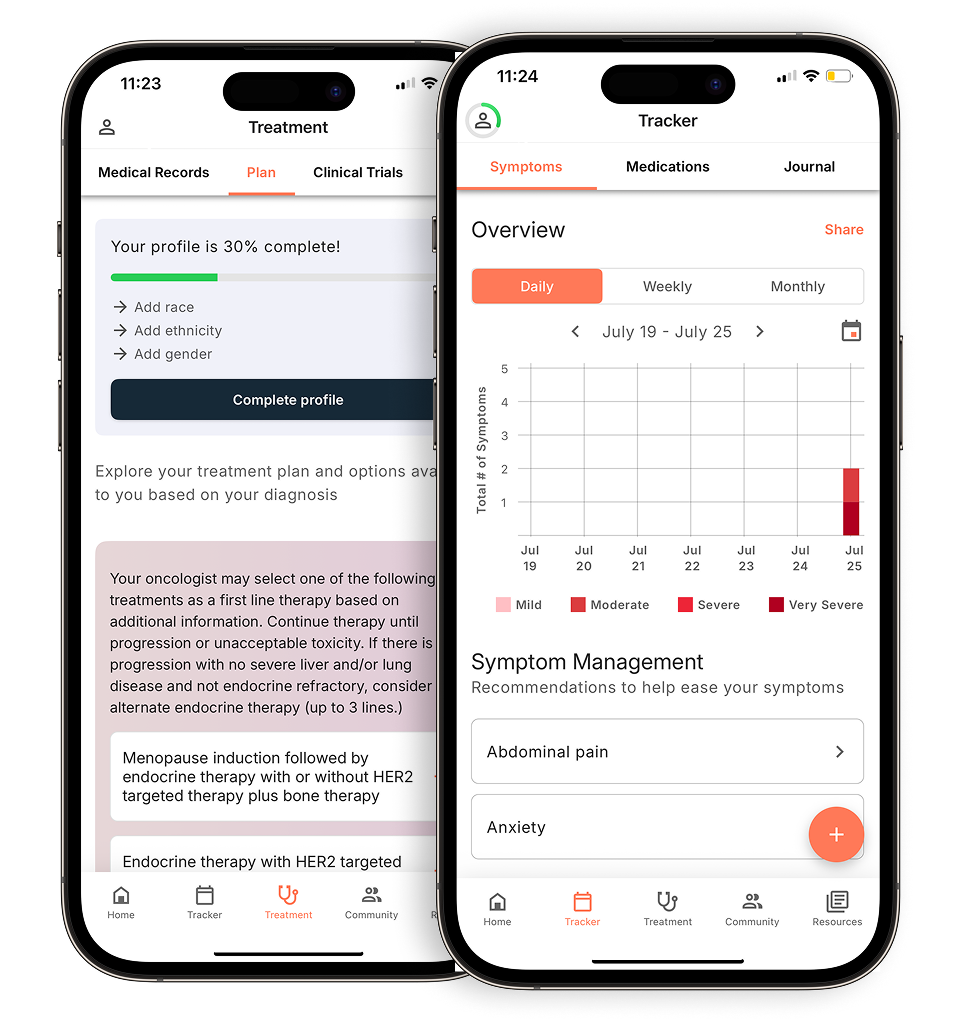
View your personalized treatment plan in the Outcomes4Me app
Use your diagnosis to unlock personalized NCCN Guidelines®-aligned recommendations.
Key Takeaways
- Locally advanced cancer is a specific stage, not a final verdict: It means the cancer has grown into nearby tissue but hasn’t spread to distant organs. This distinction is key because it allows for a focused, intensive treatment plan aimed at controlling the disease in one area of the body.
- Effective treatment often combines multiple therapies: Your care team will likely recommend a multi-pronged approach, using strategies like chemotherapy, radiation, and surgery together. This layered plan is designed to give you the best possible outcome by targeting the cancer from every angle.
- Your personal goals shape the path forward: Whether the aim is a cure or long-term management, your treatment plan is built around you. Open conversations with your doctors about your quality-of-life priorities ensure the chosen strategy aligns with what matters most to you.
What does locally advanced cancer mean?
Hearing the words “locally advanced cancer” can feel confusing. What does it actually mean for you and your treatment? In simple terms, it means the cancer has grown outside the organ where it started and may have spread into nearby tissues or lymph nodes. The key word here is nearby. While the cancer is more extensive than in its early stages, it has not yet spread to distant parts of your body, which would be considered metastatic cancer.
Think of it as a middle ground in cancer progression. It’s a sign that the cancer is growing, but it’s still contained within one general area of the body. This distinction is incredibly important because it directly influences your treatment options and overall prognosis. A diagnosis of locally advanced cancer often means that a more intensive treatment approach is needed, frequently involving a combination of therapies like chemotherapy, radiation, and surgery. Your care team will use this staging information to build a treatment plan tailored specifically to your situation, aiming to control the cancer’s growth and manage your symptoms effectively.
How is it different from other cancer stages?
It’s helpful to understand where locally advanced cancer sits on the spectrum of cancer stages. Early-stage cancer is confined to its original location. Metastatic cancer, on the other hand, is when cancer cells have traveled through the bloodstream or lymph system to form new tumors in distant organs. Locally advanced cancer falls right in between. It has moved beyond its starting point but hasn’t made that long-distance journey. This is a crucial difference, as the goals of treatment can vary. While a complete cure is the aim, treatment for advanced and metastatic cancers may also focus on shrinking tumors, slowing growth, and extending your life with the best quality possible.
Where does it fit within the cancer staging system?
Doctors use a standardized system to classify cancer, most commonly the TNM system. This system helps everyone on your care team speak the same language about your diagnosis. In the TNM system, the “T” refers to the size and extent of the primary tumor. Locally advanced cancer is often categorized as a T3 or T4. A T3 classification means the cancer has grown into nearby tissues, while T4 indicates it has spread to adjacent organs or structures. This specific staging information is vital, as it allows your oncologist to determine the most effective treatment strategies and give you a clearer picture of what to expect.
Understanding key cancer terms
When you’re dealing with a cancer diagnosis, you’re suddenly faced with a whole new vocabulary. Words like “advanced,” “recurrence,” and “metastasis” can be intimidating, but understanding what they mean is the first step toward feeling more in control. These terms are simply how your care team describes what the cancer is doing and where it is in your body. Getting a handle on this language helps you better understand your diagnosis, ask informed questions, and participate more fully in decisions about your care. Let’s break down some of the most common terms you might hear so they feel less like jargon and more like useful information.
What does “advanced cancer” mean?
The term “advanced cancer” sounds definitive, but its meaning is more nuanced. It usually means that the cancer is unlikely to be cured, but that doesn’t mean treatment stops. Far from it. For many people, treatments can shrink the cancer, slow its growth, and manage symptoms, helping them live longer and maintain a good quality of life. In some cases, advanced cancer can be managed much like a long-term or chronic illness. The focus of your care plan may shift from a cure to long-term control, and your oncology team will work with you to find the best approach for your specific situation and goals.
Recurrence vs. relapse
You might hear the words “recurrence” and “relapse” used, and while they sound similar, they have slightly different meanings. A cancer recurrence is when the cancer comes back after a period where it was undetectable. This can happen in the same place it started, in nearby lymph nodes, or in a distant part of the body. A relapse, on the other hand, refers to the return of cancer or its symptoms after a period of improvement or remission. Both terms describe the cancer returning, but they help your doctor specify the context of its return in relation to your previous treatment and health status.
What is a second cancer?
It’s also possible to be diagnosed with a completely new cancer, which is known as a second cancer. This is not the same as a recurrence. A second cancer is an entirely different and unrelated type of cancer that develops after your first diagnosis. For example, someone who was successfully treated for breast cancer could later develop lung cancer. The cells of the second cancer are different from the cells of the original one. Your doctors can determine if a new tumor is a recurrence of the first cancer or a brand new primary cancer, which is an important distinction for planning your treatment.
How does cancer spread?
One of the defining characteristics of cancer is its ability to spread from where it started. This process is called metastasis. Cancer cells can break away from the original tumor and travel through the bloodstream or the lymphatic system to other parts of the body. When these cells settle in a new area, they can form new tumors. It’s important to remember that even when cancer spreads, it’s still named after the part of the body where it originated. For example, breast cancer that has spread to the lungs is still called metastatic breast cancer, not lung cancer. Understanding this process helps clarify why your treatment plan might target different areas of your body.
Understanding metastasis
Metastasis is the medical term for cancer that has spread from its original location (the primary site) to other parts of the body. This spread can happen in a few different ways. It can be local, spreading into nearby tissues; regional, moving to lymph nodes or tissues farther away but still in the same general area of the body; or distant, traveling to far-off organs like the lungs, liver, or bones. Your doctors use imaging tests and biopsies to determine if and where the cancer has spread, which is a critical factor in deciding on the most effective treatment strategy for you.
What is micrometastasis?
Sometimes, small groups of cancer cells break off from the main tumor and spread to other parts of the body, but these clusters are too tiny to be detected by standard imaging tests like CT scans or MRIs. This is called micrometastasis. Even though these cells aren’t visible, your doctor might suspect they are present based on the characteristics of your primary tumor. This is often why treatments like chemotherapy or radiation are recommended even after a tumor has been surgically removed—the goal is to eliminate any hidden cancer cells and reduce the risk of the cancer returning later on.
What are the symptoms of advanced cancer?
The symptoms of advanced cancer can vary widely from person to person and depend heavily on the type of cancer and where it has spread. Some symptoms are general and can affect your whole body, while others are specific to the location of the new tumors. It’s important to communicate openly with your care team about any new or changing symptoms you experience. Reporting these changes promptly allows your team to manage them effectively, which is a key part of maintaining your quality of life. Your doctors can offer treatments to relieve symptoms, whether it’s medication for pain or procedures to reduce pressure from a tumor.
General symptoms
Some symptoms of advanced or metastatic cancer are not tied to one specific location. These can include feeling extremely tired (fatigue) in a way that rest doesn’t help, losing weight without trying, or discovering a new lump or swollen lymph node. While these symptoms can be caused by many other health conditions, they are important to discuss with your doctor. Your care team can help you figure out the cause and find ways to manage these symptoms, whether through medication, changes in diet, or other supportive care strategies that can help you feel better and stronger during treatment.
Symptoms based on location
Often, the symptoms of advanced cancer point to where it has spread. For example, if cancer has metastasized to the lungs, you might experience shortness of breath or a persistent cough. If it has spread to the bones, it can cause pain or make the bones weaker and more prone to fractures. Similarly, metastasis to the liver might cause jaundice (yellowing of the skin and eyes) or swelling in your belly. By telling your doctor exactly what you’re feeling, you provide crucial clues that help them monitor the cancer and adjust your treatment plan to manage these specific issues effectively.
What are the most common types of locally advanced cancer?
The term ‘locally advanced’ can apply to many diagnoses. It describes cancer that has grown outside its original organ but hasn’t spread to distant parts of the body. While every cancer is unique, here are a few of the most common types where this term is used.
Locally advanced breast cancer
When you hear the term locally advanced breast cancer, it means the cancer has spread beyond the breast to nearby tissues, like the chest wall or a significant number of lymph nodes. The crucial detail is that it hasn’t reached distant parts of the body, such as the bones, liver, or lungs. This is typically classified as Stage 3 breast cancer. Because the cancer is more extensive, your care team will likely recommend an aggressive, multidisciplinary treatment plan. This often involves a combination of chemotherapy, surgery, and radiation, all designed to attack the cancer from multiple angles and give you the best possible outcome.
Locally advanced lung cancer
A locally advanced lung cancer diagnosis usually means the cancer is at Stage III. The tumor may have grown into nearby structures and spread to lymph nodes in the chest, but it hasn’t metastasized to distant organs. The goal of treatment is to control the disease and improve survival. Your oncologist will likely create a plan combining powerful treatments like chemotherapy and radiation, sometimes followed by surgery, to address the cancer in the lungs and affected lymph nodes. This multi-pronged approach is essential for managing the cancer effectively at this stage.
Locally advanced prostate cancer
A diagnosis of locally advanced prostate cancer means the cancer has started to grow just outside the prostate gland, perhaps into the seminal vesicles or other nearby tissues. While this is a serious diagnosis, the outlook can still be very positive. For many men, the goal of treatment is a cure, and it’s possible to live for many years after treatment without significant issues. Your care plan will be tailored to you but often involves hormone therapy combined with radiation or, in some cases, surgery to remove the prostate.
How is locally advanced cancer staged and treated?
Once you have a diagnosis, your care team’s first step is to determine the cancer’s exact stage. They use a standardized method called the TNM system to understand the tumor’s size and how far it has spread. For locally advanced cancer, the classification is often T3 or T4, which simply means the cancer has grown into nearby tissues or adjacent structures. This detailed staging information is crucial because it acts as a roadmap for creating your treatment plan. Your oncologist will use this information to build a strategy tailored specifically to your situation, with the goal of controlling the cancer’s growth and managing your symptoms effectively.
Because locally advanced cancer is more extensive, treatment is often more intensive. Your care team will likely recommend a multi-pronged approach, using a combination of therapies like chemotherapy, radiation, and surgery. Think of it as a layered plan designed to attack the cancer from every possible angle to give you the best outcome. The specific combination and sequence of these treatments depend on your cancer type, its location, and your overall health. This personalized plan is designed to control the disease and improve survival, and understanding your options is a key part of the process.
Other common types
This stage applies to many other cancers, too. For example, advanced cervical cancer is treated aggressively, often with a combination of chemotherapy and radiation. Similarly, locally advanced throat cancer, which falls into Stage III or IV, typically requires a mix of surgery, radiation, and chemotherapy. While the specifics of each treatment plan vary, the underlying principle is the same: the cancer is more complex but still confined to one region of the body. This allows for focused, intensive treatment aimed at controlling the disease and preserving your quality of life.
Locally advanced pancreatic cancer
With pancreatic cancer, the term ‘locally advanced’ usually refers to Stage 3. This means the cancer has grown outside the pancreas and may involve nearby lymph nodes, but it hasn’t spread to distant parts of the body like the liver or lungs. This is a critical distinction because it allows your care team to create a focused, aggressive treatment plan. The most common approach for Stage 3 pancreatic cancer is a combination of therapies, often chemotherapy and radiation, which work together to control the disease. While the diagnosis is serious, it’s important to know that treatment is targeted. Your oncology team will work with you to develop a plan that aligns with your goals, offering a clear path forward.
Is locally advanced cancer curable?
When you hear the term “locally advanced cancer,” one of the first questions that comes to mind is likely, “Can it be cured?” The answer is complex, but it’s important to know that a cure is often possible. For many, treatment can successfully remove or destroy all signs of cancer. For others, the goal may shift to controlling the cancer long-term, allowing you to live well for many years. The path forward depends on many factors, including the type of cancer, its specific characteristics, and your overall health. Let’s break down what this means for you.
Cure vs. remission: what’s the difference?
In conversations about cancer, you’ll hear the words “cure” and “remission” used often, and it’s helpful to know the difference. A cure means that the cancer has been completely eliminated and is not expected to come back. Doctors are often cautious about using this word until several years have passed without any sign of cancer. Remission, on the other hand, means the signs and symptoms of your cancer are reduced or have disappeared entirely. While this is fantastic news, it doesn’t guarantee the cancer is gone for good. It’s a significant milestone that shows your treatment is working effectively.
Are all metastatic cancers incurable?
It’s a common belief that once cancer becomes metastatic, a cure is off the table. While it’s true that for many types of metastatic cancer, the goal of treatment shifts from a cure to long-term management, this isn’t a universal rule. There are important exceptions. For instance, some cancers, like certain testicular cancers, can still be cured even after they have spread to other parts of the body. For many others, modern treatments can be incredibly effective at controlling the disease, sometimes for years, turning it into a manageable chronic condition. The focus becomes about extending life and maintaining your quality of life, which is a powerful goal in itself.
Understanding success rates for different cancer types
The outlook for locally advanced cancer varies significantly depending on where it started. For example, locally advanced breast cancer can often be treated successfully with a combination of chemotherapy, surgery, and radiation, leading to long-term, disease-free survival for many patients. Similarly, locally advanced prostate cancer can frequently be cured or controlled for years with treatments like radiation and hormone therapy. Other types, like advanced cervical cancer, are treated aggressively with the goal of a cure, though success isn’t always guaranteed. The key is that treatment can shrink the cancer, slow its growth, and help you live longer and more comfortably.
Common misconceptions about a cure
Navigating a cancer diagnosis is hard enough without having to sort through myths and misinformation. One common misconception is that you should always choose the most aggressive treatment available. In reality, the “best” treatment is one that balances potential benefits with side effects and aligns with your personal quality-of-life goals. It’s a decision you and your doctor should make together. Misconceptions about cancer and its treatment can also impact daily life and cause unnecessary stress. Having open, honest conversations with your care team helps ensure you’re making informed choices based on facts, not fear.
What factors influence the chance of a cure?
When you’re facing a locally advanced cancer diagnosis, one of the first questions is often, “Can this be cured?” The answer isn’t a simple yes or no—it’s deeply personal and depends on a unique combination of factors. Your care team will look at the complete picture, from the specifics of the cancer to your own health, to create a treatment plan and give you a clearer idea of your prognosis. Understanding these key elements can help you feel more informed and prepared for the conversations ahead. Let’s walk through what those factors are.
How cancer type and location play a role
The type of cancer you have and where it’s located in your body are two of the most important pieces of the puzzle. Some cancers are more aggressive than others, while some respond better to certain treatments. The location also matters. For example, if a tumor is large but hasn’t spread to distant organs and is in a place where it can be completely removed by surgery, the outlook can be more positive. Surgeons aim for “clear margins,” which means no cancer cells are found at the edges of the removed tissue. This is often a key goal in treating certain colon or rectal cancers.
The importance of your overall health and age
Your general health is a major factor in how you’ll handle cancer treatment. Your doctors will consider your age and any other health conditions you might have, like heart disease or diabetes. Being in good health can mean your body is better equipped to tolerate aggressive treatments such as chemotherapy, radiation, or major surgery. This doesn’t mean a cure is impossible if you have other health issues, but it’s something your care team carefully considers. They will work to create a treatment plan that is both effective against the cancer and safe for you as an individual, balancing the benefits with potential side effects.
What your tumor’s characteristics mean for treatment
Beyond its location, the specific details of the tumor itself are critical. Your doctors will determine the cancer’s stage, which describes its size and how far it has spread into nearby tissues or lymph nodes. They also look at the tumor’s “grade,” which is a measure of how abnormal the cancer cells look under a microscope and how quickly they are likely to grow. In some cases, they may also test for specific genetic markers or proteins on the cancer cells. These details provide clues about the cancer’s behavior and can help identify which targeted therapies or immunotherapies might be most effective against it.
How your response to initial treatment matters
How your cancer reacts to the first round of therapy is a powerful indicator of your long-term outlook. Often, treatment for locally advanced cancer begins with chemotherapy or radiation to shrink the tumor before surgery. This is called neoadjuvant therapy. If the tumor shrinks significantly, it’s a great sign that the cancer is sensitive to the treatment. A positive response can make surgery easier and more effective, increasing the chances of removing all the cancer. Your oncology team will monitor your progress closely with imaging scans and other tests, ready to adjust the plan based on how the cancer is responding.
What are the treatment options for locally advanced cancer?
When you’re diagnosed with locally advanced cancer, your oncology team will develop a treatment plan tailored specifically to you. This plan considers the type of cancer, its location, your overall health, and your personal preferences. The goal is often to cure the cancer, and this usually involves a strategic combination of different therapies. Think of it as assembling the best possible team of treatments to fight the cancer from multiple angles. Let’s walk through the primary options you and your doctor will likely discuss.
Why treatments are often combined
For locally advanced cancer, one treatment alone is often not enough. That’s why doctors frequently recommend using two or more treatments together, a strategy known as multi-modality treatment. This approach is often the most effective way to attack the cancer, control its spread, and improve long-term outcomes. For example, you might have chemotherapy to shrink a tumor, followed by surgery to remove it, and then radiation to eliminate any remaining cancer cells. This layered strategy ensures that the cancer is targeted in every possible way, giving you the best chance for a successful result. Your care team will determine the right combination of therapies and the best sequence for your specific situation.
When is surgery recommended?
Surgery is a cornerstone of treatment for many solid tumors. For some locally advanced cancers, an operation to remove the tumor and nearby lymph nodes might be the primary treatment. In other cases, surgery is used after other treatments, like chemotherapy, have successfully shrunk the cancer. It’s important to understand that even if chemotherapy seems to make the tumor disappear on scans, surgery may still be a crucial step. Its purpose is to physically remove the cancerous tissue to ensure no cells are left behind that could grow back later. Your surgeon will explain the goals of the operation and what you can expect during recovery from cancer surgery.
Understanding chemotherapy and targeted therapy
Chemotherapy uses powerful drugs to kill fast-growing cancer cells throughout your body. It can be given before surgery (neoadjuvant chemotherapy) to shrink a tumor, making it easier to remove completely. It can also be given after surgery (adjuvant chemotherapy) to destroy any cancer cells that may have been left behind. Research has consistently shown that combining chemotherapy with other treatments, particularly radiation, can lead to better survival rates and a lower chance of the cancer returning. In addition to traditional chemotherapy, your doctor might also discuss targeted therapy, which uses drugs that attack specific vulnerabilities in cancer cells, often with fewer side effects.
What’s new in radiation therapy?
Radiation therapy, or radiotherapy, uses high-energy beams, like X-rays, to precisely target and destroy cancer cells. It’s a very common and effective treatment for locally advanced cancer, sometimes used as the main treatment or in combination with chemotherapy. Modern radiation therapy techniques are incredibly advanced, allowing doctors to aim beams directly at the tumor while sparing surrounding healthy tissue. Clinical trials continue to find new ways to make radiation even more effective. For instance, studies have shown that adding certain chemotherapy drugs to a radiation plan can significantly improve patient outcomes, helping more people live longer, cancer-free lives.
How your doctor creates a personalized treatment plan
Receiving a diagnosis of locally advanced cancer can feel overwhelming, but your care team has a structured process for creating a treatment plan just for you. This isn’t a generic roadmap; it’s a personalized strategy built from your specific diagnosis, health profile, and goals. Understanding how your doctors put this plan together can help you feel more in control and prepared for the conversations ahead.
Why accurate staging and diagnostics are key
The very first step your doctors take is called staging. This process helps them understand key details about the cancer, like its size, location, and whether it has grown into nearby tissues. For locally advanced cancer, staging confirms that the disease is contained in one general area and hasn’t spread to distant parts of the body. Along with imaging scans and biopsy results, this information is the foundation of your treatment plan, allowing your team to choose the most effective therapies for your specific situation.
Why a team of specialists matters
You won’t be going through this with just one doctor. Treating locally advanced cancer requires a multidisciplinary team of specialists, including a medical oncologist, a radiation oncologist, and a surgeon, who all bring their expertise to the table. This collaborative approach ensures your plan is looked at from every angle. Your team also includes nurses, social workers, and your own family caregivers, who often play a vital role in managing care at home. Having this comprehensive team means every aspect of your well-being is considered.
How your team decides the order of treatments
Once your team has a clear picture of the cancer, they’ll map out the sequence of treatments. This decision depends on many factors, including your overall health, the cancer’s specific characteristics, and your personal preferences. For example, you might receive chemotherapy or radiation first to shrink a tumor before surgery, which can lead to a better outcome. Your doctors will discuss the pros and cons of different approaches with you, making sure the final plan aligns with your health needs and what feels right for you.
Should you consider a clinical trial?
Your care team may also talk to you about joining a clinical trial. These are research studies that test new and promising treatments that aren’t yet widely available. For locally advanced cancer, a clinical trial can sometimes offer access to the most cutting-edge therapies. It’s a common misconception that trials are a last resort; in reality, they can be an excellent option at any stage of treatment. Your doctor can help you find out if there’s a trial that might be a good fit for you.
How do doctors check if cancer has spread?
After a diagnosis, it’s natural to wonder about whether the cancer will grow or spread. Your oncology team shares this focus, which is why monitoring your health is a central part of your care plan, both during and after treatment. They use a combination of regular check-ins, tests, and imaging to keep a close watch on how your body is responding to therapy. This ongoing process helps them catch any changes early and adjust your treatment if needed. It’s a proactive and standard part of managing cancer, designed to give you the best possible care every step of the way.
The role of follow-up appointments
After your main treatment is complete, you’ll transition to a schedule of follow-up appointments. These visits are crucial for monitoring your long-term health. During these check-ups, your care team will ask about any new symptoms, perform a physical exam, and may order blood tests or imaging scans. This routine helps them watch for any signs that the cancer may have returned or spread. Your follow-up care plan is a partnership between you and your doctor, ensuring that you stay on a healthy path and any potential issues are addressed as quickly as possible.
Understanding biopsies for new spots
If an imaging scan, like a CT or PET scan, reveals a new spot or area of concern, your doctor’s next step is often to recommend a biopsy. A biopsy is a procedure where a small sample of tissue is removed and examined under a microscope. This is the most definitive way to understand what’s going on. The results will tell your doctors if the new spot is related to your original cancer (meaning it has spread) or if it’s something else entirely, such as a completely new and different type of cancer. This information is essential for determining the right next steps for your treatment plan.
Caring for Your Emotional and Mental Health
A cancer diagnosis impacts every part of your life, and that absolutely includes your emotional and mental health. Tending to your mind and spirit isn’t a secondary task—it’s a central part of your treatment and well-being. It’s just as important as managing physical symptoms. Let’s walk through some ways to care for yourself emotionally as you go through treatment for locally advanced cancer.
It’s okay to acknowledge the mental health impact
If you’re feeling anxious, sad, or simply overwhelmed, please know you are not alone. It’s a completely normal response to a life-changing diagnosis. Research shows that many patients with advanced cancer experience a range of psychological symptoms, from anxiety to depression. These feelings can affect your energy, sleep, and overall quality of life. Recognizing that your mental health is being impacted is the first, most important step. It’s not a sign of weakness; it’s a sign that you’re human. Voicing these feelings to your care team opens the door to getting the support you need and deserve, which can make a real difference in how you feel day-to-day.
How to cope with uncertainty and fear
Living with uncertainty can be one of the most challenging parts of a cancer diagnosis. The fear of what’s next is real and can feel all-consuming at times. We know that psychosocial interventions are incredibly helpful because emotional distress is such a common experience. To cope, try focusing on what you can control, like your daily routine, the questions you ask your doctor, or gentle movement. Many people find comfort in practices like journaling, deep breathing, or meditation. Don’t hesitate to ask your care team for a referral to a therapist who specializes in helping cancer patients—they have the tools to help you process these complex emotions and develop personalized coping strategies.
How to find your support system
You were never meant to go through this by yourself. Leaning on your support system is crucial. This network can include your family, friends, and your healthcare team. Your loved ones often want to help but may not know how, so being specific about your needs can be empowering for everyone. Family caregivers play a huge role, often taking on complex tasks to help manage treatment. Open communication with them and your medical team helps create a supportive environment where you feel heard and understood. Also, consider connecting with a support group, either online or in person, to talk with others who truly get what you’re experiencing.
What is the prognosis for locally advanced cancer?
When you hear the word “prognosis,” it’s really just a medical term for a forecast—an educated guess about the likely course of your cancer and your chances of recovery. This forecast is heavily influenced by the cancer’s stage at diagnosis. Locally advanced cancer sits in a unique position. It’s more complex than an early-stage diagnosis because the tumor has grown larger or spread to nearby tissues or lymph nodes. However, it hasn’t traveled to distant parts of the body, which is what defines metastatic (or stage IV) cancer.
This middle-ground status means the prognosis can be more nuanced. It’s not always as straightforward as an early-stage cancer, where the path to a cure might be clearer. But it’s also very different from a metastatic diagnosis, where the primary goal often shifts from a cure to long-term management. Understanding how locally advanced cancer compares to other stages can help you have more informed conversations with your care team and set realistic expectations for your treatment journey. It’s about seeing the full picture—the challenges ahead and the very real opportunities for a positive outcome.
How outcomes compare to early-stage cancer
When cancer is found in its early stages, it’s typically smaller and hasn’t moved beyond its original location. This generally leads to a more favorable prognosis because treatment can be more direct. For instance, if a tumor is small and can be surgically removed with “clear margins”—meaning no cancer cells are found at the edges of the removed tissue—the likelihood of a cure is quite high. With locally advanced cancer, the situation is more involved. Because the tumor is larger or has grown into nearby structures, achieving a cure often requires a more intensive treatment plan than what’s needed for an early-stage diagnosis.
How outcomes compare to metastatic cancer
Metastatic cancer is cancer that has spread from where it started to distant parts of the body, such as the bones, liver, or lungs. Because it has traveled throughout the body, it is much harder to treat, and the prognosis is often more serious. It’s important to remember, however, that every cancer is different. As the American Cancer Society notes, not all locally advanced cancers are incurable, and some metastatic cancers can be cured. For many with locally advanced cancer, the goal may shift to controlling the disease long-term, essentially managing it like a chronic illness. This approach focuses on keeping the cancer in check while you maintain a good quality of life.
What can improve your long-term outcome?
Your prognosis is a forecast, not a fact set in stone. Many factors can influence your long-term health, and you and your care team have a lot of control over them. One of the most powerful strategies is combining different types of treatments. This is often called multi-modality treatment, and it might involve using surgery, chemotherapy, and radiation together to fight the cancer from every possible angle. Your personal health, how well you stick to your treatment plan, and clear communication with your doctors also play huge roles. For many people, the goal of treatment is a complete cure, allowing them to live for many years without issues.
What if a cure isn’t the goal?
Sometimes, the conversation around locally advanced cancer shifts from “cure” to “management.” This isn’t about giving up; it’s about redefining success. For many people, the primary goal becomes controlling the cancer to live as long and as well as possible. This approach treats cancer more like a chronic condition than a battle that must be won outright. It’s a practical and powerful way to take charge of your health on your own terms, focusing on what matters most to you right now.
When the focus moves to long-term management, your treatment plan is designed to keep the cancer in check, slow its growth, and manage symptoms. This allows you to maintain your quality of life, continue doing things you love, and spend meaningful time with the people who matter most. It opens up a different kind of dialogue with your care team—one centered on your personal priorities, comfort, and what a “good day” looks like for you. This shift can be incredibly empowering, allowing you to focus on living fully in the present while still actively managing your health. It’s about finding a sustainable rhythm that works for your body and your life, rather than pushing for a single outcome at any cost.
When the focus shifts to palliative care
When you hear “palliative care,” it’s easy to think it’s the same as end-of-life or hospice care, but that’s a common misconception. Palliative care, also known as supportive care, is specialized medical care focused on providing relief from the symptoms and stress of a serious illness. The goal is to improve quality of life for both you and your family. You can receive palliative care at any age and at any stage of your diagnosis, and it can be provided alongside curative treatment. A palliative care team works with you, your family, and your other doctors to provide an extra layer of support that addresses everything from pain and fatigue to anxiety and nausea. It’s about treating you as a whole person, not just your cancer.
Living with cancer as a chronic condition
For many types of locally advanced cancer, the goal can shift to controlling the disease for years, much like managing other chronic illnesses such as diabetes or heart disease. With this approach, treatment aims to keep the cancer from growing or spreading while minimizing side effects. You might have periods of active treatment followed by periods of monitoring, allowing you to live your life with a sense of stability. Thinking of cancer as a chronic condition can help change your perspective. Instead of feeling like you’re in a constant fight, you can see it as something you are actively managing. This mindset allows you to plan for the future and focus on long-term well-being. It’s a sustainable way to approach life with cancer, prioritizing balance and consistency.
Prioritizing your quality of life and finding support
When managing cancer long-term, your quality of life becomes the top priority. This means having open and honest conversations with your doctors and loved ones about what’s most important to you. What activities bring you joy? What trade-offs are you willing to make for a particular treatment? Your voice is the most critical part of this decision-making process. Your support system is also essential. Family members and friends often become caregivers, and their role is invaluable. It’s important for them to understand your wishes, like at what point you might want to stop active treatment or what comfort means to you. Having these conversations early can ensure everyone is on the same page and that your care aligns with your personal values.
Get personalized guidance for your diagnosis
Hearing the words “locally advanced cancer” can bring up a lot of questions and uncertainty. This is the time to lean on your medical team for clear, personalized answers. Your treatment plan won’t look like anyone else’s, and that’s a good thing. A team of specialists—often including a surgeon, a medical oncologist, and a radiation oncologist—will collaborate to create a strategy tailored just for you. They consider everything: the type and location of the cancer, your overall health, and just as importantly, your personal preferences and goals.
This is your cue to ask plenty of questions. Start by asking your doctor to explain exactly what “locally advanced” means for your specific situation, as the term can be used differently. From there, you can discuss all the potential treatment choices, making sure you understand the good and bad points of each one. Don’t hesitate to ask about the goals of each option and what success looks like.
While a cure is often the primary goal, it’s important to know that for some, treatment focuses on long-term control. Many advanced cancers can be managed effectively for years, allowing you to maintain a good quality of life. Your medical team is your best source of information on what to expect and will work with you to align the treatment plan with what matters most to you.
Related Articles
- Advanced Non Small Cell Lung Cancer Treatment Options
- Your Stage 4 Lung Cancer Treatment Options
- Breast Cancer Prognosis: A Guide for Patients
- NSCLC First Line Treatment: A Patient’s Guide
- Navigating Non Small Cell Lung Cancer Stage 4 Treatment
View your personalized treatment plan in the Outcomes4Me app
Use your diagnosis to unlock personalized NCCN Guidelines®-aligned recommendations.
Frequently Asked Questions
Does “locally advanced” mean my cancer has spread all over my body? Not at all. This is a really important distinction. “Locally advanced” means the cancer has grown outside of the organ where it started, but it’s still contained in that one general region of your body. It might be in nearby tissues or lymph nodes, but it has not traveled to distant organs like the bones, liver, or lungs. That would be called metastatic cancer.
Why are my doctors suggesting multiple treatments like chemo and surgery? Using treatments in combination is a very common and effective strategy for locally advanced cancer. Think of it as a team approach where each therapy has a specific job to do. For instance, you might have chemotherapy first to shrink a tumor, which can make it easier for a surgeon to remove it completely. Radiation might then be used to target any cancer cells that could have been left behind. This layered strategy is designed to attack the cancer from every angle.
Is a cure always possible with locally advanced cancer? A cure is often the primary goal, and for many people, it is absolutely achievable. However, the outcome depends on many personal factors, including the specific type of cancer and how it responds to treatment. For some, the goal may shift to controlling the cancer long-term, allowing you to live well for many years by managing it like a chronic condition. Your doctor can give you the clearest picture of what to expect in your unique situation.
What kind of information does my doctor use to create my specific treatment plan? Your treatment plan is built just for you, based on several key pieces of information. Your care team looks at the exact type and location of the cancer, its stage, and its grade, which tells them how quickly the cells might grow. They also consider your overall health, your age, and your personal goals and preferences. This ensures the final plan is not only effective against the cancer but is also the right fit for you as a person.
It feels like this diagnosis is affecting my mental health. Is that normal? Yes, it is completely normal to feel anxious, sad, or overwhelmed. A cancer diagnosis is a major life event, and it’s expected to have a significant emotional impact. Acknowledging these feelings is a brave and important first step. Please talk to your care team about what you’re experiencing. They can connect you with valuable resources, like support groups or counselors who specialize in helping people with cancer. Caring for your emotional health is a vital part of your overall treatment.