
Why is a disease long associated with retirement age now showing up in people barely into their careers? Early-onset colorectal cancer generally refers to cases diagnosed in adults younger than 50, though definitions may vary. It has moved from a clinical curiosity to a category that gastroenterologists and oncologists plan around.
Clinicians often note that some research suggests younger patients with colorectal cancer may be diagnosed at more advanced stages compared to older patients, though care teams can discuss individual factors that may affect prognosis and treatment options. Not because their tumors are inherently faster, but because nobody, patient or provider, suspected cancer first. Months pass. Symptoms get attributed to stress, diet, or hemorrhoids.
This article explores the factors driving the increase, how cancer cells behave differently from healthy ones, the symptoms that deserve a same-week appointment, and how screening options stack up against each other today.
Understanding the ‘why’. Factors driving the increase
There is no single explanation. Researchers have suggested that shifts in the gut microbiome, environmental exposures, sedentary work patterns, and Western dietary habits may play a role in early-onset colon cancer, though more study is needed to understand these connections. These are factors most often discussed when people ask why so many adults under 50 are affected.
Inherited syndromes like Lynch syndrome may account for some cases of early-onset colorectal cancer, though researchers continue to study how often they play a role. Many risk factors for early-onset colorectal cancer appear to be sporadic, though researchers are still working to understand whether genetic factors may play a role in some cases.
Critical symptoms: when to worry about blood in stool
Rectal bleeding is a symptom that should be evaluated by a doctor in adults under 50, as it can sometimes be associated with colorectal cancer, though it often has other causes.
Evidence-based guidance powered by NCCN Guidelines®
Personalized treatment plans shaped by the latest oncology standards—tailored to your diagnosis.
Get started
View your personalized treatment plan in the Outcomes4Me app
Use your diagnosis to unlock personalized NCCN Guidelines®-aligned recommendations.
Continue in app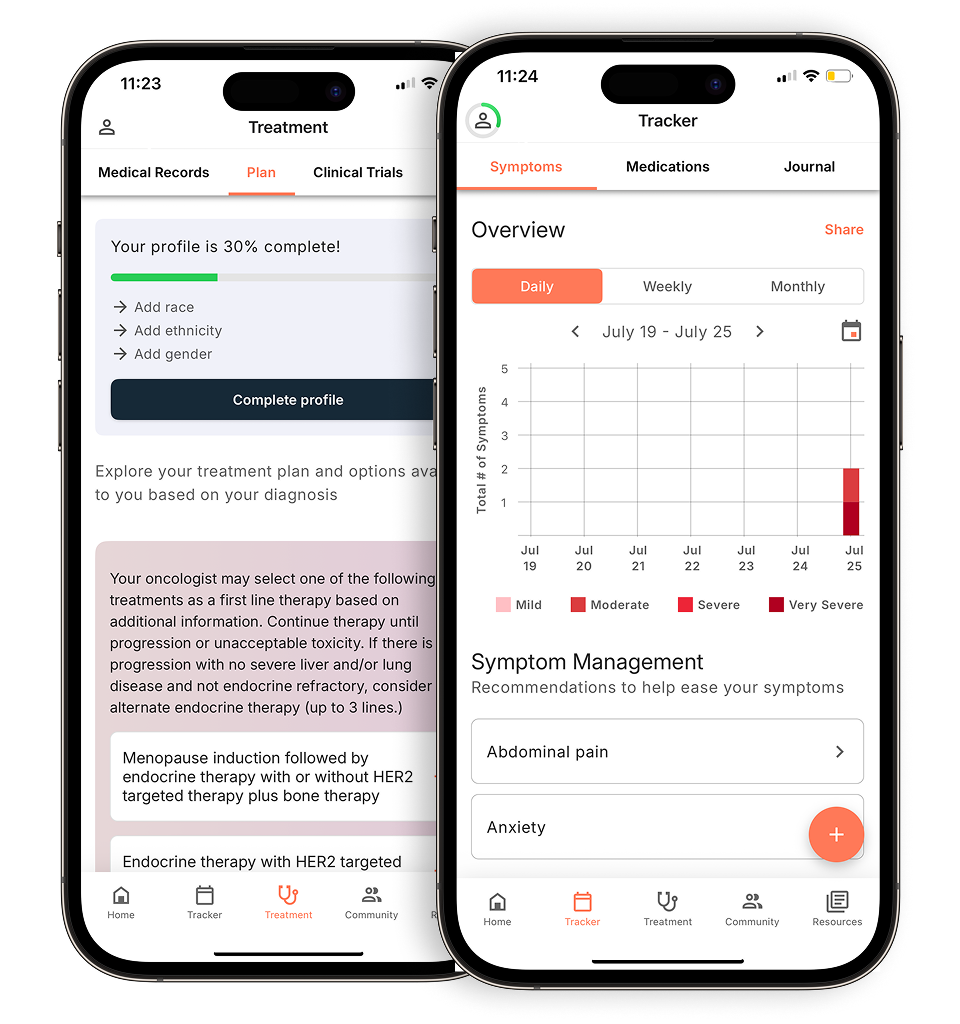
Other symptoms that may be associated with colon cancer include unexplained weight loss, abdominal pain, iron-deficiency anemia, a feeling that the bowel doesn’t fully empty, and changes in bowel habits such as narrowing of the stool. If you experience any of these symptoms, talk with your doctor about whether they warrant further evaluation.
A common question is whether a single food causes colon cancer. Processed foods and cured meats have been studied in connection with colorectal cancer risk, and some research suggests they may play a role worth considering as part of your overall diet. Low fiber intake is thought to play a role in colorectal cancer risk, and some experts suggest that adequate fiber may be worth discussing with your care team as part of your overall health strategy.
Distinguishing CRC symptoms from common GI issues
Hemorrhoids and irritable bowel syndrome are more commonly diagnosed than colorectal cancer, so many people with these conditions may not have cancer. However, it’s important to discuss any concerning symptoms with your doctor rather than assuming they are caused by a less serious condition. That’s precisely the problem. Persistent bowel symptoms may warrant a visit to your doctor. It’s worth discussing with your healthcare team how long to monitor a symptom before scheduling an appointment.
Escalate promptly if you have bleeding alongside weight loss, persistent diarrhea or constipation that won’t resolve, nighttime symptoms that wake you, anemia on bloodwork, or a first-degree relative with colorectal cancer.
The link between inflammation and malignancy
Chronic inflammation is the quiet contributor here. In conditions like Crohn’s disease and ulcerative colitis, the colon lining undergoes frequent repair and cell turnover. Researchers believe this ongoing cellular activity may increase the chances for genetic changes that could lead to cancer over time.
Oxidative stress may contribute to DNA damage in cells, and researchers are studying whether repair mechanisms can sometimes fall behind in addressing that damage. This is why inflammatory bowel disease has been associated with an increased risk of colorectal cancer over time, which is why people with IBD may benefit from discussing screening and surveillance with their care team. People living with IBD may have surveillance recommendations that begin earlier and repeat more frequently than standard guidelines, though screening approaches can vary based on individual risk factors and care team recommendations.
Cancer care guidance for every step of your journey
Get treatment options, clinical trials, and support tailored to your diagnosis--all in one place.
Get started
See treatment options, manage symptoms, and stay informed—all in the app
View treatment options and trials personalized to your diagnosis—plus track progress in real time.
Continue in appScreening and prevention strategies in 2026
Current guidelines recommend that average-risk adults in the United States consider discussing colorectal screening with their care team starting at age 45. If you have a family history of colon cancer, a parent, sibling, or child diagnosed, your doctor may recommend starting screening earlier than standard guidelines, often around ten years before the age at which your relative was diagnosed.
Non-invasive options have expanded. Stool-based DNA tests are designed to look for altered DNA and hidden blood in stool samples. Ask your doctor whether this type of test might be appropriate for you. The Shield blood test is being studied as a potential way to detect tumor-derived DNA circulating in the bloodstream. Ask your care team whether this type of test might be appropriate to discuss as part of your screening options.
Colonoscopy is widely used for colorectal cancer screening and, if polyps are found, can remove them during the same procedure. Ask your doctor whether colonoscopy may be a good option for you.
Quick start for your next appointment. Map your family’s cancer history on both sides, note ages at diagnosis, list any current symptoms with their start dates, and ask directly which test your care team recommends and why.
Modern diagnostic tools
Blood-based screening may be easier for some patients to complete compared to other screening methods, though your care team can discuss which option is right for you. Visual exams like colonoscopy may be better at detecting some precancerous polyps, particularly smaller ones that might not yet be shedding detectable DNA. Your doctor can help you understand which screening approach may be best for your situation.
The choice depends on your risk profile, symptom status, and how likely you are to actually follow through. One rule holds regardless. A positive result on a non-invasive test typically leads to a follow-up diagnostic colonoscopy to confirm findings and allow for treatment if needed. Talk with your doctor about what a positive result means for your next steps.
Risk reduction through lifestyle modification
Several lifestyle factors, including tobacco use, alcohol consumption, excess body weight, and physical inactivity, have been associated with colorectal cancer risk and may be worth discussing with your doctor.
Practical changes include building meals around vegetables, fruit, legumes, and whole grains. Reduce processed meat and cap alcohol or skip it. Regular physical activity may play a role in metabolic health. Some research suggests links between activity level, insulin function, and digestive health, all factors that may influence colorectal risk, though more study is ongoing.
What you need to know
- Colorectal cancer is rising among adults under 50, and rectal bleeding is a symptom that should be evaluated by a doctor in this age group.
- Current guidelines recommend that average-risk adults in the United States consider discussing colorectal screening with their care team starting at age 45, starting earlier if you have a relevant family history or inflammatory bowel disease.
- Diet, alcohol, weight, and activity all influence long-term risk, but prompt evaluation of symptoms remains a strong protection available to you.
- Early detection through screening methods like colonoscopy may help identify colorectal cancer at earlier stages. Talk with your doctor about which screening options might be right for you and how they fit into your overall care plan.
Disclaimer: The information provided in this article is for informational purposes only and is not intended to be a substitute for professional medical advice, diagnosis, or treatment. Outcomes4Me is not acting as your caregiver, and any suggestions or guidance offered should not replace the advice of your healthcare provider or qualified medical professional. Always seek the guidance of your physician or other qualified health provider with any questions you may have regarding a medical condition.
Personalized support for real care decisions
Understand your diagnosis, explore clinical trials, and track symptoms--all in one place.
Get started
Compare treatments, prepare for appointments, and track side effects—all in the app
Built for your diagnosis, Outcomes4Me gives you the tools to make confident, informed decisions—right when you need them.
Continue in app