
If you’re worried about the cost of health care, making an appointment or getting a recommended test may feel like another expense you can’t afford. For people with cancer, the costs of screening, diagnosis, treatment, medications, and travel to appointments can add up quickly.
New research suggests that medical debt may be linked to a higher rate of late-stage cancer diagnoses in communities across the United States. The findings highlight an important issue: financial concerns can make it harder for people to get the care they need, and getting help with these costs may be an important step toward accessing care.
If you’re concerned about paying for cancer care, there are resources that can help.
What did the study find?
Researchers looked at medical debt and cancer diagnosis data from over 2,950 U.S. counties. They compared the percentage of residents with medical debt in collections in 2016 with cancer diagnoses from 2017 through 2021.
They found that counties with more residents who had medical debt in collections also tended to have higher rates of cancer diagnosed at a later stage.
This link was found for seven types of cancer:
- Lung cancer
- Colorectal cancer
- Cervical cancer
- Melanoma, a type of skin cancer
- Kidney cancer
- Bladder cancer
- Head and neck cancers
The researchers also found that medical debt was more common in rural communities and in communities facing greater social and economic challenges.
What is a late-stage cancer diagnosis?
Cancer stage describes how far cancer has grown or spread. In this study, a late-stage diagnosis meant that cancer had spread to nearby tissues or lymph nodes, or to more distant parts of the body.
Finding cancer earlier can give some people more treatment options and may improve outcomes, although this depends on the type of cancer and each person’s situation.
Why might medical debt be linked to later cancer diagnoses?
The study isn’t evidence that medical debt causes cancer to be diagnosed at a later stage. Researchers looked at information about entire counties, not individual patients, so they couldn’t tell whether a particular person delayed care because of medical bills.
Evidence-based guidance powered by NCCN Guidelines®
Personalized treatment plans shaped by the latest oncology standards—tailored to your diagnosis.
Get started
View your personalized treatment plan in the Outcomes4Me app
Use your diagnosis to unlock personalized NCCN Guidelines®-aligned recommendations.
Continue in app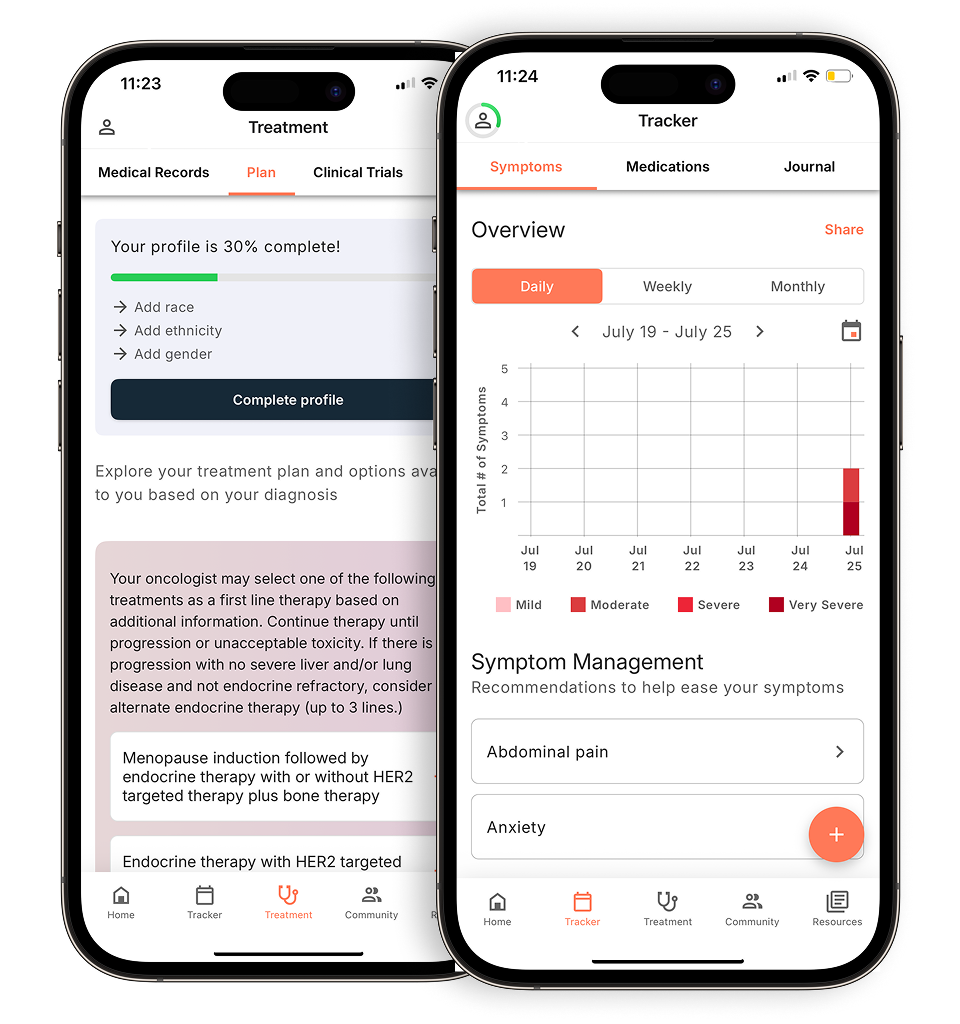
However, financial concerns may make it harder for people to get checked when something doesn’t feel right.
The cost of screening and testing. Even with health insurance, you may have to pay deductibles, copayments, or other out-of-pocket costs. Worrying about these expenses may lead some people to put off recommended screening or follow-up tests.
Concerns about symptoms. If you notice a change in your health, you may hesitate to make an appointment because you are unsure how much it will cost. But waiting to have a symptom checked can delay finding out what is causing it.
The cost of getting to appointments. Medical bills are only one part of the financial picture. Gas, parking, public transportation, childcare, and time away from work can also make it difficult to attend appointments, especially if you live far from a cancer center.
Difficulty finding affordable care. People in rural or underserved communities may have fewer nearby health care providers or need to travel farther for specialized care. When these challenges overlap with financial hardship, getting timely care can become even more difficult.
These are possible explanations for the study’s findings, rather than causes proven by the research. Still, the results draw attention to the many factors that can affect when someone receives a cancer diagnosis.
What can you do if you’re worried about the cost of cancer care?
If you’re concerned about paying for a screening test, diagnostic appointment, medication, or treatment, let your health care team know. There may be programs that can help lower your costs or connect you with other resources.
Don’t wait until you are in debt to ask for help.
1. Ask about financial assistance at your hospital
Many hospitals have financial assistance programs that may reduce or cover some medical bills for people who qualify. These programs are sometimes called charity care.
Contact your hospital’s billing department and ask:
- Do you offer financial assistance or charity care?
- Can I apply if I already have a medical bill?
- Are payment plans available?
- Can someone help me understand my bill and insurance coverage?
You can also ask whether your hospital has a financial counselor, social worker, or patient navigator who can help you understand your options.
Cancer care guidance for every step of your journey
Get treatment options, clinical trials, and support tailored to your diagnosis--all in one place.
Get started
See treatment options, manage symptoms, and stay informed—all in the app
View treatment options and trials personalized to your diagnosis—plus track progress in real time.
Continue in app2. Find out whether help is available for medications
Cancer medications can be expensive, but some drug manufacturers offer programs to help eligible patients pay for their prescriptions. Depending on your medication and insurance, you may qualify for assistance with the cost of the drug or your copayment.
Ask your oncology team or pharmacist whether your medication has a patient assistance program. They may also know about nonprofit organizations that help cover prescription costs.
3. Look for support with everyday expenses
Cancer can affect your finances in ways that go beyond medical bills. You may need to take time off work, travel for treatment, arrange childcare, or pay for a place to stay near a cancer center.
Some nonprofit organizations offer assistance for these expenses. A hospital social worker can help you find programs in your area and determine which ones you may qualify for.
4. Review your health insurance
Understanding what your insurance covers can help you plan for the costs of care. Ask your insurer about your deductible, copayments, prescription coverage, and out-of-pocket maximum. Before a test or treatment, find out whether it’s covered and whether you need approval in advance.
If you don’t have insurance or are struggling to afford coverage, a health insurance navigator may be able to help you explore available options through HealthCare.gov.
5. Reach out before medical bills become unmanageable
If you receive a bill you can’t afford, contact the provider to ask about financial assistance or a payment plan. You can also request an itemized bill to check the charges and confirm that your insurance has been applied correctly.
If a bill has already gone to collections, you can still contact the original provider to ask about assistance. A nonprofit credit counselor or legal aid organization may also be able to help you understand your options.
Most importantly, if cost is keeping you from scheduling an appointment, filling a prescription, or following up on a concerning symptom, tell your care team. They may be able to help you find a way forward.
Financial assistance resources for people with cancer
These organizations can help you explore financial support and other resources. Programs have different eligibility requirements, and funding may be limited, so contact them to find out what is currently available.
Talking with your care team about costs
Talking about money can feel uncomfortable, especially when you’re already dealing with health concerns, but your care team needs to know if financial worries are making it harder for you to get care.
You might ask:
- Who can help me understand the cost of my care?
- Are there financial assistance programs I may qualify for?
- Is there help available for my medications, transportation, or other expenses?
- What should I do if I can’t afford a recommended test or treatment?
- Can you connect me with a social worker or patient navigator?
If it helps, bring a trusted friend or family member to your appointment. They can help you take notes, ask questions, and keep track of the resources you want to explore.
Don’t ignore concerning symptoms because you are worried about the cost of an appointment. Contact your health care team to discuss your concerns and ask about affordable options. Getting guidance early may help you understand your next steps.
If you’re struggling to pay for your care, you deserve support. Ask questions, explore financial assistance programs, and let your care team know what you need. Help may be available, and you don’t have to figure everything out on your own.
Disclaimer: The information provided in this article is for informational purposes only and is not intended to be a substitute for professional medical advice, diagnosis, or treatment. Outcomes4Me is not acting as your caregiver, and any suggestions or guidance offered should not replace the advice of your healthcare provider or qualified medical professional. Always seek the guidance of your physician or other qualified health provider with any questions you may have regarding a medical condition.
Personalized support for real care decisions
Understand your diagnosis, explore clinical trials, and track symptoms--all in one place.
Get started
Compare treatments, prepare for appointments, and track side effects—all in the app
Built for your diagnosis, Outcomes4Me gives you the tools to make confident, informed decisions—right when you need them.
Continue in app