
For people living with KRAS G12D-mutated non-small cell lung cancer (NSCLC), treatment options after standard therapies stop working have been very limited. New research presented at the 2026 American Association for Cancer Research (AACR) Annual Meeting offers encouraging news.
An investigational targeted therapy called zoldonrasib showed promising results and manageable side effects in patients with previously treated KRAS G12D-mutated NSCLC, according to findings from an early-phase clinical trial.
Why this matters
KRAS mutations are common genetic changes seen in lung cancer, but not all KRAS mutations are the same.
Currently, there are FDA-approved targeted therapies for KRAS G12C-mutated NSCLC, including sotorasib (Lumakras) and adagrasib (Krazati). There are no approved targeted therapies yet for KRAS G12D mutations, which occur in about 4% to 5% of NSCLC cases.
That leaves many patients with few treatment options after receiving platinum-based chemotherapy and immunotherapy.
Evidence-based guidance powered by NCCN Guidelines®
Personalized treatment plans shaped by the latest oncology standards—tailored to your diagnosis.
Get started
View your personalized treatment plan in the Outcomes4Me app
Use your diagnosis to unlock personalized NCCN Guidelines®-aligned recommendations.
Continue in app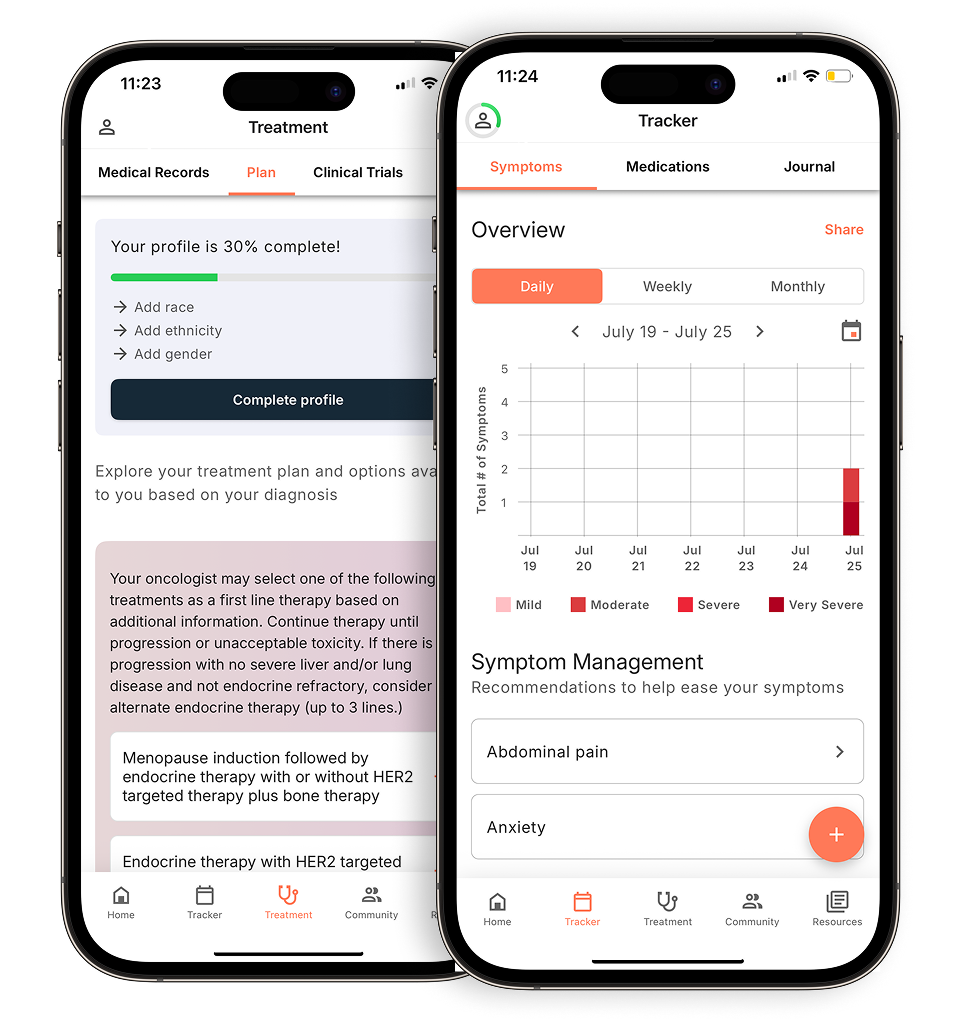
The usual next step is chemotherapy with docetaxel, sometimes combined with ramucirumab (Cyramza). These treatments can be difficult to tolerate and often provide only modest benefit, with patients typically seeing their cancer controlled for just 3 to 4.5 months.
That’s why researchers say there is a major need for better options—especially targeted therapies designed specifically for KRAS G12D.
What is zoldonrasib?
Zoldonrasib is an oral targeted therapy designed to block the KRAS G12D mutation, which can drive cancer growth.
KRAS mutations keep cancer cells in an “on” position, sending constant signals that tell the cancer to grow and spread. Zoldonrasib works by selectively targeting the KRAS G12D mutation in its active state, helping to shut down those signals.
Since it specifically targets the mutation fueling the cancer, it may offer a more precise and potentially less toxic approach than standard chemotherapy.
Encouraging early results
In this phase I study, researchers looked at patients whose lung cancer had already been treated with immunotherapy and platinum-based chemotherapy.
- 52% saw their tumors shrink
- 93% had their disease controlled
- Median progression-free survival was 11.1 months
- 48% of patients were still progression-free at 12 months
- 73% were still alive at 12 months
These are especially promising findings when compared with current second-line treatment options, which often control the disease for only a few months.
Another encouraging sign was how quickly the drug worked: the median time to response was just 1.4 months, meaning many patients began seeing benefits in a relatively short amount of time.
Side effects were mostly mild
Zoldonrasib appeared to be well-tolerated in this study. Most treatment-related side effects were mild digestive issues, such as nausea or diarrhea.
Researchers reported:
- 13% of patients had more serious side effects, including diarrhea or anemia
- No patients experienced grade 4 or higher treatment-related side effects
- 15% needed to temporarily pause treatment
- 3% needed a dose reduction
- 5% stopped treatment because of side effects
What happens next?
Because of these promising early findings, the FDA has already granted zoldonrasib breakthrough therapy designation for adults with KRAS G12D-mutated advanced or metastatic NSCLC who have previously received immunotherapy and platinum chemotherapy.
This designation is designed to speed the development of treatments that may offer substantial benefits over existing options.
While more research is still needed, these results suggest that zoldonrasib could become an important new targeted treatment option for patients with KRAS G12D-mutated lung cancer.
Researchers are now continuing to study the drug to better understand:
- How durable responses may be over time
- Whether certain groups of patients benefit more than others
- How zoldonrasib may work in combination with other treatments
- Whether it could help patients with other KRAS G12D-driven cancers, such as pancreatic and gastrointestinal cancers
While the drug is still investigational, the early data are encouraging. For those facing limited choices after standard treatment, that’s a meaningful step forward.
Outcomes4Me is here to help you better understand your diagnosis and treatment options. You deserve clear, trustworthy information at every step.
Personalized support for real care decisions
Understand your diagnosis, explore clinical trials, and track symptoms--all in one place.
Get started
Compare treatments, prepare for appointments, and track side effects—all in the app
Built for your diagnosis, Outcomes4Me gives you the tools to make confident, informed decisions—right when you need them.
Continue in app