It’s common for small cell lung cancer (SCLC) to come back after initial treatment. Massachusetts General Hospital Dr. Catherine Meador shares with us, “We expect at some point the cancer will return and grow back. The question is when and how much?” If that happens, know that you have options. We asked lung cancer experts to share the therapies available and how you and your care team can think through next steps.
Understanding second-line treatment options
When SCLC returns after initial therapy, doctors often recommend what’s called second-line treatment. This simply means the next round of therapy after the first has stopped working. There are several approaches your care team may consider, depending on how your cancer responded the first time and how long it stayed under control.
Chemotherapy is still an important option
Even if you’ve already had chemotherapy, it can still play a role if SCLC comes back. Dr. Meador shares, “There are multiple other chemotherapy options that are available. There’s a long list of what we call single-agent chemotherapies, meaning something that’s a little bit less intrusive than first-line therapy, but can still be really effective.”
Targeted delivery: Antibody-drug conjugates (ADCs)
A newer and exciting class of treatments for recurrent SCLC is antibody-drug conjugates (ADCs). Memorial Sloan Kettering Cancer Center’s Dr. Charles Rudin describes them as “kind of like Trojan horses…a smart bomb. They take the drug to the tumor.”
These therapies work by using an antibody to find cancer cells and delivering chemotherapy directly into those cells. Dr. Rudin adds that while some ADCs have shown high response rates, the length of response may vary. Researchers are actively working on improving how long these treatments work and how best to combine them with other therapies.
Emerging treatments: T-cell engagers and combinations
Beyond ADCs, there are other innovative treatments being studied, including T-cell engagers, which help your immune system better recognize and attack cancer. “Definitely ask your doctor about something called tarlatamab-dlle (Imdelltra),” says Dr. Meador. “Data shows there is greater outcomes compared to other chemotherapies after progressing through first-line therapy.”
Dr. Rudin adds that this is an area of growing momentum. “There are many drugs that are being looked at that are showing real activity. We’re excited about the opportunity to lead to more durable outcomes for patients.”
What about radiation therapy?
Dr. Rudin shares that radiation is still very useful for treating localized problems with SCLC recurrence including:
- Painful bone metastases
- Lesions in weight-bearing bones that might fracture
- Spinal lesions, to prevent spinal cord compression
- Brain metastases, especially when drugs can’t cross the blood-brain barrier well
He adds that doctors now often use focal radiation for isolated brain metastases, which has fewer side effects than older whole-brain radiation techniques.
How to decide: Balancing benefits and side effects
Choosing your next treatment is deeply personal and dependent on your previous therapies, goals, and priorities. There’s no one-size-fits all and having a discussion with your care team is essential. Dr. Meador encourages patients to have open conversations with their care team and ask:
- What are our options?
- What are the risks?
- What are the benefits?
- How am I going to feel?
- How likely is this to work?
Ultimately, your decision comes down to what you feel ready for. Have an honest, informed conversation with your care team about what matters most to you.
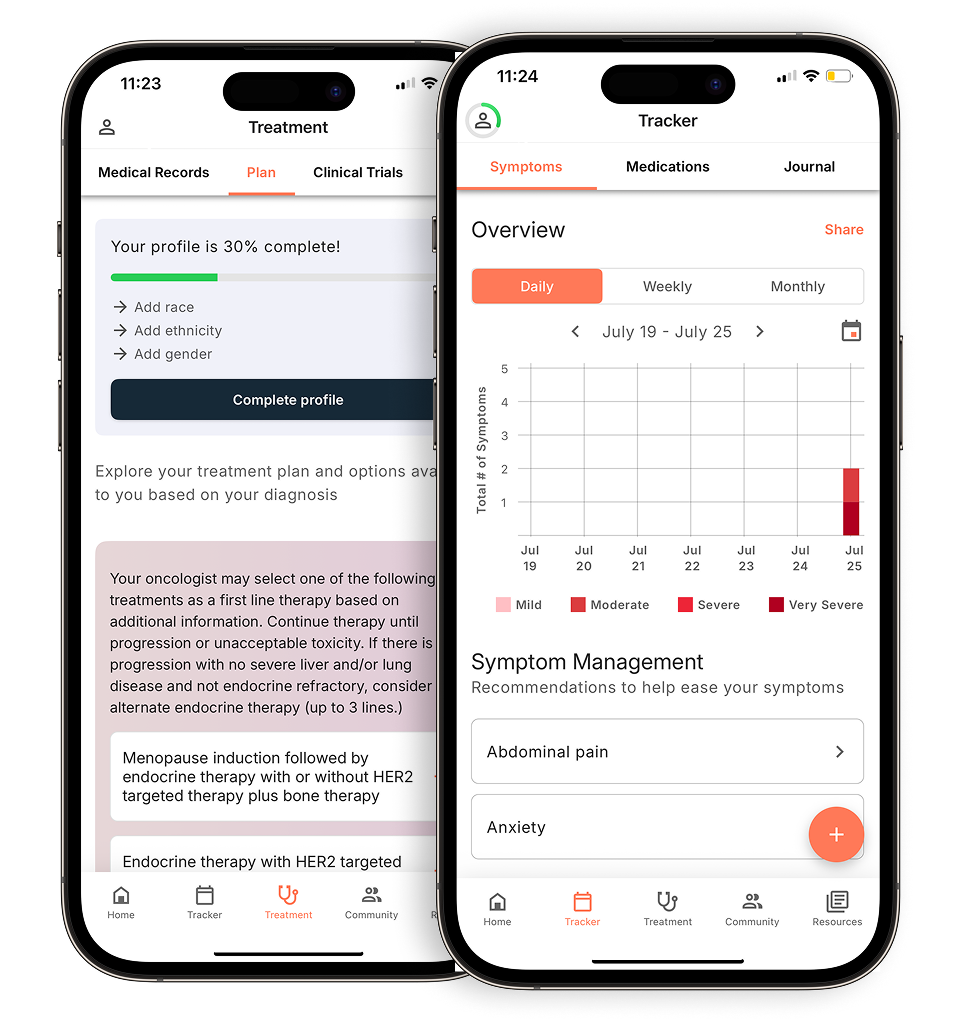
We’re here to help you find answers. Connect with an oncology nurse practitioner directly using the Ask Outcomes4Me button in the Outcomes4Me app.
Personalized support for real care decisions
Understand your diagnosis, explore clinical trials, and track symptoms--all in one place.
Get started
Compare treatments, prepare for appointments, and track side effects—all in the app
Built for your diagnosis, Outcomes4Me gives you the tools to make confident, informed decisions—right when you need them.
Continue in app