If you have been diagnosed with triple-negative breast cancer (TNBC), you were probably told early on that it is “aggressive,” “fast-growing,” or “harder to treat.” You may also have been told that treatment options are limited. For years, TNBC was grouped together simply because the tumors did not express estrogen receptors, progesterone receptors, or HER2. That definition is still technically true but science has moved past that surface-level description. Researchers and clinicians now know that there are important biological differences within TNBC, and those differences can influence treatment options, response to therapy, and outcomes.
The idea that triple-negative breast cancer is not one single disease is not brand new. Researchers began uncovering this more than a decade ago. What is new is how much that knowledge is starting to affect real treatment decisions. For many years, TNBC was defined by what it lacked. No estrogen or progesterone receptors and no HER2. That definition made sense at the time, but it also flattened very real biological differences between tumors, grouping patients together even when their cancers behaved very differently.
In the early 2010s, large genomic studies showed that TNBC tumors could be divided into distinct molecular subtypes based on how their genes were expressed. Some tumors showed strong immune activity, others were driven by problems with DNA repair and some behaved more like hormone-related cancers, even though they technically did not have hormone receptors.
This discovery was important, but for a long time, it lived mostly in research papers, not in the clinic helping patients directly. Knowing that cancers are different only helps patients if those differences change what doctors can actually do. For several years, they did not and treatment options were still largely the same, regardless of subtype.
As immunotherapy entered TNBC care, biology began to matter more. Testing for markers like PD-L1 helped determine whether immunotherapy was likely to help. Germline genetic testing for BRCA1 and BRCA2 mutations became standard for many people with TNBC, because those mutations could open the door to targeted treatments like PARP inhibitors. Around the same time, doctors began paying closer attention to how TNBC responded to treatment before surgery. Instead of seeing chemotherapy as just something to get through, response became information to guide future treatment choices. If the cancer disappeared, great! But if it did not, additional treatment options could now be considered afterward to reduce recurrence risk.
This is also why when patients compare notes they can feel confused. Two people can both say they have TNBC and yet walk away with very different treatment plans. One hears about immunotherapy. Another never does. One is encouraged to do more after surgery. Another is not. That gap can feel unsettling. It is not that one person received better care, it is that TNBC is no longer being treated as a single, uniform disease, even if the language has not caught up yet.
So where does that leave patients in 2026? TNBC is still serious, but the story is no longer just about what TNBC lacks. It is increasingly about what your specific cancer shows, how it behaves, and how treatment can be matched more thoughtfully to those details.
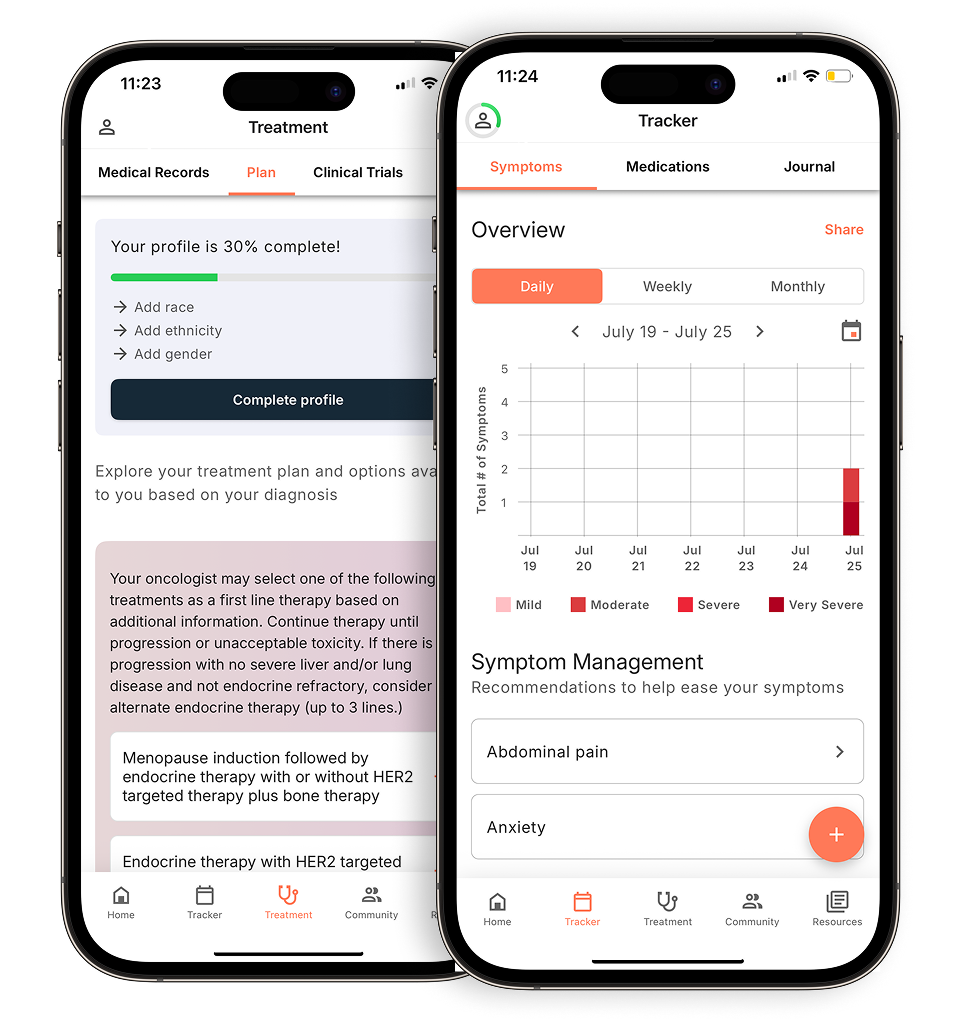
If you’re navigating triple-negative breast cancer, Outcomes4Me can help you make sense of what your specific tumor biology means for treatment and clinical trial options. Our platform brings trusted, evidence-based information together in one place so you can prepare for appointments and participate more confidently in your care.
Personalized support for real care decisions
Understand your diagnosis, explore clinical trials, and track symptoms--all in one place.
Get started
Compare treatments, prepare for appointments, and track side effects—all in the app
Built for your diagnosis, Outcomes4Me gives you the tools to make confident, informed decisions—right when you need them.
Continue in app