
The story of breast cancer care is one of incredible progress. An early diagnosis means the cancer is small, contained, and highly treatable, which is why the conversation around early diagnosis breast cancer survival is so optimistic. It opens the door to more effective and less invasive treatments. Many people wonder, is breast cancer curable at an early stage? The answer is often yes. In this guide, we’ll explain how doctors determine your stage and build a personalized plan, giving you the clarity you need for the road ahead.
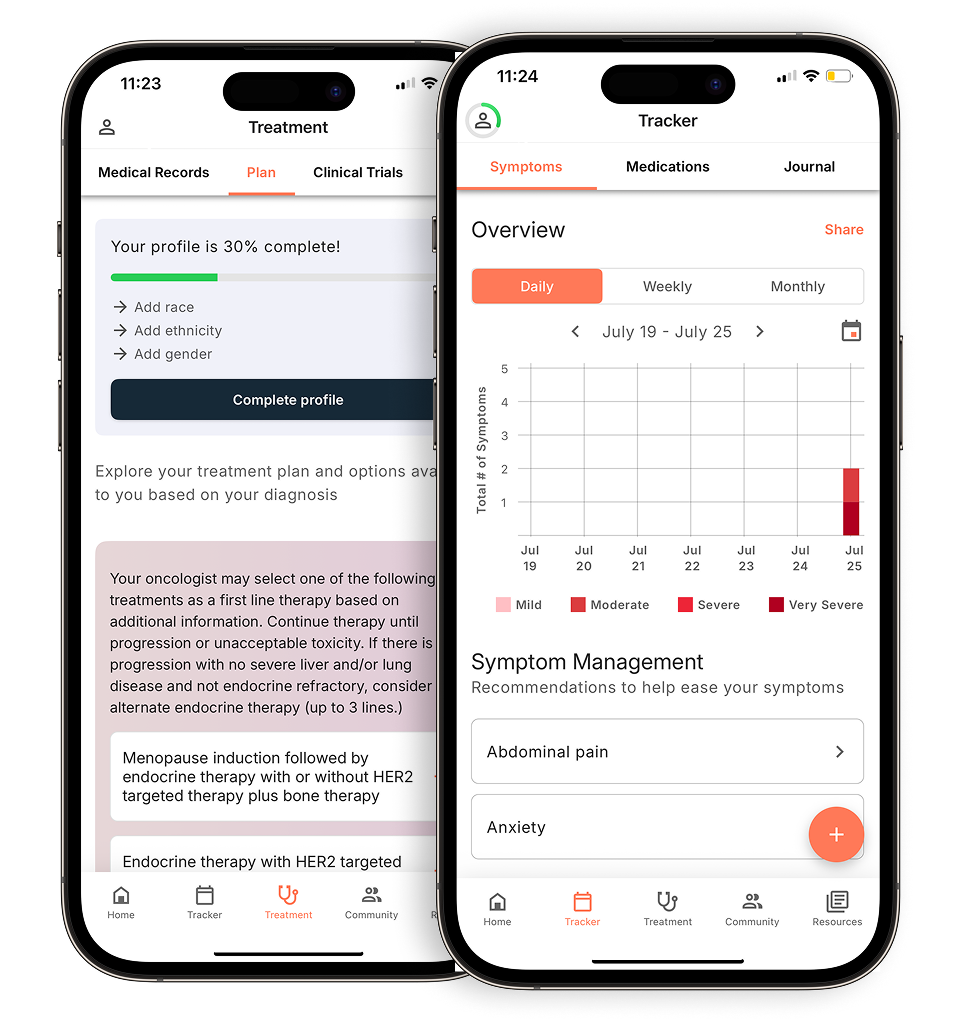
View your personalized treatment plan in the Outcomes4Me app
Use your diagnosis to unlock personalized NCCN Guidelines®-aligned recommendations.
Key Takeaways
- An early-stage diagnosis is highly treatable: Finding breast cancer in Stage 0 or Stage I means it is contained, which leads to a very positive prognosis and successful treatment for most people.
- Treatment is tailored to your unique diagnosis: Your care team considers many factors beyond the stage, like tumor characteristics and your overall health, to create a personalized and effective plan.
- You are an active partner in your health: Understanding your body, asking questions, and making supportive lifestyle choices are powerful ways to manage your care and well-being.
What is early-stage breast cancer?
Hearing you have breast cancer can be overwhelming, but understanding your diagnosis is a key step toward feeling more in control. When breast cancer is found early, it means the cancer is contained in the breast and hasn’t spread to distant parts of the body. This is often referred to as stage 0 or stage I. Early-stage breast cancer is highly treatable, and the outlook is very positive for many people. Let’s walk through what these early stages mean.
What does stage 0 (DCIS) mean?
Stage 0 breast cancer is also known as ductal carcinoma in situ, or DCIS. You can think of it as a pre-invasive condition. This means that while abnormal cells are present, they are still contained inside a milk duct in the breast. They haven’t broken through the duct wall to spread into surrounding breast tissue. Because DCIS is confined to the duct, it is highly treatable. Your care team will discuss the best course of action to manage it and reduce the risk of it becoming invasive cancer.
What is stage I breast cancer?
Stage I is the earliest stage of invasive breast cancer. The word ‘invasive’ simply means the cancer cells have moved beyond the milk duct and into nearby breast tissue. At this stage, the tumor is still small, and the cancer typically has not spread to the lymph nodes or other parts of the body. It’s important to know that the prognosis for Stage I breast cancer is excellent, with a five-year relative survival rate of over 99%. Your treatment plan will be designed to remove the cancer and prevent its return.
Stage 1A vs. Stage 1B
To get even more specific, Stage I is broken down into two sub-stages: 1A and 1B. Think of Stage 1A as the most localized form of invasive breast cancer. In this stage, the tumor is small—measuring 2 centimeters or less—and there is no evidence that the cancer has spread to any nearby lymph nodes. Essentially, the cancer is completely contained within the breast tissue. Because it’s so localized, the prognosis for Stage 1A breast cancer is excellent. Your care team will focus on a treatment plan designed to remove the cancer effectively while minimizing side effects, helping you move forward with confidence.
Stage 1B is slightly different because it involves the lymph nodes, even if just on a microscopic level. In Stage 1B breast cancer, small clusters of cancer cells are found in the lymph nodes near the breast. Interestingly, there might be a small tumor in the breast, or sometimes, no tumor is found in the breast at all. While it’s still considered an early and very treatable stage, the presence of cancer cells in the lymph nodes means your doctors will create a more comprehensive treatment plan to address it. This ensures they are treating both the breast and the nearby lymph nodes to give you the best possible outcome.
How doctors determine your stage
To determine the stage of breast cancer, your doctors use information from several tests. This process usually starts with a physical exam and imaging like a mammogram or ultrasound. If an area looks suspicious, a biopsy is done to remove a small tissue sample for testing. The staging process considers the tumor’s size, whether cancer cells are in nearby lymph nodes, and if the cancer has spread to other areas. This complete picture helps your care team create the most effective treatment plan for you.
The role of imaging tests like mammograms and ultrasounds
Imaging tests are your care team’s eyes, giving them a clear view of what’s happening inside the breast. A mammogram, which is a special X-ray of the breast, is the most common tool used for early detection. It can often find breast cancer when it’s too small to be felt, which is why regular screenings are so important. If a mammogram shows something unusual, or if you or your doctor feel a lump, an ultrasound might be the next step. An ultrasound uses sound waves to create a picture of the breast tissue. It’s particularly good at showing whether a lump is a solid mass or a fluid-filled cyst, which is usually not cancerous. Together, these tests provide vital information that helps your doctor understand the specifics of your diagnosis and plan the best path forward.
What do survival rates for early breast cancer really mean?
When you first hear the term “survival rate,” it can sound a bit intimidating. But it’s helpful to know what these numbers actually represent. Survival rates are statistics that tell us what percentage of people with the same type and stage of cancer are still alive after a certain period, usually five or ten years, compared to people without that cancer.
Think of them as a big-picture view based on the experiences of thousands of people. They can give you a general idea of the prognosis, but they can’t predict your individual outcome. Your own journey is unique. For early-stage breast cancer, the statistics are very encouraging and reflect major advances in detection and treatment. These numbers are a powerful reminder that finding cancer early gives you the best possible chance for a long and healthy life.
What are the survival rates for stage 0?
Stage 0 breast cancer is also known as ductal carcinoma in situ, or DCIS. The term “in situ” means “in its original place.” This means the abnormal cells are contained within a milk duct and have not spread to other breast tissue. Because it’s non-invasive, DCIS is considered a pre-cancerous or pre-invasive condition.
The outlook for Stage 0 breast cancer is excellent. The survival rates are nearly 100%. This means that almost everyone diagnosed at this very early stage can expect to live for many years with successful treatment. A DCIS diagnosis is often seen as a critical opportunity to prevent invasive cancer from ever developing.
What are the survival rates for stage I?
Stage I breast cancer is still considered an early stage, but it is invasive. This means the cancer cells have broken through the wall of the duct or lobule and have grown into nearby breast tissue. Even so, the tumor is still small, and the cancer has not spread to the lymph nodes or other parts of the body.
The prognosis for Stage I is also very positive. The 5-year relative survival rate for Stage I breast cancer is about 99%. This incredibly hopeful statistic shows just how effective early detection and treatment are. It highlights why regular screenings and being aware of your body are so important for catching cancer when it’s most treatable.
What are the survival rates for later stages?
While early detection provides the best outlook, it’s important to understand that a later-stage diagnosis is far from a hopeless one. Breast cancer found in stages 2, 3, or 4 simply means the cancer has grown larger or spread from its original location, which calls for a different and often more comprehensive treatment approach. Your care team’s focus remains on providing the most effective care possible to manage the cancer and maintain your quality of life. Thanks to ongoing research and medical innovation, advances in treatment have significantly improved the prognosis for these stages, giving more people more time and options than ever before.
Stage 2 and 3 survival rates
In Stage 2, the tumor is larger than in Stage 1, or it has spread to a few nearby lymph nodes. For Stage 3, the cancer is more advanced locally, potentially involving more lymph nodes or surrounding tissue, but it has not spread to distant parts of the body. The prognosis for these breast cancer stages remains quite positive. The five-year relative survival rate for Stage 2 breast cancer is around 96% to 98%. For Stage 3, the five-year survival rate is approximately 86%. While these numbers are slightly lower than for Stage 1, they show that treatment is still highly effective and often leads to successful, long-term outcomes.
Metastatic (stage 4) survival rates
Stage 4, or metastatic breast cancer, means the cancer has spread to distant parts of the body, such as the bones, liver, lungs, or brain. The five-year relative survival rate for metastatic breast cancer is about 28%. It’s important to view this number with context. A metastatic diagnosis often shifts the goal of treatment from curing the cancer to managing it as a chronic disease. The focus becomes controlling the cancer’s growth, managing symptoms, and ensuring you have the best possible quality of life. Ongoing research continues to bring new, more effective therapies that are helping people with metastatic breast cancer live longer, fuller lives.
What do 5-year and 10-year survival rates tell us?
When you see data for 5-year or 10-year survival, it’s important to understand what that means. It doesn’t suggest that life expectancy is limited to that timeframe. Instead, these are standard benchmarks that researchers use to measure how well treatments are working over time. Many people diagnosed with early-stage breast cancer live much, much longer.
For Stage I breast cancer, the five-year survival rate is over 99%, meaning most women live long and healthy lives after their treatment. Looking at the bigger picture, research shows that about three out of four women diagnosed with breast cancer are expected to live for 10 years or more. These numbers reflect the incredible progress made in cancer care.
Understanding the long-term outlook
An early-stage diagnosis is more than just a statistic; it’s the foundation for a positive long-term outlook. The goal of your treatment is not only to address the cancer now but also to set you up for a long and healthy future. For Stage I breast cancer, the five-year survival rate is over 99%, which is a powerful testament to the effectiveness of modern treatments. This means that the vast majority of people diagnosed at this stage continue to live full lives for many years to come. Your care team will create a follow-up plan that includes regular check-ups and monitoring to support your ongoing wellness, making you an active partner in your long-term health.
What factors can influence your prognosis?
When you first receive a diagnosis, it’s natural to focus on the stage of the cancer. While staging is a very important tool for your care team, it’s just one part of a much bigger picture. Think of it as the starting point of your story, not the final chapter. Many different elements come together to shape your personal outlook and help your doctors create a treatment plan that’s truly tailored to you.
Your prognosis is influenced by a combination of factors, including your personal health, the specific characteristics of the cancer cells, and how your body responds to therapy. According to the American Cancer Society, things like your age, overall health, and the cancer’s grade all play a role in your outlook. Understanding these factors can help you feel more informed and empowered as you talk with your care team about what to expect and the best path forward for your health.
A note on how survival rates are calculated
It’s also helpful to know that survival rates are based on data collected from thousands of people over many years. Researchers use this information to get a big-picture view of outcomes for a specific cancer type and stage. Because it takes a long time to gather this data, the statistics you see today often reflect the experiences of people who were diagnosed and treated at least five years ago. This is actually good news, as it means the numbers don’t always account for the very latest advances in treatment. These statistics are a useful guide for doctors, but they can’t predict your personal journey. Your own health, your specific diagnosis, and your treatment plan are what truly matter.
How your age and overall health play a role
Your age and general health are important pieces of your personal health puzzle. They don’t define your outcome, but they do help your care team understand which treatments might be most effective and well-tolerated by your body. For example, certain treatments might be adjusted based on your overall fitness or if you have other health conditions. The goal is always to find a plan that is both powerful against the cancer and manageable for you. Your doctors will consider your complete health profile to recommend a path that supports your well-being throughout treatment and beyond.
Why tumor details and hormone status matter
Beyond the stage, the specific details of the tumor itself provide crucial clues for your treatment plan. Your doctors will test the cancer cells to check their hormone receptor (HR) and HER2 status. These tests tell them what might be fueling the cancer’s growth. For instance, if a cancer is HR-positive, it means it uses hormones to grow, so treatments that block hormones can be very effective. Knowing these details allows for highly personalized care. This is why survival rates can differ based on these markers, as they directly guide doctors to the most targeted and successful therapies available for your specific type of cancer.
How breast cancer type affects prognosis
Breast cancer isn’t a one-size-fits-all diagnosis; it’s a collection of different diseases. The specific type you have plays a huge role in your treatment and overall outlook. Based on the hormone receptor (HR) and HER2 tests, your cancer will be classified into a subtype, such as HR-positive/HER2-negative, HER2-positive, or triple-negative. Each of these subtypes behaves differently and responds to different treatments. For example, cancers with known drivers, like HR-positive or HER2-positive types, can be treated with highly effective targeted therapies. Understanding your specific breast cancer subtype gives your care team a clear roadmap, allowing them to tailor a plan that gives you the best possible outcome.
How your body responds to treatment
Every person is unique, and so is their response to treatment. While survival statistics offer a broad overview, they are just averages and can’t predict your individual journey. As the Susan G. Komen® foundation notes, your specific diagnosis and treatment plan are what truly matter. Your care team will closely monitor how the cancer responds to the therapies you receive. This ongoing observation is a key part of your care, as it allows your doctors to make adjustments if needed, ensuring you are always on the most effective treatment path for you. Your personal response is a powerful factor in your long-term outlook.
What are the treatment options for early-stage breast cancer?
When you’re diagnosed with early-stage breast cancer, your care team will work with you to create a treatment plan that’s tailored to your specific situation. There isn’t a one-size-fits-all approach. The right path for you depends on many details, including the size and characteristics of the tumor, your hormone receptor status, and your overall health. The goal is always to remove the cancer and reduce the chances of it coming back. Your plan will likely involve a combination of treatments. The main options for early-stage breast cancer include surgery, radiation, and hormonal therapy. For some people, chemotherapy may also be part of the plan. Let’s walk through what each of these treatments involves.
What are the surgical options
Surgery is a cornerstone of treatment for early-stage breast cancer. You and your doctor will typically discuss two main surgical options: a lumpectomy or a mastectomy. A lumpectomy, also called breast-conserving surgery, involves removing the tumor along with a small margin of healthy tissue around it. A mastectomy is the removal of the entire breast. The choice between them depends on factors like the tumor’s size and location, your breast size, and your personal preferences. During surgery, your doctor may also check the lymph nodes under your arm to see if the cancer has spread. This is a key step that helps your team confirm the cancer’s stage and finalize the rest of your treatment plan.
What to know about radiation therapy
Radiation therapy is often recommended after surgery, especially following a lumpectomy. Think of it as a safety net. Its purpose is to destroy any microscopic cancer cells that might have been left behind in the breast tissue. By targeting these remaining cells, radiation therapy helps lower the risk of the cancer returning in the same breast, which is known as a local recurrence. The treatment itself is typically given in daily sessions over several weeks. While the schedule can feel like a commitment, the goal is to give you the best possible long-term outcome. Your radiation oncologist will talk with you about the specific plan, including the type and duration of treatment that makes the most sense for you.
How does hormonal therapy work?
If your pathology report shows that your cancer is hormone receptor-positive (ER-positive or PR-positive), your doctor will likely talk to you about hormonal therapy. This type of treatment is very effective for cancers that use hormones like estrogen to grow. It works by either lowering the amount of estrogen in your body or by blocking it from reaching the cancer cells. Unlike chemotherapy, hormonal therapy is a targeted treatment that usually comes in the form of a daily pill. It’s a long-term commitment, often lasting for five to ten years after your initial treatment, but it plays a huge role in reducing the risk of the cancer coming back.
When is chemotherapy part of the plan?
Hearing the word “chemotherapy” can be stressful, but it’s important to know that it isn’t used for every early-stage breast cancer. In fact, it’s often not needed. Your care team might recommend chemotherapy if certain features of the tumor suggest a higher risk of it spreading or returning. This could be because of the tumor’s size, grade, or if it is a type like triple-negative breast cancer. Sometimes, genomic tests on the tumor tissue can help predict whether chemotherapy would be beneficial. If it is recommended, it’s usually given after surgery to target any cancer cells that may have traveled beyond the breast. Your oncologist will carefully weigh the potential benefits against the side effects to help you make an informed decision.
The role of bone-strengthening treatments
Your care team’s focus is on your whole-body health, and that includes keeping your bones strong. This is an important conversation because some breast cancer treatments, especially certain hormonal therapies, can lead to bone loss over time. This is a known and manageable side effect, and your doctor will monitor your bone health closely. If needed, they may recommend medications called bone-modifying agents to help protect your bones and prevent fractures. Alongside any prescribed treatments, your team will also emphasize the power of lifestyle choices. Simple habits like getting enough calcium and vitamin D and doing weight-bearing exercises like walking are powerful ways to support your bone health and overall well-being.
How does finding breast cancer early affect outcomes?
When it comes to breast cancer, knowledge and timing are incredibly valuable. Finding cancer in its early stages is one of the most effective ways to ensure a positive outcome. Early detection often means the cancer is smaller and hasn’t spread beyond the breast, which can lead to more treatment options and a better prognosis. It allows you and your care team to be proactive, creating a treatment plan when the cancer is most treatable.
This is why regular screenings and self-awareness are so important. They are powerful tools that put you in a better position to manage your health. While many women show no symptoms at first, being familiar with your body and staying on top of recommended check-ups can make all the difference. Think of it as giving yourself a head start. By catching any changes early, you open the door to simpler treatments and, most importantly, a higher chance of long-term health and well-being. This proactive approach shifts the dynamic from reacting to a problem to actively managing your health journey. It can significantly ease the emotional and physical burden of a diagnosis by empowering you with more control and a clearer path forward. The goal is to find any potential issues when they are at their most manageable, making the entire treatment process smoother and more effective for you and your care team.
Why regular mammograms are so important
Regular mammograms are a key part of early detection. These screenings can spot changes in breast tissue that are too small to be felt, often finding cancer long before any physical symptoms appear. This is crucial because it helps reduce the number of late-stage diagnoses, which directly improves survival rates. Even if you feel perfectly healthy and have no family history of breast cancer, routine mammograms are a vital, proactive step you can take for your health. They provide a clear picture of what’s going on inside your body and give you and your doctor the information needed to act quickly if necessary.
Screening recommendations by age
It can be confusing to know exactly when to start getting mammograms, as different health organizations have slightly different suggestions. For women with an average risk of breast cancer, many experts recommend starting annual screenings between the ages of 40 and 45. The most important thing you can do is have a conversation with your doctor about what’s right for you. They can help you understand your personal risk factors and decide on a screening schedule that makes sense for your health. This personalized approach ensures you’re taking the right steps at the right time, making your health a collaborative effort between you and your care team.
The role of clinical breast exams
In addition to mammograms, regular clinical breast exams are another important tool for early detection. During this exam, a doctor or nurse will physically check your breasts and underarm area for any lumps or other changes. This hands-on check is valuable because some changes might not be visible on a mammogram, especially in women with dense breast tissue. Think of it as another layer of care that complements your imaging tests. These exams are a simple, quick part of your regular check-up and provide an opportunity to discuss any concerns you might have about your breast health with a professional.
What if you have a higher risk?
If you have a higher risk of breast cancer due to factors like a strong family history or a known genetic mutation, your screening plan will look different. It’s essential to work closely with your healthcare provider to create a personalized strategy. This might mean starting mammograms at a younger age, getting them more often, or adding other types of imaging, such as a breast MRI or ultrasound, to your routine. Understanding your personal risk factors is the first step toward creating a proactive plan that gives you the best possible surveillance and peace of mind.
Why you should get to know your ‘normal’
Beyond medical screenings, simply being familiar with your own body is an invaluable tool. Since many women who are diagnosed with breast cancer have no obvious symptoms or a family history of the disease, personal awareness becomes a first line of defense. Take time to understand what’s normal for you. This doesn’t have to be a source of anxiety; instead, view it as an empowering practice. When you know your body well, you’re more likely to notice subtle changes, like a new lump, skin dimpling, or nipple changes. This familiarity helps you have more informed conversations with your doctor and ensures that any concerns are addressed right away.
Practical tips for breast self-exams
Doing a breast self-exam is a straightforward way to get familiar with your body. The best time to do one is a few days after your period ends, when your breasts are least likely to be tender or swollen. The goal is to learn what your “normal” feels like so you can spot any changes. Using the pads of your three middle fingers, follow a simple pattern to check the entire breast and armpit area, applying light, medium, and firm pressure. Look for any new lumps, thickening, skin dimpling, or changes in your nipples. Remember, most breast changes are not cancer, but getting to know your body is a powerful step in your health. If you notice anything different, don’t hesitate to bring it up with your doctor.
Why it’s important to be aware of symptoms
While early-stage breast cancer often doesn’t cause noticeable symptoms, it’s still helpful to know what to look for. Being aware of the potential signs of breast cancer allows you to be an active partner in your health care. Many women report feeling surprised by a diagnosis because they weren’t aware of the less common symptoms. Understanding the range of possible changes can help you feel more prepared and less caught off guard. This awareness isn’t about looking for trouble; it’s about being proactive and informed. Familiarizing yourself with the facts versus the myths can help you feel more in control and confident when speaking with your care team.
Specific signs of breast cancer
Knowing what to look for can help you feel more in tune with your body. While a new lump or mass is the most well-known sign of breast cancer, it’s not the only one. It’s helpful to be aware of other, less common changes as well. According to the National Breast Cancer Foundation, some of the most common signs include swelling, skin dimpling or irritation, nipple pain or retraction (turning inward), and any unusual discharge. Paying attention to the overall look and feel of your breasts and bringing any changes to your doctor’s attention is a simple yet powerful way to stay on top of your health.
Common sites where breast cancer can spread
The main goal of early detection is to find and treat cancer before it has a chance to travel to other areas. When breast cancer does spread, it often moves to the lymph nodes under the arm first. If it continues to grow, it can become metastatic, meaning it spreads to more distant parts of the body. The American Cancer Society notes that the most common sites for breast cancer to spread are the bones, liver, lungs, and brain. This is why catching cancer at Stage 0 or Stage I is so critical—it means the cancer is still contained and hasn’t moved to these other areas, making it much more treatable.
Understanding breast cancer recurrence
After finishing active treatment, it’s common to wonder about the possibility of cancer returning. This is a completely normal thought, and it’s something your care team keeps in mind as they create your long-term follow-up plan. Understanding what recurrence means can help you feel more prepared and less anxious about the future. The goal of your initial treatment is to be as thorough as possible to reduce this risk, and your ongoing care is designed to monitor your health for years to come.
What happens if early-stage cancer is not treated?
One of the main goals of treating early-stage breast cancer is to prevent it from growing and spreading. If left untreated, the cancer has a significant chance to progress. The abnormal cells can continue to multiply, potentially growing into nearby breast tissue or spreading to the lymph nodes under the arm. This is why your care team acts quickly to create a treatment plan. According to the National Cancer Institute, untreated breast cancer can lead to a local recurrence, where it returns to the same area, or it can advance to a more serious stage. Following through with your recommended treatment is the most powerful step you can take to manage the cancer and work toward a positive long-term outcome.
Types of recurrence: local, regional, and distant
If breast cancer does come back after treatment, it’s known as a recurrence. It’s helpful to know that this can happen in a few different ways, and your follow-up care is designed to watch for any signs. A local recurrence is when the cancer returns in the same breast or on the chest wall where the original surgery was done. A regional recurrence means it has appeared in the lymph nodes close to the original site, like those in the armpit. The third type is a distant recurrence, also called metastatic breast cancer, which is when the cancer has traveled to other parts of the body, such as the bones, liver, or lungs. Understanding these types of recurrence helps you and your doctor know what to monitor during your follow-up appointments. It’s also reassuring to know that the rates of local recurrence for early-stage breast cancer are generally low.
What should you ask your care team?
Walking into an appointment with a list of questions can feel empowering. It helps you take an active role in your health and ensures you and your care team are on the same page. Open communication is key, and no question is too small or silly. Here are a few areas you might want to cover to help guide your conversations.
Questions about your specific prognosis
You might come across survival rates online, and it’s natural to wonder what they mean for you. It’s helpful to remember that these numbers are averages based on large groups of people from the past. They can offer a general picture, but they can’t predict your individual outcome because every person’s situation is unique. The best person to help you understand your prognosis is your doctor. You can ask them, “Given my specific diagnosis, how do these survival rates for breast cancer apply to me?” This opens the door for a more personalized conversation about your health.
Questions to ask about your treatment plan
Your treatment plan is tailored specifically to you, based on a number of factors beyond just the stage of the cancer. Things like your age, your overall health, and the specific details of the tumor all play a significant role. Your care team will look at the tumor’s grade and its biological subtype, such as its hormone receptor and HER2 status. Understanding these details can help you feel more confident in your treatment path. Consider asking your doctor, “Can you walk me through how these different factors led to my recommended treatment plan?” This can help clarify why a certain approach is the best fit for you.
What should you ask about long-term care?
Once active treatment is complete, the focus shifts to long-term health and wellness. It’s important to know that many people who have had early-stage breast cancer go on to live full and long lives. Your long-term care will likely involve a follow-up plan to monitor your health. This is a great time to talk with your team about what to expect in the coming years. You can ask questions like, “What is my schedule for follow-up appointments and tests?” or “What symptoms should I watch for and report to you?” This helps you create a clear plan for staying on top of your health moving forward.
How can lifestyle choices support your health?
While your medical treatment is the top priority, the choices you make every day can play a big part in your overall well-being. Focusing on your physical and emotional health can help you feel more in control and better equipped to handle the road ahead. Think of it as caring for your whole self, not just the diagnosis. Small, consistent steps in how you eat, move, and connect with others can make a meaningful difference in your energy levels, mood, and resilience during and after treatment.
How diet and exercise can make a difference
Nourishing your body with a balanced diet and staying active can help you manage treatment side effects and maintain your strength. You don’t need to overhaul your entire life overnight. Simple swaps, like adding more fruits and vegetables to your plate, and gentle movement, like a daily walk, can have a positive impact. The goal is to maintain a healthy lifestyle that feels sustainable for you. Always talk with your care team before making significant changes to your diet or exercise routine. They can offer personalized advice that complements your treatment plan and helps you feel your best.
Why your mental health matters, too
It’s completely normal to feel a wide range of emotions after a breast cancer diagnosis. Taking care of your mental and emotional health is just as important as caring for your physical health. Giving yourself space to process your feelings, whether through journaling, meditation, or talking with a trusted friend, is a vital part of the journey. If you feel overwhelmed, remember that professional support is available. Organizations like CancerCare provide free individual and support group counseling with oncology social workers who understand what you’re going through. Reaching out for help is a powerful way to care for yourself.
How to build your support system
You don’t have to go through this alone. Connecting with others who have similar experiences can provide a unique sense of comfort and understanding. A strong support system can be a source of encouragement on tough days and a community to celebrate milestones with. Programs like the Peer-to-Peer Support Network at Dana-Farber connect you with others who share similar diagnoses. Finding your people, who truly get it, can make a world of difference. Groups like SHARE Cancer Support also offer a compassionate community where you can find education, empowerment, and connection.
Clearing up common myths about early breast cancer
When you hear the words “early-stage,” it’s easy to feel a mix of relief and confusion. While an early diagnosis is good news, it can also come with a lot of questions and misconceptions. Let’s walk through some of the most common myths about early breast cancer to help you feel more informed as you talk with your care team about your path forward.
Myth: “Early-stage” means it’s not serious
It’s understandable to think that “early” means “not a big deal,” but any cancer diagnosis deserves careful attention. The term “early-stage” means the cancer is contained and has not spread, which often leads to a better prognosis. However, it still requires a comprehensive treatment plan. Many women show no symptoms at first, which is why getting routine mammograms is so important. Screening can help find cancer in its earliest, most treatable stages, even if you feel perfectly healthy and have no family history of the disease.
Myth: There’s one “right” way to treat it
If you’ve known someone with breast cancer, you might assume your treatment will be similar. In reality, there is no single “right” way to treat early-stage breast cancer. Your treatment plan will be completely personalized, based on details like the tumor’s size, its hormone receptor status, and your overall health. While most women with an early diagnosis will have some type of surgery to remove the cancer, the specific procedure varies. Your plan might also include radiation or hormone therapy, all designed to give you the best possible outcome.
Myth: Your age determines your outcome
It’s a common belief that age is the main factor in a prognosis, but it’s just one piece of a much larger puzzle. Your outcome depends more on the specific biology of the cancer and how well it responds to treatment. Statistics like survival rates are helpful for understanding the bigger picture, but they are just averages and can’t predict what will happen for any one person. Your personal prognosis is unique. Your care team can give you the most accurate information based on your individual health profile.
Related Articles
- Breast Cancer Treatment Steps: A Complete Guide
- Cancer Treatment Options by Stage Explained
- Breast Cancer Guidance: Diagnosis, Treatment & Recovery | Outcomes4Me
- Breast Cancer Prognosis: A Guide for Patients
View your personalized treatment plan in the Outcomes4Me app
Use your diagnosis to unlock personalized NCCN Guidelines®-aligned recommendations.
Frequently Asked Questions
If the survival rate for early-stage breast cancer is so high, why is treatment so intensive? That’s a really thoughtful question. While the outlook is excellent, the main goal of treatment is to give you the best possible chance of the cancer never returning. Your care team creates a comprehensive plan to remove the cancer that’s there now and to target any microscopic cells that might be left behind. Think of it as being thorough to ensure your long-term health and peace of mind.
Is chemotherapy always necessary for early-stage breast cancer? Not at all. Many people with early-stage breast cancer do not need chemotherapy. Your doctors make this recommendation based on very specific details about the tumor, like its size, grade, and whether it’s a type that is more likely to return. For many, treatments like surgery, radiation, and hormonal therapy are highly effective on their own.
What does it mean if my cancer is ‘hormone receptor-positive’? This is a key piece of information from your pathology report. In simple terms, it means the cancer cells have receptors that attach to hormones, like estrogen, which then act as fuel for the cancer’s growth. Knowing this is actually very helpful, as it allows your doctors to use a powerful and targeted treatment called hormonal therapy to block this fuel source and lower the risk of the cancer coming back.
What’s the difference between a lumpectomy and a mastectomy? These are the two main surgical options for removing breast cancer. A lumpectomy is a breast-conserving surgery where the surgeon removes only the tumor and a small margin of healthy tissue around it. A mastectomy involves removing the entire breast. The best choice for you depends on many factors, including the tumor’s size and your personal preference, and it’s a decision you will make together with your surgeon.
What does long-term follow-up care look like after treatment ends? Once your active treatment is complete, your care shifts to monitoring and maintaining your health. Your follow-up plan will be personalized but typically includes regular check-ups with your oncology team and routine mammograms. If you are on hormonal therapy, you will continue taking that for several years. This ongoing care is designed to keep you healthy and address any concerns as you move forward.