
Is a clinical trial a good option for you? How do you know which studies are safe and trustworthy? These are common questions, and a great place to start finding answers is with the NCCN Guidelines. Think of them as the gold standard in cancer care. These expert recommendations guide doctors and form the foundation for high-quality research. Understanding the nccn framework can help you and your doctor find well-vetted trials grounded in the latest science. It gives you a clear, reliable place to start your search and even helps clarify your nccn eligibility for certain studies.
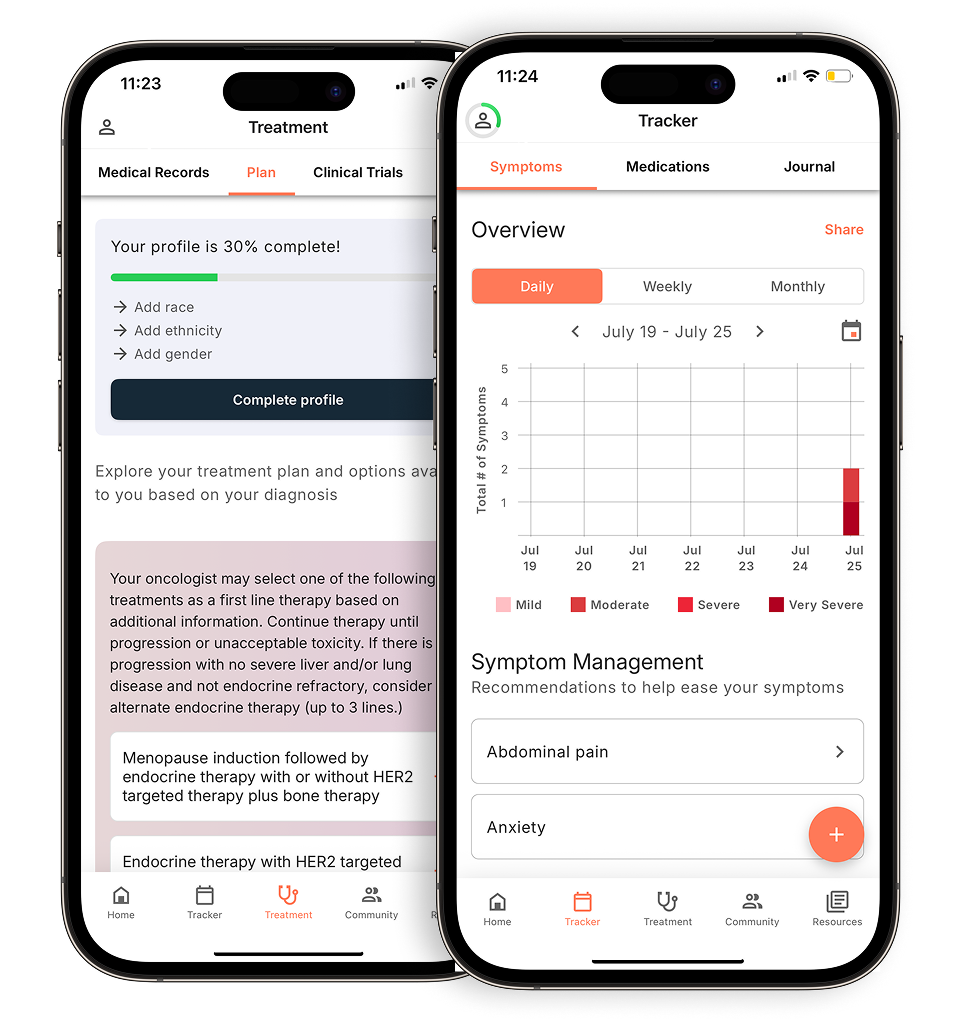
View your personalized treatment plan in the Outcomes4Me app
Use your diagnosis to unlock personalized NCCN Guidelines®-aligned recommendations.
Key takeaways
- NCCN guidelines are your quality check for clinical trials: They represent the highest standard of cancer care, ensuring that research studies are safe, well-designed, and based on solid scientific evidence.
- Use trusted resources, but always consult your doctor: Tools like ClinicalTrials.gov and personalized apps can help you identify potential trials, but your care team is essential for deciding if a study is right for your specific health needs.
- Come to your appointments prepared: Learning about trial phases and eligibility criteria helps you understand the research process. Prepare questions for your doctor and connect with support groups to feel more confident in your decisions.
What are NCCN guidelines and why are they important?
When you’re exploring treatment options, especially clinical trials, you’ll likely come across the term “NCCN Guidelines.” It might sound technical, but understanding what these guidelines are and why they’re so important can give you confidence in your care decisions. Think of them as a trusted roadmap for high-quality cancer care. They play a big role in shaping the clinical trials that lead to new breakthroughs, ensuring that research is safe, effective, and built on the best science we have today.
What is the National Comprehensive Cancer Network (NCCN)?
The National Comprehensive Cancer Network (NCCN) is a non-profit alliance of leading cancer centers in the United States. This group of experts collaborates to develop and maintain the NCCN Clinical Practice Guidelines in Oncology. Think of these as the gold standard for cancer treatment. They are detailed, evidence-based recommendations that outline the best approaches for diagnosing, treating, and managing different types of cancer. Because these guidelines are continuously updated to reflect the latest scientific advancements, they ensure that treatment recommendations are always based on the most current and trustworthy information available to doctors and patients.
The NCCN’s mission and global reach
At its core, the NCCN’s mission is to improve the quality, effectiveness, and efficiency of cancer care so that patients can live better lives. They achieve this by creating resources that help care teams make well-informed decisions. This mission is crucial when it comes to clinical trials, as the guidelines help ensure that research studies are designed with the highest standards for safety and efficacy. The NCCN’s work has a significant global impact, with its guidelines and resources being used by healthcare professionals in over 190 countries. This worldwide recognition underscores their authority and can give you an added layer of confidence when considering a trial that aligns with their recommendations.
What are the NCCN guidelines?
Think of the NCCN Guidelines as a detailed playbook for cancer care. They are a comprehensive set of recommendations developed by the National Comprehensive Cancer Network (NCCN), a non-profit alliance of leading cancer centers. These guidelines are created by teams of experts who review all the latest research to provide trusted, evidence-based advice for treating different types of cancer. Because science is always moving forward, these guidelines are updated constantly to reflect new findings. They are essential for supporting clinical trials that are designed to find new and better ways to prevent, diagnose, and treat cancer, ensuring that new research builds upon the current standard of care.
How do NCCN guidelines keep clinical trials safe?
One of the most important ways NCCN guidelines contribute to clinical trials is by helping to set clear and safe rules for who can participate. These rules, known as eligibility criteria, are there to protect patients and make sure the study results are reliable. The criteria might include factors like your age, specific cancer type, and treatment history. This isn’t about excluding people, but about making sure the new treatment is appropriate and safe for a specific group. By helping to define a well-characterized study population, the guidelines ensure that the trial is conducted with the highest integrity and that patient safety remains the top priority throughout the research process.
How NCCN guidelines lead to evidence-based care
Cancer treatment can be incredibly complex, with many different paths to consider. The NCCN Guidelines are designed to make these complex recommendations easier for your healthcare team to navigate and understand. This helps them make faster, more accurate decisions, ensuring that the care you receive is tailored to your specific needs and based on solid scientific evidence. This commitment to evidence-based care is what connects the guidelines directly to the high standards required for clinical trials. It ensures that any new treatment being tested is evaluated against the best care available today, which is a critical step in moving cancer care forward for everyone.
What other resources does the NCCN offer?
Beyond creating the clinical guidelines that shape cancer care and research, the NCCN is dedicated to supporting patients and their families directly. They offer a range of resources designed to make complex medical information more accessible and to ensure high-quality care is available to everyone. From patient-friendly guides to educational materials and advocacy work, these tools can help you feel more informed and empowered as you work with your care team. Understanding these resources can give you another layer of support throughout your cancer experience.
NCCN Guidelines for Patients
It’s one thing for doctors to have a roadmap, but it’s another for you to have one, too. That’s why the NCCN created the NCCN Guidelines for Patients. These are special versions of the clinical guidelines that translate the technical medical language into clear, easy-to-understand information. Developed with the help of patient advocates, these guides explain the expert recommendations for your specific cancer type. They are designed to help you have more productive conversations with your care team about your treatment options, so you can feel like an active partner in your own care. They are updated regularly to make sure you always have access to the latest information.
Educational resources and publications
The NCCN also provides a wide variety of educational resources and publications for both patients and healthcare providers. Think of it as a library of trusted information covering different cancer types, treatment side effects, and the latest research updates. These materials are created to help you and your loved ones learn more about your diagnosis and what to expect during treatment. By providing this knowledge, the NCCN aims to improve the quality of cancer care and ensure that everyone involved is well-informed about the best practices and newest findings in oncology. This commitment to education helps bridge the gap between clinical research and patient understanding.
Policy advocacy and research support
The NCCN also works behind the scenes to improve cancer care on a larger scale. As an alliance of leading cancer centers, they play an important role in health policy, working to ensure that treatment guidelines are recognized by insurance providers and policymakers. This advocacy helps more patients get access to the high-quality care recommended by experts. Additionally, the NCCN Foundation supports ongoing cancer research by funding promising new studies and early-career scientists. This work is essential for driving the next wave of breakthroughs and continuously improving treatment options for patients everywhere.
How to find clinical trials that follow NCCN guidelines
Finding the right clinical trial can feel like a big task, but there are several excellent resources available to help you find options that align with NCCN guidelines. These tools and strategies can help you and your care team identify studies that are a potential fit for your specific situation. Taking it one step at a time can make the process feel much more approachable.
Start with the NCCN clinical trial database
A great place to start your search is directly with the NCCN. The organization maintains its own clinical trial database to support research that aims to find new and better ways to treat cancer. Because this resource comes from the same experts who develop the guidelines, you can feel confident that the trials listed are focused on advancing high-quality cancer care. It’s a straightforward way to see what research is currently underway and what options might be available to you.
How to search on ClinicalTrials.gov
ClinicalTrials.gov is a massive, comprehensive database of clinical studies happening in the United States and around the world. It’s run by the National Institutes of Health (NIH) and contains detailed information on each trial, including what the study is for, who is eligible to join, and where it’s located. To get the most out of this resource, it helps to be specific with your search terms. Using keywords related to your diagnosis and treatment history can help you narrow down the thousands of listings to find a clinical trial that is relevant to you.
Find personalized trial matches with Outcomes4Me
Sifting through large databases can be time-consuming. That’s where platforms like Outcomes4Me come in. Our app helps simplify the process by matching you with clinical trials based on your unique diagnosis, stage, and treatment history. This personalized approach helps ensure you see the most relevant options without having to sort through studies that aren’t a good fit. Using a clinical trial finder tool can make the search feel much more manageable and focused on your individual needs.
Work with your oncology team to find the right trials
Your doctor and care team are your most important partners in this process. They have a deep understanding of your health history and can help you weigh the pros and cons of any potential trial. It’s a good idea to bring a list of trials you’re interested in to your next appointment. This conversation can happen at any point in your cancer journey, and your team can provide personalized recommendations and help you understand the next steps. They are essential for helping you find a clinical trial that is truly right for you.
Other places to find trusted trial information
Beyond the major databases, there are other places to look for trials. Many NCCN Member Institutions, which are leading cancer centers, have their own listings of clinical trials. The National Cancer Institute (NCI) and the U.S. National Library of Medicine (NLM) also have websites with valuable information. If you need more direct assistance, you can contact the NCI’s Cancer Information Service for one-on-one help. Exploring these additional resources can give you a more complete picture of the research being done.
How do clinical trials work? Phases and eligibility
When you start looking into clinical trials, you’ll see them described by “phase.” This just refers to the step-by-step process researchers use to study a new treatment. Each phase answers a different set of questions, and understanding them can help you see where a potential treatment is in its development journey. At the same time, every trial has specific requirements for who can join, known as eligibility criteria. Let’s walk through what these phases and requirements mean for you.
Phase 1: Is the treatment safe?
Think of Phase 1 as the first step where a new treatment is introduced to a small group of people. The main goal here isn’t to see if the treatment works, but to make sure it’s safe. As the National Comprehensive Cancer Network (NCCN) explains, “Phase 1 trials are primarily concerned with assessing the safety of a new drug or treatment.” Researchers in these clinical trials carefully watch for any side effects and work to find the most effective dose that doesn’t cause harmful reactions. This phase lays the critical groundwork for all future research on the treatment.
Phase 2: Does the treatment work?
Once a new treatment has been found to be safe in Phase 1, it moves on to Phase 2. In this stage, the focus shifts to effectiveness. Researchers want to know if the treatment has a positive effect on a specific type of cancer. According to the NCCN, “In Phase 2 trials, researchers evaluate how well the drug or treatment works against a specific type of cancer.” This phase helps them gather the initial data needed to see if the treatment is promising enough to be compared against existing, standard treatments. It’s a key step in determining if the research should move forward.
Phase 3: Is it better than the standard treatment?
Phase 3 is where a new treatment is directly compared to the current standard of care. These trials are usually much larger and can involve hundreds or even thousands of participants. The goal is to see if the new option is as good as, or better than, what is already available. “Phase 3 trials are designed to compare the new drug or treatment to standard treatments,” the NCCN notes. If the results show that the new treatment is more effective or has fewer side effects, the researchers can use this data to apply for FDA approval, which could make it widely available to patients.
Phase 4: What are the long-term effects?
Sometimes, a trial continues even after a treatment is approved and available to the public. These are called Phase 4 trials. This phase allows researchers to keep an eye on the treatment’s long-term safety and effectiveness in a large, diverse population. “Phase 4 trials occur after a treatment has been approved by the FDA,” and their purpose is to “study the long-term effects and benefits of the treatment in a larger population.” This ongoing monitoring helps doctors and patients understand the full picture of a treatment’s impact over many years.
Who can join a clinical trial?
Not everyone can join every clinical trial. Each study has a list of requirements, called eligibility criteria, that you must meet to participate. These rules are in place to ensure patient safety and help researchers get clear results. “Eligibility criteria for clinical trials can vary widely, but they often include factors such as age, cancer type and stage, and treatment history,” according to the NCCN. When you and your doctor are considering a clinical trial, you’ll carefully review these criteria to see if a particular study is a good fit for you.
How your health history affects eligibility
Your personal health journey plays a big role in determining which trials you might be able to join. Researchers need to create a study group that is right for the questions they are trying to answer. As one study on optimizing eligibility criteria explains, “Eligibility criteria are influenced by various patient factors, including age, functional status, past medical history, and prior treatments.” These details help the research team make sure that the new treatment is appropriate and safe for you, based on your specific circumstances. It’s why providing a complete medical history to your care team is so important when exploring your clinical trial options.
Where to find support during the clinical trial process
Exploring clinical trials can feel like a big step, but you don’t have to go through it alone. From your own healthcare team to communities of other patients, there are many resources available to guide and support you. Building a strong support system can help you feel more confident as you consider your options and move through the process. Remember, asking for help and seeking out information are signs of strength.
Find your community in patient support groups
One of the best first steps you can take is to talk to your doctor about whether a clinical trial is a good option for you. You can have this conversation at any point during your cancer journey. Beyond your medical team, connecting with patient advocacy organizations and support groups can be incredibly helpful. These communities offer a space to share experiences and learn from others who understand what you’re going through. The Cancer Support Community, for example, provides resources and support networks specifically for people considering clinical trials. Hearing from others can provide both emotional comfort and practical insights that you won’t find anywhere else.
Questions to ask your healthcare team
When you discuss clinical trials with your doctor, it helps to come prepared. Having a list of questions ready can make the conversation more productive and ensure you get all the information you need to make a decision. According to the NCCN, some important questions to ask your care team include:
- Do you think a clinical trial is a good idea for me?
- How can I find trials I might be able to join?
- What exactly is being tested in the trial?
- What are the possible risks and benefits?
Jotting these down before your appointment can help you feel more organized and in control of the conversation. Your care team can provide you with the best guidance for your specific situation.
What to expect when you join a trial
If you decide to move forward with a trial, the process is designed to be very clear and transparent. Before you commit to anything, a member of the research team will sit down with you to explain everything in detail. They’ll cover the purpose of the study, what participation involves, and any potential risks and benefits. You will also receive a document called an “informed consent form.” This isn’t just a paper to sign; it’s a comprehensive guide that outlines all aspects of the trial. Take your time to read it carefully and ask questions about anything you don’t understand. The goal is for you to feel fully informed and comfortable with your decision.
How to stay informed about new trials
Staying up-to-date on new and ongoing trials is easier than ever with several reliable online resources. Your doctor is a great source of information, but you can also do your own research. Some of the best places to look for clinical trials include:
- NCCN Cancer Centers: These leading cancer centers often conduct cutting-edge research.
- The National Cancer Institute (NCI): Their website has a searchable database of cancer clinical trials across the country.
- The U.S. National Library of Medicine (NLM): This government-run site, ClinicalTrials.gov, is a comprehensive database of public and private clinical studies worldwide.
These resources can help you and your care team explore all available options.
Related Articles
- What are NCCN guidelines? A simple guide for patients
- How to read NCCN guidelines: A simple guide
- Why and how to join a clinical trial for my NSCLC
- Your guide to breast cancer NCCN guidelines
View your personalized treatment plan in the Outcomes4Me app
Use your diagnosis to unlock personalized NCCN Guidelines®-aligned recommendations.
Frequently Asked Questions
What’s the simplest way to think about NCCN Guidelines? Think of them as a master recipe for high-quality cancer care. They are created and constantly updated by a large group of leading cancer experts who review all the latest science. For clinical trials, these guidelines ensure that new research is built upon the best, most effective treatments we already have, which helps keep research safe and focused on moving care forward.
How do I know if a clinical trial is high-quality and safe? High-quality trials are designed with patient safety as the top priority. The NCCN Guidelines play a big role by helping to establish the standard of care that new treatments are measured against. Furthermore, every trial has strict rules, called eligibility criteria, to make sure the treatment is appropriate for the participants. Your doctor is your best resource for vetting potential trials and can help you identify studies that are well-designed and run by trusted institutions.
I see trials listed as Phase 1, 2, or 3. What does that mean for me? The phase simply tells you the main goal of the study. Early-phase trials are focused on finding out if a new treatment is safe and if it shows any initial signs of working. Later-phase trials are designed to compare the new treatment directly against the current standard treatment to see if it’s better. Understanding the phase helps you and your doctor know the specific purpose of the research and what questions the trial is trying to answer.
What is the most important first step if I’m interested in a clinical trial? The single most important first step is to have a conversation with your doctor and care team. While online databases are helpful for exploring what’s out there, your team understands your unique health situation better than anyone. They can help you determine if a trial is a good option for you right now and provide personalized recommendations that you might not find on your own.
What happens if I join a trial and then change my mind? Participating in a clinical trial is completely voluntary, and you have the right to leave a study at any time, for any reason. Before a trial begins, you go through a detailed process called informed consent where this is explained. If you decide to stop, it will not affect your relationship with your care team. They will simply work with you to continue your treatment using the best standard care options available.