
Let’s clear up a common point of confusion. When we talk about lung cancer genomic testing, we aren’t looking at the genes you were born with. Instead, this special test for lung cancer gene changes looks directly at the tumor cells to find the specific mutations driving their growth. Think of it like creating a personalized instruction manual for your cancer, showing your doctors exactly what makes it tick. The goal is to find unique markers that can be targeted with modern medicines, helping create a truly personalized care plan. This guide will walk you through exactly how it works.
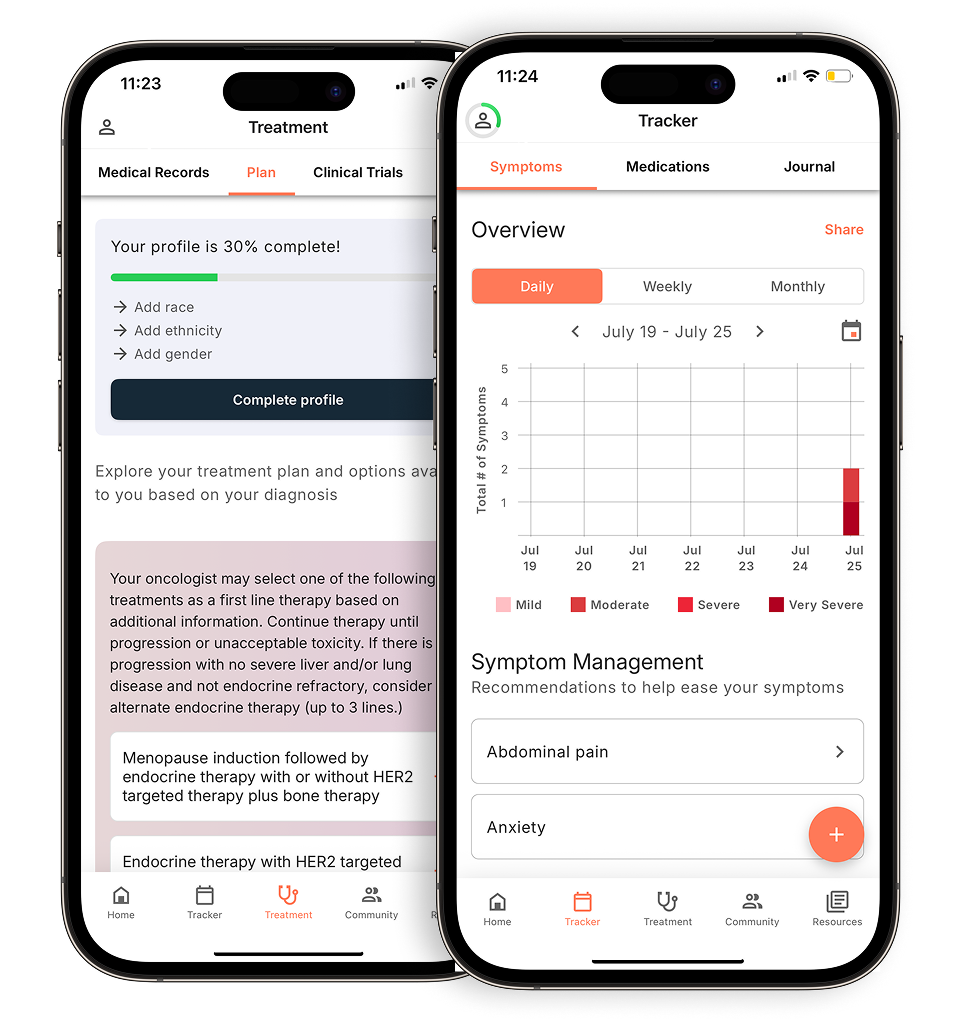
View your personalized treatment plan in the Outcomes4Me app
Use your diagnosis to unlock personalized NCCN Guidelines®-aligned recommendations.
Key Takeaways
- Genomic testing creates a profile of the tumor, not you: This test analyzes the specific genetic changes in cancer cells to guide your treatment. It’s different from hereditary testing and is used to match you with targeted therapies or immunotherapies that are more likely to be effective for your specific cancer.
- Be your own advocate by asking about testing: If you have lung cancer, especially non-small cell lung cancer, ask your care team if genomic testing is right for you. Understanding your tumor’s unique profile is a critical step in building a personalized treatment plan and helps you make informed decisions together.
- Your results provide clarity, no matter what they show: Finding a specific mutation can open the door to targeted treatments. If no actionable mutations are found, the result is still valuable—it helps your care team rule out certain therapies and focus on other effective options, like chemotherapy or immunotherapy, right away.
What is lung cancer genomic testing?
If you or a loved one has been diagnosed with lung cancer, you’ve likely heard your care team mention many different kinds of tests. One of the most important is genomic testing. In simple terms, genomic testing, also called biomarker or tumor testing, looks for specific changes in the genes of the cancer cells. Think of it as creating a unique profile of the tumor. These changes, or mutations, can control how the cancer grows and spreads, and understanding them is a key part of modern cancer care.
The main goal of this testing is to gather information that can help you and your doctor make the best treatment decisions. By understanding the specific genetic makeup of the tumor, your care team can identify which treatments are most likely to be effective. This moves your care beyond a one-size-fits-all approach and toward a plan that is personalized just for you. The results from lung cancer genetic tests can point toward targeted therapies or immunotherapies that are designed to work against cancer cells with particular mutations. This personalized approach can often lead to better outcomes and may involve treatments with different side effects compared to traditional chemotherapy, helping to match the right treatment to the right person at the right time.
How does genomic testing work?
The process usually starts with getting a small sample of the tumor. The most common way to do this is with a biopsy, where a doctor removes a tiny piece of tissue. This is a standard procedure, and your care team will ensure you are as comfortable as possible. This tissue sample is then sent to a special lab where scientists analyze its genetic material to look for specific mutations.
In some cases, getting a tissue sample might be difficult or not possible. When that happens, your doctor might suggest a blood test, often called a “liquid biopsy.” This test is much less invasive and can find tiny pieces of DNA from the tumor that are circulating in your blood. While it’s a great alternative, a tissue biopsy is generally considered the most accurate way to get a complete picture of the tumor’s genetic profile.
Common lab methods
Once your sample arrives at the lab, scientists use special techniques to analyze its genetic code. They aren’t just looking for one or two things; they’re often running a broad search for any known mutations that can drive lung cancer. The most advanced and common method used today is called next-generation sequencing, or NGS. Think of it as a high-powered search engine for the tumor’s DNA. Instead of looking for just one specific gene change, comprehensive biomarker testing with NGS can screen for hundreds of potential mutations at the same time. This gives your care team a complete picture of what’s happening inside the cancer cells, which is essential for finding the best possible treatment for you.
What are genetic mutations in lung cancer?
When we talk about genetic mutations in lung cancer, we’re referring to specific changes in the DNA of the cancer cells themselves. These aren’t usually genetic traits you were born with or inherited from your parents. Instead, these are changes that happened within the lung cells that caused them to become cancerous and grow uncontrollably.
Doctors use lung cancer biomarker testing to look for well-known mutations in genes like EGFR, ALK, ROS1, and KRAS, among others. Finding one of these biomarkers can be a game-changer for your treatment plan. That’s because there are specific drugs, called targeted therapies, designed to attack cancer cells that have these exact mutations, often with fewer side effects than traditional chemotherapy.
What causes these gene mutations?
It’s a common question, and the answer is reassuring for many: the gene changes found in lung cancer are almost always acquired during a person’s lifetime, not inherited from family. These changes can happen for a few different reasons. Exposure to environmental factors like tobacco smoke, radon gas, or air pollution can cause mutations in lung cells over time. Sometimes, they happen simply because a cell makes a mistake while dividing—a natural, though unfortunate, part of biology. In some cases, the exact cause isn’t known. Regardless of the cause, identifying these specific mutations is what matters most for your treatment. It gives your care team the information they need to choose the most effective therapies for your cancer.
Clearing up common myths about genomic testing
It’s easy to get confused by all the information out there, so let’s clear up a couple of common myths. First, many people hear “genetic testing” and think it’s about finding inherited cancer risks that run in their family. While that type of testing exists, genomic testing for lung cancer is different. It focuses on mutations that develop only in the tumor cells and are not passed down to your children.
Another myth is that this testing is only for people with advanced cancer. The truth is, genomic testing can be incredibly valuable at any stage. The information it provides can help guide your very first treatment plan or help find new options if your cancer changes over time. Understanding your tumor’s unique profile is a powerful step in creating an effective treatment plan.
Why is genomic testing important for your treatment plan?
Think of genomic testing as creating a detailed map of the cancer cells in your body. Instead of using a general approach to treatment, this map allows your care team to see the specific signals and switches—called biomarkers—that make the cancer grow and spread. Understanding this unique genetic makeup is a critical step in modern lung cancer care.
This information moves your treatment plan beyond a one-size-fits-all model. It provides the specific details needed to choose therapies that are more likely to be effective against your particular cancer. By identifying the tumor’s vulnerabilities, your doctors can develop a strategy that is tailored specifically to you. This personalized approach is at the heart of why genomic testing has become so essential for many people with lung cancer. It equips you and your healthcare team with the knowledge to make clear, informed decisions about the path forward.
Who should get genomic testing?
If you have been diagnosed with lung cancer, it’s a good idea to talk to your care team about genomic testing. It’s a key step in understanding the specifics of the tumor and can provide valuable information for your treatment, regardless of the type or stage of your cancer.
Testing for non-small cell lung cancer (NSCLC)
If you have non-small cell lung cancer (NSCLC), which is the most common type of lung cancer, asking your doctor about genomic testing is especially important. The results provide a detailed roadmap of the tumor, highlighting specific markers that can be targeted with certain treatments. This information is a critical part of building a personalized care plan that is tailored to you. By understanding the tumor’s unique profile, you and your care team can make more informed decisions together, choosing therapies that have the best chance of being effective from the start. Think of it as the first step in creating a truly personalized treatment strategy.
Testing for other types of lung cancer
Genomic testing isn’t just for people with NSCLC or those with advanced-stage cancer. It can be incredibly valuable at any stage, for any type of lung cancer. The information it provides can help guide your very first treatment plan or find new options if your cancer changes or stops responding to a treatment over time. It’s also important to remember that this testing focuses on genetic changes that have developed only in the tumor cells. These are different from hereditary mutations and are not passed down to your children, which is a common point of confusion. The goal is always to gather information that can help you and your doctor make the best treatment decisions.
How genomic testing personalizes your treatment plan
A personalized treatment plan is one that is designed around the specific characteristics of your lung cancer. Genomic testing is what makes this level of personalization possible. The test results identify genetic changes, or mutations, within the cancer cells’ DNA.
This information allows your care team to select targeted therapies that are designed to attack cancer cells with those specific changes, often with less harm to your body’s healthy cells. It’s like having a key that fits a specific lock. Instead of trying many different keys, your doctor can use the one that is made to work for your exact type of cancer, creating a plan that is truly yours.
Working toward better treatment outcomes
When your treatment is precisely matched to your cancer’s genetic profile, it can lead to better results. Because targeted therapies focus on the specific molecules that help cancer cells grow, they can be more effective at stopping or slowing the tumor’s progression.
This approach can also mean fewer or less severe side effects compared to traditional chemotherapy, which can damage healthy cells along with cancer cells. According to MedlinePlus, knowing about these gene changes helps doctors choose a treatment that attacks the cancer cells while causing less harm to the rest of your body. This can improve not only the effectiveness of the treatment but also your quality of life during the process.
The impact of targeted therapies
Traditional chemotherapy is powerful, but it often works by attacking all rapidly dividing cells in the body—both cancerous and healthy. This is why it can cause side effects like hair loss and nausea. Targeted therapies, on the other hand, are much more precise. They are designed to find and attack cancer cells with specific genetic mutations, allowing the treatment to interfere directly with the pathways those cells use to grow and survive. By focusing the attack on the cancer cells, these therapies can be highly effective while causing less harm to the rest of your body, which can lead to a better quality of life during treatment.
Finding the right treatment for you
Ultimately, the goal of genomic testing is to find the right treatment for you, right from the start. The results give your doctor a clear guide for selecting therapies that have the best chance of working against your specific lung cancer. This avoids a trial-and-error process and gets you on an effective path more quickly.
As Memorial Sloan Kettering Cancer Center notes, identifying these genetic changes is key to choosing the most appropriate targeted treatments. This knowledge empowers you to have more productive conversations with your doctor about your options. You become an active partner in your care, equipped with information to help make the best possible decisions for your health and future.
What are the different types of genomic tests?
When your doctor talks about genomic testing, they might mention a few different approaches. The type of test you have will depend on your specific situation and what your care team needs to learn to find the best path forward. It can feel like a lot of new information, but understanding the basics can help you feel more prepared for the conversation with your doctor. Let’s walk through the main types of tests together.
Comprehensive vs. single-gene tests: What’s the difference?
In the past, doctors might have tested for one genetic mutation at a time. This is called single-gene testing. Today, however, your doctor will likely recommend comprehensive biomarker testing, often done using a method called Next-Generation Sequencing (NGS). Think of it as casting a wide net instead of a single fishing line. This approach looks at many genes at once, giving your care team a complete picture of the tumor’s genetic makeup. This detailed view is incredibly helpful because it helps identify any and all mutations that could be matched with a specific treatment, leaving no stone unturned.
Liquid vs. tissue biopsies: Which is right for you?
To run these tests, your doctor needs a sample of the cancer cells. The most common way to get this is through a tissue biopsy, where a small piece of the tumor is removed for analysis. This might be done with a needle or during a minor procedure. Sometimes, though, getting a tissue sample isn’t practical or possible. In these cases, your doctor might suggest a liquid biopsy. This is a simple blood test that can detect tiny pieces of DNA from the tumor that are circulating in your bloodstream. While a tissue biopsy is often preferred for getting a complete sample, a liquid biopsy is a powerful and less invasive alternative.
Comparing accuracy
You might be wondering which test is more accurate, and that’s a great question. Both tissue and liquid biopsies are very reliable, especially with today’s advanced testing methods like Next-Generation Sequencing (NGS). While a tissue biopsy is generally seen as the best way to get a complete picture of the tumor’s genetic profile, don’t worry if your doctor recommends a liquid biopsy. Studies have shown that liquid biopsies can also detect actionable mutations with a high degree of accuracy. The choice often comes down to your specific situation, like the location of the tumor and your overall health. Your care team will weigh the pros and cons and recommend the test that will give them the clearest information to guide your treatment.
When is each type of test used?
The main goal of genomic testing is to see if your cancer has genetic changes that can be treated with a targeted therapy. These treatments are designed to work specifically on cancer cells with particular mutations. This often leads to fewer side effects than traditional chemotherapy because they can leave healthy cells alone. Your doctor will decide which test is right for you based on your diagnosis, your overall health, and how much tumor tissue is available. For example, if a tissue biopsy is too risky, a liquid biopsy might be the best first step. Comprehensive testing is often preferred to ensure no potential treatment options are missed.
Key times for testing
Knowing when to have genomic testing done is a key part of the process. The best time to discuss this with your doctor is at your diagnosis, ideally before your first biopsy. This helps ensure enough tissue is collected from the very beginning to run a comprehensive test, giving your care team the most complete information to build your initial treatment plan. If your cancer changes or grows while you’re on a treatment, that’s another key moment to consider retesting. Cancers can evolve, and a new test can find different mutations that may have developed. This new information can help your doctor find other treatment options if your current one is no longer working. If testing wasn’t done initially, it may be possible to use leftover tissue from a past procedure or a liquid biopsy.
What biomarkers do doctors look for in lung cancer?
When your care team talks about genomic testing, they’re looking for specific “biomarkers” in the cancer cells. Think of these as unique flags or signals that provide important clues about the cancer’s behavior. Finding these biomarkers helps your doctor understand what is driving the cancer’s growth and, most importantly, how to best treat it.
While there are many potential biomarkers, a few are particularly important in non-small cell lung cancer (NSCLC). Knowing about them can help you have more informed conversations with your doctor about your test results and treatment plan.
How common are specific gene mutations?
While there are many possible mutations, it’s helpful to know that some are found more often than others, especially in non-small cell lung cancer (NSCLC). The KRAS mutation, for instance, is one of the most common, appearing in about 30% of cases. Others, like EGFR, are found in about 10% to 15% of people with NSCLC, while ALK and MET mutations are less frequent, at around 5% and 3%, respectively. Even if a mutation is considered rare, finding it is still a game-changer. Identifying these specific actionable mutations is the key to finding targeted therapies that may be right for you. It’s also worth remembering that these gene changes usually happen over a person’s lifetime and are not typically passed down through families.
What are EGFR mutations?
EGFR stands for epidermal growth factor receptor. It’s a protein on the surface of cells that normally helps them grow and divide. Sometimes, the gene that makes this protein has a mutation, or change, that causes it to be overactive. This can lead to uncontrolled cell growth. About 2 out of every 10 people with non-small cell lung cancer (NSCLC) have an EGFR gene mutation. The good news is that finding this mutation means you may be a candidate for targeted therapies designed specifically to block the signals from the faulty EGFR protein, stopping the cancer from growing.
Understanding ALK rearrangements
ALK, which stands for anaplastic lymphoma kinase, is another gene that can be altered in lung cancer. Instead of a simple mutation, the ALK gene sometimes breaks and fuses with a different gene. This is called a rearrangement, and it can also fuel cancer growth. Nearly 5 out of every 100 people with NSCLC have ALK gene changes. Like EGFR mutations, these alterations can be targeted with specific treatments that can significantly improve outcomes. Identifying an ALK rearrangement is a key step in personalizing your care plan and finding a treatment that targets the cancer’s specific driver.
What does PD-L1 expression mean?
Unlike a gene mutation, PD-L1 is a protein. Your doctor will be looking at the level of PD-L1 on your tumor cells, which is called its “expression.” PD-L1 helps cancer cells hide from your immune system. The levels of PD-L1 in tumor cells help predict whether immunotherapy, a treatment that helps your own immune system fight cancer, will be effective for you. Higher levels of PD-L1 expression are often associated with a better response to certain immunotherapies. This information is a critical part of deciding if this type of treatment is a good option for your care plan.
Other important biomarkers to know
The list of important biomarkers in lung cancer is always growing as researchers learn more. Beyond EGFR and ALK, your doctor may also test for other genetic changes, such as RET and NTRK gene rearrangements. While less common, finding these changes is just as important. Comprehensive biomarker testing can identify specific genetic changes such as RET and NTRK. There are FDA-approved targeted treatments available for many of these alterations, which can provide new options for patients. This is why broad testing is so valuable—it casts a wide net to find any actionable target that could guide your treatment.
ROS1
Similar to ALK, ROS1 is another gene that can have a “rearrangement,” which is a type of change that can fuel the growth of cancer cells. Finding ROS1 rearrangements is an important discovery because it opens the door to specific targeted therapies. These treatments are designed to block the activity of the ROS1 protein, which can help slow or stop the cancer’s growth and lead to better outcomes.
BRAF
A small number of lung cancers are driven by mutations in the BRAF gene. These changes can cause cancer cells to grow and divide without stopping. If your genomic test shows a BRAF mutation, your care team can consider targeted therapies that are made to block the faulty BRAF protein. This is another great example of how understanding the tumor’s specific profile can lead to a more precise and effective treatment plan.
HER2
While you may have heard of HER2 in the context of breast cancer, mutations in the HER2 gene can also contribute to the growth of lung cancer. Identifying this mutation in your tumor allows your doctor to consider targeted therapies specifically designed to work against it. This provides another path for a personalized treatment approach that is tailored to the unique characteristics of your cancer.
NRG1
The discovery of NRG1 fusions is a more recent development in lung cancer research, showing how quickly the field is advancing. This type of genetic alteration can lead to the activation of pathways that promote cancer growth. While it’s a less common biomarker, targeted therapies are being developed to specifically address NRG1 fusions, offering new hope and more options for patients with this alteration.
How do test results guide your treatment options?
Think of your genomic test results as a personalized roadmap for your treatment. They provide your care team with detailed information about the specific characteristics of the lung cancer cells, going far beyond a general diagnosis. This information is crucial because it helps identify which treatments are most likely to be effective for you. By understanding the unique genetic makeup of the cancer, you and your doctor can work together to choose a path forward that is tailored to your specific situation, opening up possibilities for more precise and effective care.
Why you should wait for test results before starting treatment
After a lung cancer diagnosis, it’s completely natural to want to start treatment as soon as possible. The waiting period for test results can feel stressful, but this pause is one of the most important steps in your care. Starting treatment before you have the full picture from your genomic test results is like starting a road trip without a map—you might be moving, but you might not be heading in the best direction. The results provide a clear guide for your care team, helping them select therapies that have the best chance of working against your specific lung cancer from the very beginning. This information helps avoid a trial-and-error approach, ensuring your first treatment is your best one, chosen based on the specific biology of your cancer and helping you make an informed decision about your care.
Matching targeted therapies to your results
One of the biggest benefits of genomic testing is its ability to identify targets for specific treatments. These tests look for changes, or mutations, in the genes of cancer cells. If a specific mutation is found, your doctor may be able to match you with a targeted therapy. These drugs are designed to work like a key in a lock, attacking only the cancer cells with that particular genetic change. This precision means they can be very effective while causing less harm to your body’s healthy cells. It’s a way of fighting cancer on a molecular level, based on what makes it unique.
Deciding if immunotherapy is an option
Genomic testing also provides clues about whether your cancer might respond to immunotherapy. In addition to gene mutations, these tests can measure the amount of a protein called PD-L1 on your cancer cells. Some cancer cells use this protein to hide from your immune system. If your test results show high levels of PD-L1, it suggests that a treatment called an immune checkpoint inhibitor could be a good option. These drugs block the PD-L1 signal, allowing your own immune system to recognize and attack the cancer cells more effectively.
Finding clinical trials with your genetic profile
Your genomic test results can also open doors to new treatments through clinical trials. Even if your results don’t point to a currently approved targeted therapy, your unique genetic profile is valuable. Researchers are constantly developing new drugs that target less common mutations, and your specific results might make you a perfect candidate for a clinical trial testing one of these promising treatments. This gives you access to cutting-edge care while also helping to advance cancer research. Your care team can help you explore trials that might be a good fit for you.
What to expect during the genomic testing process
Knowing what’s ahead can make any medical process feel more manageable. Genomic testing involves a few key steps, from collecting a sample to discussing the results with your doctor. While every person’s experience is unique, the general process follows a similar path. Understanding these steps can help you feel more prepared and confident as you move forward with your care team. The goal is to gather the specific information needed to tailor a treatment plan that’s right for you.
How a sample is collected
To analyze the genetics of a tumor, your doctors first need to get a sample of it. The most common way to do this is with a tissue biopsy, where a doctor removes a small piece of the tumor. This might be done with a thin needle or during a procedure like a bronchoscopy. Sometimes, if getting a tissue sample isn’t possible or is too risky, your doctor may suggest a blood test instead. This is often called a “liquid biopsy,” and it works by finding tiny pieces of the tumor’s DNA that are circulating in your blood. While useful, tissue biopsies are generally considered the most accurate way to get a complete genetic picture of the tumor.
When to expect your results
Waiting for test results can be one of the most challenging parts of the process. It’s helpful to know that getting the results from genomic testing often takes longer than other lab tests you may have had. Because the analysis is so detailed, it can take anywhere from a few days to a couple of weeks to get your report back. Your care team will let you know when you can expect to hear from them. Try to be patient with yourself during this time, and don’t hesitate to reach out to your nurse or doctor if you have questions about the timeline.
Timeline for tissue biopsy results
The results from a tissue biopsy typically take about three to four weeks to come back. I know that wait can feel incredibly long, but it’s important to understand what’s happening during that time. The lab is conducting a thorough analysis of the tumor’s genetic material, which is a complex process essential for creating a personalized treatment plan. This isn’t just a simple test; it’s a deep investigation into what makes the tumor tick. According to experts at UT MD Anderson, this detailed review is what allows your care team to identify the most effective treatments for you, so the time spent waiting is a crucial investment in your care.
Timeline for liquid biopsy results
If you’re having a liquid biopsy, the timeline is usually a bit shorter, with results taking about two to three weeks. This less invasive method can provide valuable insights into the tumor’s genetic profile, giving your care team important information without needing a tissue sample. While it’s generally considered less comprehensive than a tissue biopsy, it’s a powerful alternative when a tissue sample isn’t an option. The faster turnaround time is a key advantage, allowing you and your doctor to develop a treatment strategy more quickly and get your care plan started sooner.
How to prepare for your test
Your doctor will give you specific instructions on how to prepare for your biopsy. Preparation can vary depending on the type of procedure you’re having. Before the test, make sure to ask your doctor any questions you have. It’s a good idea to discuss what the procedure will be like, any potential risks involved, and what you should do to get ready. For example, you might need to avoid eating or drinking for a certain period before the biopsy. Writing down your questions beforehand can help you remember everything you want to ask during your appointment.
How to talk with your doctor about testing
If you have lung cancer, especially non-small cell lung cancer, it’s important to talk with your doctor about genomic testing. This conversation is key to making sure your treatment plan is as personalized as possible. You can start by simply saying, “I’ve read about genomic testing and would like to know if it’s an option for me.” This opens the door for your doctor to explain how the results could guide your treatment choices, potentially matching you with targeted therapies or immunotherapies. This is a partnership, and your questions help ensure you are an active participant in your care.
What are the limitations of genomic testing?
Genomic testing is a powerful tool that can shape your lung cancer treatment, but it’s helpful to know that it has some limitations. Understanding these ahead of time can help you and your care team make the most of your results. The goal is to use this information as one piece of your larger healthcare puzzle, combining it with other tests and your doctor’s expertise to create the best path forward for you. Being aware of potential hurdles like test inaccuracies, insurance questions, and the emotional side of the process can make you a more prepared and confident partner in your own care. It’s all about having a complete picture so you can ask the right questions and feel good about the decisions you make together with your healthcare team.
When test results are unclear
It can feel discouraging if your genomic test results don’t show a common, actionable mutation. But it’s important to know that this information is still incredibly valuable for your care team. Finding no specific mutation helps your doctor rule out certain targeted therapies that wouldn’t be effective for you, saving you time and helping you avoid unnecessary treatments. This clarity allows your team to focus on other proven options, like chemotherapy or immunotherapy, right away. Your unique genetic profile can also be the key to accessing new treatments through clinical trials, as researchers are always developing drugs for less common mutations. This knowledge empowers you to have more productive conversations with your doctor and helps build a truly personalized treatment plan.
What are false positives and negatives?
Like any medical test, genomic tests aren’t perfect. Sometimes, a test can show a “false positive,” meaning it detects a genetic mutation that isn’t actually there. This can cause unnecessary worry or lead to discussions about treatments that aren’t right for you. On the other hand, a “false negative” can happen when the test misses a mutation that you do have. This could mean missing an opportunity for a targeted therapy. It’s important to discuss the specifics of your test with your doctor, who can help you understand the results in the context of your overall health. The National Cancer Institute provides a helpful overview of what to expect from genetic testing.
Will insurance cover your test?
The cost of genomic testing is a common and valid concern. The good news is that most health insurance plans will cover the cost when a doctor recommends the test as medically necessary for your treatment plan. However, coverage can vary depending on your specific plan and the type of test being ordered. Before you get tested, it’s a great idea to have your doctor’s office contact your insurance company to confirm your coverage and find out about any out-of-pocket costs, like copays or deductibles. This simple step can prevent financial surprises down the road. For more details, the American Society of Clinical Oncology offers information on genetic testing coverage.
Finding support during the testing process
Waiting for test results and then making sense of them can feel overwhelming, so remember that you don’t have to go through it alone. Leaning on your support system is key. This can include talking with family, friends, a therapist, or a hospital social worker. There are also many incredible organizations dedicated to helping people with lung cancer. Groups like the Lung Cancer Foundation of America offer a wealth of resources, from educational materials to information on financial assistance. Connecting with these communities can provide both emotional support and practical guidance as you move through the testing process and beyond.
What if no actionable mutations are found?
It can feel like a setback to get your genomic test results and learn that no “actionable mutations” were found. It’s completely normal to feel disappointed, but please know this result does not mean you are out of treatment options. It simply means that your specific cancer doesn’t have one of the known genetic markers that today’s targeted therapies are designed to attack. In a way, this is valuable information. Instead of trying a treatment that is unlikely to work, you and your care team can immediately focus on other proven strategies.
Think of this result as one important data point, not the final word. Your oncologist will look at the full picture—including your cancer type, its stage, where it’s located, and your overall health—to build a comprehensive treatment plan. Many of the most effective treatments for lung cancer, such as chemotherapy and immunotherapy, don’t require an actionable mutation to work. This test result helps narrow the field, pointing you and your team toward the paths that hold the most promise for you. It’s a step that brings clarity, even if it’s not the one you were hoping for.
What are the next steps for treatment?
When no actionable mutations are found, your doctor will discuss other proven treatment options with you. Standard therapies like chemotherapy and radiation therapy are often very effective in these situations. Another powerful option is immunotherapy, which works by helping your own immune system recognize and fight cancer cells. The best approach for you will depend on several factors, including the type and stage of your lung cancer and your overall health. Your care team will review all of this with you to create a plan that fits your specific needs and treatment goals.
Are clinical trials still an option?
Absolutely. In fact, you may be a great candidate for a clinical trial. Clinical trials are research studies that explore new and promising treatments before they become widely available. Many trials are designed specifically for people whose cancers don’t have common mutations, offering access to the next wave of innovative therapies. Participating in a trial can be a powerful way to contribute to cancer research while receiving cutting-edge care. If this is something you’re interested in, ask your doctor if there are any trials that might be a good fit for you.
Should you get tested again in the future?
This is a great question to discuss with your doctor over time. Cancer can change and evolve, and new mutations can sometimes develop, especially if the cancer progresses. The field of oncology is also advancing rapidly, with new targeted therapies being approved regularly. Because of this, it’s a good idea to have an ongoing conversation with your healthcare provider about re-testing. They may recommend another genomic test in the future if your situation changes or as new treatments that target different mutations become available.
How to partner with your healthcare team
Genomic testing provides powerful information, but its true value comes from the conversations it sparks between you and your care team. Think of it as a tool that helps you and your doctor work together to build a treatment plan that is truly personalized for you. This partnership is key to making confident and informed decisions about your care.
Questions to ask your doctor about genomic testing
Walking into an appointment with a few questions can help you feel more prepared and make the most of your time. If you have non-small cell lung cancer, it’s especially important to talk to your doctor about genomic testing. Consider asking some of the following to guide the conversation:
- What genomic testing do you recommend for my specific type of lung cancer?
- How will the results of this test help us choose the best treatment options for me?
- What does the testing process involve, and when can we expect the results?
- Are there any limitations to this test I should be aware of?
Discussing testing before a biopsy
Timing can be really important when it comes to genomic testing. It’s a great idea to talk with your doctor about it before you have a biopsy. The reason is simple: when the doctor knows that the tissue sample will be used for comprehensive testing, they can make sure to collect enough of it during the procedure. This single step can help you avoid needing a second biopsy later on. Having a thorough analysis from the start gives your care team the clearest possible picture of the tumor, which is essential for building an effective and personalized treatment plan right away.
Asking about specialized cancer centers
It can also be helpful to ask your doctor about the benefits of being treated at a specialized cancer center. These facilities often have teams of experts who focus entirely on lung cancer and have deep experience with genomic testing and personalized medicine. They typically have access to the latest technology, which can lead to faster and more reliable test results. Seeking care at one of these centers can also open up more opportunities to participate in clinical trials, giving you access to cutting-edge treatments. It’s another way to ensure you’re exploring every available option for your care.
Getting a second opinion
Remember, you are the most important member of your healthcare team. If your provider doesn’t bring up biomarker testing, or if you feel unsure about your treatment plan for any reason, it is always okay to get a second opinion. This is a very normal and respected part of the medical process. A second opinion can provide peace of mind by confirming your current plan, or it might offer a new perspective and introduce you to different treatment options. Feeling confident and clear about your path forward is essential, and seeking additional insights is a powerful way to advocate for your own health.
How to understand your test results
Your test results will show if your cancer has any specific genetic mutations or biomarkers. Your doctor will walk you through the report, but the main goal is to see if your cancer can be matched with a specific treatment. The results help predict how the cancer might behave and connect you to a targeted therapy that is most likely to be effective. A positive result for a certain biomarker can open the door to specific medicines, clinical trials, or other personalized approaches to your care.
Making treatment decisions together
Your genomic test results are a critical piece of the puzzle, but they are just one piece. Your doctor will use this information along with details about your cancer type and stage to create a treatment plan just for you. This process is often called shared decision-making, where your doctor provides the medical expertise, and you provide your personal preferences, goals, and values. Knowing about these gene changes helps your care team choose the best treatment, and your input ensures that the plan aligns with what matters most to you.
Using your results to build a treatment plan
Once you and your doctor have the results from your genomic testing, you can start putting all the pieces together. Think of it as creating a roadmap for your care. This isn’t just about choosing the first step; it’s about building a comprehensive strategy that is tailored specifically to you and the unique characteristics of your cancer. Your genomic test results are a critical part of this map, guiding decisions and pointing toward the most effective paths forward.
This plan will likely include your initial treatment, but it’s also a living document that can adapt over time. It will outline how your care team will monitor your progress, what signs to watch for, and when you might need to consider different options. Partnering with your healthcare team to create this plan ensures that you are all on the same page and that your treatment aligns with your personal goals. It’s your opportunity to be an active participant in your care, armed with the best information available about your specific diagnosis. This collaborative approach helps ensure your treatment is as precise and effective as possible from day one.
How genomic results fit into your care plan
Your genomic test results are a cornerstone of your personalized care plan. This testing, also known as biomarker testing, looks for specific changes in a tumor’s DNA that control how it grows and behaves. By identifying these unique markers, your doctor can match you with targeted therapies. These treatments are designed to attack only the cancer cells that have those specific changes, which often means they cause less harm to your body’s healthy cells. The results can also tell your doctor which treatments are unlikely to work, saving you valuable time and helping you avoid unnecessary side effects.
How to stay informed about new treatments
The field of lung cancer research is moving incredibly fast, with new and better treatments becoming available all the time. Your genomic profile is key to accessing these advances. For many types of lung cancer, especially non-small cell lung cancer, genetic testing is now a routine part of diagnosis because it helps doctors choose the most effective drugs. Staying informed can feel overwhelming, but you don’t have to do it alone. Talk with your care team about new research or clinical trials that might be a good fit for you. They can help you understand how the latest developments apply to your specific situation and treatment plan.
Using the Outcomes4Me app to find options
Your genomic test report can feel like it’s written in another language, but you don’t have to decipher it alone. The Outcomes4Me app is designed to help you translate this information into clear, actionable steps. When you securely provide your diagnosis and health records, the platform uses your specific biomarkers to generate personalized guidance. This includes potential treatment options, clinical trials you may be eligible for, and other tests to discuss with your doctor. It’s a simple way to see how your unique results connect to the latest evidence-based care recommendations, empowering you to partner with your healthcare team and make informed decisions about your treatment plan.
What to expect for long-term monitoring
Your cancer treatment plan isn’t set in stone. Just as your life changes, tumors can also change over time. A targeted therapy that works well for a while might become less effective if the cancer develops new mutations and starts to grow again. This is why ongoing monitoring is so important. If your doctor sees that your cancer is growing, they may recommend re-testing the tumor with another biopsy. This can provide updated information about its genetic makeup and help identify a new treatment that will be more effective. Think of it as checking the map periodically to make sure you’re still on the best route forward.
Related Articles
- 5 questions about lung cancer genomic testing
- 9 lung cancer biomarkers currently in use: a guide
- Understanding biomarker testing in lung cancer treatment: a guide for patients
- Biomarker testing for lung cancer treatment plans
View your personalized treatment plan in the Outcomes4Me app
Use your diagnosis to unlock personalized NCCN Guidelines®-aligned recommendations.
Frequently Asked Questions
Is this the same as the genetic testing that tells me if cancer runs in my family? That’s a great question, and it’s a common point of confusion. The genomic testing we’re talking about here is different. It looks for genetic changes that have developed only within the cancer cells themselves. The goal is to understand what makes the tumor grow so we can find the best way to treat it. It doesn’t tell you about the genes you were born with or any cancer risk you could pass on to your children.
Why is this testing so important before starting treatment? Think of it as getting a detailed blueprint of the cancer before you decide on a treatment strategy. This blueprint can show if the cancer has a specific vulnerability that can be targeted with a particular drug. Starting with this information helps you and your doctor choose a therapy that is most likely to be effective right from the start, rather than taking a trial-and-error approach. It personalizes your care from day one.
What happens if my test results don’t show any specific mutations? It’s completely understandable to feel discouraged by this result, but it doesn’t mean you’re out of options. This information is still very valuable because it helps your care team rule out treatments that are unlikely to work for you. Instead, you can focus on other proven and effective therapies, such as chemotherapy or immunotherapy. This result simply provides clarity and helps point your treatment plan in the right direction.
Is a blood test for genomic testing as good as a tissue sample? A tissue biopsy, where a small piece of the tumor is removed, is generally considered the best way to get a complete and accurate genetic picture of the cancer. However, sometimes getting a tissue sample isn’t possible or is too risky. In those cases, a liquid biopsy, which is a simple blood test, is an excellent and much less invasive alternative that can still provide your doctor with critical information to guide your treatment.
Will I need to have this testing done more than once? It’s possible. Cancer can change over time, and a treatment that works well initially might become less effective if the tumor develops new mutations. If your cancer starts to grow again, your doctor may recommend re-testing. This can provide an updated genetic profile of the cancer and help identify new treatment options that may be more effective for you at that time.