
If you’re discussing surgery for a brain tumor, you’ll likely hear your care team mention “GTR.” This often leads to the question, what is GTR surgery for the brain? The GTR medical abbreviation stands for gross total resection, and it means the surgical team’s goal is to remove all of the visible tumor. For many facing a gtr brain tumor diagnosis, this is a critical first step. But it’s rarely the only step. This surgery is designed to work with other therapies, clearing the way for them to do their job. This article will explain how GTR fits into your bigger treatment picture.
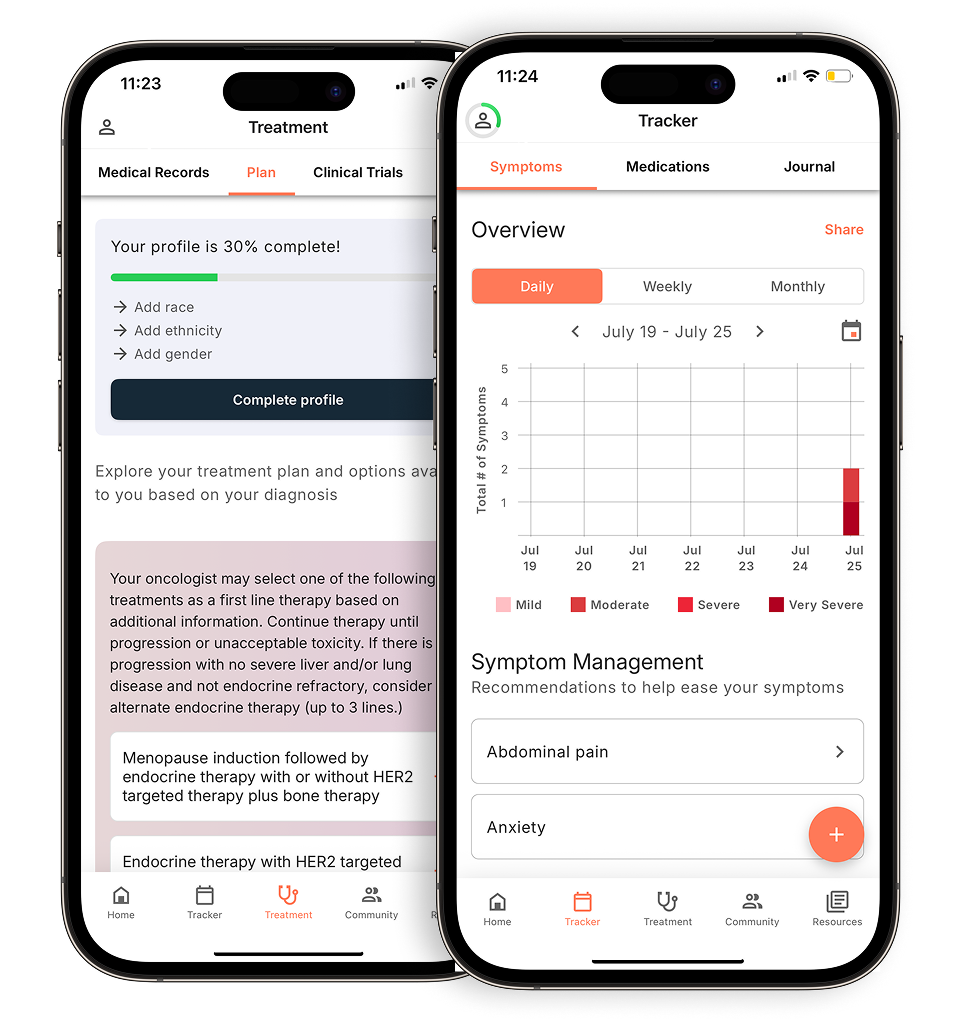
View your personalized treatment plan in the Outcomes4Me app
Use your diagnosis to unlock personalized NCCN Guidelines®-aligned recommendations.
Key Takeaways
- GTR is a foundational part of your treatment plan: The goal is to remove all visible tumor tissue, which helps make subsequent treatments like radiation or chemotherapy more effective on any remaining cancer cells.
- The decision is a careful balance of benefits and risks: Your care team considers the tumor’s location, your overall health, and your quality of life to determine if complete removal is the safest and best path forward for you.
- Your questions help shape the right approach: Asking about the surgical goals, recovery expectations, and your personal priorities ensures the final decision is a collaborative one that you feel confident in.
What is a gross total resection (GTR)?
When you and your care team discuss surgery as a treatment option, you might hear the term “gross total resection,” or GTR. It sounds technical, but the concept is straightforward. GTR is a type of surgery where the goal is to remove all of the visible tumor. Think of it as the surgeon’s attempt to get every last piece of the cancer that they can see during the operation.
This is different from other types of surgery where only a portion of the tumor is removed. The decision to aim for a GTR depends on many factors, including the type of cancer, where it’s located, and your overall health. It’s a significant procedure, and it’s often the first major step in a broader cancer treatment plan designed to give you the best possible outcome. Understanding what GTR involves can help you feel more prepared as you discuss your surgical options with your doctor.
What is the goal of GTR surgery?
The main objective of a gross total resection is to leave no visible tumor behind. During the procedure, your surgeon works to remove the entire mass. This is in contrast to a subtotal resection (STR), where a surgeon intentionally leaves some of the tumor, often because removing it all would be too risky or could damage vital nearby tissues.
While the goal of removing as much of the tumor as possible is clear, achieving it can be complex. Surgeons must carefully weigh the benefits of complete removal against the potential for surgical complications. Your care team will consider every angle to decide if GTR is the safest and most effective approach for your specific situation.
How does GTR fit into your treatment plan?
A gross total resection is rarely the only treatment you’ll receive. Instead, it’s a crucial part of a larger strategy. By removing the primary tumor, GTR can make other treatments, like radiation or chemotherapy, more effective because there is less cancer for them to target. For many people, this comprehensive approach can lead to better long-term results.
For certain cancers, like high-grade gliomas, studies have shown that GTR appears to be more effective than a partial resection in helping patients live longer. By getting rid of the bulk of the cancer, the surgery sets the stage for the next phase of your treatment, aiming to control any remaining microscopic cancer cells and reduce the chances of the cancer returning.
How is GTR different from other types of surgery?
When you and your doctor discuss surgery as a treatment option, it’s helpful to know that not all tumor removal surgeries are the same. The main goal is always to remove the cancerous cells, but the extent of the surgery can differ based on your specific situation. Your surgeon will consider the tumor’s type, size, and location, as well as your overall health, to decide on the best approach. This decision balances the goal of removing as much of the tumor as possible with the priority of keeping you safe and preserving your quality of life. Understanding these different surgical approaches can help you have more informed conversations with your care team about what to expect.
What’s the difference between complete and partial tumor removal?
The primary difference between a gross total resection (GTR) and other surgeries is the amount of tumor the surgeon aims to remove. With GTR, the goal is to take out all of the visible tumor. Another common approach is a subtotal resection (STR), where the surgeon intentionally removes only part of the tumor. This might be done if the tumor is attached to vital organs or blood vessels, making complete removal too risky. For certain cancers like glioma, studies suggest that a GTR is often more effective than an STR. Research indicates that removing the entire visible tumor can help patients live longer overall and may extend the time before the tumor could potentially grow back.
Why might your doctor recommend GTR?
Your surgical team will recommend GTR when they believe they can remove the entire tumor without causing significant harm. This is a careful balancing act. For brain tumors, for example, surgeons work to remove the maximum amount of the tumor while ensuring that the patient’s brain function is kept safe after the procedure. For many types of solid tumors, GTR is considered the best initial approach if it’s feasible. Studies have shown that for patients with high-grade glioma, even those who are older, attempting a GTR can lead to better survival outcomes. Your doctor will use detailed imaging and other tests to determine if GTR is the right and safest option for you.
What types of cancer are treated with GTR?
Gross total resection is a surgical option for solid tumors, which are abnormal masses of tissue that don’t contain cysts or liquid areas. It’s most effective when a tumor is in one place and hasn’t spread to other parts of the body. Because of this, GTR is a common and important treatment for certain types of brain tumors. The goal is always to remove as much of the cancer as possible while keeping healthy tissue safe. Your care team will look at your specific situation, including the tumor’s type, size, and location, to see if GTR is a good fit for your treatment plan.
How GTR is used for brain tumors
GTR is frequently the standard surgical goal for brain tumors. For people with gliomas, including glioblastomas, surgeons aim to remove all of the tumor that is visible on brain scans. Studies show that maximizing the amount of tumor removed often improves patient outcomes. The same principle applies to other types of brain tumors, such as atypical meningiomas. By removing the entire visible tumor, the goal is to reduce the chances of it growing back and to make other treatments, like radiation or chemotherapy, more effective.
Low-grade gliomas
For adults with low-grade gliomas, the surgical approach can make a significant difference. Research has shown that patients tend to live longer when surgeons can remove as much of the tumor as possible. This strategy, known as “maximizing tumor resection,” means the surgical team works to remove all of the tumor that can be seen on scans. The goal is to leave no visible trace of the cancer behind, which can improve the effectiveness of any follow-up treatments and help delay the possibility of the tumor returning. This is a key reason why your care team may aim for a GTR if it can be done safely for your specific situation.
Craniopharyngiomas
Craniopharyngiomas present a unique challenge because, while they are not cancerous, they grow near very important parts of the brain. Their location close to the optic nerves, hypothalamus, and pituitary gland means they can cause serious issues with vision and hormone function. Because of this delicate placement, the decision to perform a GTR is made with extreme care. The surgeon must weigh the benefits of removing the entire tumor against the risks of damaging these critical structures. In some cases, a subtotal resection might be the safer choice to preserve your quality of life.
Supratotal resection
In some situations, surgeons may go a step beyond a gross total resection. This is called a supratotal resection. While a GTR means removing all of the tumor visible on an MRI, a supratotal resection involves removing tissue even beyond the visible edges of the tumor. This more extensive approach is based on the idea that some cancer cells might be present in the area immediately surrounding the main tumor. By removing this small margin of tissue, the goal is to further reduce the risk of the cancer coming back. This decision is carefully considered and is only an option when it can be done safely.
Can GTR be used for other types of cancer?
While GTR is a primary goal for many brain tumor surgeries, the idea of removing the entire tumor is a cornerstone of surgical oncology for many cancer types. The principle is applied to other localized, solid tumors throughout the body, such as certain types of sarcomas, breast cancer, and colon cancer, when the cancer is contained in one area. The ability to perform a GTR depends heavily on where the tumor is located and whether it involves critical nearby structures. For any cancer, the decision to attempt a GTR is made to improve treatment outcomes and give you the best path forward.
What are the potential benefits and risks of GTR?
Deciding on a surgical plan is a significant step, and it’s completely normal to have a lot of questions. When your care team discusses gross total resection, they are weighing the potential benefits against the possible risks, always with your specific health and goals in mind. This isn’t just about the surgery itself, but about what your life could look like afterward.
The main goal of GTR is to remove all of the visible tumor, which can have a major impact on your treatment path. However, it’s a complex procedure, and its success depends on many factors, like the tumor’s type, size, and location. Think of this as a detailed conversation with your medical team. They will walk you through why they believe GTR may or may not be the best approach for you, helping you understand both the hopeful outcomes and the challenges you might face. Together, you can make an informed choice that feels right for your situation.
What GTR means for your long-term outlook
One of the most significant potential benefits of GTR is its effect on long-term health. The primary hope with this surgery is to extend life and improve your quality of life. For many types of cancer, completely removing the tumor can mean a longer time before the cancer might return, a period known as progression-free survival.
Several studies have shown that when surgeons can achieve GTR, patients often have better overall survival rates compared to those who have only a partial removal. By taking out the entire visible tumor, you may reduce the chances of it growing back, which can be a crucial step in your overall cancer care plan.
Survival rates for high-grade glioma
When it comes to high-grade gliomas, the extent of the surgery can play a big role in the outcome. A detailed analysis of several studies found that people who had a GTR lived longer overall than those who only had a partial removal (a subtotal resection, or STR). Specifically, a GTR was shown to lower the risk of death by about 30% compared to an STR. This benefit was seen even in older individuals, suggesting that aiming for a complete resection can be a valuable goal across different age groups. The positive impact was also noticeable soon after the procedure, with the research showing a significantly lower risk of death at three, six, nine, and twelve months after surgery for those who had a GTR.
What are the potential risks of GTR surgery?
Like any major operation, GTR comes with risks. Because the goal is to remove the entire tumor, the surgery can sometimes be more extensive than a partial resection. This can increase the chance of surgical complications. The specific risks depend heavily on where the tumor is located. For example, a brain tumor near areas that control speech or movement requires extreme precision to avoid affecting those functions.
Your surgeon will talk with you in detail about the potential complications for your specific case. They use incredible skill and advanced technology to protect healthy tissue and minimize these risks. This open conversation is meant to prepare you, not to scare you, so you have a clear picture of the procedure.
Comparing side effects in GTR vs. subtotal resection
The choice between a GTR and a subtotal resection (STR) comes down to balancing different kinds of risks. Since GTR is a more extensive surgery that aims to remove the entire visible tumor, it can sometimes have a higher risk of complications right after the procedure. An STR is less aggressive, which may mean fewer short-term surgical risks. The trade-off, however, is that leaving tumor tissue behind increases the chance that the cancer could grow back, or recur. This balance is well-documented: GTR is often linked to more post-operative issues but lower recurrence rates, while STR may have fewer immediate complications but a higher chance of the cancer returning. Your medical team will walk you through this balance, helping you understand which approach offers the best possible long-term outcome for your specific situation.
How will GTR affect your quality of life?
The conversation about GTR is about more than just removing a tumor; it’s about your life after the procedure. The ultimate goal is to remove the cancer while preserving the functions that are important to you. Your surgical team is always balancing the aim of a complete resection with the priority of keeping you safe and maintaining your quality of life.
For some, this might mean deciding that removing the tumor as much as is safely possible is the best path forward, even if a tiny portion is left behind to protect a critical area. Your doctors will consider your overall health, age, and personal priorities when making a recommendation. This ensures the surgical plan aligns with what matters most to you for your future.
How does your care team decide if GTR is right for you?
Deciding on a major surgery like a gross total resection is a significant step, and it’s a decision you and your care team will make together. It’s not just about the cancer itself, but about you as a whole person. Your doctors will carefully consider several key factors to determine if GTR is the most appropriate and safest path forward for your specific situation. This process involves looking closely at the tumor, evaluating your overall health, and using the best available technology to plan the procedure.
Why your tumor’s size and location matter
One of the first things your team will evaluate is the tumor’s specific characteristics. The size of the tumor and, just as importantly, its exact location are critical pieces of the puzzle. A tumor located in an area that’s easier to access might be a more straightforward candidate for GTR. However, if a tumor is near or involved with parts of the brain or body that control vital functions—like speech, movement, or major blood vessels—the surgery becomes more complex. Your surgeons will weigh the ability to remove the entire visible tumor against the risk of damaging healthy, critical tissue.
How your overall health affects the decision
Your general health is another crucial factor in the decision-making process. Your care team needs to be confident that you are strong enough to undergo a major surgery and manage the recovery period that follows. They will look at your complete medical history, including any pre-existing conditions like heart or lung issues, which could increase surgical risks. Beyond your physical health, other personal factors can influence treatment decision-making, and it’s important to have open conversations with your team about your support system and what to expect after the procedure. This holistic view ensures the chosen treatment plan aligns with your overall well-being.
How doctors use advanced tools to plan GTR
To make the most informed decision, surgeons rely on sophisticated technology. Advanced imaging techniques, such as detailed MRIs and CT scans, give your team a clear picture of the tumor and its relationship to surrounding structures. In some cases, especially with brain tumors, they may use tools like brain mapping. This technology helps them create a detailed “roadmap” of your brain, identifying critical areas to avoid during the operation. Using these tools allows your surgical team to plan the safest, most precise approach to remove as much of the tumor as possible while protecting your quality of life.
What tools and techniques help surgeons during GTR?
When planning a surgery as precise as a gross total resection, your surgical team relies on much more than just a steady hand. They use a range of sophisticated technologies designed to make the procedure as safe and effective as possible. These tools help them see the tumor more clearly, plan the best approach for removal, and protect healthy tissue. This combination of advanced imaging and specialized surgical instruments allows your team to work with incredible accuracy, all with the goal of preserving your function and quality of life.
The role of real-time imaging in the operating room
Long before you enter the operating room, your care team uses advanced imaging to create a detailed map of the tumor and the surrounding area. Techniques like magnetic resonance imaging (MRI) provide a clear, three-dimensional picture, showing the exact size, shape, and location of the tumor. This isn’t just a one-time snapshot; surgeons often use this advanced imaging during the procedure itself. This intraoperative imaging helps them see the tumor in real-time, confirm they are on the right track, and ensure they have removed as much of it as possible before completing the surgery.
What other tools ensure a precise and safe surgery?
Beyond imaging, surgeons have other specialized tools to guide them. One key technique, particularly for brain tumors, is called brain mapping. This process helps surgeons identify and protect areas of the brain that control critical functions like speech and movement. By mapping these areas, the surgical team can carefully navigate around them, allowing for a more complete tumor removal while minimizing the risk to your neurological function. These new techniques are all about maximizing the effectiveness of the surgery while keeping you safe.
What can you expect during surgery and recovery?
Thinking about surgery can feel overwhelming, but knowing what to expect can help you feel more prepared. The experience of a gross total resection, from the procedure itself to your long-term recovery, is a journey. Your medical team will be there to guide you, but here’s a general look at what the path might look like.
Your surgery day and immediate recovery
During a GTR, the primary goal of your surgical team is to remove all of the tumor that is visible on imaging scans. This is a major operation performed under general anesthesia. Immediately after the surgery, you’ll wake up in a recovery area where a team will closely monitor your vital signs. Depending on the complexity of the surgery, you may spend some time in an intensive care unit (ICU) before moving to a regular hospital room. Your hospital stay can range from a few days to a week or more, as your team works to manage your pain and monitor your initial recovery from surgery.
What does long-term recovery look like?
Once you leave the hospital, your recovery journey continues at home. This process is unique for everyone and may involve working with physical, occupational, or speech therapists to regain strength and function. It’s important to be patient with yourself during this time. A significant benefit of GTR is its connection to better long-term outcomes. Studies have shown that patients who have a successful GTR may live longer compared to those who have only a partial removal. Your follow-up care is a critical part of this long-term plan and will include regular appointments and imaging scans to watch for any changes.
Understanding and managing potential complications
Every surgery comes with risks, and it’s important to discuss them with your doctor. While GTR aims for complete removal, it’s not always achievable, especially if a tumor is in a delicate or hard-to-reach area. Because it is a more extensive procedure, GTR can carry a higher risk of complications than a partial resection. This can include surgically acquired deficits, which are new challenges with things like speech, strength, or memory that can arise after the procedure. Your surgeons will carefully weigh the goal of prolonging survival against these potential risks when planning the best and safest approach for you.
How does GTR work with other cancer treatments?
Think of GTR as a powerful first step rather than the final chapter of your treatment. Surgery is often part of a multi-pronged approach, working alongside other therapies to give you the best possible outcome. Your care team will look at your specific situation to create a comprehensive plan that may include GTR in combination with other treatments. This strategy is designed to attack the cancer from different angles, addressing any microscopic cells that surgery might leave behind.
Will you need radiation or chemotherapy after GTR?
GTR can make other treatments, like chemotherapy and radiation, more effective. By removing as much of the tumor as possible, the surgery essentially clears the way for these therapies to do their job on a smaller, more manageable target. Research suggests that reducing the tumor’s size creates a better environment for radiation and chemotherapy to work. This combined approach is often linked to better long-term results. A comparative assessment of different surgical approaches found that a more complete resection can help people live longer and may extend the time before a tumor grows back.
How your team decides the timing of treatments
The sequence of your treatments is a carefully considered decision made by your oncology team. There isn’t one single timeline that works for everyone. Depending on your tumor type, its size, and your overall health, your team might recommend surgery first, followed by chemotherapy or radiation. In other cases, you might have chemotherapy or radiation first to shrink the tumor before surgery. The amount of tumor removed during GTR is a key piece of information that helps your doctors plan the next phase of your care. This is why maximizing tumor resection is often considered an important factor when planning your complete treatment journey.
Understanding the research on GTR
When you and your doctor discuss GTR, they’re referencing a goal backed by years of medical research. But like any area of science, that research has its own context. Understanding how studies on GTR are conducted can help you have a more meaningful conversation with your care team about what the evidence means for you. It’s not about becoming an expert, but about feeling empowered to ask questions as you consider your treatment path.
Limitations of current studies
It’s helpful to know that much of the research on GTR is retrospective, meaning it looks back at the records of patients who have already been treated. While this provides valuable information, it can sometimes make the benefits of a treatment seem stronger than they might be in real-time, a limitation noted in a systematic review of past studies. Many of these older studies also couldn’t account for specific details we now know are critical, like a tumor’s genetic features. Since the research spans decades, some data comes from an era before today’s advanced surgical tools were available, which is why your care team focuses on the most current evidence for your situation.
How treatment has evolved over time
The good news is that the field of neurosurgery has made incredible leaps forward. Surgeons today use advanced tools to plan and perform these complex procedures with a level of precision that wasn’t possible in the past. They use detailed MRI scans, sometimes even during the surgery itself, and sophisticated techniques like brain mapping to carefully identify and avoid areas of the brain responsible for important functions. This evolution has also shifted the thinking on when to be more aggressive with surgery, as aiming for a more complete resection for certain tumors, like low-grade gliomas, is now known to help patients live longer.
What questions should you ask your medical team about GTR?
Talking with your care team is one of the most important parts of your treatment journey. It’s your chance to understand your options, share your priorities, and feel confident in the path forward. When GTR is on the table, having a list of questions ready can help you make the most of that conversation. Think of it as a partnership where you and your doctors work together to make the best decision for your health and your life. Here are a few key areas to cover.
Questions to ask about your expected outcome
It’s natural to wonder what a successful surgery could mean for you. You can ask your doctor, “What are the goals of this surgery, and how might it affect my long-term outlook?” For some cancers, like high-grade gliomas, studies suggest that a complete tumor removal may be more effective than a partial one. It’s also helpful to understand how GTR fits into your bigger treatment picture. A good follow-up question is, “How does this surgery prepare me for other treatments, like radiation or chemotherapy?” Sometimes, removing the tumor can help create a better environment for these next steps to work well.
What should you ask about recovery and daily life?
Beyond the immediate outcome, you’ll want to know what life might look like after surgery. Don’t hesitate to ask, “What can I expect during recovery, both in the hospital and when I go home?” and “How might this affect my daily activities?” Research has shown that GTR can be linked to a longer period without cancer progression, which can have a positive impact on your quality of life. Understanding the recovery timeline and any potential changes to your routine can help you and your family prepare for the weeks and months ahead.
Should you ask about other options or a second opinion?
GTR is just one potential part of a larger treatment plan. It’s always a good idea to ask, “What are all of my treatment options, and what are the pros and cons of each?” Your care team can walk you through the details of every approach so you can make an informed choice together. The American Cancer Society encourages patients to talk through every option. Remember, your personal values and what you’re willing to accept in terms of treatment risks are important factors in shared decision-making. And if you feel you need more information, getting a second opinion is a standard and respected part of the process.
Related Articles
- How can cancer be gone if the whole tumor wasn’t removed after surgery?
- How long does cancer treatment brain fog last after surgery?
- What to Expect After Cancer Surgery?
- How long is recovery after oncoplastic lumpectomy with breast reduction?
View your personalized treatment plan in the Outcomes4Me app
Use your diagnosis to unlock personalized NCCN Guidelines®-aligned recommendations.
Frequently Asked Questions
Does a gross total resection mean I’m cured of cancer? A gross total resection is a major and positive step, but it doesn’t mean the cancer is cured. The term “gross total” refers to removing all the tumor that is visible to the surgeon and on imaging scans. It’s possible for microscopic cancer cells to remain in the surrounding tissue. This is why GTR is almost always followed by other treatments, like radiation or chemotherapy, which are designed to target any of these remaining cells.
What happens if the surgeon can’t remove the entire tumor during the operation? It’s quite common for a surgeon to decide during the procedure that removing the entire tumor would be too risky. This might happen if the tumor is attached to a critical blood vessel or a vital part of the brain. In this case, they will remove as much of the tumor as is safely possible, which is called a subtotal resection. This is not a failure; it’s a careful decision made to protect your safety and quality of life, which is always the top priority.
Why is GTR often recommended for brain tumors specifically? GTR is a goal for many solid tumors, but it’s particularly important for brain tumors because of the brain’s enclosed space. Removing the main tumor mass can relieve pressure inside the skull and help reduce symptoms. Also, since the brain has a protective barrier that can make it hard for some chemotherapy drugs to reach it, removing the bulk of the cancer surgically is a very effective first line of attack.
Will I definitely need more treatment, like chemo or radiation, after a GTR? In most cases, yes. Think of GTR as the first part of a one-two punch against cancer. The surgery removes the primary source of the cancer, which can make subsequent treatments more effective because they have a much smaller target to attack. Your oncology team will create a comprehensive plan where surgery, radiation, and/or chemotherapy work together to give you the best possible long-term outcome.
How does my surgeon balance removing the whole tumor with keeping me safe? This is the central challenge of this type of surgery, and it’s where your surgeon’s skill and experience are so important. They use advanced imaging and mapping tools before and during the operation to create a detailed roadmap of the tumor and the healthy tissue around it. Their goal is to be as aggressive as possible in removing the cancer while carefully preserving the functions that are essential to your quality of life, like your ability to speak, move, and think clearly.