
Treating cancer can feel like trying to open a locked door. You could try a bunch of random keys, or you could find the one specific key made for that exact lock. This is the core idea behind lung cancer genomic testing. It’s the process of finding that specific key. This genomic testing for lung cancer analyzes the tumor’s DNA to find the unique genetic mutations—the lock—driving its growth. This allows your doctor to select a targeted therapy—the key—designed to fit that lock perfectly. This precise approach increases the chances of a positive response, often with fewer side effects. We’ll explain this process in simple terms, so you can understand how it helps create a more effective treatment plan for you.
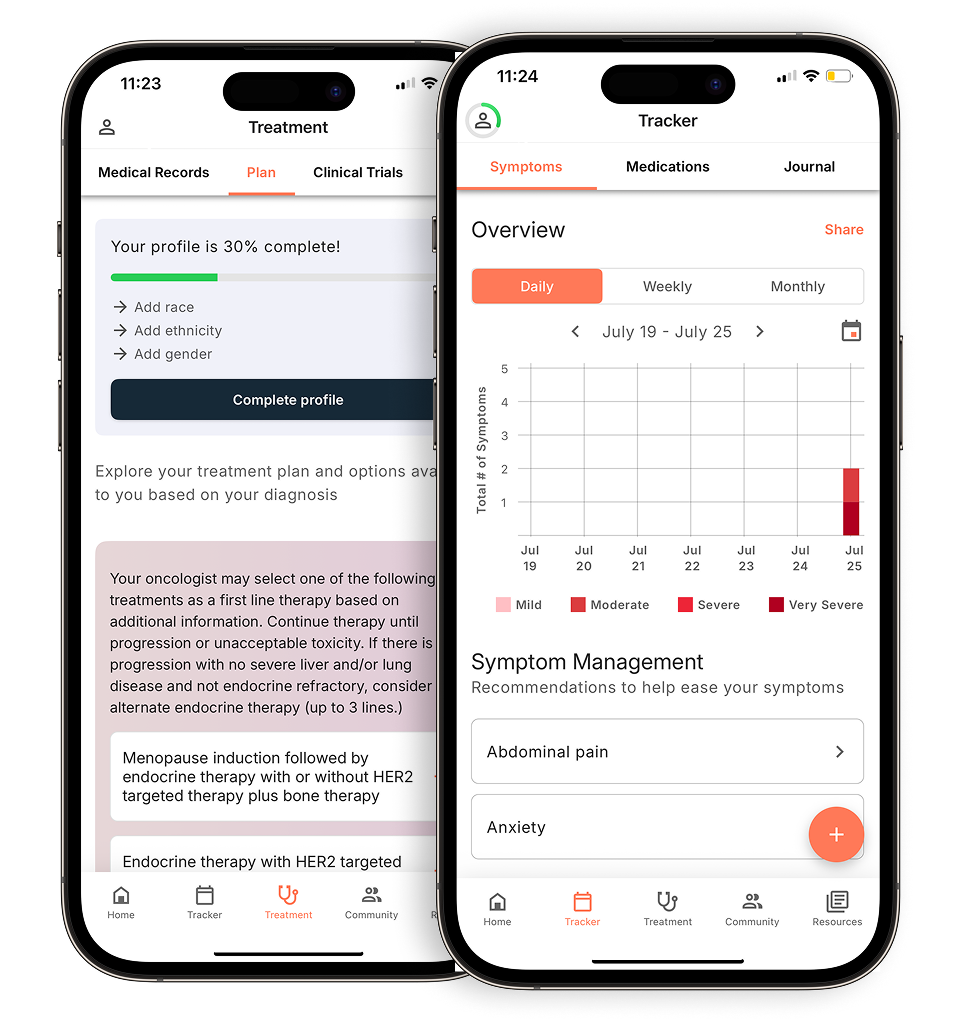
View your personalized treatment plan in the Outcomes4Me app
Use your diagnosis to unlock personalized NCCN Guidelines®-aligned recommendations.
Key Takeaways
- It creates a roadmap for your specific cancer: Genomic testing analyzes the DNA of the tumor itself—not your inherited genes—to find the unique changes that are driving its growth.
- Your results can point to personalized treatments: Finding a specific biomarker can match you with a targeted therapy or immunotherapy designed to work against your cancer’s unique profile, often with more manageable side effects.
- All results provide valuable information: Even if no specific targetable mutation is found, the test is still a success because it helps your doctor rule out ineffective treatments and confidently choose the best path forward.
First, a quick look at lung cancer basics
The main types of lung cancer
It’s helpful to know that lung cancer isn’t just one disease. Doctors classify it into two main types based on how the cells appear under a microscope. This is a key first step, as it helps your care team understand how the cancer might act and which treatments will be most effective for you.
Non-small cell lung cancer (NSCLC)
This is the most common type, making up about 85 out of every 100 lung cancer cases. NSCLC is a group of lung cancers that includes subtypes like adenocarcinoma and squamous cell carcinoma. Because it’s so common, there has been a lot of research into NSCLC, leading to a wide range of treatment options, including the targeted therapies that genomic testing helps identify.
Small cell lung cancer (SCLC)
This type is less common, found in about 13 out of every 100 cases. SCLC is often linked to a history of smoking and tends to grow and spread more quickly than NSCLC. Because it behaves differently, the treatment approach is often different, too.
How lung cancer is staged
Once your doctor knows the type of lung cancer, the next step is to determine its stage. Staging is simply a way of describing the size of the tumor and how far it has spread from its original location. A complete lung cancer diagnosis will include its stage, which is essential for creating an effective treatment plan. The stages range from 0 to 4 (often written as IV), with a lower number indicating that the cancer is more contained. This information—your specific type and stage—forms the foundation of your personalized care plan and is what we use in the Outcomes4Me app to help you see treatment options aligned with expert guidelines.
What is genomic testing for lung cancer?
If you’ve been diagnosed with non-small cell lung cancer (NSCLC), your care team might talk to you about genomic testing. It’s a powerful tool that helps doctors understand your cancer on a molecular level. You might also hear it called molecular testing or biomarker testing. The main goal of this testing is to look for specific changes, or mutations, in the DNA of the cancer cells. These changes can control how a cancer cell grows, divides, and spreads.
Think of it like finding a specific address for your cancer. Instead of using a general map, genomic testing provides the exact coordinates, allowing your doctor to find the most precise and personalized treatment for you. By identifying these unique characteristics in the tumor’s DNA, your care team can match you with therapies designed to target those specific changes. This approach is a cornerstone of personalized medicine, moving away from a one-size-fits-all treatment plan and toward one that is tailored to your unique cancer. It’s all about getting the right treatment to the right person at the right time, which can lead to better outcomes and potentially fewer side effects compared to traditional chemotherapy.
How does the testing process work?
Getting a genomic test is a straightforward process. It’s typically done using a sample of the tumor, which is collected during a procedure called a tissue biopsy. During a biopsy, a doctor takes a small piece of the tumor, which is then sent to a lab for analysis. Another option that is sometimes used is a liquid biopsy. This is a simple blood test that can find tiny pieces of DNA from the tumor that are circulating in your bloodstream. The lab then analyzes the sample to see what specific DNA changes and protein levels are present in the tumor. It’s important to know that most of these changes are unique to the cancer cells and are not the kind you can pass down to your family.
Understanding next-generation sequencing (NGS)
One of the most advanced methods used in genomic testing is called next-generation sequencing, or NGS. Think of it as a super-fast, high-powered scanner for the tumor’s DNA. Instead of looking at just one gene at a time, this powerful technology can analyze hundreds of genes at once. This comprehensive approach allows your care team to get a complete picture of the genetic changes—like mutations or rearrangements—that might be causing the cancer to grow. By casting such a wide net, NGS increases the chances of finding a specific biomarker that can be matched with a targeted therapy. It’s a powerful tool that helps ensure no stone is left unturned when creating your personalized treatment plan.
Genomic vs. genetic testing: what’s the difference?
It’s easy to get “genomic” and “genetic” testing mixed up, but they look for different things. Genomic testing focuses on the tumor itself. It analyzes the complete set of genes in the cancer cells to find mutations that are driving the cancer’s growth. The results help guide your treatment decisions. Genetic testing, on the other hand, usually looks for inherited gene mutations that might increase a person’s risk of developing cancer in the first place. So, while genetic testing assesses hereditary risk, genomic testing is all about creating a personalized treatment plan for a cancer you already have.
Why lung cancer mutations are usually “somatic”
You might hear your doctor use the word “somatic” to describe the mutations found in your lung cancer. This simply means the genetic changes happened in the cancer cells during your lifetime; they weren’t passed down from your parents. Most lung cancer mutations are somatic, which is why genomic testing focuses on the tumor’s DNA, not the DNA you were born with. These changes can happen due to a variety of environmental factors, such as exposure to chemicals in tobacco smoke or radon gas. Because these mutations are unique to the cancer cells, they are not something you can pass on to your children. Identifying these specific somatic mutations is the key to finding a targeted therapy that can effectively treat your cancer.
What does genomic testing look for in lung cancer?
Think of your cancer cells as having their own instruction manual, or DNA. Sometimes, there are typos or changes in that manual that tell the cells to grow and divide uncontrollably. Genomic testing is like proofreading that manual to find those specific changes, which are often called biomarkers or mutations. These aren’t just random typos; they are specific “driver mutations” that fuel the cancer’s growth.
By identifying the unique genetic profile of your lung cancer, your care team can get a much clearer picture of what makes it tick. This information is incredibly valuable because it moves your treatment beyond a one-size-fits-all approach. Instead of using a therapy that works for a broad group of people, your doctor can use your test results to match you with treatments designed to target the exact mutation found in your cancer cells. This is the foundation of personalized medicine, and it all starts with understanding what the test is looking for.
EGFR mutations
One of the most common biomarkers in non-small cell lung cancer (NSCLC) is a mutation in the Epidermal Growth Factor Receptor (EGFR) gene. Normally, EGFR helps cells grow and divide in a controlled way. But when certain mutations happen—like Exon 19 deletions or Exon 21 L858R—the gene gets stuck in the “on” position, leading to out-of-control cell growth. The good news is that finding an EGFR mutation opens the door to a class of drugs called EGFR inhibitors. These targeted therapies are specifically designed to block the signal from the faulty gene, which can significantly improve treatment outcomes.
How common are EGFR mutations?
EGFR mutations are one of the more frequently found biomarkers in non-small cell lung cancer (NSCLC). The likelihood of having one, however, can vary quite a bit depending on factors like your ethnicity and geographic location. For example, these mutations are more common in people of East Asian descent and in women who have never smoked. Overall, studies have found that EGFR mutations can be present in up to half of all people diagnosed with NSCLC, with certain types like exon 19 deletions being particularly common. Because the prevalence differs so much across different groups, it’s impossible to guess who might have one. This is why genomic testing is so important—it’s the only way to know for sure if your cancer has this specific biomarker, which can help your doctor choose the most effective treatment for you.
What to know about ALK rearrangements
Another important biomarker is an ALK rearrangement. This isn’t a simple typo but more like a sentence from one chapter of the instruction manual getting moved into another. A piece of the ALK gene breaks off and fuses with a different gene, creating a new, abnormal gene that drives cancer growth. This is most often seen in a subtype of lung cancer called adenocarcinoma. If your test shows an ALK rearrangement, your doctor can recommend ALK inhibitors. These drugs are very effective at targeting this specific alteration, offering a powerful and personalized treatment option based on the updated molecular testing guideline for lung cancer.
How common are ALK rearrangements?
ALK rearrangements are found in about 3% to 5% of people with non-small cell lung cancer (NSCLC). While that might seem like a small number, it represents a significant group of patients for whom a highly effective, targeted treatment is available. These rearrangements are more common in certain situations, particularly in a subtype of NSCLC called adenocarcinoma. According to various studies, the rate can be as high as 7% in people with this specific diagnosis. This is a perfect example of why genomic testing is so important—it helps find the exact key for your lock, even if that key is rare.
What to know about KRAS mutations
KRAS mutations are among the most frequently found genetic changes in lung cancer. For a long time, they were considered “undruggable,” meaning there weren’t effective targeted therapies for them. A KRAS mutation causes the production of a protein that signals cells to multiply constantly. However, recent breakthroughs have changed the outlook. Researchers have developed drugs that can specifically target one of the most common KRAS variants, known as G12C. This has created exciting new treatment possibilities for many people, making comprehensive biomarker testing for KRAS more important than ever.
How common are KRAS mutations?
KRAS mutations are quite common, found in about 20% to 30% of people with non-small cell lung cancer (NSCLC). This makes it one of the most frequent mutations identified in this type of cancer. There’s a particularly strong connection between KRAS mutations and a history of smoking, with some studies showing that they occur in approximately 30% of NSCLC cases in this group. Because it’s so prevalent, testing for KRAS is a standard and important step in understanding the genetic makeup of the tumor. Identifying this mutation helps your care team build a complete picture of your cancer, which is essential for choosing the most effective treatment path for you.
Other key mutations your test might find
Beyond EGFR, ALK, and KRAS, there are several other driver mutations that genomic testing can identify. These include changes in genes like BRAF, ROS1, and MET, among others. Each of these mutations can play a critical role in how a lung cancer grows and spreads. Just as with the more common mutations, finding one of these allows your care team to create a personalized treatment strategy. Targeted therapies are available for many of these alterations, making it possible to attack the cancer based on its unique genetic makeup. The ongoing genetic analysis and clinical therapy in lung cancer continues to uncover more targets and develop new treatments.
BRAF mutations
BRAF mutations are another type of driver mutation that genomic testing can identify. These changes can be a key factor in how lung cancer grows and spreads. When a BRAF mutation is found, it gives your care team a specific target to aim for. This allows them to create a personalized treatment strategy, which may include targeted therapy drugs designed to work against this specific mutation.
ROS1 mutations
Similar to BRAF, a ROS1 mutation is a driver mutation that can be found in some lung cancers. This is technically a “rearrangement,” where the ROS1 gene fuses with another gene, creating a new gene that tells cancer cells to grow. Finding a ROS1 rearrangement is great news because there are highly effective targeted therapies, called ROS1 inhibitors, that are designed to shut down this specific growth signal.
RET rearrangements
RET rearrangements are another significant alteration that genomic testing can find. Like ALK and ROS1, this happens when a piece of the RET gene breaks off and fuses with a different gene, creating a cancer-driving fusion gene. Identifying a RET rearrangement is important because it opens the door to targeted therapies that can effectively address this specific genetic change, offering a personalized treatment path.
HER2 mutations
You might have heard of HER2 in the context of breast cancer, but it can also be a driver in lung cancer. A HER2 mutation is a change in the gene that can cause cancer cells to grow. While less common in lung cancer, finding a HER2 mutation is valuable because it can lead to personalized treatment options, including therapies that specifically target this alteration.
NTRK gene fusions
NTRK gene fusions are rare but important alterations that can occur in many different types of cancer, including lung cancer. This is another type of gene rearrangement that can fuel tumor growth. The exciting part is that treatments are available that are “tumor-agnostic,” meaning they are designed to work against the NTRK fusion itself, no matter where in the body the cancer is located.
TP53 mutations
TP53 mutations are very common and are found in many different types of cancer, including about half of all lung cancers. The TP53 gene is normally a “tumor suppressor,” meaning its job is to stop cells from becoming cancerous. When it’s mutated, it can’t do its job properly. While there isn’t a single targeted drug for TP53 yet, identifying this mutation gives your doctor valuable insights into the cancer’s behavior and helps inform your overall treatment strategy.
FGFR1 mutations
FGFR1 mutations are another driver mutation that can be found through genomic testing. The FGFR1 gene plays a role in cell growth, and when it’s mutated, it can cause cells to grow and divide too much. Finding an FGFR1 mutation can influence treatment decisions and allow your care team to consider a more personalized approach to your therapy.
Understanding co-mutations
Sometimes, a tumor can have more than one mutation at the same time—these are called co-mutations. Understanding this is crucial because having multiple mutations can sometimes impact how well a certain treatment works. This is why comprehensive genomic testing is so helpful. It provides a complete view of the tumor’s genetic landscape, allowing your care team to create a more tailored and effective treatment approach based on the full picture.
How genomic test results can shape your treatment plan
Think of your genomic test results as a personalized roadmap for your cancer care. Instead of starting with a standard treatment approach, this information allows your care team to tailor a plan specifically for the type of lung cancer you have. It’s all about finding the most direct and effective path forward for you. By understanding the unique drivers of the cancer, your doctor can make more informed decisions about which therapies are most likely to help and which ones you can probably skip. This approach puts the unique biology of your tumor at the center of your treatment strategy.
Finding the right targeted therapy
The main goal of genomic testing is to see if your cancer has specific changes, often called biomarkers or mutations, that can be targeted with certain drugs. If your test identifies one of these biomarkers, it opens the door to using a targeted therapy. These are medications designed to find and attack cancer cells with that specific mutation, often with less harm to your healthy cells. For many people with non-small cell lung cancer (NSCLC), this testing is a critical step in finding a treatment that precisely matches the biology of their tumor, giving them a better chance at a positive response.
Actionable vs. nonactionable biomarkers
When your results come back, your doctor will look for “actionable biomarkers.” This means finding a genetic change in your tumor that has an approved, targeted therapy designed to treat it. For example, if your test finds an EGFR mutation, that’s an actionable result because there are drugs called EGFR inhibitors that specifically block that mutation’s activity. Finding an actionable biomarker gives your care team a clear, personalized path forward, allowing them to select a treatment that directly addresses what’s driving your cancer.
A “nonactionable” biomarker is a genetic change that doesn’t currently have a matching approved drug. While that might sound discouraging, this information is still incredibly valuable. It helps your doctor rule out treatments that are unlikely to work, saving you from the side effects of an ineffective therapy. The Lung Cancer Research Foundation notes that any result is a success because it helps guide your doctor toward the best next steps, which could include other treatments or clinical trials.
Helping you avoid less effective treatments
Genomic testing is helpful even when it doesn’t find a specific targetable mutation. Knowing which mutations your cancer doesn’t have is just as important as knowing which ones it does. This information helps your doctor rule out treatments that are unlikely to be effective for you. This way, you can avoid spending valuable time and energy on a therapy that has a low chance of success. Your results can help guide your team toward other options, like chemotherapy, immunotherapy, or participation in a clinical trial that might be a better fit for your situation.
When is the right time for genomic testing?
It’s a good idea to talk with your doctor about genomic testing as early as possible, ideally before your first biopsy. This helps ensure that enough tissue is collected during the procedure to run all the necessary tests. Cancer can also evolve over time, so testing isn’t always a one-and-done event. If a treatment stops working and the cancer begins to grow again, your doctor might recommend re-testing the tumor. A new biopsy can check for any new mutations that may have developed, which could open up different treatment possibilities for you.
Testing for early-stage lung cancer
Genomic testing is just as important for early-stage lung cancer as it is for later stages. After surgery, a big question is whether you might benefit from additional treatment to reduce the risk of the cancer returning. This is where genomic testing comes in. By analyzing the tumor’s unique profile, the test results can help your care team decide if an adjuvant therapy, like a targeted drug, is a good option for you. Getting this information early provides a clear roadmap from the start, ensuring your treatment plan is tailored to your specific cancer and helps prepare for your long-term health.
How targeted therapies can help
When your treatment plan is built around the specific characteristics of your cancer cells, it opens up a more personalized and precise way to manage your health. This approach isn’t just about finding a different treatment; it’s about finding a treatment that’s a better fit for you. Using targeted therapies guided by genomic testing comes with some significant advantages that can make a real difference in your experience.
The main goal is to use treatments that are more likely to be effective while minimizing the impact on your overall well-being. By understanding the genetic drivers of your lung cancer, your care team can select therapies designed to work against those specific drivers. This shifts the focus from a one-size-fits-all approach to one that is tailored to your unique biology, which can change your treatment journey for the better.
Improving the chances of a positive response
One of the most important benefits of targeted therapy is that it can be more effective than standard treatments for cancers with certain mutations. Think of the mutation as a lock on the cancer cell and the targeted therapy as the specific key designed to fit it. When you have the right key, you have a much better chance of opening the lock. This precision means the treatment is more likely to shrink tumors or stop their growth. Research shows that using comprehensive genomic profiling to guide treatment can be helpful for people at all stages of lung adenocarcinoma, giving you a better opportunity for a positive outcome.
Could you have fewer side effects?
Traditional chemotherapy works by attacking rapidly dividing cells. While this is effective against cancer, it can also harm healthy, fast-growing cells in your body, like those in your hair follicles or digestive tract, leading to well-known side effects. Targeted therapy, on the other hand, is more selective. Because it’s designed to find and attack cancer cells with specific genetic markers, it tends to leave healthy cells alone. As the American Lung Association notes, this often means that the side effects can be different, and sometimes less severe, than those from chemotherapy. This can make your treatment easier to tolerate day-to-day.
Supporting your quality of life during treatment
When a treatment is more effective and has more manageable side effects, the natural result is a better quality of life. Spending less time and energy dealing with difficult side effects means you have more time for your family, hobbies, and the things that bring you joy. Feeling better physically can also have a positive impact on your emotional and mental well-being. Experts describe cancer genomics as a “truly powerful tool” for changing outcomes in lung cancer because it helps you and your doctor make treatment choices that support not just your health, but your whole life.
Genomic testing and immunotherapy: what’s the connection?
Genomic testing doesn’t just point toward targeted therapies; it can also help determine if immunotherapy is a good option for you. Immunotherapy is a type of treatment that uses your own immune system to find and destroy cancer cells. Certain genomic markers can act as clues, suggesting how likely your tumor is to respond to this approach. By looking for these specific markers, your care team can get a better idea of whether an immunotherapy drug might be effective for your specific type of lung cancer. This information adds another important layer to your personalized care plan, opening up possibilities beyond traditional treatments.
What is PD-L1 expression?
One of the most common biomarkers for immunotherapy is a protein called PD-L1. Some cancer cells have high levels of this protein on their surface, which essentially acts as a “don’t see me” signal to your immune system. This allows the cancer to hide and grow without being attacked. If your genomic test shows that your tumor has high PD-L1 expression, a type of immunotherapy called an immune checkpoint inhibitor might be a good fit. These drugs work by blocking the PD-L1 signal, which helps your immune system recognize and attack the cancer cells more effectively.
Why PD-L1 testing is recommended
Testing for PD-L1 is recommended because it helps predict how well your cancer might respond to immunotherapy. The results give your doctor a crucial piece of information to help decide if this type of treatment is a good option for you. A high PD-L1 level suggests that the cancer is relying heavily on this “don’t see me” pathway to hide from your immune system, which actually makes it a better target for drugs designed to block that signal. This information helps your care team guide treatment decisions with more confidence, determining whether immunotherapy alone or combined with another treatment might be the most effective approach for you.
What is tumor mutational burden?
Tumor mutational burden, or TMB, is a measure of how many mutations are present in a tumor’s DNA. Think of it as a count of the genetic changes within the cancer cells. A high TMB means there are many mutations, which can cause the cancer cells to produce abnormal proteins. These proteins can act like red flags, making the tumor more visible to your immune system. For this reason, a high TMB can indicate that a tumor may respond better to immunotherapy, as it gives your immune system more targets to lock onto. Understanding your TMB helps create a more personalized treatment plan.
What is microsatellite instability?
Microsatellite instability (MSI) is another important biomarker. It happens when the machinery that repairs DNA inside a cell isn’t working properly. This leads to a high number of mutations, particularly in short, repeated segments of DNA called microsatellites. Similar to having a high TMB, tumors with high levels of MSI (known as MSI-H) often produce many abnormal proteins. This makes them a clear target for the immune system. As a result, tumors with MSI-H can respond very well to certain immunotherapies, which is a key part of revolutionizing cancer care with genomic insights.
What to expect during the genomic testing process
Knowing what’s ahead can make any new process feel more manageable. Genomic testing involves a few key steps, from collecting a sample to reviewing the results with your doctor. While it might sound complicated, each step is designed to gather the most precise information about the cancer so your care team can create the best possible treatment plan for you. Let’s walk through what the process typically looks like, so you can feel prepared and informed.
How you get tested: tissue vs. liquid biopsies
The first step in genomic testing is getting a sample of the tumor for analysis. There are two main ways your doctor can do this. The most common method is a tissue biopsy, where a doctor removes a small piece of the tumor. This sample is then sent to a lab for testing.
Another option is a liquid biopsy. This is a simple blood test that can find tiny pieces of tumor DNA or cancer cells circulating in your blood. Your doctor will decide which type of biomarker testing is right for you based on your specific situation, including the location of the tumor and your overall health.
Which type of biopsy is better?
So, which one is the right choice? There isn’t a simple answer because it’s not about one being universally better than the other. A tissue biopsy is often considered the standard because it gives the lab a solid piece of the tumor to work with, which can provide a very detailed picture of the cancer’s genomic makeup. However, getting a tissue sample isn’t always possible or practical.
This is where a liquid biopsy can be a great alternative. Since it’s just a blood draw, it’s much less invasive and can be a safer option if a tumor is in a hard-to-reach location. Ultimately, your doctor will recommend the best approach for you. They will consider everything from the type and stage of your cancer to your overall health to make sure they can get the most accurate information in the safest way possible.
How long does it take to get results?
It’s completely normal to wonder how long you’ll have to wait for your test results. After your sample is collected, it’s sent to a specialized laboratory for analysis. Generally, it can take anywhere from one to four weeks to get the results back. The exact timing can depend on the type of test being done and the specific lab’s schedule.
The waiting period can be challenging, but try to remember that this time allows for a thorough and accurate analysis. Your care team will let you know when they expect the results and will contact you as soon as they are ready to discuss them.
Making sense of your test report
When the results are in, you’ll receive a report that details the genomic profile of the tumor. This report can look technical, but your doctor is there to walk you through it. It will list any specific genetic changes, or biomarkers, that were found in the cancer cells.
The most important part of this step is the conversation with your care team. They will explain what the findings mean and how they can be used to guide your treatment. Understanding the specific genetic changes in the tumor helps your doctor identify which therapies are most likely to be effective, creating a truly personalized approach to your care.
Who should consider genomic testing for lung cancer?
Deciding whether to get genomic testing is a conversation you’ll have with your care team, but knowing the general recommendations can help you feel more prepared. For many people with lung cancer, this type of testing is a key step in creating a truly personalized treatment plan. It’s not just about finding any treatment; it’s about finding the right treatment for you, based on the unique makeup of the cancer cells.
National guidelines provide a strong framework for doctors, helping them identify who is most likely to benefit from the information these tests provide. Your specific diagnosis, the stage of your cancer, and even your treatment history all play a role in this decision. Think of it as gathering as much information as possible about the cancer so you and your doctor can make the most informed choices together. Below, we’ll walk through what the official guidelines say, what to consider regarding insurance, and why testing might be something you discuss more than once on your cancer journey.
What do the official guidelines say?
Experts have developed guidelines to help ensure patients get the most effective care. For lung cancer, national guidelines recommend that anyone diagnosed with advanced non-small cell lung cancer (NSCLC) should have genomic testing. “Advanced” typically means the cancer is at a later stage, such as stage 4, and may have spread. NSCLC is the most common type of lung cancer, and this recommendation is especially strong for a subtype called adenocarcinoma. The reason is simple: the results from these tests can point directly to targeted therapies or immunotherapies that may work better than standard chemotherapy for tumors with certain mutations.
Why testing is a standard part of care
Genomic testing has become a standard part of care because it provides a detailed blueprint of the tumor, which is essential for creating the most effective treatment plan. It moves beyond a one-size-fits-all approach by analyzing the tumor’s DNA to find the specific changes that are making it grow. This information is the foundation of personalized medicine, allowing your care team to match you with therapies designed to work against those unique drivers. The results help guide every decision, and even if no specific targetable mutation is found, the test is still incredibly valuable. It helps your doctor rule out treatments that are unlikely to work, so you can confidently move forward with the best possible option for you.
Will insurance cover the test?
The cost of testing is a practical and important concern. The good news is that coverage for genomic testing has improved significantly, and many insurance plans, including Medicare, cover it for advanced lung cancer. However, policies can vary, so it’s always a good idea to confirm your specific coverage. You can call your insurance provider directly to ask about biomarker testing coverage. Your hospital or cancer center likely has a financial counselor or patient navigator who can also help you understand any potential out-of-pocket costs. Getting clarity on the financial side ahead of time can help you focus on your treatment decisions.
Finding financial assistance programs
Even with insurance, out-of-pocket expenses for treatment and testing can add up. Thankfully, many organizations are dedicated to helping people manage the financial side of cancer care. These programs often provide grants that cover more than just medical bills, helping with related costs like co-pays, travel to appointments, and lodging. A great place to start is by talking with a hospital social worker or financial navigator at your cancer center, as they can point you to resources. You can also explore groups like the Cancer Financial Assistance Coalition (CFAC), which brings together multiple support organizations. Don’t forget to check with your county’s department of social services, as they may have information on local government programs that can help.
Why you might need to be tested again
Genomic testing isn’t always a one-time event. Cancers can change over time, sometimes developing new mutations that help them resist a treatment that was once working well. This is a process known as acquired resistance. If your care team notices that your current treatment is no longer as effective, they may suggest re-testing the tumor. This can be done with another biopsy or sometimes with a simple blood test called a liquid biopsy. A new test can reveal changes in the tumor’s genetic profile, potentially opening the door to a different targeted therapy or a clinical trial that wasn’t an option for you before.
How to talk to your doctor about genomic testing
Having a clear conversation with your doctor about genomic testing is key to making sure you’re on the same page. It’s your chance to ask questions, share your concerns, and understand how this information will fit into your overall care plan. Think of it as a partnership where you and your care team work together to find the best path forward for you. Being prepared for this discussion can help you feel more confident and in control.
Questions to ask your care team
It’s completely normal to have questions. Writing them down beforehand can help you remember everything you want to cover during your appointment. This is about gathering the information you need to feel confident in your decisions. Consider bringing up some of these points to get the conversation started and learn more about comprehensive biomarker testing:
- Do you think I need biomarker testing?
- What type of test would you recommend?
- How could the results change my treatment plan?
- Will I need another biopsy?
- What is the cost, and will my insurance cover it?
- How long will it take to get the results?
- Can I still be tested if I’ve already started treatment?
How to prepare your medical history
Before your appointment, take a little time to gather your medical information. Having your health history organized helps your doctor get a complete picture and make the best recommendations for you. This is especially important if you have non-small cell lung cancer, where the results of biomarker testing can open up different treatment possibilities. Your doctor needs this context to decide if testing is right for you and which type of test would be most helpful. It’s a simple but powerful step you can take to ensure your care team has all the pieces of the puzzle.
What to do if your doctor doesn’t suggest testing
It’s important to feel confident in your care plan, and if genomic testing hasn’t been mentioned, it’s perfectly okay for you to bring it up. You are your own best advocate. Start by asking your doctor directly if biomarker testing is an option for you and, if not, what the reasoning is. There may be a specific clinical reason, but asking the question ensures you understand the thought process behind your treatment plan. Since guidelines recommend testing for many people with advanced non-small cell lung cancer, it’s a very reasonable topic to discuss. If you still have concerns after that conversation, remember that getting a second opinion is a normal and often valuable part of the process to make sure all potential treatment options are on the table.
What are the limitations of genomic testing?
Genomic testing is an incredible tool, but it’s helpful to know its limits. For example, a liquid biopsy is a simple blood test that can provide results quickly, but it might not catch every mutation that a tissue biopsy would find. It’s also important that you and your doctor are clear on the purpose of the test. Don’t hesitate to ask your doctor to explain what the test can and can’t tell you. This ensures you have realistic expectations about how lung cancer biomarker testing will guide your care.
Understanding the goals of targeted therapy
The main goal of targeted therapy is to attack cancer more precisely. Think of it as a smart treatment that zeroes in on the specific changes in cancer cells that help them grow and survive. When genomic testing finds a biomarker, it’s like finding a specific lock on the cancer cell—and a targeted therapy is the key designed to fit it. This precision is why these treatments can be so effective, as they go right to the source of the problem. Unlike traditional chemotherapy, which can affect both cancerous and healthy cells, targeted therapies are more selective. They tend to leave healthy cells alone, which often means the side effects are different and can be more manageable. When a treatment is both effective and easier to tolerate, it can make a big difference in your day-to-day life. The ultimate aim is to manage the cancer effectively while also supporting your quality of life throughout your treatment journey.
Debunking common myths about genomic testing
When you’re learning about a new aspect of your care, it’s easy to come across information that can be confusing or even incorrect. Genomic testing is a powerful tool, but it’s also a complex topic surrounded by a few common misunderstandings. Let’s clear up some of the most frequent myths so you can feel more confident in your conversations with your care team.
Myth: It only checks for inherited risk
This is one of the most common points of confusion, and it comes down to the difference between genomic and genetic testing. While some tests look for cancer risk passed down through families, that’s not the main goal of genomic testing for your treatment plan. Instead, this testing looks at the specific DNA changes within the cancer cells themselves. Most cancers are not caused by an inherited predisposition. The real focus is finding mutations that developed in the tumor, as these changes can provide a roadmap for which treatments might work best for you.
Myth: A result guarantees a specific treatment will work
Receiving a genomic test report that identifies a targetable mutation is a hopeful step forward. It means your doctor can match you with a therapy designed to attack that specific change. However, it’s important to understand that this isn’t a guarantee of success. Research has shown that there can be misunderstandings about cancer DNA tests and what they can promise. Think of it as greatly improving the odds in your favor. The test points to the treatment that is most likely to be effective, but every person’s cancer is unique, and responses can vary.
Myth: All genomic tests are the same
Genomic testing isn’t a one-size-fits-all process. There are many different types of tests, and the one your doctor recommends will depend on your specific situation, including your cancer type and stage. Some tests, called panels, look for changes in a large number of genes at once, while others might focus on just a few key mutations known to be important in lung cancer. For example, some tests are specifically designed to find mutations that help tumors grow, which has led to the development of targeted treatments for lung cancer. Your care team will choose the test that can provide the most useful information for your personal treatment plan.
What if the test doesn’t find any targetable mutations?
Receiving your genomic test results can feel like a pivotal moment. If the report comes back without identifying a specific mutation that matches an available targeted therapy, it’s natural to feel discouraged. But it’s important to know that this is not a dead end. In fact, this result is a valuable piece of information that helps your care team refine your treatment path and rule out therapies that are less likely to help you.
Think of it this way: the test has provided crucial clarity. Instead of trying a treatment that may not work, you and your doctor can now focus your energy on the options that hold the most promise for your specific type of lung cancer. This result helps narrow down the possibilities, allowing for a more strategic approach to your care. It opens the door to other effective treatments, potential clinical trials, and conversations about what the future may hold. Your genomic report is just one tool in the toolbox, and even a “negative” result for a targetable mutation provides the guidance needed to choose the next right tool for the job.
What are your other treatment options?
Even if your test doesn’t pinpoint a mutation with a matching targeted drug, the results are still incredibly useful. This information helps your doctor understand what won’t work, which is just as important as knowing what will. It allows your care team to make more informed decisions about other treatments, like chemotherapy or immunotherapy, that might be more effective for your specific cancer. The test provides a clearer picture of the tumor’s biology, helping to guide these other standard-of-care therapies. This knowledge saves you precious time and helps you avoid the potential side effects of a treatment that was unlikely to be successful from the start.
How to find a clinical trial that’s right for you
Your genomic report can also be a map to new possibilities. Clinical trials are research studies that test new treatments, and they are often an excellent option for many people with lung cancer. Sometimes, a genomic test identifies a less common mutation, and finding it might mean you’re a great candidate to join a clinical trial studying a new drug designed for that exact mutation. Your doctor can use your test results to search for trials that you may be eligible for. Participating in a trial can give you access to cutting-edge therapies that are not yet widely available, contributing to the future of cancer care for everyone.
When you might consider future testing
It’s also important to remember that your cancer’s genomic profile isn’t set in stone. Tumors can change and evolve over time, especially in response to treatment. If a therapy eventually stops working, your doctor might recommend re-testing your tumor to see if its makeup has changed. This is often done with a new biopsy or a liquid biopsy (a blood test). A new test could reveal a different mutation that wasn’t there before, potentially opening up different targeted therapy or clinical trial options down the road. This makes genomic testing a tool that can be used at different points in your cancer journey.
Related Articles
- 5 questions about lung cancer genomic testing
- 9 lung cancer biomarkers currently in use: a guide
- Understanding biomarker testing in lung cancer treatment: a guide for patients
- Biomarker testing for lung cancer treatment plans
View your personalized treatment plan in the Outcomes4Me app
Use your diagnosis to unlock personalized NCCN Guidelines®-aligned recommendations.
Frequently Asked Questions
Is genomic testing only for people with advanced lung cancer? While national guidelines most strongly recommend genomic testing for those with advanced non-small cell lung cancer (NSCLC), its role is expanding. The information from these tests is most critical when the cancer has spread because it can directly guide your treatment choices. However, testing is sometimes considered for earlier stages, especially in the context of a clinical trial. It’s a great topic to discuss with your doctor, who can explain how it might apply to your specific diagnosis and stage.
What’s the real difference between a tissue biopsy and a liquid biopsy? Think of a tissue biopsy as getting information straight from the source by taking a small sample directly from the tumor. A liquid biopsy is a simple blood test that cleverly finds and analyzes tiny bits of cancer DNA that are floating in your bloodstream. Your doctor will recommend the best approach for you. A tissue biopsy is often the first choice, but a liquid biopsy can be a great option if a tumor is hard to reach or if you need to be tested again later on in your treatment.
Why would I need to get tested again if I’ve already had it done? Cancers can be dynamic and may change their genetic makeup over time, especially as a way to resist a treatment that was previously working. If a treatment stops being effective, your doctor might suggest re-testing the tumor. A new test can reveal if any new mutations have appeared. Finding a new change could open the door to a different targeted therapy or clinical trial that wasn’t an option for you before.
Does this test tell me if my family is at risk for cancer? This is a common and important question. The genomic testing we discuss here is focused entirely on the tumor itself to guide your personal treatment plan. It looks for DNA changes that are specific to the cancer cells and are not the kind you can pass down to your children. Testing that looks for an inherited risk of cancer is called genetic testing, which is a different process that you would discuss with your doctor or a genetic counselor.
What are my options if the test doesn’t find a mutation that matches a targeted therapy? It’s completely understandable to feel disappointed if your test doesn’t identify a specific targetable mutation, but this result is still very valuable. It helps your care team rule out treatments that are unlikely to work for you, saving you precious time and energy. This allows you to focus on other effective options, such as chemotherapy or immunotherapy. Your results can also help identify a clinical trial that might be a perfect fit for you.