
We’re often told to check for lumps, but the story of breast cancer is much broader than that. Many people who share their experience of how I discovered I had breast cancer talk about noticing other, more subtle signs first. They answer the question “how did you know you had breast cancer?” by pointing to things like skin dimpling, nipple changes, or persistent swelling. These stories are powerful because they remind us to trust our instincts. Knowing your body is key. This guide will walk you through the full range of symptoms, giving you the health information you need to be your own best advocate.
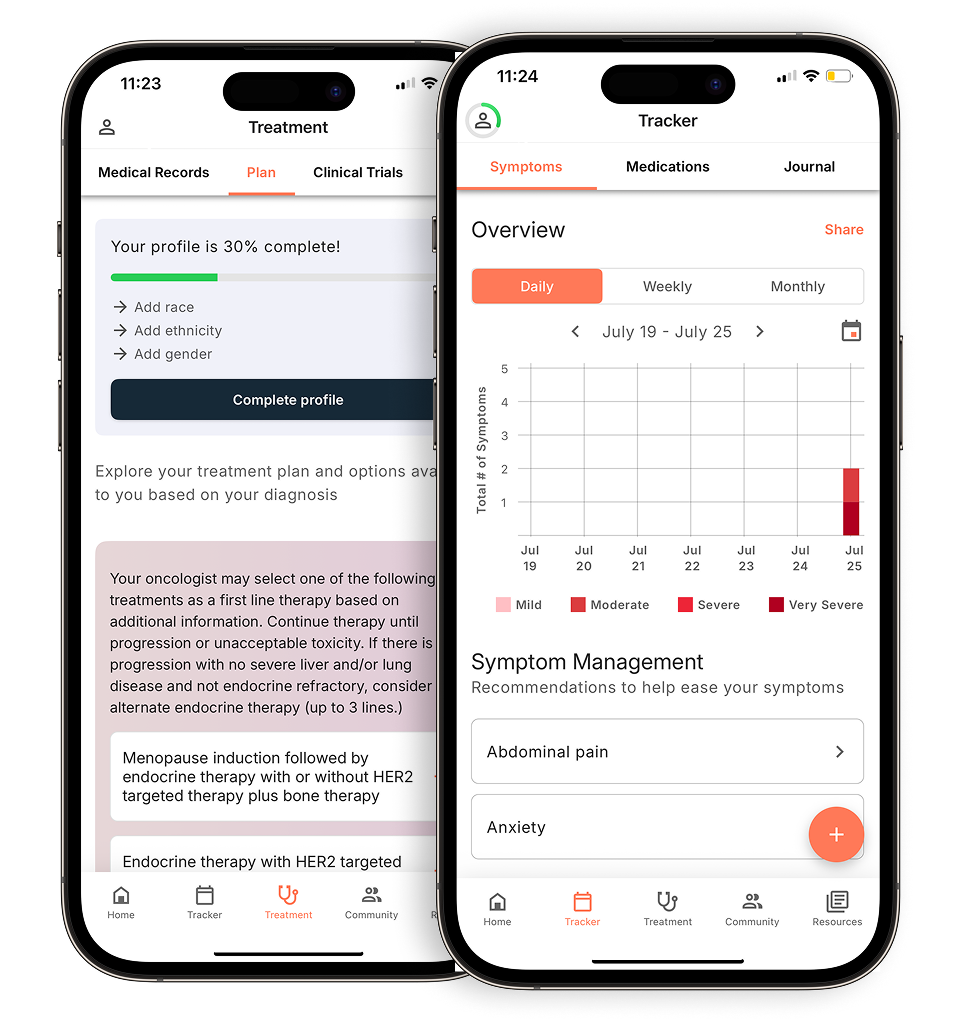
View your personalized treatment plan in the Outcomes4Me app
Use your diagnosis to unlock personalized NCCN Guidelines®-aligned recommendations.
Key Takeaways
- Look beyond the lump: While a new lump is a well-known sign, breast cancer can also appear as skin dimpling, swelling, nipple changes, or pain. Knowing the full range of possible symptoms helps you stay informed.
- Combine self-checks with regular screenings: Knowing what’s normal for your body is a powerful first step, but it doesn’t replace professional screenings like mammograms, which can detect changes too small to see or feel.
- Speak up when you notice a change: If something feels different, schedule a doctor’s appointment. Prepare your questions, and don’t hesitate to ask about your breast density or seek a second opinion to get the answers you need.
What are the early signs of breast cancer?
When we talk about breast cancer, the first thing that often comes to mind is finding a lump. While that’s certainly a key sign to watch for, it’s only one piece of the puzzle. The truth is, the early signs of breast cancer can be subtle and varied, and they look different for everyone. Knowing your body and what’s normal for you is the most powerful first step you can take in looking after your health.
Sometimes, breast cancer is found unexpectedly in people who feel perfectly healthy and active. It’s a reminder that paying attention to even small changes is so important. Understanding the full range of possible symptoms—not just the most common ones—can help you feel more prepared and confident in speaking with your doctor if you notice something isn’t right. This isn’t about creating worry; it’s about giving you the knowledge to be your own best advocate. From physical changes in your breasts to less common symptoms you might not have heard of, let’s walk through what you should know.
Checking for physical changes in your breasts
Being familiar with the look and feel of your breasts makes it easier to spot when something has changed. While a new, painless lump is the most common sign of breast cancer, it’s not the only one. Other physical changes can also be early indicators. It’s helpful to be aware of any new or persistent signs and symptoms that are different for you.
Pay attention to things like:
- Swelling in all or part of a breast (even if no lump is felt)
- Skin dimpling that might look like an orange peel
- Breast or nipple pain
- Nipple retraction (turning inward)
- Red, dry, flaking, or thickened skin on the nipple or breast
- Nipple discharge (other than breast milk)
- Swollen lymph nodes under the arm or near the collarbone
Understanding breast pain and nipple changes
It’s easy to feel a sense of alarm when you experience breast pain, but it’s important to know that it’s often linked to benign causes, like hormonal shifts during your menstrual cycle. However, pain can sometimes be a sign of something more serious. The key is to pay attention to the nature of the discomfort. Pain that comes and goes with your cycle is typically less concerning than pain that is constant and localized to one specific spot. According to the NHS, persistent breast or nipple pain that doesn’t seem to follow a pattern should be discussed with your doctor. Learning to distinguish between different types of pain helps you know when it’s time to seek a professional opinion.
What kind of pain is a warning sign?
If you notice a new pain in your breast or armpit that just won’t go away, it’s a good idea to get it checked out. Unlike the general tenderness that might come and go, a warning sign is often a persistent ache or sharp pain that stays in one area. The Centers for Disease Control and Prevention (CDC) highlights that unexplained, persistent pain in your breast or armpit is a symptom that warrants a conversation with your healthcare provider. This doesn’t automatically mean it’s cancer, but it’s one of those changes that shouldn’t be ignored. Trusting your body and speaking up when something feels consistently off is a crucial part of advocating for your health.
Nipple discharge and other changes to watch for
Beyond pain, changes in your nipples can also be an important indicator of breast health. While some nipple discharge can be normal, especially if you are breastfeeding, any spontaneous discharge that happens without squeezing the nipple deserves attention. Cancer Research UK notes that you should see a doctor for any nipple discharge that is bloody or clear. Other changes to look for include a nipple that suddenly turns inward (retraction) or the development of a rash, flaking, or thickened skin on or around the nipple. These signs might be subtle, but they are significant, making it important to be familiar with what’s normal for you.
Don’t overlook these less common symptoms
Some types of breast cancer don’t cause a distinct lump at all. Inflammatory breast cancer (IBC), for example, is a rare and aggressive form where symptoms can appear very quickly—sometimes seemingly overnight. Instead of a lump, IBC symptoms are caused by cancer cells blocking lymph vessels in the skin.
This can lead to sudden swelling, redness covering a large area of the breast, and skin that feels warm or heavy. You might also notice a rash or what looks like an insect bite. Because these signs can be mistaken for an infection, it’s important to understand the symptoms of IBC and see a doctor right away if they appear and don’t improve with antibiotics.
Understanding inflammatory breast cancer (IBC)
Inflammatory breast cancer is a less common but important type of breast cancer to be aware of because it presents so differently. Unlike other breast cancers that often form a noticeable lump, IBC is characterized by cancer cells that block the lymph vessels in the skin of the breast. This blockage is what causes the distinct “inflammatory” symptoms, like redness and swelling. Because symptoms can develop rapidly, sometimes over just a few weeks, knowing that a lump isn’t always present is a key part of understanding the full picture of breast health and advocating for yourself if you notice these specific changes.
Key symptoms of IBC
The signs of IBC can often be mistaken for a breast infection, like mastitis. That’s why it’s so helpful to know what to look for. The blockage of lymph vessels can cause the breast to become red, swollen, and feel warm to the touch. Some people describe the skin as looking pitted, similar to an orange peel (a sign called peau d’orange), or notice a rash-like appearance. The breast might also feel tender, painful, or itchy. If you are prescribed antibiotics for a suspected infection and the symptoms don’t improve, it’s crucial to follow up with your doctor for further evaluation.
How IBC is diagnosed
Diagnosing inflammatory breast cancer typically starts with a physical exam, where a doctor can see and feel the changes in the breast’s skin and tissue. Because IBC rarely forms a solid tumor, a mammogram might not show a distinct lump; instead, it may reveal skin thickening or increased breast density. For this reason, other imaging tests are often used to get a clearer picture. An ultrasound can help visualize the skin and underlying tissue, and a breast MRI may also be recommended. Ultimately, a biopsy, where a small sample of tissue is removed for testing, is needed to confirm an IBC diagnosis.
Remember, not all breast changes are cancer
Discovering a change in your breast can be unsettling, but it’s important to remember that most breast changes are not cancer. Your breasts can change due to hormonal cycles, injuries, or benign (non-cancerous) conditions like cysts or fibroadenomas. These benign breast conditions are very common and do not pose a threat to your health.
The key is not to ignore a change but to get it checked out so you can have peace of mind. Knowing about other factors, like your personal breast density, is also part of understanding your overall breast health. The goal is simply to be informed and proactive. If you notice anything new or different, talking to your doctor is always the right next step.
Mastitis vs. inflammatory breast cancer
It can be confusing when your breast becomes red, swollen, and warm to the touch. These symptoms are often associated with a common infection called mastitis, but they can also be signs of a rare type of breast cancer. Mastitis is a breast infection that is most common in breastfeeding women, but it can happen to anyone. It is, by far, the most frequent cause of this kind of breast inflammation. While much less common, these symptoms can also point to inflammatory breast cancer (IBC), an aggressive form of the disease that doesn’t typically present with a lump.
The most important thing to do if you notice these changes is to see your doctor right away. Because the symptoms look so similar, a doctor will often prescribe antibiotics first. If the redness and swelling improve with treatment, it’s almost certainly an infection. However, if the symptoms don’t get better or even worsen after a week of antibiotics, it’s crucial to follow up immediately. Persistent inflammation that doesn’t respond to treatment is a key sign that it might be something more serious, and further testing would be needed to get a clear diagnosis.
How do regular screenings help you find cancer early?
Staying on top of your health can feel like a lot to manage, but regular screenings are one of the most powerful tools you have for early cancer detection. Many people who have been through a breast cancer diagnosis share that they discovered something was off during a routine check. In fact, some patients found their cancer during regular mammograms or by noticing a lump themselves.
Think of screenings as a consistent, proactive way to care for your body. They can spot potential issues long before you might notice any symptoms, which often leads to more treatment options and better outcomes. It’s about being informed and in control of your health journey. By making screenings a regular part of your wellness routine, you’re giving yourself the best chance to catch any changes early. This doesn’t just mean formal medical tests; it also includes getting to know your own body through self-exams. Understanding what’s normal for you is a crucial piece of the puzzle. This section will walk you through the key types of screenings, what they involve, and how you can be an active participant in your own breast health. We’ll cover everything from mammogram schedules to what you can expect during a clinical exam, so you feel prepared and confident.
When should you get a mammogram?
Mammograms are a cornerstone of early breast cancer detection. They are low-dose X-rays that can find changes in breast tissue that are too small for you or your doctor to feel. While breast self-exams are a great way to stay familiar with your body, it’s important to remember they should never replace professional exams and screening tests like mammograms.
So, when should you start getting them? Guidelines can vary, but many organizations recommend starting annual or biennial mammograms in your 40s. However, your personal schedule might be different depending on your family history and other risk factors. The best first step is always to talk with your doctor to create a screening plan that’s right for you.
How to perform a breast self-exam
A breast self-exam is a simple way to check in with your body between clinical appointments. The goal is to become familiar with the normal look and feel of your breasts so you can spot any changes quickly. There are two common ways to do a breast self-exam at home: standing in front of a mirror or lying down. You can follow a few easy steps to perform your check.
While looking in the mirror, you can check for any visual changes with your arms in different positions. When lying down, you can use the pads of your fingers to feel for any lumps or unusual textures. Doing this once a month can help you build a baseline for what’s normal for you.
What to expect during a clinical breast exam
A clinical breast exam is performed by a healthcare provider, usually during your annual wellness visit. It’s similar to a self-exam, but with the benefit of a trained professional’s expertise. Your doctor or nurse will visually and manually examine your breasts and underarm area for any lumps, skin changes, or other abnormalities.
This is also a great opportunity to ask questions and learn what to look for on your own. A clinical exam helps you build what’s known as breast awareness, which is simply understanding the typical look and feel of your breasts. This awareness is a key part of your long-term health and can help you feel more confident in monitoring for changes.
What should you do if you notice a change?
Finding a change in your breast can feel unsettling, but it’s also a sign that you’re in tune with your body. The most important thing you can do is take the next step. Knowing what to do can help you feel more in control of the situation. It starts with knowing when to reach out to your doctor, how to get ready for your appointment so you can have a productive conversation, and understanding why it’s always okay to ask for a second opinion if you need more clarity.
When to call your doctor
Trust your instincts. If you notice any changes in your breasts—whether it’s a lump, skin dimpling, nipple changes, or something else that just feels off—it’s time to call your doctor. This is especially true if the symptom appears suddenly or doesn’t go away after a few days. It’s easy to fall into a “wait and see” mindset, but being proactive is one of the best things you can do for your health. Getting an appointment on the calendar is the first step toward getting answers. Even if it turns out to be a benign issue like a cyst, having a medical professional confirm that will give you valuable peace of mind. Don’t delay in seeking medical advice for any new or persistent symptoms.
How to prepare for your appointment
Walking into your doctor’s office with a clear plan can make a world of difference. Before you go, take a few minutes to jot down some notes. Write down the specific changes you’ve noticed, when you first saw them, and if they’ve changed at all over time. It’s also helpful to list any questions you have so you don’t forget them in the moment. Consider asking a trusted friend or family member to come with you for support and to serve as a second set of ears. Your appointment is a conversation, and you are an active participant. You can even discuss your self-exam technique with your doctor to make sure you’re on the right track for future breast awareness.
Why a second opinion can be helpful
You are your own best advocate. If you’ve seen a doctor but still feel like something isn’t right, it is completely acceptable to seek a second opinion. Sometimes, symptoms of a serious condition can mimic something more common. For example, inflammatory breast cancer is sometimes mistaken for a breast infection. If you’re given a diagnosis but your symptoms don’t improve with the recommended treatment, speak up. It’s okay to go back to your doctor and say, “This isn’t getting better. Can we explore other possibilities?” You can specifically ask for further testing, like a diagnostic mammogram or a biopsy, to get a clearer picture. Getting another expert’s perspective is a normal and often wise part of the diagnostic process.
How does breast density affect screenings?
After a mammogram, you might hear your doctor mention breast density. It’s a term that can sound confusing, but it’s an important piece of information for understanding your breast health and screening needs. Having dense breasts is common and not something you can control—it’s just the way your breasts are made. But knowing your density level helps you and your doctor make the best decisions about your health screenings moving forward. It’s all about having the right information to advocate for yourself and ensure you’re getting the most thorough care possible.
What is dense breast tissue?
Dense breast tissue simply means you have a higher amount of fibrous and glandular tissue compared to fatty tissue in your breasts. It’s not something you can feel, and it has nothing to do with the size or firmness of your breasts. The only way to know if you have dense breasts is through a mammogram. Many women aren’t aware of their breast density until they see it on their report. Learning about your breast composition is the first step in understanding what it means for your health and what questions you should ask your care team about future screenings.
What dense breasts mean for your mammogram
On a mammogram, fatty tissue appears dark and transparent, while both dense tissue and potential tumors appear as solid white areas. This can create a camouflage effect, making it harder for radiologists to spot a small tumor in a dense breast. Think of it like trying to find a snowball in a snowstorm. Because of this, women with dense breasts may need more than just a standard mammogram to get a clear picture. It’s one of the common breast cancer myths that a mammogram is foolproof for everyone; your personal anatomy plays a big role.
Additional screening options to consider
If you find out you have dense breasts, it’s a great opportunity to have a conversation with your doctor about a more personalized screening plan. They may recommend additional tests to be used alongside your regular mammogram. Options can include a 3D mammogram (tomosynthesis), a breast ultrasound, or an MRI. These imaging tests can help provide a clearer view of the breast tissue. Continuing to perform breast self-exams is also important, but adding these other tools can offer extra peace of mind and improve the chances of early detection.
What can you expect during the diagnostic process?
If you or your doctor have found a potential concern, the next phase is the diagnostic process. This is a series of steps healthcare teams use to get a clear picture of your breast health and determine what’s causing the change. While waiting for answers can be stressful, knowing what to expect can help you feel more prepared for each step. The goal is to gather all the necessary information to get a clear and accurate diagnosis.
The first steps after an abnormal screening
The diagnostic journey typically begins with a visit to your healthcare provider. They will likely start with a clinical breast exam to feel for any lumps or other changes in your breast tissue and under your arms. You’ll also discuss your personal and family medical history. It’s important to be open about any symptoms you’ve noticed and any risk factors you may have. If your doctor finds an area of concern, they will usually recommend imaging tests to get a closer look. This is a standard and important step to investigate further and gather more information.
Understanding imaging tests and biopsies
Imaging tests create detailed pictures of the inside of your breasts. The most common types are mammograms, breast ultrasounds, and sometimes MRIs. These tests help your doctor see the size and location of any suspicious areas. If an imaging test shows something that needs more investigation, a biopsy will be performed. During a biopsy, a doctor removes a small sample of tissue from the area of concern. That sample is then sent to a lab, where a specialist will examine it under a microscope to check for cancer cells. A biopsy is the only way to know for sure if a suspicious spot is cancer.
How to understand your test results
After the biopsy, the results are compiled into a pathology report. This document is very important, as it will tell you and your doctor whether cancer cells were found. If cancer is present, the report will also include key details, like the type of cancer and its characteristics, which help guide treatment decisions. Your doctor will go over the report with you in detail. This is the time to ask any questions you have. Understanding your results is the first step in creating a personalized treatment plan that’s right for you.
Coping with the emotional side of a diagnosis
A breast cancer diagnosis is a life-changing event that extends far beyond the physical. It’s completely normal to feel a mix of emotions—shock, fear, anger, or even numbness. This emotional journey is just as much a part of the experience as the medical appointments and treatments. It’s important to give yourself space to process these feelings and recognize that you don’t have to go through it alone. Taking care of your mental well-being is a crucial part of your overall care plan. Understanding how to find support and manage frustrations, like unexpected delays, can help you feel more grounded during a time that can feel very overwhelming.
The importance of mental health support
It’s common for people with cancer, and their loved ones, to struggle with their mental health. A diagnosis can feel especially jarring when it comes out of the blue for someone who feels perfectly healthy. This shock can make it difficult to process what’s happening. Finding ways to care for your emotional health is essential. This could mean talking to a therapist who specializes in working with cancer patients, joining a support group, or leaning on friends and family. There are many resources available to help you find the right support. Having access to clear, reliable information about your diagnosis and treatment options can also help reduce feelings of uncertainty and give you a greater sense of control over your journey.
When external factors cause delays
Waiting for appointments, tests, or results can be one of the most challenging parts of the diagnostic process. Sometimes, factors completely out of your control, like scheduling backlogs, can cause delays that add to your stress and anxiety. It’s natural to feel frustrated or helpless in these situations. While you can’t always speed up the timeline, you can focus on what you can control. Keep a notebook to track your appointments and questions, and don’t hesitate to follow up with your doctor’s office for updates. Being an active participant in your care and advocating for your needs can help restore a sense of agency during a period of uncertainty.
What is advanced or metastatic breast cancer?
Sometimes, breast cancer can spread from the breast to other parts of the body. When this happens, it’s known as advanced, secondary, or metastatic breast cancer. This isn’t a new or different type of cancer; it’s still breast cancer, but it’s now growing in a new location. Understanding this stage is important because the symptoms can be quite different from those of early-stage breast cancer. The signs often depend on where the cancer has spread, which can include the bones, liver, lungs, or brain. Knowing what to look for can help you have more informed conversations with your healthcare team about any new or persistent feelings of being unwell.
When breast cancer spreads (secondary breast cancer)
When breast cancer cells travel to other parts of the body, they can cause a new set of symptoms. These are often more general than the localized changes you might notice in a breast. For example, you might experience persistent fatigue that doesn’t get better with rest, a loss of appetite, or unexplained weight loss. Some people report a general feeling of being unwell without a clear reason, nausea, or trouble sleeping. Because these symptoms can be vague and easily attributed to other things, it’s important to pay attention to your body and talk to your doctor about any new patterns that don’t feel right to you.
General symptoms of metastatic breast cancer
The specific signs of metastatic breast cancer can vary widely depending on where it has settled. If it has spread to the bones, you might experience new, persistent pain, swelling, or bones that break more easily. If it’s in the lungs, symptoms could include a cough that doesn’t go away, shortness of breath, or chest pain. Cancer in the liver might cause jaundice (yellowing of the skin and eyes), abdominal pain or swelling, or fatigue. And if it has spread to the brain, you might notice headaches, vision changes, seizures, or confusion. It’s not about looking for every possible symptom, but about being aware of persistent changes in your body.
What happens if breast cancer is not treated?
Deciding to move forward with treatment is a deeply personal choice, but it’s one that is best made with a clear understanding of the options and potential outcomes. Timely and appropriate medical care is the most effective way to manage breast cancer, slow its progression, and improve quality of life. The experiences of many survivors highlight how critical a quick and correct diagnosis is, as symptoms can appear suddenly and progress rapidly. Getting treatment gives you the best opportunity to manage the disease effectively and continue living a full life. It’s about taking an active role in your health journey, supported by a medical team that can provide the best care for your specific situation.
Survival rates for untreated breast cancer
The data on treatment outcomes shows just how much of a difference medical care can make. One study looked at patients diagnosed with metastatic breast cancer and found a significant gap in survival between those who received treatment and those who did not. Patients who chose not to get any treatment lived for an average of only 2.5 months. In contrast, patients who did receive treatment lived for an average of 36.4 months. This research powerfully illustrates that treatment can greatly extend life, offering valuable time and improving the chances for a better outcome. It underscores why seeking medical care is such a critical step after a diagnosis.
The importance of timely treatment
Getting a prompt and accurate diagnosis is crucial because breast cancer can spread quickly. The stories of many survivors show that symptoms can be very different for each person and can sometimes appear very suddenly. This is why it’s so important not to delay seeking medical advice if you notice a change. Early detection and treatment often lead to more options and better outcomes. By addressing symptoms as soon as they arise, you and your healthcare team can create a plan to manage the disease effectively from the start. This proactive approach is a key part of taking control of your health and giving yourself the best possible chance for success.
Why sharing your story matters
When you’re going through a breast cancer diagnosis, it can feel like you’re on an island. But hearing from others who have been there can be a lifeline. Personal stories create powerful connections, reminding us that we aren’t alone in our experiences. They can also be an incredible source of information and strength, both for the person sharing and for those who are listening. Sharing your journey, in your own time and way, helps build a community of support and understanding that can make a real difference.
How others discovered they had breast cancer
Every diagnosis story is unique. Reading about how others discovered their cancer can show you just how varied the experience can be. For instance, some people, like Annie Miyazaki-Grant and her sister, found lumps around the same time, highlighting a possible family connection. Others, like Sandra Race, were diligent about their health and yearly mammograms and still received a diagnosis. These patient stories show there isn’t one single path to discovery. Hearing these different accounts can help validate your own experience, no matter how you found a change in your breast, and remind you that cancer doesn’t discriminate.
Clearing up common myths about symptoms
One of the most powerful things personal stories can do is correct common myths. A widespread belief is that breast cancer always causes a lump, but this isn’t true. Many people are diagnosed without ever feeling one. For example, women with inflammatory breast cancer (IBC) often share stories of symptoms like skin redness, swelling, or warmth, which can be mistaken for a breast infection. Hearing from IBC survivors about their initial symptoms helps others recognize these important warning signs and encourages them to seek medical advice for any persistent changes.
Finding support in other people’s stories
Beyond providing information, sharing your story fosters a deep sense of connection. When you’re facing a diagnosis, it’s easy to feel isolated. Reading about someone who has walked a similar path can be incredibly comforting and validating. It’s a reminder that you are part of a larger community. These personal accounts offer insights and emotional support that you can’t always find in a medical textbook. They are also a strong way to raise awareness and advocate for better research and care. Whether you’re sharing or listening, these stories build a network of understanding and strength, helping everyone involved feel more supported on their journey.
Related Articles
- No Lump Breast Cancer: Stories & Warning Signs
- A Young Breast Cancer Survivor’s Guide to Thriving
- Breast density and breast cancer risk | Outcomes4me
View your personalized treatment plan in the Outcomes4Me app
Use your diagnosis to unlock personalized NCCN Guidelines®-aligned recommendations.
Frequently Asked Questions
Besides a lump, what other breast changes should I watch for? It’s great that you’re thinking beyond just lumps, as many early signs are more subtle. Pay attention to any changes in the look or feel of your breasts, such as swelling in one area, skin dimpling that resembles an orange peel, or any new or persistent pain in your breast or nipple. You should also take note of changes to your nipple, like if it turns inward, or if you notice any redness, dryness, or discharge other than breast milk.
I found a change in my breast, but I’m nervous about what it could be. Is it okay to wait and see if it goes away? It’s completely understandable to feel nervous when you notice something new. However, the best thing you can do for your health and your peace of mind is to schedule a doctor’s appointment. While most breast changes are not cancer, putting off a visit only prolongs the worry. Getting it checked out is the only way to get clear answers and is a proactive step in taking care of yourself.
If mammograms are the best way to find cancer early, why are breast self-exams still important? Think of mammograms and self-exams as partners in your health routine. A mammogram is a powerful tool that can detect tissue changes that are too small to be felt. A breast self-exam, on the other hand, is about building breast awareness. By regularly checking in with your body, you become the expert on what’s normal for you, which helps you spot any new or different changes that might appear between your scheduled screenings.
My mammogram report says I have dense breasts. Does this mean I’m at a higher risk for cancer? Having dense breasts is very common and simply describes the composition of your breast tissue. It means you have more fibrous and glandular tissue compared to fatty tissue. While it can make mammograms slightly more difficult to read and is associated with a small increase in risk, it doesn’t mean you will get cancer. It’s an important piece of information that opens up a conversation with your doctor about creating the best screening plan for you, which might include additional tests like a 3D mammogram or an ultrasound.
What’s the difference between a screening test and a diagnostic test? A screening test, like your routine annual mammogram, is a check that’s done when you have no known problems or symptoms. Its purpose is to look for any potential signs of cancer early. If that screening shows an area of concern, or if you report a new symptom like a lump, your doctor will then order diagnostic tests. These tests, which can include a different type of mammogram, an ultrasound, or a biopsy, are designed to get a closer look at a specific area to figure out exactly what’s going on.