
A cancer diagnosis can make you feel like you’ve lost control. One of the most powerful ways to get that feeling back is through knowledge. The NCCN Guidelines contain the most authoritative treatment information, but let’s be honest—they are dense and written for doctors. Don’t let that stop you. This guide is here to change that. We provide clear, step-by-step instructions for reading the guidelines, helping you understand the official NCCN recommendations and find the specific cancer patient guidance you need. Our goal is to turn this complex document into an accessible tool you can use to advocate for yourself.
View your personalized treatment plan in the Outcomes4Me app
Use your diagnosis to unlock personalized NCCN Guidelines®-aligned recommendations.
Key Takeaways
- Start with the Gold Standard: The NCCN Guidelines are the most trusted, evidence-based recommendations for cancer care. Familiarizing yourself with them provides a solid foundation for understanding your treatment options and the reasoning behind them.
- Find the Patient-Friendly Version: You don’t have to decipher dense clinical documents. Use resources like the “NCCN Guidelines for Patients” and digital tools that translate expert recommendations into clear, understandable language relevant to you.
- Use Information to Start a Conversation: The guidelines are a powerful tool for talking with your doctor. Bring what you learn to your appointments to discuss how the recommendations fit your unique health situation and collaborate on a treatment plan you feel confident about.
What Are the NCCN Guidelines and Why Do They Matter?
When you’re diagnosed with cancer, you’re suddenly faced with a flood of information. It can be hard to know what to trust. That’s where the NCCN Guidelines come in. Think of them as the most reliable, up-to-date roadmap for cancer treatment, created by leading experts to help you and your doctor make the best decisions for your health. Understanding what these guidelines are and why they’re so important is a powerful first step in becoming an active partner in your own care.
Who Makes Up the NCCN?
The NCCN isn’t a single government body or company; it’s a not-for-profit alliance of 33 leading cancer centers in the United States. This group includes world-renowned institutions like the Mayo Clinic Comprehensive Cancer Center and The University of Texas MD Anderson Cancer Center. Panels of experts from these centers create and continuously update the guidelines. These panels are made up of multidisciplinary teams—oncologists, surgeons, nurses, and other specialists—who are at the forefront of cancer research and patient care. They work together to review all the available evidence and reach a consensus on the most effective and safest treatment approaches, ensuring the guidelines reflect the highest standard of cancer care.
How NCCN Guidelines Shape Your Cancer Care
The National Comprehensive Cancer Network (NCCN) brings together panels of top cancer experts from across the country to create trusted recommendations for cancer care. These aren’t just opinions; they’re based on solid scientific research and agreement among many specialists. Because of this rigorous process, the NCCN Guidelines are widely recognized as the gold standard for clinical direction and policy in cancer care. Your oncology team uses these guidelines to ensure the treatment plan they recommend for you is backed by the highest level of evidence and expertise available.
Why Evidence-Based Care Matters
The ultimate goal of the guidelines is simple: to help patients have the best possible health results. Cancer research moves incredibly fast, and what was standard treatment a few years ago might not be the best option today. The NCCN expert panels are constantly reviewing new data and updating the guidelines to reflect the latest breakthroughs. These clinical practice guidelines are incredibly detailed, featuring decision-making flowcharts and clear explanations of the science behind each recommendation. This ensures that the guidance is not only current but also transparent, helping your care team apply the most effective strategies to your specific situation.
What Do the NCCN Guidelines Cover?
The NCCN Guidelines are far more than just a list of treatments. They are a comprehensive library of information covering the entire cancer journey, from your first screening to survivorship. This breadth is what makes them such an indispensable resource for both patients and doctors. They provide a detailed framework for making decisions at every stage, ensuring that the care you receive is holistic, evidence-based, and considers all aspects of your health and well-being. Understanding the scope of what these guidelines offer can help you see where they fit into your own experience and how you can use them to have more productive conversations with your care team.
A Wide Range of Cancer Types
The NCCN Guidelines are incredibly thorough, offering evidence-based recommendations for a vast number of cancers. Whether you’re dealing with breast cancer, lung cancer, colon cancer, leukemia, or skin cancer, there’s a specific set of guidelines tailored to that diagnosis. These aren’t generic suggestions; they provide detailed pathways for treatment based on the specific type, stage, and even molecular characteristics of the tumor. The experts who create these guides understand that every cancer is unique, and the treatment approach must be as well. This level of detail is what makes them the gold standard, but it can also make them challenging to sort through on your own, which is why having a tool that can filter this information for you is so helpful.
Prevention and Early Detection
The guidelines aren’t just for those who have already been diagnosed. A significant portion is dedicated to prevention and screening, which are crucial for catching cancer early when it’s often most treatable. You’ll find recommendations on topics like when to get a mammogram for breast cancer screening or who should be screened for lung cancer. This proactive guidance helps individuals and their doctors make informed decisions about monitoring their health based on risk factors and family history. The NCCN provides these resources for patients to empower them with the knowledge to take charge of their health, offering clear, expert-backed advice on how to reduce cancer risk and the importance of early detection.
Supportive Care for Managing Symptoms
Managing a cancer diagnosis goes beyond just treating the disease itself; it’s also about maintaining your quality of life. The NCCN recognizes this by providing extensive guidelines for supportive care. These recommendations focus on managing the side effects of treatment and the symptoms of the cancer. For example, you can find guidance on everything from managing fatigue and nausea to more complex issues like using hematopoietic growth factors to help your body produce more blood cells. They even offer resources for things like smoking cessation, which can significantly impact treatment outcomes. This focus on the whole person ensures that your comfort and well-being are a central part of your care plan.
Guidance for Specific Patient Groups
Cancer care is not a one-size-fits-all process, and the NCCN Guidelines reflect this reality. The expert panels develop specific recommendations for unique patient populations who may have different needs or face different challenges. For instance, there are dedicated guidelines for adolescents and young adults (AYAs) with cancer, whose biological and psychosocial needs differ from those of older adults or young children. The guidelines also address complex situations, such as treating cancer in people with HIV, where treatment plans must account for multiple health conditions. This tailored approach ensures that every patient, regardless of their specific circumstances, can receive care that is both evidence-based and personalized to their life.
How Can You Access the NCCN Guidelines?
Knowing that these expert guidelines exist is one thing, but getting your hands on them is the next crucial step. You might think that such a critical resource would be hard to find, but the NCCN makes its clinical content available to everyone, including patients and caregivers. The key is knowing where to look and which tools will make the information easiest for you to digest. Let’s walk through the simple ways you can access the NCCN Guidelines and start feeling more informed about your care.
Get Free Access Online
The best place to start is by going directly to the source. Patients and healthcare providers can create a free account on the National Comprehensive Cancer Network (NCCN) website to view their complete library of clinical content. Creating an account gives you full access to the most current treatment protocols and recommendations for your specific cancer type. This is an invaluable first step toward understanding the standards of care that oncologists use every day. Taking a few minutes to register can open up a world of information, helping you prepare for appointments and have more meaningful conversations with your care team.
Find Your Way with the NCCN Guidelines Navigator
Once you have an account, you might feel a bit overwhelmed by the sheer amount of clinical information. That’s where the NCCN Guidelines Navigator comes in. This innovative online tool is designed to help you easily find your way through the dense guidelines. Think of it as a user-friendly roadmap that helps you pinpoint the information most relevant to your diagnosis and treatment journey. Instead of sifting through complex documents, the Navigator helps you quickly find what you need, making it much easier to understand your treatment options and the recommendations that apply to you.
Use the Mobile App for Offline Access
For those moments when you’re not at your computer, NCCN offers a mobile app that puts all the guidelines right at your fingertips. You can view the guidelines anytime, anywhere—whether you’re waiting for an appointment or simply want to review information on the go. This flexibility is a game-changer, ensuring you always have access to critical information when you need it most. A standout feature is the app’s offline access, which allows you to download guidelines directly to your device. This is incredibly helpful if you have inconsistent internet access or want to be sure you can pull up information during a doctor’s visit without any delays.
Making Sense of the NCCN Guidelines Layout
Opening the NCCN Guidelines for the first time can feel a bit overwhelming. They are dense, detailed documents created for medical professionals, filled with complex terms and diagrams. But don’t let that discourage you. Once you get familiar with their layout, you can find the information that’s most relevant to your care. Think of it as learning the key to a map—once you know what the symbols mean, you can find your way.
The guidelines are intentionally structured to provide clear, evidence-based paths for cancer treatment. They aren’t just a list of drugs or procedures; they are a comprehensive resource that walks through the entire care journey, from diagnosis to survivorship. Understanding the main components—the visual flowcharts, the detailed explanations, and the expert panels behind them—is the first step to using this powerful tool to have more informed conversations with your doctor. Let’s look at the three main parts you’ll encounter.
How to Read Treatment Algorithms and Flowcharts
The core of the NCCN Guidelines are the treatment algorithms, which are essentially detailed flowcharts. These diagrams map out the recommended steps for cancer care based on specific information, like your cancer type, stage, and other diagnostic results. They are designed to guide clinicians through the decision-making process, showing different paths and options at each stage.
For you as a patient, these treatment algorithms and flowcharts can help you visualize your potential treatment journey. You can see the standard-of-care options and understand why your doctor might recommend one path over another. Following the lines and boxes can clarify the sequence of treatments, from initial therapy to what might come next if the cancer returns or progresses.
Locating Supporting Text and References
While the flowcharts provide a great visual overview, they don’t tell the whole story. Each guideline is paired with comprehensive supporting text that explains the why behind every recommendation. This is where you can find the deeper context and rationale. If you’re wondering why a particular treatment is preferred or what the evidence says, this section is your go-to resource.
This text also includes references to the latest research studies and clinical trials that the recommendations are based on. This transparency allows you and your care team to see the exact evidence supporting each option. It’s a powerful way to confirm that the suggested treatments are backed by solid scientific data.
Who Creates the Guidelines (and How Often Are They Updated)?
It’s important to know that the NCCN Guidelines are a trusted resource because of the people who create them. They are developed and regularly updated by expert panels made up of leading oncologists, researchers, and patient advocates from top cancer centers. These multidisciplinary teams review the latest medical findings to ensure the guidelines reflect the most current and effective approaches to cancer care.
Because cancer research moves so quickly, these guidelines are not static. The panels meet frequently to review new data and update the recommendations as needed. This continuous review process means you can be confident that the information is up-to-date and represents the current consensus among cancer experts.
What Do the NCCN Evidence Categories Mean?
When you look at the NCCN Guidelines, you’ll notice that each recommendation comes with a “category” label. Think of these categories as a rating system that tells you how strong the medical evidence is for a particular treatment and how much the experts agree on it. Understanding what these labels mean can help you feel more confident in the treatment path you and your doctor decide on. It’s the NCCN’s own system for showing the work behind their recommendations, giving you a peek into the expert consensus that shapes cancer care.
This system is broken down into four main categories. Each one gives you a clue about the level of certainty behind the advice. Knowing the difference between a Category 1 and a Category 3 recommendation can shape the questions you ask your care team and help you become a more informed partner in your own care.
Category 1: The Strongest Evidence
When you see a Category 1 recommendation, you can think of it as the gold standard. This label means the recommendation is based on high-level evidence, and there is uniform agreement among the NCCN expert panel that it’s the best course of action. The evidence usually comes from well-designed clinical trials, which are the strongest type of medical research. For patients, a Category 1 recommendation offers the highest degree of confidence that a treatment is effective and has been thoroughly vetted by the oncology community. You and your doctor can proceed with this option knowing it’s backed by the most robust scientific data available.
Category 2A: Strong Consensus, Less Data
A Category 2A recommendation is still a very strong one. While it’s based on slightly lower-level evidence compared to Category 1, the key here is that there is still uniform agreement among the NCCN experts. This might mean the evidence comes from smaller studies or compelling real-world data rather than a large, randomized trial. You can feel very secure with a 2A recommendation, as it indicates a strong consensus from top oncologists that this is an appropriate and effective treatment option for your specific situation. It’s a solid choice that the experts stand behind, even if the supporting data looks a little different from Category 1.
Category 2B: General Consensus with Some Disagreement
Here’s where things get a little more nuanced. A Category 2B recommendation is also based on lower-level evidence, but there isn’t complete, uniform agreement among the experts. While there’s a general consensus, some panel members may have differing opinions. This doesn’t mean it’s a poor choice, but it does suggest there might be other reasonable options to consider. A 2B recommendation is a great signal to have a deeper conversation with your doctor about why they believe this is the right path for you and what other alternatives might exist. It’s an opportunity to explore the different perspectives on your care.
Category 3: When the Experts Disagree
A Category 3 recommendation indicates there is significant disagreement among the NCCN panel members about the treatment. This often happens when evidence is limited, conflicting, or still emerging, such as with a brand-new therapy. A recommendation falls into this category when the experts feel it’s a reasonable option in certain circumstances, but it’s not considered a standard of care. If a treatment you’re considering is Category 3, it’s essential to discuss the potential risks, benefits, and scientific rationale thoroughly with your healthcare team. This category highlights areas where more research is needed, and your participation could even contribute to future knowledge.
How to Read NCCN Treatment Algorithms
At the heart of the NCCN Guidelines are the treatment algorithms. Think of these as detailed roadmaps for your care. They can look intimidating at first glance with all their boxes and arrows, but they are designed to be logical and easy to follow once you know what you’re looking for. These visual guides walk you and your healthcare team through the recommended treatment options based on specific details of your diagnosis, like the type and stage of your cancer. Learning to follow these paths can empower you to have more informed conversations with your doctor about what comes next.
A Step-by-Step Guide to Decision Trees
The best way to approach a treatment algorithm is to treat it like a “choose your own adventure” story. You start at the beginning, and each box presents a decision point based on your specific clinical situation. From there, you follow the arrows to the next logical step. The NCCN’s step-by-step charts are designed to guide you through the complex process of choosing a treatment. By following the path that matches your diagnosis, test results, and health status, you can see the sequence of recommended actions, from initial workup to primary treatment and follow-up care. This structured approach helps clarify why certain options are recommended over others.
Decode Common Symbols and Abbreviations
As you follow the flowcharts, you’ll notice categories listed next to each recommendation, like “Category 1” or “Category 2A.” These aren’t just random labels; they tell you how strong the evidence is for that particular treatment. Understanding the level of scientific evidence is key.
- Category 1: This is the highest recommendation, backed by strong evidence and uniform agreement among the NCCN experts.
- Category 2A: This is also a strong recommendation, but it’s based on slightly lower-level evidence. Still, the experts are in complete agreement.
- Category 2B: The evidence here is also lower-level, and while there’s general agreement, some debate exists.
- Category 3: This indicates major disagreement among the panel members.
Knowing these categories helps you understand the confidence behind each suggestion.
What the Recommendation Boxes and Footnotes Mean
The main treatment options are laid out in boxes within the algorithm, but don’t overlook the footnotes. These little notes, often marked with a letter or symbol, provide crucial context that can be essential for your care. They might explain specific circumstances where a treatment is preferred, detail potential side effects, or clarify dosage information. The guidelines are created to help everyone involved in cancer care—from doctors and nurses to patients and their families—make good decisions. Reading the footnotes helps you understand the full picture and the reasoning behind each recommendation, giving you more clarity for discussions with your care team.
What to Look For in the Discussion Sections
While the treatment algorithms provide the “what,” the discussion sections offer the “why.” Think of this part of the guidelines as the detailed conversation among the experts. It’s where they explain their reasoning, weigh the pros and cons of different options, and talk about the evidence that shaped their recommendations. Reading these sections can give you a much deeper understanding of your potential treatment path and help you formulate more specific questions for your care team. It’s where the black-and-white flowcharts gain color and context, making the information feel more personal and less intimidating.
Understanding the “Why” Behind Each Recommendation
Have you ever wondered what makes a particular treatment the standard of care? The discussion section breaks it down for you. This is where the expert panel explains the clinical trials and data that support their choices. According to the NCCN, their guidelines are trusted recommendations for cancer care because they “are based on strong research and agreement from many experts.” By reading this section, you can see the strength of the evidence behind each option, which can build your confidence in the recommended plan and help you understand why your doctor is suggesting a specific course of action over another.
Finding Special Considerations for Your Situation
Cancer care is never one-size-fits-all. The discussion sections often explore the nuances of treatment for different patient populations. For example, the experts might discuss how age, other health conditions (comorbidities), or specific tumor characteristics can influence treatment decisions. This is also where you can find information that helps you and your doctor make choices together. NCCN creates easy-to-understand guides for cancer patients that pull from these detailed discussions, helping you learn about your care options and feel more prepared for conversations with your oncologist.
Learn About New Therapies and Research
The world of cancer research moves incredibly fast, and the guidelines reflect that. The discussion section is often the first place you’ll see mentions of promising new therapies or the latest clinical trial results. Because new research is always emerging, the guidelines are updated continuously to ensure they always contain the most current information. Reading this part can give you a glimpse into the future of cancer care and introduce you to cutting-edge options that may be relevant to your diagnosis, providing a sense of hope and highlighting the constant progress being made in the field.
What Makes the NCCN Guidelines Hard to Read?
Let’s be honest: the NCCN Guidelines were written by and for oncologists. While they are an incredible resource, they weren’t designed with a patient audience in mind. It’s completely normal to open a document and feel like you’re trying to read a foreign language. Recognizing the common hurdles can help you prepare and find the right strategies to get the information you need without feeling overwhelmed.
The main difficulties usually fall into three buckets: the complex medical language, the sheer volume of constant updates, and the challenge of figuring out how these general recommendations apply to your specific situation. Think of the guidelines as a detailed, technical map. It has all the possible routes, but you still need a guide—your oncology team—to help you choose the best path based on your personal journey, the current weather (your health), and your destination (your treatment goals). Understanding these challenges upfront is the first step toward using the guidelines as the powerful tool they are meant to be.
Understanding Complex Medical Jargon
One of the biggest barriers to understanding the NCCN Guidelines is the language itself. The documents are filled with clinical abbreviations, scientific terms, and medical jargon that can make your head spin. This isn’t a reflection on you; it’s a reflection of the document’s intended audience. It’s a known challenge, as differences in health literacy can make it incredibly difficult for patients to grasp complex medical information, and the NCCN Guidelines are a prime example of this. You might see terms for specific gene mutations, drug classes, or treatment protocols that are unfamiliar. Don’t feel discouraged. Instead, make a list of questions and unfamiliar terms to review with your doctor or a nurse navigator.
How to Keep Up with Guideline Updates
Cancer research moves at a rapid pace, which is fantastic news for patients. It means new therapies and better approaches are constantly being developed. To reflect this, the NCCN expert panels are always reviewing the latest evidence and updating the guidelines. While this ensures the recommendations are current, it can also be overwhelming. The treatment that was standard six months ago might have a new alternative today. It’s tough to know if you’re looking at the most recent version or if a significant change has just been published. Always check the publication date on the guidelines you’re reading and feel empowered to ask your care team if any recent updates might affect your treatment plan.
Applying Recommendations to Your Own Situation
The NCCN Guidelines provide a roadmap for the “average” patient with a specific cancer type and stage, but no one is truly average. The recommendations are based on large clinical trials and may not account for your unique circumstances, such as other health conditions, your age, specific tumor biomarkers, or your personal preferences for quality of life. This is why it’s so important to view the guidelines as a starting point for a conversation, not a final verdict. True shared decision-making happens when you and your doctor use these guidelines together to tailor a plan that is right for you.
How Digital Tools Make NCCN Guidelines Easier to Use
The NCCN Guidelines are incredibly thorough, but their clinical language and complex charts can feel overwhelming. Thankfully, you don’t have to decipher them on your own. A growing number of digital tools are designed to translate these expert recommendations into clear, actionable information that’s relevant to your specific situation. These platforms can help you process the guidelines, connect them to your health history, and feel more prepared for conversations with your care team. Think of them as a helpful bridge between the dense medical text and your personal cancer journey.
Get Personalized Guidance with AI-Powered Tools
Artificial intelligence (AI) is changing how we access complex information. In cancer care, AI-powered tools can analyze the vast NCCN guidelines and filter them based on your unique diagnosis. Instead of reading through every possible treatment path, these tools highlight the most relevant recommendations. Research shows that AI can effectively provide personalized recommendations that align with NCCN guidance, helping you and your doctor consider options tailored to your circumstances. This technology acts as a smart filter, saving you time and reducing information overload.
Connect Your Personal Medical Records
Generic advice has its limits. To get the most from the NCCN Guidelines, the information needs to connect to your personal health records. Digital platforms make this possible. For example, the NCCN Guidelines Navigator is an online tool that helps you sort through the guidelines based on your specific cancer details. By inputting information about your diagnosis and medical history, these tools deliver tailored guidance reflecting the latest clinical recommendations for your situation. This turns a massive library of information into a personalized roadmap you can explore.
Use Patient-Friendly Platforms to See Your Options
Medical jargon can be a major barrier to feeling empowered in your care. Recognizing this, many organizations create patient-friendly platforms that translate clinical language into plain English. The NCCN itself develops easy-to-understand guides for patients, breaking down complex topics into manageable information. Digital health apps and websites take this a step further, often using visuals and simple definitions to explain your treatment options. These resources ensure you can access the same high-quality information as your doctors, just in a format built for you.
The Outcomes4Me Platform
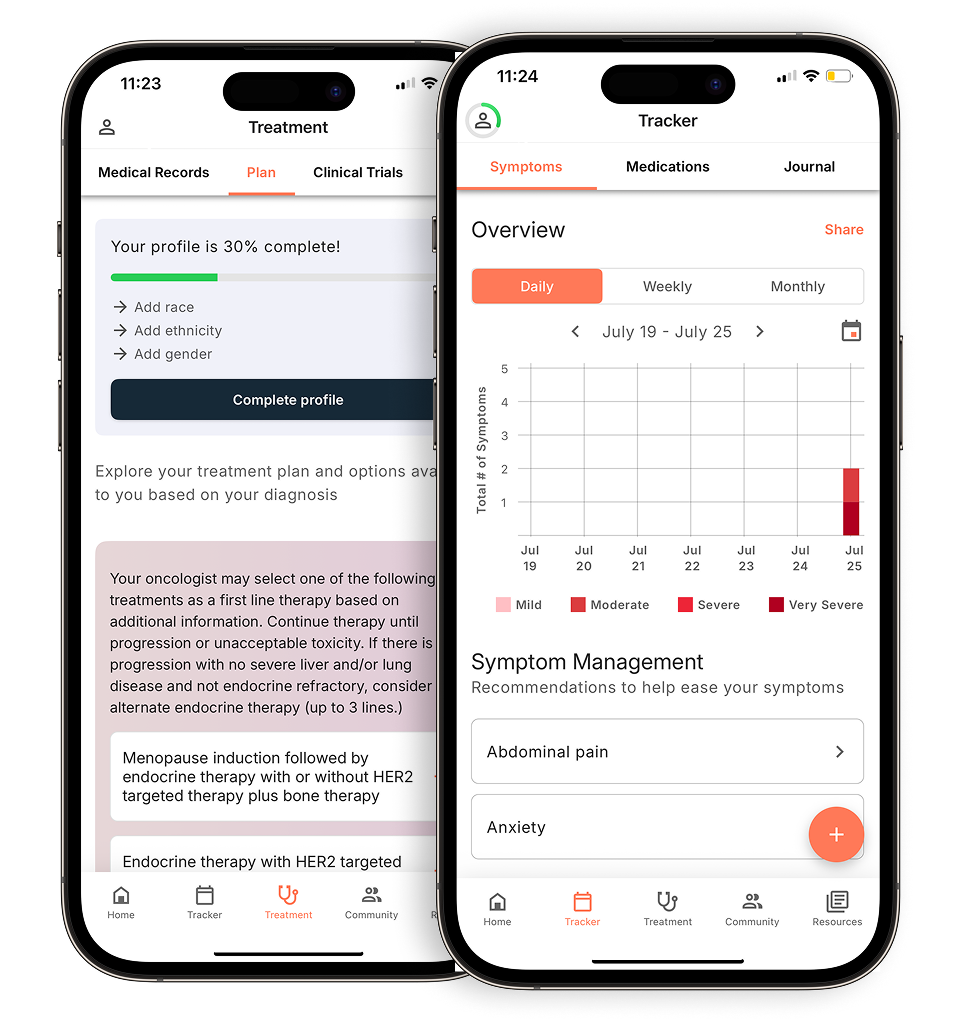
The Outcomes4Me platform was built to bridge this exact gap. As the only digital platform that directly integrates with the NCCN Guidelines® and presents them in a patient-friendly format, it acts as your personal translator. When you securely provide your diagnosis details and medical records, the app’s AI-driven technology filters the extensive guidelines to deliver personalized recommendations. This means you see the treatment options, clinical trials, and potential genetic testing information that are most relevant to your unique situation, all aligned with the highest standard of care.
This tailored approach transforms the guidelines from a dense clinical resource into a clear, actionable tool. Instead of trying to figure out which flowchart applies to you, the platform does the heavy lifting, presenting you with a simplified view of your potential care path. This empowers you to have more informed, confident conversations with your oncologist. With the Outcomes4Me app, you can move from feeling overwhelmed by information to feeling prepared to partner with your care team in making the best decisions for your health.
Where to Find More Help with the NCCN Guidelines
Even with a solid game plan, the NCCN Guidelines can feel dense and technical. That’s completely normal. The good news is you don’t have to decipher them alone. The NCCN provides several resources specifically designed to make this information more accessible for patients and their families. Think of these as your support system for understanding the clinical-level details. From simplified guides to interactive tools, these resources can help you find the answers you need without getting lost in the complexity. Let’s walk through some of the best places to turn for extra help.
Read the “NCCN Guidelines for Patients” Versions
One of the most valuable resources you can find is the collection of NCCN Guidelines for Patients. These are patient-friendly versions of the clinical guidelines, written in clear, easy-to-understand language. They cover specific cancer types and topics, breaking down complex treatment pathways into manageable information. As the NCCN explains, “The information in these patient guides comes from the main NCCN Guidelines. These main guidelines are used by doctors all over the world for the best cancer care.” They are the perfect starting point if the full clinical documents feel overwhelming, giving you the same evidence-based information in a much more approachable format.
Watch Educational Webinars and Videos
If you’re more of a visual or auditory learner, the NCCN has you covered. The organization offers a wide range of educational resources to help both patients and providers stay informed. While some materials are geared toward clinicians, many webinars and presentations are incredibly helpful for patients who want to understand the reasoning behind certain treatment recommendations. The NCCN notes that it “offers many learning activities for cancer care teams to help them improve their daily work,” and patients can benefit from this same commitment to education. These resources can provide deeper context on new therapies, clinical trials, and the latest research shaping cancer care.
Use Search and Filters to Find What You Need Fast
Instead of reading a guideline from start to finish, you can use tools to pinpoint the exact information you need. The NCCN Guidelines Navigator is an online tool designed to help you search the guidelines efficiently. You no longer have to scroll through pages of information that don’t apply to your situation. According to the NCCN, “You can search for specific topics, use a table of contents, or click on answers to questions to see only the parts of the guidelines that apply.” This is a game-changer, allowing you to filter the content and focus on the sections most relevant to your diagnosis, stage, and personal health factors.
Understanding the Fine Print: Disclaimers and Usage
As you start using the NCCN Guidelines, it’s helpful to know about the rules of the road. These documents are an incredible resource, but they come with some important disclaimers about how they should be used. Think of this as the “fine print” that ensures the information is used safely, ethically, and in the way it was intended. Understanding these details doesn’t make the guidelines less valuable; it actually helps you use them more effectively as a tool for collaboration with your healthcare team. It’s all about knowing the context so you can be the most informed advocate for your own care.
Copyright and Permissions
First, it’s important to know that the NCCN owns the copyright to all of its guidelines. This means that while you are free to create an account and use them for your personal education, you can’t reproduce, copy, or distribute them for other purposes without getting written permission first. The NCCN makes this clear to protect the integrity of its work. So, feel free to download them, print sections to bring to your doctor, and highlight what’s important to you. Just remember that you can’t post them on your own website or use them in a commercial project. Using an approved platform is a great way to use them for other purposes without worrying about these rules.
The Role of Your Doctor’s Judgment
This is perhaps the most critical point to understand: the NCCN Guidelines are a tool to support, not replace, your doctor’s expertise. They are designed to be used alongside a physician’s professional judgment. Your doctor knows your complete medical history, your other health conditions, and the specific details of your cancer in a way a document never can. The NCCN itself states that doctors should use these guidelines along with their own medical judgment. Think of the guidelines as the expert-approved map, but your doctor is the experienced guide who knows the best route for you, considering the terrain of your personal health journey.
How to Use NCCN Recommendations in Your Care
Understanding the NCCN Guidelines is one thing, but putting that knowledge into action is what truly matters. Think of the guidelines not as a rigid set of rules, but as a powerful tool to help you and your care team map out the best path forward. They provide a shared language and a foundation of evidence-based options, allowing you to take a more active and informed role in your treatment decisions. Using them effectively means personalizing the information, bringing it into conversations with your doctor, and staying aware of the latest developments. This approach helps ensure your care plan is not only based on the highest standard of evidence but is also the right fit for you as an individual.
Remember to Consider Your Personal Health
The NCCN Guidelines are designed to cover a wide range of scenarios, but they can’t account for the one thing that makes your situation unique: you. Your overall health, other medical conditions, treatment history, and personal preferences all play a huge role in determining the best course of action. NCCN creates easy-to-understand guides for cancer patients for this very reason—to help you learn about your care options and make choices with your doctors. Use the guidelines as a starting point to see what the experts recommend, then think about how those options align with your life and your health goals. This is the first step in tailoring the recommendations to your specific needs.
Discuss Your Options with Your Healthcare Team
Your oncologist is your most important partner in this process. The patient guides you read are based on the same core information from the main NCCN Guidelines, which are used by doctors worldwide for the best cancer care. When you go to your next appointment, bring your questions and what you’ve learned from the guidelines. You can talk about why a certain treatment is recommended, what the alternatives are, and how each option might affect you. This creates a collaborative conversation where your doctor’s clinical expertise and your personal insights come together to shape a treatment plan you feel confident about.
How to Stay on Top of Guideline Updates
Cancer research moves quickly, and treatment options are constantly evolving. Because new research comes out all the time, the NCCN Guidelines are updated continuously to ensure they always reflect the latest and best information. A treatment that was considered experimental a year ago might be the standard of care today. Staying informed about these updates is key to making sure you have access to the most current and effective therapies available. You can check for updates on the NCCN website or use digital health tools that automatically incorporate the latest changes, giving you peace of mind that your treatment plan is based on up-to-the-minute evidence.
Related Articles
- NCCN Guidelines For Patients: Cancer Treatment Updates
- NCCN Guidelines For Breast Cancer: Early Stage Treatment
- Outcomes4Me and the National Comprehensive Cancer Network (NCCN) Expand Collaboration to Help Lung Cancer Patients
- NCCN Breast Cancer Treatment Guideline Updates
- 7 Lung Cancer Questions to Ask Your Oncologist About Treatment
View your personalized treatment plan in the Outcomes4Me app
Use your diagnosis to unlock personalized NCCN Guidelines®-aligned recommendations.
Frequently Asked Questions
Why are these guidelines so important for me as a patient? Think of the NCCN Guidelines as a quality check for your cancer care. They represent the collective agreement of top cancer experts on what treatments are most effective, based on solid scientific evidence. Understanding them helps you confirm that your treatment plan aligns with the highest standard of care and gives you the confidence to ask more specific, informed questions during your appointments.
What if my doctor recommends a treatment that isn’t listed in the guidelines? This is a perfect opportunity for a conversation with your doctor. A recommendation might differ from the guidelines because it’s part of a new clinical trial or is tailored to your unique health profile and tumor characteristics. The guidelines are a roadmap, not a rigid set of rules, so a different path isn’t necessarily a red flag, but it’s an important moment to ask why that specific approach is the best choice for you.
The guidelines are so technical. How can I realistically use them to talk to my doctor? You don’t need to become an expert overnight. The best approach is to start with the “NCCN Guidelines for Patients,” which are written in much simpler language. From there, you can prepare one or two specific questions. For instance, you could ask, “I read that Treatment X is a common option. Can you help me understand why Treatment Y is a better fit for my situation?” This shows you’re engaged in your care without requiring you to master complex medical terms.
How do I know if the information I’m looking at is still current? This is a crucial question, as cancer research moves very quickly. The NCCN website always provides the most recent versions of the guidelines, and each document includes a publication or update date. If you’re ever unsure, the simplest thing to do is ask your care team if any recent updates for your cancer type might be relevant to your treatment plan.
Do these guidelines consider my personal situation, like my age or other health issues? The guidelines provide a comprehensive framework, but they can’t capture every individual’s unique circumstances. They often include discussion sections or footnotes that address special considerations, but this is where your doctor’s expertise is essential. Your oncologist uses the guidelines as a starting point and then applies their clinical judgment to tailor the recommendations to your specific health profile, personal preferences, and treatment goals.