
The decision to learn about your genetic risk is a deeply personal one. Maybe a family member’s diagnosis has you thinking about your own health, or perhaps you’re simply proactive about understanding your body. Whatever your reason, the path to getting information should be clear and supportive. For many, the privacy and convenience of being able to order a BRCA test online makes it a comfortable first step. In this article, we’ll explore what that process looks like, what to consider before you buy, and how to prepare for the results, ensuring you feel supported along the way.
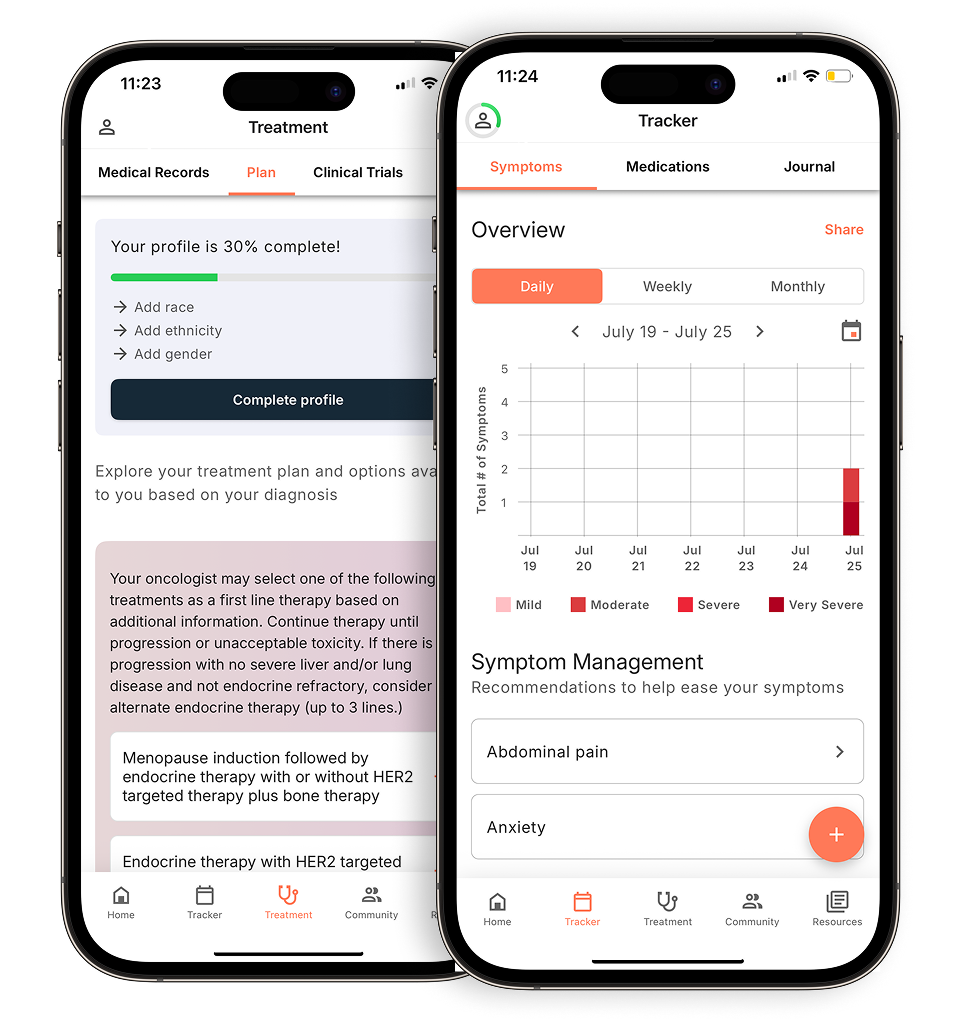
View your personalized treatment plan in the Outcomes4Me app
Use your diagnosis to unlock personalized NCCN Guidelines®-aligned recommendations.
Key Takeaways
- Understand what your test actually covers: A direct-to-consumer screening only looks for a few common BRCA variants, while a clinical-grade test provides the comprehensive analysis you and your doctor need to make informed health decisions.
- A test result is a starting point, not a final diagnosis: A positive result allows you to be proactive about your health—it doesn’t mean you will get cancer. Likewise, a negative result doesn’t eliminate all risk, so it’s important to continue with regular screenings.
- Prioritize access to genetic counseling: Your results can bring up complex questions and emotions. A genetic counselor is an essential guide who can help you interpret the report, understand your options, and create a clear plan for your health.
What Is a BRCA Test and Should You Get One?
If you’ve spent any time researching breast or ovarian cancer, you’ve likely come across the term “BRCA.” A BRCA test is a type of genetic test that looks for specific changes, or mutations, in your DNA. Understanding your BRCA status can be a powerful piece of information, helping you and your doctor make more informed decisions about your health, from screening plans to treatment options.
But what exactly are these genes, and who should consider getting tested? Let’s walk through the basics so you can feel more confident in your conversations with your healthcare team.
What Are the BRCA1 and BRCA2 Genes?
Think of the BRCA1 and BRCA2 genes as your body’s built-in tumor suppressors. Everyone has these genes, and their main job is to repair damaged DNA, which helps keep cells growing normally and prevents them from turning into cancer. They are a crucial part of your body’s natural defense system.
When one of these BRCA genes has a harmful mutation, it’s like a key worker on your repair team calling in sick—the job doesn’t get done as well. This faulty gene can no longer effectively fix DNA damage, which can lead to a significantly higher risk of developing certain cancers, most notably breast and ovarian cancer.
Who Is a Candidate for BRCA Testing?
BRCA testing isn’t for everyone; it’s typically recommended for people who have a higher chance of carrying a mutation based on their personal or family health history. You might be a candidate for genetic screening if you or a close relative has a history of breast cancer (especially before age 50), ovarian cancer, pancreatic cancer, or prostate cancer. It’s also important to know that these gene mutations can affect both men and women.
If your family history includes any of these cancers, or if you have an Ashkenazi Jewish heritage (which has a higher prevalence of BRCA mutations), it’s a good idea to bring this up with your doctor or a genetic counselor. They can help you assess your personal risk and decide if testing is the right next step for you.
How to Order a BRCA Test Online
Taking the step to get a BRCA test can feel like a big decision, but the process itself is more straightforward than you might think. Thanks to several direct-to-consumer companies, you can manage the entire process from the comfort of your own home. It’s all about finding a reputable company, providing a sample, and then waiting for your results. Let’s walk through exactly what that looks like, step by step, so you know what to expect.
Follow These Steps to Order Your Test
Getting started is as simple as visiting a website. You can order BRCA testing online from a variety of direct-to-consumer (DTC) companies that have made genetic testing much more accessible. Well-known options like 23andMe, JScreen, and Color Health provide user-friendly platforms to guide you through the ordering process. You’ll typically start by selecting the test you want, creating an account, and providing some basic information. The company then ships a collection kit directly to your home, so you don’t have to schedule a separate lab appointment just to get the process started.
How to Collect Your Sample at Home
Once your test kit arrives, the next step is to collect your sample. Most at-home BRCA tests require either a saliva or blood sample. For example, the BRCAssure test requires a blood sample that you collect yourself using a simple finger-prick method. The kits come with detailed, easy-to-follow instructions to make sure you do it correctly. You’ll also likely be asked to fill out a questionnaire about your personal and family health history. This information provides crucial context for interpreting your genetic results. Once you’ve collected your sample and completed the forms, you’ll mail it back in the prepaid packaging provided.
When to Expect Your Results
The waiting period is often the hardest part, but knowing the timeline can help. After you’ve sent your sample back to the lab, you can generally expect to receive your results within 14 to 21 days. If you’ve ordered a more comprehensive test that analyzes a larger panel of genes (12 or more), the turnaround time might be a bit longer, typically between 21 and 30 days. This timeline allows the lab to perform a thorough analysis of your sample. Companies like Quest Diagnostics provide this information upfront so you can manage your expectations while you wait.
Comparing Online BRCA Testing Companies
Once you start looking for an online BRCA test, you’ll quickly see there are many companies to choose from. The options can feel overwhelming, but they generally fall into a few categories: some offer broad, consumer-focused screenings, others provide comprehensive, clinical-grade diagnostics, and some platforms focus on helping you make sense of it all.
Understanding the differences is key to picking the right test for your situation. A company that’s great for someone curious about their general genetic makeup might not be the best choice if you have a strong family history of cancer and need a more thorough analysis. It’s not just about getting a result; it’s about getting the right information for your health journey and having the support you need to act on it. We’ll walk through a few well-known companies to give you a clearer picture of what they offer, how they differ, and what kind of support you can expect. This will help you compare your options and find the service that aligns with your health needs and goals.
How Outcomes4Me Guides Your Testing Journey
Outcomes4Me isn’t a testing company, but rather a personal guide for your cancer care. If you’re considering genetic testing, the platform can help you understand what it all means for you specifically. Based on your personal health information, the app provides personalized guidance on your options, including whether genetic testing might be recommended for your diagnosis. It’s designed to give you clear, evidence-based information so you can have more informed conversations with your doctor. Think of it as a support tool to help you make sense of the complex decisions that come with genetic testing, ensuring you feel prepared and confident every step of the way.
What to Know About 23andMe
You’ve likely heard of 23andMe, which offers a test for 44 specific variants in the BRCA1 and BRCA2 genes as part of its Health + Ancestry Service. It’s important to understand that this is not a comprehensive BRCA test. There are more than 4,000 known BRCA variants linked to cancer risk, and this test only screens for a small fraction of them. While a positive result on 23andMe’s test does indicate an increased risk, a negative result doesn’t rule out the presence of other risk-associated variants. It’s a starting point for some, but it isn’t a substitute for a full diagnostic test, especially if you have a personal or family history of cancer.
Exploring Color’s Testing Services
Color takes an integrated approach to cancer care that goes beyond just providing a test result. Their services are designed to support you through the entire process, from early detection to treatment guidance. Color’s platform focuses on making it easier to get the care you need by offering personalized guidance and continuous support. This model is built to help you and your doctor find cancer earlier and create a clear plan for managing your health. If you’re looking for a service that combines testing with a structured support system, Color is an option that provides a more guided experience from start to finish.
A Look at Ambry Genetics
Ambry Genetics is a company that specializes in clinical-grade genetic testing, particularly for genes like BRCA1 and BRCA2 that are linked to Hereditary Breast and Ovarian Cancer (HBOC). They offer a range of comprehensive testing options, from targeted panels that look for specific mutations to full gene sequencing that examines the entire gene. You can order tests through their online portal, and they provide sample collection kits for at-home use. Because Ambry is focused on diagnostics, their tests are more thorough than direct-to-consumer screenings, making them a strong option if your doctor recommends a deep dive into your genetic risk factors.
Breaking Down the Cost of Online BRCA Testing
Understanding the financial side of genetic testing is a crucial step in the process. The cost can vary significantly depending on the type of test you choose and your insurance coverage. Thinking through your budget and exploring your options ahead of time can help you make a confident decision without any surprises. Let’s walk through what you can expect to pay, whether insurance might help, and where you can find financial support if you need it.
Comparing Prices: What to Expect
The price tag for online BRCA testing isn’t one-size-fits-all. Many at-home genetic tests that screen for common BRCA mutations fall in the $200 to $300 range. For example, 23andMe includes a report on 44 variants in the BRCA1 and BRCA2 genes as part of its Health + Ancestry Service. However, more comprehensive, clinical-grade tests ordered through a provider can be much more expensive. Some of these extensive panels, like the BRCAvantage Plus test, can cost over $3,000. The right test for you depends on your personal health history, family history, and what you hope to learn from the results.
Will Insurance Cover Your Test?
Whether your insurance plan will cover BRCA testing often depends on why you’re getting tested. Many insurance providers will cover the cost if you meet specific criteria, such as having a personal or strong family history of breast, ovarian, prostate, or pancreatic cancer. However, most direct-to-consumer at-home tests are not covered by insurance, meaning you’ll likely pay for them out-of-pocket. The best first step is to call your insurance company directly. Ask them about your specific coverage for genetic testing so you know exactly what to expect before you order a kit.
Finding Financial Support and Payment Plans
If the cost of testing feels out of reach, please know that you have options. Many testing companies offer payment plans that allow you to spread the cost over several months, making it more manageable. Additionally, several non-profit organizations and foundations provide financial assistance to help cover the expense for eligible individuals. A little research can go a long way. Exploring these financial support programs can help reduce the financial burden, ensuring that cost isn’t a barrier to accessing important information about your health.
4 Key Factors for Choosing a BRCA Test
Deciding to get a BRCA test is a big step, and choosing the right one can feel overwhelming. With so many options available online, it’s easy to get lost in the details. To help you make a confident choice, let’s walk through the four most important factors to consider before you order a test. Thinking about these points will ensure you select a test that fits your health needs and gives you clear, actionable information. Your peace of mind is the top priority, and that starts with picking the right tool for the job.
Clinical-Grade vs. Consumer Tests: What’s the Difference?
Not all genetic tests are created equal. The main distinction you’ll see is between clinical-grade and direct-to-consumer (DTC) tests. A DTC test, like the one from 23andMe, might only screen for a few specific, common BRCA variants. While interesting, this doesn’t give you the full picture. A clinical-grade test, often ordered through a healthcare provider, offers a much more comprehensive analysis of the BRCA genes. This broader coverage is essential for accurately assessing your risk. For results you can truly rely on to make medical decisions, a clinical-grade test is the standard, and it almost always comes with access to genetic counseling to help you interpret the findings.
Know Which Mutations Your Test Covers
When you’re comparing tests, dig into the specifics of what they actually screen for. Some companies are very transparent about this. For example, 23andMe’s FDA-authorized test looks for 44 specific variants in the BRCA1 and BRCA2 genes but clearly states it is not a comprehensive cancer screening. In contrast, companies like Ambry Genetics offer diagnostic testing that analyzes the entire gene, searching for thousands of possible mutations linked to Hereditary Breast and Ovarian Cancer (HBOC). Before you buy, make sure the test’s scope aligns with the level of detail you and your doctor need. A test that covers more mutations will give you a more thorough and reliable assessment of your hereditary risk.
How Companies Protect Your Privacy and Data
Your genetic information is some of the most personal data you have, so it’s crucial to understand how a company will protect it. Before you commit to a test, take a few minutes to read the company’s privacy policy. Look for clear information on how they store, use, and share your data. Do they sell anonymized data for research? Can you request that your sample be destroyed after testing? Companies like Color position themselves as integrated health services, which means they have robust systems for managing sensitive information. Choosing a company with a transparent and strong data privacy policy will give you confidence that your information is in safe hands.
Check for Access to Genetic Counseling
Receiving your BRCA test results can bring up a lot of questions and emotions. This is where a genetic counselor becomes an invaluable resource. These trained professionals help you understand what your results mean for you and your family, discuss your actual cancer risk, and outline potential next steps for screening or prevention. Many reputable testing companies, such as Labcorp, either include or strongly recommend genetic counseling as part of their service. Don’t view this as an optional extra—it’s a key part of the process. Having an expert to talk to ensures you can use your results to make informed decisions about your health with clarity and support.
The Accuracy and Limitations of Online BRCA Tests
At-home genetic tests have made it easier than ever to get information about your health, but it’s important to understand what they can—and can’t—tell you. When it comes to BRCA testing, not all tests are created equal. The accuracy of your results depends entirely on the type of test you take and which specific genetic variants it analyzes.
Direct-to-consumer (DTC) tests are a great starting point for exploring your genetic risk, but they are often just that: a starting point. They typically screen for a limited number of the most common BRCA mutations, which means they can miss many others. A clinical-grade test ordered by your doctor, on the other hand, usually involves a more comprehensive analysis, like full gene sequencing, which examines the entire gene for any mutations. Understanding this difference is key to interpreting your results and making informed decisions about your health.
What “Clinically Validated” Really Means
You’ll often see online tests described as “clinically validated,” which sounds reassuring. However, this term simply means the test has been proven to be accurate for the specific mutations it’s designed to detect. The catch is that many consumer tests only look for a handful of variants out of thousands that exist. So, while the test may be accurate in identifying what it screens for, it doesn’t provide a complete picture. A more thorough analysis, like the full gene sequencing used in clinical settings, is needed to check for rare or less common BRCA mutations that a DTC test would miss.
What At-Home Tests Might Miss
Most at-home tests are not comprehensive cancer screenings. For example, 23andMe offers an FDA-authorized report on 44 specific variants in the BRCA1 and BRCA2 genes. While helpful, this is a small fraction of the thousands of known variants linked to increased cancer risk. This means the test can detect about 30-40% of BRCA variants in people of certain ancestries but may miss the majority of them. A negative result from a test like this doesn’t mean you are free of risk; it just means you don’t have one of the specific BRCA variants the test screened for.
Why You Might Need a Second Test
If you receive a positive result from an at-home test, the standard medical recommendation is to have it confirmed with a second, clinical-grade test ordered by your doctor. This step is essential before making any medical decisions, such as considering preventive surgery or starting specific screenings. This confirmatory test ensures the result is accurate and provides a more complete view of your genetic profile. It’s also the point where genetic counseling becomes incredibly valuable. A genetic counselor can help you understand what the results truly mean for you and your family.
Clearing Up Common Myths About BRCA Testing
Genetic testing can feel like a heavy topic, and with so much information floating around, it’s easy to get confused. When it comes to BRCA testing, separating fact from fiction is essential for making informed decisions about your health. Let’s walk through some of the most common myths and get to the bottom of what your test results really mean for you and your family. Understanding these nuances can help you feel more in control of your health journey and have more productive conversations with your care team.
Myth: A Negative Result Means Zero Risk
Receiving a negative BRCA test result can bring a huge sense of relief, but it’s important to understand its limitations. A negative result means you don’t carry the specific BRCA1 or BRCA2 variants the test screened for. However, it doesn’t mean you have zero risk of developing cancer.
Your overall cancer risk is influenced by many factors, including your family history, lifestyle choices, and other genetic mutations not covered by a standard BRCA test. Think of it as one piece of a much larger puzzle. It’s a significant piece, for sure, but it’s not the whole picture. Always continue with regular screenings and discuss your complete health profile with your doctor to manage your long-term wellness.
Myth: A Positive Result Means You’ll Get Cancer
Hearing that you have a positive result for a BRCA mutation can be incredibly stressful, so let’s be very clear: a positive result is not a cancer diagnosis. It means you have a genetic variant that significantly increases your lifetime risk of developing certain cancers, particularly breast and ovarian cancer. It does not mean you will definitely get cancer.
Many people with BRCA mutations never develop cancer. Remember, most cases of breast and ovarian cancer are not caused by these inherited variants. A positive result is a powerful tool that gives you and your doctor the information needed to create a proactive risk-management plan. This might include more frequent screenings, medication, or preventive surgeries.
Myth: The Test Checks for All Cancer-Related Genes
It’s a common assumption that a BRCA test is a comprehensive screening for all hereditary cancer risks, but that’s not the case. These tests are specifically designed to look for variants in the BRCA1 and BRCA2 genes. Some direct-to-consumer tests, for example, only screen for a handful of the most common variants out of thousands that are known to exist.
There are many other genes associated with hereditary cancer that a standard BRCA test won’t look for. If you have a strong family history of cancer but test negative for BRCA variants, your doctor or a genetic counselor might recommend a broader genetic panel to get a more complete view of your potential risk.
You Have Your Results—Now What?
The waiting is over, and your BRCA test results are in. This moment can bring a mix of relief, anxiety, and a lot of questions. No matter what your report says, the next step is to understand what it means for you and your health. This isn’t a journey you have to take alone. Your results are a powerful piece of information, and having a clear plan for what to do next can help you feel more in control.
Think of your results not as a final destination, but as a signpost guiding your future health decisions. Below, we’ll walk through how to interpret your report, the concrete steps you can take if you have a high-risk result, and where to find the emotional and professional support you deserve. Your healthcare team, including genetic counselors, can partner with you to create a personalized plan that fits your life and priorities.
How to Read Your Results
When you open your report, you’ll typically see one of three results: negative, positive, or a variant of uncertain significance (VUS). A negative result means no known harmful mutation was found. A positive result means a harmful mutation was detected in the BRCA1 or BRCA2 gene, which increases your risk for certain cancers. A VUS means a genetic change was found, but it’s not yet known if it’s harmful.
Understanding your report is the first step, but it’s also important to acknowledge how you feel. Research shows the effect of a BRCA1/2 gene test result on anxiety and health-related thoughts can be significant. It’s completely normal to feel overwhelmed. Take your time processing the information and be prepared to discuss it with a genetic counselor who can explain every detail.
Your Next Steps if You’re High-Risk
If your test comes back positive for a harmful BRCA mutation, your first and most important step is to schedule a follow-up with your doctor or a genetic counselor. They will help you create a personalized screening and prevention plan. This isn’t just about managing your physical health; it’s also about your emotional well-being. Studies have found that previvors and survivors with BRCA mutations experience greater psychological distress than those without mutations.
Your plan may include more frequent cancer screenings (like mammograms and MRIs), preventive medications, or risk-reducing surgeries. These are deeply personal decisions, and there is no one-size-fits-all answer. A healthcare professional can walk you through the risks and benefits of each option, helping you make an informed choice that feels right for you.
Where to Find Support and Counseling
Regardless of your results, getting tested is a major life event, and it’s okay to seek support. Emotional distress following genetic testing is common, whether you’re processing a high-risk result or grappling with the uncertainty of a VUS. You don’t have to sort through these feelings on your own. Genetic counselors are trained to help you understand the medical information and manage the emotional impact.
Connecting with others can also make a huge difference. Support groups, either online or in person, allow you to share experiences with people who truly get it. Research has highlighted the importance of counseling by evaluating the emotional states of women after receiving their results. A therapist, especially one who specializes in health-related concerns, can also provide a safe space to talk through your feelings and develop coping strategies.
Is an Online BRCA Test Right for You?
Deciding to get a BRCA test is a big step, and the convenience of ordering one online can feel like a simple solution. Before you add a kit to your cart, it’s worth taking a moment to think about whether an at-home test is the right path for you. While the process is straightforward, the results can bring up a lot of emotions, and it’s important to be prepared.
Learning about your genetic risk is powerful, but it can also be heavy. Research shows that the psychological impact of receiving BRCA results can be significant, sometimes leading to feelings of anxiety or worry about the future. This isn’t to say you’ll definitely feel this way—everyone’s reaction is unique. Some people feel a sense of relief and empowerment, while others find the information overwhelming. The key is knowing yourself and what you’ll need to process the results, whatever they may be.
One of the biggest differences between online and in-person testing is the built-in support. When you test through your doctor’s office, you often have immediate access to a genetic counselor who can walk you through the results. With an online test, you might have to seek out that support on your own. Studies on the emotional consequences of genetic testing highlight just how important it is to have someone to talk to. Before you test, ask yourself: Do I have a strong support system? Am I ready to handle this information, potentially on my own at first? Thinking through these questions can help you make a choice that feels right for your emotional well-being.
Related Articles
- BRCA Testing Cost: A Complete Guide for 2025
- Genetic Testing for Ovarian Cancer Explained
- Debunking Genetic Testing For Breast Cancer Myths Webinar
- Genetic Testing for Breast & Ovarian Cancer 101
- Should You Get Genetic Testing for Breast Cancer?
View your personalized treatment plan in the Outcomes4Me app
Use your diagnosis to unlock personalized NCCN Guidelines®-aligned recommendations.
Frequently Asked Questions
What’s the real difference between a test from my doctor and one I buy online? The biggest difference comes down to how thorough the test is. Most direct-to-consumer tests you buy online screen for a small number of the most common BRCA mutations. Think of it as a spot-check. A clinical-grade test ordered by your doctor, however, typically involves full gene sequencing, which is a much deeper analysis of the entire gene. This comprehensive approach is better at finding rarer mutations and is the standard for making any medical decisions.
If my at-home test comes back negative, does that mean I don’t have a BRCA mutation? Not necessarily. A negative result from an at-home test only means you don’t have one of the specific, limited variants that the test screened for. Since there are thousands of known BRCA mutations, a negative consumer test doesn’t rule out the possibility that you could have a different, less common mutation. If you have a strong personal or family history of cancer, it’s important to discuss the result with a doctor or genetic counselor, as they may still recommend a more comprehensive clinical test.
Should I talk to a doctor or genetic counselor before I order a test? Yes, it’s always a great idea. A healthcare professional can help you review your personal and family health history to determine if you’re a good candidate for testing in the first place. They can also help you choose the most appropriate test for your situation and prepare you for the potential outcomes. Starting this conversation early ensures you have professional support from the very beginning, which can make the entire process feel much more manageable.
What exactly is a ‘variant of uncertain significance’ and what should I do if I get one? A variant of uncertain significance, or VUS, means the lab found a change in your BRCA gene, but science hasn’t yet determined if that specific change actually increases your cancer risk. It’s a gray area. If you receive a VUS result, it is not treated as a positive result, and medical decisions are generally not made based on it. The best thing to do is discuss it with a genetic counselor, who can explain what it means and keep you updated as new research becomes available.
If I test positive, what does this mean for my family? A positive result means you carry a hereditary gene mutation, which indicates that your close blood relatives, like your parents, siblings, and children, have a 50% chance of carrying the same mutation. Sharing this information with them can be a difficult conversation, but it gives them the opportunity to consider testing for themselves. A genetic counselor can provide you with advice on how to talk to your family and what this information might mean for their health.