
The conversation around secondary breast cancer is shifting, and for good reason. We’re moving away from a cure-or-nothing mindset and toward treating it as a manageable, long-term condition. Still, this brings up a central question: why can’t secondary cancer be cured? The answer is in the cancer cells themselves. Once they spread, they become incredibly resilient—adapting to therapies and hiding from the immune system. But here’s the hopeful part: modern secondary breast cancer treatment is designed to outsmart these cells. This article explains the science and shows how today’s therapies are making long-term management a reality.
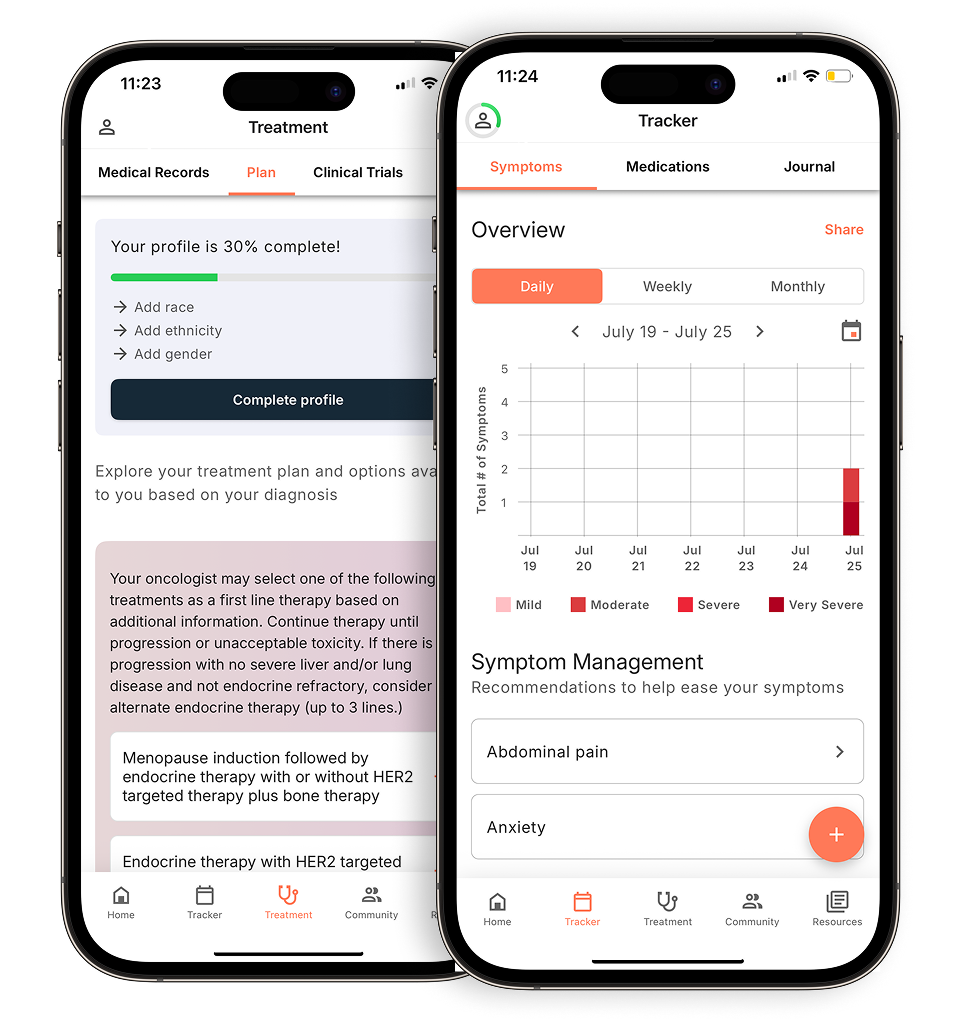
View your personalized treatment plan in the Outcomes4Me app
Use your diagnosis to unlock personalized NCCN Guidelines®-aligned recommendations.
Key takeaways
- Treatment focuses on long-term management, not a cure: The goal for secondary breast cancer is to control its growth and manage symptoms, allowing you to maintain a good quality of life. This approach helps many people live well with the condition for years.
- Personalized care is key to effective treatment: Your plan is tailored to you, considering factors like your cancer’s biomarkers, where it has spread, and your overall health. This ensures you receive the most effective therapies for your specific situation.
- You have an active role in your care, and research offers hope: Your personal goals are central to creating a sustainable treatment plan with your doctor. At the same time, advances in research, like targeted therapies and immunotherapy, are constantly providing new and more effective options.
What is secondary breast cancer?
If you’ve heard the term “secondary breast cancer,” you might be wondering exactly what it means. It can feel like a confusing topic, but understanding the basics is a helpful first step. Simply put, secondary breast cancer is when cancer cells that originally started in the breast have spread to another part of the body, like the bones, liver, lungs, or brain. This is also known as advanced or metastatic breast cancer. Let’s take a closer look at what that means and how it happens.
Understanding metastatic breast cancer
Metastatic breast cancer is another name for secondary, or Stage IV, breast cancer. It’s important to know that this isn’t a new type of cancer. Instead, it’s the original breast cancer that has traveled to a different location. For instance, if breast cancer spreads to the bones, it’s still made of breast cancer cells and is treated as metastatic breast cancer, not bone cancer. While there isn’t a cure for metastatic breast cancer, many treatments are available to help manage it. These treatments aim to control the cancer’s growth, manage symptoms, and help people live longer with a good quality of life.
Cancer is not just one disease
It’s helpful to remember that “cancer” isn’t a single illness but a name for over 200 different diseases. Each type, and even the subtypes within breast cancer, acts differently because of its unique genetic profile. This is why a treatment that works well for one person may not be the right fit for another. Getting to know the specific details of your diagnosis—like your cancer’s hormone receptor status or other biomarkers—is the first step toward a truly personalized treatment plan. This tailored approach is central to modern cancer care. The Outcomes4Me app is designed to support you here, helping you understand your diagnosis and see the NCCN Guidelines®-aligned treatment options that are specific to you.
The impact of metastatic cancer by the numbers
While statistics can feel overwhelming, they help explain why the goals for treating metastatic breast cancer are different. For early-stage breast cancer, five-year survival rates are very high. These rates are lower for metastatic disease because the cancer has spread and become more complex. But these numbers don’t tell the whole story. The focus of care shifts from a cure to long-term management. The primary goal of available treatments is to slow the cancer’s growth, relieve symptoms, and maintain your quality of life. This approach allows many people to live well with the disease for years, and ongoing research continues to bring new and better options to the forefront.
How do cancer cells spread?
So, how does this spread, or metastasis, happen? It starts when cancer cells break away from the original tumor in the breast. These cells can then travel through the body’s natural pathways, like the bloodstream or the lymph system, which is part of your immune system. Think of these pathways as highways that can carry the cells to new places. Once they arrive in a new area, like the liver or lungs, they can settle and start to grow into new tumors. Sometimes, these cells can stay quiet or dormant for months or even years before they become active again, which is why secondary breast cancer can sometimes appear long after the initial diagnosis.
Where does cancer commonly spread?
When cancer cells travel, they often have preferred destinations. It’s a common point of confusion, but a new tumor formed by these cells is still the same type of cancer as the original. For instance, if breast cancer spreads to your bones, it’s still treated as breast cancer, not bone cancer. This is called metastatic cancer. While it can go to many places, cancer most frequently spreads to the bones, liver, lungs, and brain. Certain cancers also have predictable patterns—breast and prostate cancer, for example, often spread to the bones. Understanding these common sites helps your care team know what to look for, allowing them to create a more effective and personalized plan to manage your health.
How is secondary cancer diagnosed?
Finding out if breast cancer has spread involves a careful and thorough process. Secondary cancer can be identified at the same time as the initial diagnosis, but it’s often discovered later, sometimes during routine follow-up appointments after you’ve completed treatment for the primary cancer. Your oncology team keeps a close watch through regular check-ups, and these appointments are the perfect time to bring up any new or persistent symptoms you might be experiencing. If your doctor thinks there’s a reason to investigate further, they will recommend specific tests to get a clear picture of what’s going on inside your body. This process is all about gathering information so they can recommend the best possible path forward for your care.
Common diagnostic tests and procedures
To determine if cancer has metastasized, doctors rely on a few key tests. Imaging scans like CT scans, MRIs, or PET scans are commonly used to create detailed pictures of your organs and bones, allowing doctors to spot any areas of concern. Blood tests can also provide important clues by looking for specific substances, known as tumor markers, that can be elevated when cancer is present. However, the most definitive way to diagnose secondary cancer is often with a biopsy. This involves taking a small sample of tissue from the suspected area to be examined under a microscope. This not only confirms the presence of cancer cells but also verifies that they are breast cancer cells, which is crucial for planning your treatment.
What are the symptoms of secondary cancer?
When breast cancer spreads, the symptoms can vary widely depending on where the cancer cells have settled. It’s also important to know that metastasis doesn’t always cause symptoms right away; sometimes they can take months or even years to appear. The signs can be general, like feeling unusually tired, or they can be very specific to the part of the body affected. Being aware of these potential symptoms isn’t about causing worry, but about empowering you to have informed conversations with your healthcare team. If you notice anything new, different, or persistent, it’s always best to bring it up with your doctor so you can figure out the cause together.
General symptoms to be aware of
Some of the first signs of metastatic cancer can be quite general and might be easy to dismiss as something else. These can include feeling extremely tired in a way that rest doesn’t seem to help, experiencing drenching night sweats, or losing weight without trying. Because these symptoms can be subtle, it’s helpful to pay attention to your body and how you feel from day to day. Keeping a simple log of any new or changing feelings in a journal or an app can make it easier to share clear information with your doctor during your appointments. This helps your care team get a full picture of your health and decide if any tests are needed.
Symptoms based on where cancer has spread
When symptoms become more specific, they often point to the particular area of the body where the cancer has spread. Understanding these location-specific signs can help you identify what might be important to discuss with your doctor.
In the bones
If breast cancer has spread to the bones, the most common symptom is a new, persistent pain in a specific area, like your back, hips, or ribs. It might feel like a dull ache that doesn’t go away. Another sign can be bones that fracture or break more easily than you would expect, sometimes from a minor injury or fall.
In the liver
When cancer spreads to the liver, it can cause symptoms related to digestion and abdominal discomfort. You might notice bloating, a swollen or tender belly, a loss of appetite, or feeling full after eating only a small amount. Some people also develop jaundice, which is a yellowing of the skin and the whites of the eyes.
In the lungs
The primary symptom of cancer that has spread to the lungs is shortness of breath. You might feel like you can’t quite catch your breath, even during rest or with minimal activity. A persistent cough that doesn’t go away can also be a sign.
In the brain
Metastasis in the brain can cause neurological symptoms. These may include persistent headaches that feel different from typical headaches, unexplained dizziness or problems with balance, or seizures. You might also notice changes in your vision or speech.
Why can’t secondary breast cancer be cured?
When breast cancer spreads to other parts of the body, doctors often refer to it as “incurable.” This word can feel heavy and final, but it’s important to understand what it means in a medical context. It doesn’t mean the cancer is untreatable. Instead, it means that while treatments can control the cancer, often for many years, they are unlikely to make it go away completely and forever.
The challenge lies in the complex and resilient nature of cancer cells once they have spread. They can travel, adapt, and hide in ways that make them incredibly difficult to eliminate entirely. Let’s look at some of the key reasons why a complete cure is so challenging.
Is secondary cancer ever curable?
While the word “incurable” is often used for secondary cancer, it’s more accurate to say that for most people, it isn’t curable with current treatments. The goal of treatment is usually to control the cancer’s growth, manage symptoms, and maintain a good quality of life for as long as possible. This approach helps turn the condition into a manageable one, much like other chronic diseases. However, medicine is always evolving. In a small number of very specific situations, where the cancer has only spread to one or a few small areas, doctors are exploring more aggressive treatments that may lead to long-term remission. This is an exception rather than the rule, but it represents an important and hopeful area of cancer research.
Understanding oligometastatic cancer
One of these hopeful exceptions is a condition called oligometastatic cancer. This is a term used when cancer has spread from its original location but only to a limited number of new sites—typically five or fewer. Because the spread is not widespread, it presents a unique opportunity. Researchers are actively studying whether treating these few tumors directly with focused therapies, like highly targeted radiation or surgery, can improve outcomes. The idea is that by eliminating these few spots of cancer, it might be possible to stop the disease from spreading further, potentially leading to longer survival and a better quality of life for some patients. This is a promising field that is changing the conversation about what’s possible in treating advanced cancer.
How cancer cells can learn to resist treatment
One of the biggest hurdles in treating secondary breast cancer is that cancer cells can evolve and become resistant to treatments. A therapy that works well initially may become less effective over time because the cancer cells find ways to survive it. This is known as drug resistance. It’s as if the cancer cells learn from the treatment and change their own structure to block its effects.
Researchers are constantly working on this problem, exploring new drugs and different ways to deliver them to stay one step ahead of the cancer. The goal is to find innovative, efficient drug delivery methods that can overcome this resistance and continue to control the cancer’s growth effectively.
Why differences between tumors make treatment complex
When breast cancer spreads, the new tumors that grow in other parts of the body, like the bones, liver, or lungs, may not be identical to the original tumor in the breast. They can have different genetic makeups and characteristics. This means a treatment that works on a tumor in one location might not work on a tumor somewhere else.
This is why your care team may test the new tumors to understand their specific features. Treatments like immunotherapy, for example, have shown great promise for certain subtypes of breast cancer, like triple-negative (TNBC) and HER2-positive. Understanding these differences helps your doctor choose the most effective therapy for your specific situation.
The challenge of targeting cancer that has spread
Once cancer cells have spread through the bloodstream or lymph system, they can form tiny deposits in multiple locations. While surgery and radiation are very effective at treating a single tumor in one place, it’s nearly impossible to use these methods to remove every single cancer cell scattered throughout the body.
Chemotherapy and other systemic treatments (drugs that travel through the whole body) are the main approach for metastatic cancer. While these treatments have improved significantly and are helping people live longer with secondary breast cancer, the challenge of eradicating every last cancer cell remains. The focus of treatment often shifts from a cure to long-term management and control, making the role of surgery in metastatic breast cancer a topic of ongoing research.
How cancer cells can hide from your immune system
Your immune system is your body’s natural defense force, designed to find and destroy abnormal cells, including cancer cells. However, some cancer cells are clever and develop ways to hide from the immune system. They can put up a “shield” that makes them invisible to immune cells, allowing them to grow and spread without being attacked.
This is where a newer class of drugs called immunotherapy comes in. These treatments don’t kill cancer cells directly. Instead, they work by taking the “brakes” off the immune system or removing the cancer cells’ disguise. This helps your own body recognize and fight the cancer. Immunotherapy approaches are a key area of research, offering a powerful way to treat certain types of secondary breast cancer.
What are the treatments for secondary breast cancer?
When you’re diagnosed with secondary breast cancer, your oncology team will work with you to create a personalized treatment plan. While there isn’t a cure, the goal is to manage the cancer as a long-term condition. Think of it less like a sprint to the finish line and more like a marathon where the focus is on endurance, symptom control, and maintaining your quality of life.
The treatments you receive will depend on several factors, including the type of breast cancer you have, where it has spread, previous treatments you’ve had, and your overall health. Your care plan will be unique to you. Many people with secondary breast cancer continue to live full and active lives for many years with treatment. The main goals are to control the cancer’s growth, slow its spread, and relieve any symptoms it may be causing. Your team will regularly monitor how well the treatment is working and can adjust the plan as needed, ensuring you always have the best approach for your specific situation.
Using hormone therapy for HR-positive cancers
If your cancer cells have receptors for hormones like estrogen or progesterone, it’s called hormone receptor-positive (or HR-positive) breast cancer. For this type, your doctor may recommend hormone therapy. This treatment works by lowering the amount of estrogen in your body or by blocking its ability to reach the cancer cells, which can slow or stop their growth.
Hormone therapy is often given as a daily pill, but it can also be an injection. It’s a common and effective first-line treatment for HR-positive secondary breast cancer and is often used for as long as it continues to work. Your doctor will help you understand the specific types of hormone therapy and which one is right for you.
Understanding chemotherapy and targeted therapy
Chemotherapy and targeted therapy are two other key treatments for secondary breast cancer. Chemotherapy uses powerful drugs to kill fast-growing cells, including cancer cells. Because it travels throughout your body, it can treat cancer that has spread to different areas.
Targeted therapy is a more specialized approach. These drugs are designed to identify and attack specific features on cancer cells that help them grow and survive. For example, if your cancer is HER2-positive, you might receive a targeted drug that blocks the HER2 protein. These therapies can be used alone or often in combination with chemotherapy to make the treatment more effective.
How immunotherapy works for specific subtypes
Immunotherapy is a newer type of treatment that helps your own immune system recognize and fight cancer cells more effectively. It doesn’t attack the cancer directly but instead gives your body’s natural defenses a helping hand.
This approach has shown particular promise for certain subtypes of breast cancer, especially triple-negative breast cancer (TNBC) and some HER2-positive cancers. Immunotherapy drugs, often called checkpoint inhibitors, can be very effective for some people, helping to control the cancer’s growth. Your oncology team can determine if immunotherapy is a suitable option for you based on the specific characteristics of your cancer.
Using radiation therapy to manage symptoms
Radiation therapy uses high-energy X-rays to destroy cancer cells in a specific area. For secondary breast cancer, it’s not typically used to cure the cancer but to manage symptoms and improve your quality of life. This is sometimes called palliative radiation.
For example, if cancer has spread to your bones and is causing pain, radiation can help shrink the tumor and relieve that discomfort. It can also be used to treat cancer that has spread to the brain or spinal cord to reduce pressure and other symptoms. The treatment is focused and precise, targeting only the affected area to minimize side effects.
Treatments for cancer that has spread to the bones
When breast cancer spreads to the bones, it’s called bone metastases. The main goal of treatment here is to manage symptoms, prevent fractures, and slow the cancer’s growth so you can maintain a good quality of life. Your doctor may recommend bone-strengthening drugs, like bisphosphonates, which help make your bones stronger and reduce the risk of breaks. Alongside these, the systemic treatments you might already be familiar with—like chemotherapy, targeted therapy, and immunotherapy—continue to play a role in controlling the cancer throughout your body. If a specific tumor is causing pain, radiation therapy can be used to shrink it and provide relief. Your oncology team will combine these approaches to create a plan that’s tailored to you.
Why treatment focuses on controlling cancer, not curing it
It can be difficult to hear that secondary breast cancer isn’t curable. However, it’s important to understand that “incurable” does not mean “untreatable.” The main goal of your treatment is to control the cancer and slow its spread, helping you live as well as possible for as long as possible.
Your care team will focus on managing symptoms, maintaining your health, and ensuring you have a good quality of life. With today’s advanced therapies, many people can live with metastatic breast cancer for years. Your treatment plan is designed to be adaptable, changing as your needs change, to give you the best possible outcome and help you continue doing the things you love.
What factors can affect your prognosis?
When you’re living with secondary breast cancer, it’s natural to wonder what the future holds. While every person’s experience is unique, several key factors help your care team understand your prognosis and map out the best possible treatment plan. Think of these factors not as rigid rules, but as important pieces of information that create a fuller picture of your health. Understanding them can help you have more informed conversations with your doctor about what to expect and the options available to you.
The role of your cancer subtype and biomarkers
Not all breast cancers are the same. The specific characteristics of the cancer cells, known as the subtype, play a big role in how the cancer behaves and which treatments will be most effective. Your doctor will look for specific biomarkers, which are like signals on the surface of cancer cells. These include hormone receptors (HR) and the HER2 protein. Whether your cancer is HR-positive, HER2-positive, or triple-negative helps determine if treatments like hormone therapy, targeted therapy, or immunotherapy might work for you. This detailed information allows for a much more personalized approach to managing the cancer.
Why the location of metastasis matters
Metastasis is the term for cancer that has spread from the breast to other parts of the body. Where the cancer cells have traveled can affect your symptoms and treatment plan. Common sites for breast cancer metastasis include the bones, lungs, liver, and brain. For example, if cancer has spread to the bones, your treatment might focus on strengthening the bones and managing pain. If it’s in the lungs, you might experience shortness of breath. Your oncology team will tailor treatments to manage symptoms in these specific areas, with the goal of maintaining your quality of life and slowing the cancer’s progression.
How your overall health impacts your care plan
Your treatment plan is created just for you, and it takes more than just the cancer into account. Your overall health, age, and any other medical conditions you have are important considerations. These factors can influence which treatments your body can handle and how you might respond to them. Your past treatment history is also a key part of the puzzle. If the cancer has returned or spread after certain therapies, your doctor will use that information to choose a different path forward. This is all part of a collaborative process of making treatment decisions with your care team to find a plan that fits your health and personal preferences.
Clearing up common misconceptions
When you’re dealing with a secondary breast cancer diagnosis, it’s easy to get overwhelmed by information. A lot of terms get used, and it can be tough to sort out what they mean for you and your future. Understanding the facts can help you feel more in control and prepared for the road ahead. Let’s clear up a few common points of confusion, from the language doctors use to what your quality of life can look like and the role you play in your own care.
Is it a recurrence or metastasis?
You might hear the words “recurrence” and “metastasis” and wonder if they mean the same thing. They’re related, but different. A local recurrence is when cancer comes back in the same breast or nearby lymph nodes after treatment.
Secondary breast cancer, on the other hand, means the original breast cancer cells have spread to another part of the body, like the bones, liver, lungs, or brain. This is also called advanced or metastatic breast cancer. While it usually cannot be cured, it’s important to know that treatment can help slow its spread, manage symptoms, and help you feel better.
What can quality of life look like?
A diagnosis of secondary breast cancer can feel devastating, but it doesn’t mean your life is over. The primary goals of secondary breast cancer treatment are to control the cancer’s growth and manage symptoms, all while helping you maintain a good quality of life. For many people, this means continuing to do the things they love, like spending time with family, working, or enjoying hobbies. Living with secondary breast cancer often becomes about finding a new normal. With the right support and care plan, many people live well for several years.
The importance of your voice in your treatment plan
Your voice is essential in shaping your care. You are a key part of your treatment team, and you have choices. It’s so important to talk openly with your doctor about all your options, including the potential side effects of a treatment and how it might affect your daily life. Don’t hesitate to ask questions and share what’s important to you. Remember, you can also decide to stop a particular treatment if the side effects become too much to handle. Your comfort and personal preferences are a central part of creating a sustainable, long-term care plan.
How research is creating new treatment possibilities
While secondary breast cancer is not currently considered curable, the landscape of treatment is constantly changing for the better. It’s an area of intense focus for researchers around the world, who are dedicated to finding new and more effective ways to manage the disease, extend life, and improve its quality. This progress is steadily turning secondary breast cancer into a more manageable, chronic condition that people can live with for many years. The pace of discovery is faster than ever, bringing new therapies from the lab to the clinic and offering new possibilities.
The goal of modern research isn’t just about finding a single “cure.” It’s about developing a toolbox of smarter, more personalized treatments that can control cancer long-term. This means more options, therapies that are better tolerated, and plans that are tailored to you as an individual. Every new discovery, from understanding a tumor’s genetic weak spots to harnessing the immune system, offers real, tangible hope. It’s a future where treatment is more precise, more effective, and designed to give you more quality time to live your life. This shift in focus from a single endpoint to long-term management is one of the most hopeful aspects of current cancer care.
Exploring personalized medicine and combination therapies
One of the most promising areas of research is personalized medicine. This approach moves away from a one-size-fits-all treatment plan and instead focuses on the unique characteristics of your specific cancer. Doctors can now analyze a tumor’s genetic makeup to understand what’s driving its growth and choose therapies that directly target those drivers.
Researchers are also exploring how to best combine different treatments to get better results. For example, studies look at whether using hormone therapy with radiation is more effective than one method alone. By using combination therapies, doctors can attack cancer cells from multiple angles, which can be more effective at controlling the disease and overcoming treatment resistance.
The role of clinical trials in finding new treatments
New treatments are always in development, and clinical trials are the path to getting them approved for patients. One of the most exciting developments is immunotherapy, which works by helping your own immune system recognize and fight cancer cells. Some of these therapies, known as PD-1/PD-L1 inhibitors, have shown positive results in early trials for specific subtypes like triple-negative and HER2-positive breast cancer.
Beyond new drugs, scientists are also working on better ways to deliver treatment directly to cancer cells. These innovative drug delivery methods aim to make treatments more effective while potentially reducing side effects on healthy parts of the body. Participating in a clinical trial can give you access to these cutting-edge treatments.
Using genetic testing to guide your therapy options
Genetic testing of the tumor itself can provide a roadmap for your treatment. This testing can identify specific gene mutations that help cancer grow. Once a mutation is identified, your doctor may be able to select a targeted therapy designed to work against that exact change.
For instance, some ER-positive breast cancers develop a mutation called ESR1. A newer type of oral drug has been shown to be more effective at slowing the growth of these specific tumors than standard hormone therapy. These advances in breast cancer research show how understanding a tumor’s genetics allows for a much more precise and effective treatment plan, giving you and your care team more options than ever before.
Getting personalized guidance for your care
Living with secondary breast cancer means your care should be as unique as you are. A one-size-fits-all approach doesn’t work when managing a complex condition. Personalized guidance helps ensure your treatment plan aligns with your specific cancer, your health, and your personal priorities. It’s about working with your healthcare team to make informed decisions that are right for you every step of the way.
Setting realistic goals for your treatment
When you’re living with secondary breast cancer, the focus of treatment often shifts. It’s helpful to have open conversations with your doctor about what you can realistically expect. The main goals of treatment are to control the cancer’s growth, ease symptoms, and help you maintain a good quality of life. This might mean choosing a therapy with fewer side effects, allowing you to continue doing things you love. Setting these goals with your care team ensures your treatment plan reflects what matters most to you.
Working with your oncology team on a care plan
Your treatment plan should be tailored specifically to you. You’ll work with a team of doctors, specialist nurses, and other health professionals, often called a multidisciplinary team (MDT). This team collaborates to recommend the best course of action based on your unique situation. Your secondary breast cancer treatment plan will consider the cancer subtype, where it has spread, previous treatments, and your overall health. This collaborative approach ensures your care is comprehensive and considers all aspects of your well-being.
Key questions to ask your doctor
Your voice is essential in shaping your care, so it’s important to feel prepared for your appointments. It’s so important to talk openly with your doctor about all your options, including the potential side effects of a treatment and how it might affect your daily life. Don’t hesitate to ask questions and share what’s important to you. Consider asking about the goals of a recommended treatment, what a typical day might look like while on it, and if there are any clinical trials you might be eligible for. Your personal goals are central to creating a sustainable treatment plan, and having this information helps you and your doctor make decisions together.
Coping with the emotional impact of your diagnosis
A diagnosis of secondary breast cancer can feel overwhelming, but it’s important to remember that you are not alone and support is available. The primary goals of treatment are to control the cancer’s growth and manage symptoms, all while helping you maintain a good quality of life. Living with secondary breast cancer often becomes about finding a new normal. With the right care plan and a strong support system, many people live well for several years. Allow yourself space to process your feelings and lean on your care team, friends, family, and patient communities for emotional support.
Finding evidence-based resources and support
Having access to reliable information and strong support is essential. Remember that you are in control of your care. You can decide to stop a treatment at any time if the side effects become too much to handle. Choosing to stop a cancer treatment doesn’t mean stopping all care. You can still receive medicines to manage symptoms like pain or sickness. This type of supportive care can help with symptoms at any stage, not just at the end of life, helping you feel as well as possible.
Related Articles
- Metastatic breast cancer treatment: options, drugs, medication
- An overview of breast cancer treatment options
- HER2-positive breast cancer life expectancy & survival rate
- Treatment options archives – Outcomes4Me
- Navigating stage 3 breast cancer treatment options
View your personalized treatment plan in the Outcomes4Me app
Use your diagnosis to unlock personalized NCCN Guidelines®-aligned recommendations.
Frequently Asked Questions
Is secondary breast cancer the same thing as a recurrence? Not quite, though the terms can be confusing. A recurrence usually means the cancer has come back in the same breast or nearby lymph nodes where it was first treated. Secondary breast cancer, also called metastatic breast cancer, is when the original breast cancer cells have traveled to a different part of the body, such as the bones, liver, or lungs.
If secondary breast cancer is “incurable,” does that mean treatment won’t work? This is a really important point to clarify. In a medical sense, “incurable” means that treatments are unlikely to make the cancer disappear completely and forever. However, it absolutely does not mean the cancer is untreatable. Many effective therapies are available to control the cancer’s growth, manage symptoms, and help people live well for many years, often treating it like a manageable long-term condition.
How will my doctors decide which treatment is best for me? Your care plan will be created just for you. Your oncology team considers several key factors, including the specific subtype of your cancer (for example, if it’s HR-positive or HER2-positive), where in the body it has spread, your overall health, and any treatments you may have had in the past. This information helps them choose the therapies most likely to be effective for your unique situation.
What is the main goal of treatment if it isn’t a cure? The focus of treatment shifts from a cure to long-term control. The primary goals are to slow the cancer’s growth, relieve any symptoms it may be causing, and help you maintain a good quality of life. Think of it as managing a chronic illness, where the aim is to keep you feeling as well as possible so you can continue to do the things that are important to you.
Can I still have a good quality of life while living with secondary breast cancer? Yes, absolutely. A central goal of your treatment plan is to help you live as fully as possible. Many people continue to work, travel, and enjoy their hobbies while managing their condition. Your care team will work with you to manage side effects and symptoms, ensuring your