After a chronic lymphocytic leukemia (CLL) diagnosis, you may hear about treatment options including watchful waiting, chemotherapy, targeted therapy, or immunotherapy. Asking your care team about clinical trials may provide additional ways to explore innovative therapies and treatment strategies.
In CLL, clinical trials are driving advances in targeted therapy, combination regimens, and precision medicine approaches that help doctors tailor treatment to a patient’s disease characteristics. Depending on your diagnosis, you may be eligible for a clinical trial that’ll provide you access to treatment innovations. Here’s what you should know about CLL clinical trials.
What is a clinical trial?
A clinical trial is a research study that tests new treatments, combinations, or approaches to managing or diagnosing cancer. Trials typically move through phases: phase I and II test safety, side effects, and initial effectiveness, phase III compares the new approach to standard care, and phase IV monitors long-term outcomes after approval.
In CLL, current clinical trials are examining how new targeted drugs and therapies can help patients live longer while improving quality of life. It’s through this process that new drugs become widely available to patients with CLL.
Are clinical trials safe?
Clinical trials are carefully monitored and regulated to ensure participant safety. Ethics boards review protocols, and participants are closely observed through frequent lab tests, imaging, and visits. This level of oversight often provides more frequent check-ins than standard care.
Before joining a clinical trial, you’ll walk through the informed consent process, which covers the details of what it means to participate in a study. This includes your rights, the risks, benefits, and purpose of the study. You can remove yourself from a trial at any time.
How can I find a clinical trial?
Your oncology team can help identify trials appropriate for your type and stage of CLL. You can also explore ClinicalTrials.gov or explore organizations like CLL Society, which offer patient-friendly resources on clinical trials.
If you need to travel to your trial, many cancer centers have resources to help with transportation, lodging, or other logistical needs. Social workers or patient navigators can also guide you toward financial support programs.
How can I benefit from a clinical trial?
Participating may give you early access to promising new therapies that could improve outcomes, reduce side effects, or boost your quality of life. You’ll also receive more hands-on care that can be helpful during this challenging time, which may be covered by trial sponsors.
Clinical trial participation also helps advance CLL research, informing future therapies and improving care for future patients.
Questions to ask your doctor
Below are some questions to help you navigate your discussion on clinical trials.
- Are there trials available for my stage and type of CLL?
- How does the trial treatment differ from the standard of care?
- What monitoring will be required?
- What will my day-to-day routine look like on a clinical trial?
- What resources are available to help me through this process?
Even if you decide not to participate, learning about clinical trials helps you make more informed decisions on your treatment options.
As always, if you would like to connect with an Outcomes4Me oncology nurse practitioner at no charge through the Outcomes4Me app, just use the “Ask Outcomes4Me” button.
Personalized support for real care decisions
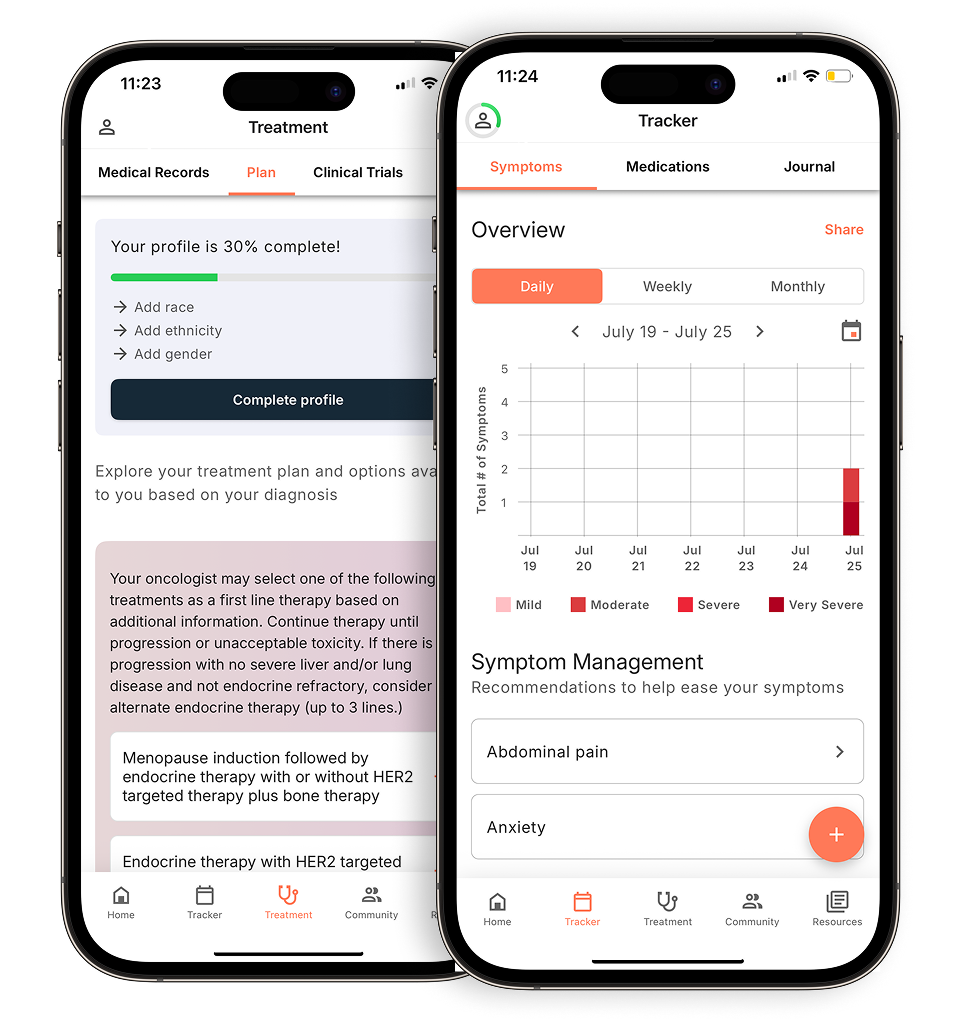
Understand your diagnosis, explore clinical trials, and track symptoms--all in one place.
Get started
Compare treatments, prepare for appointments, and track side effects—all in the app
Built for your diagnosis, Outcomes4Me gives you the tools to make confident, informed decisions—right when you need them.
Continue in app